The Quick Answer: Is an Electric Car Kit Conversion Worth It?
Bottom line: An electric car kit conversion typically costs $8,000 to $30,000+ depending on battery capacity and donor vehicle, yielding 40 to 150 miles of real-world range. For most buyers, a used production EV (like a 2022–2024 Chevrolet Bolt EV at $12,000–$18,000 with 239–259 miles EPA range) delivers more range, reliability, and safety per dollar. Conversions make sense primarily for classic-car enthusiasts, specialty vehicles, or fleet operators with specific chassis requirements — not as a budget path to daily EV driving.
If you've searched for an electric car kit conversion hoping to turn your current gas vehicle into an affordable EV, the math and engineering realities deserve a clear-eyed look. The DIY EV conversion community is real and passionate, but the gap between project-car satisfaction and practical daily transportation is wider than most kit marketing suggests. Let's break down the numbers.
What an Electric Car Kit Conversion Actually Includes
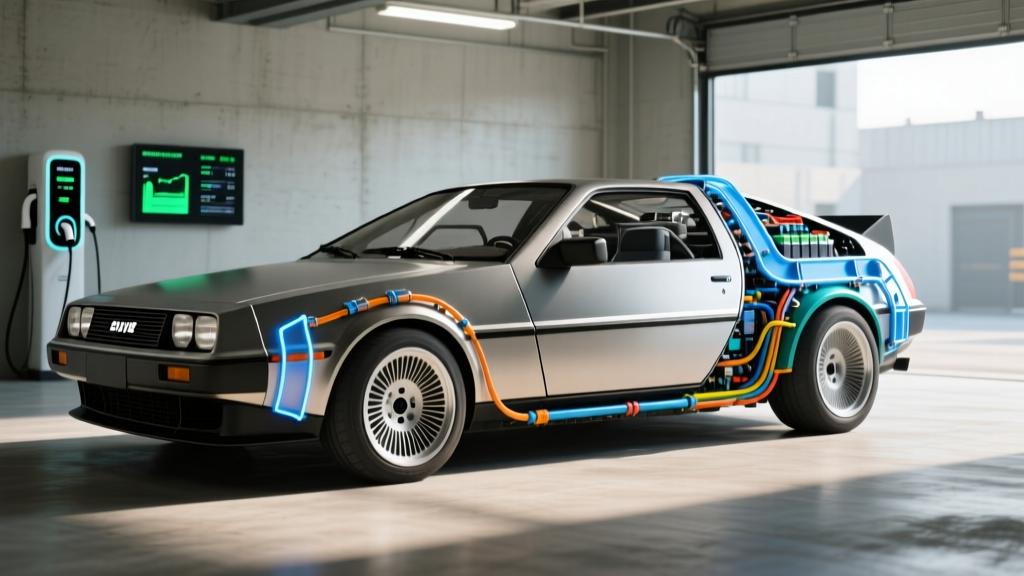
A complete electric car kit conversion replaces the internal combustion engine, fuel tank, and exhaust system with an electric powertrain. Here's what a typical kit contains and what you'll actually spend:
| Component | Budget Kit | Mid-Range Kit | High-Performance Kit |
|---|---|---|---|
| Electric motor (AC induction or PMAC) | $1,500–$3,000 | $3,000–$6,000 | $6,000–$12,000 |
| Motor controller | $800–$2,000 | $2,000–$4,000 | $3,500–$7,000 |
| Battery pack (LiFePO4 or NMC modules) | $3,000–$6,000 (15–25 kWh) | $6,000–$12,000 (30–50 kWh) | $12,000–$25,000 (60–100 kWh) |
| Battery management system (BMS) | $300–$800 | $800–$1,500 | $1,500–$3,000 |
| Charger (Level 2 onboard) | $400–$800 (1.5–3.3 kW) | $800–$1,500 (6.6 kW) | $1,500–$3,000 (7.2–11.5 kW) |
| DC-DC converter, wiring, adapters | $500–$1,200 | $1,200–$2,500 | $2,000–$4,000 |
| Throttle interface, gauges, safety cut-offs | $300–$700 | $700–$1,500 | $1,500–$3,000 |
| Parts subtotal | $6,800–$14,500 | $13,700–$29,000 | $28,000–$57,000 |
| Professional install labor (if not DIY) | $3,000–$8,000 | $5,000–$15,000 | $10,000–$25,000 |
| Total project cost | $9,800–$22,500 | $18,700–$44,000 | $38,000–$82,000 |
These figures don't include the donor vehicle itself, custom fabrication for motor mounts and battery enclosures, or the hundreds of hours of labor a DIY conversion demands. Budget kits with lead-acid batteries still exist in the $4,000–$6,000 range but deliver only 20–40 miles of range and weigh significantly more — they're essentially obsolete for any practical use.
Range, Charging, and Performance: The Real-World Numbers
Production EVs benefit from integrated thermal management, aerodynamic optimization, and regenerative braking systems that conversion kits simply can't match. Here's what you can realistically expect:
| Vehicle | Battery (kWh usable) | EPA / Estimated Range | Efficiency | DC Fast Charge |
|---|---|---|---|---|
| Budget conversion (15–25 kWh, LFP) | 15–25 | 40–70 mi (est.) | ~300–400 Wh/mi | None (Level 2 only, 3.3 kW max) |
| Mid-range conversion (30–50 kWh, NMC) | 30–50 | 70–120 mi (est.) | ~280–370 Wh/mi | Rarely available; 15–25 kW typical |
| High-end conversion (60–100 kWh) | 60–100 | 120–180 mi (est.) | ~300–400 Wh/mi | Custom; 25–50 kW possible |
| 2023 Chevrolet Bolt EV (used) | 65 (NMC) | 259 mi (EPA) | 28 kWh/100 mi | 55 kW peak, 10–80% in ~45 min |
| 2024 Hyundai Kona Electric (used) | 64.8 (NMC) | 261 mi (EPA) | 29 kWh/100 mi | 100 kW peak, 10–80% in ~43 min |
| 2023 Tesla Model 3 RWD (used) | 57.5 (LFP) | 272 mi (EPA) | 25 kWh/100 mi | 170 kW peak, 10–80% in ~25 min |
Key takeaways on range: A conversion vehicle's efficiency suffers from added weight (battery modules are heavier than OEM integrated packs), lack of active thermal management (batteries degrade faster and charge slower when cold or hot), and the absence of sophisticated regenerative braking. In cold weather (below 32°F / 0°C), expect a conversion with no battery heating to lose 30–45% of range — compared to 15–30% in a production EV with a heat pump and battery preconditioning.
Charging reality: Most conversion kits max out at Level 2 charging (240V AC) at 3.3 to 7.2 kW. That means a 40 kWh battery takes 6–12 hours to fully charge — fine for overnight home charging but a serious road-trip limitation. DC fast charging requires additional hardware (a DC-DC converter capable of handling 50–400V input), proper CCS or NACS connector integration, and BMS communication protocols that most kits don't support. You'll be planning routes around Level 2 destination chargers, not 150+ kW fast-charging corridors.
Electric Car Kit Conversion vs. Buying a Used EV: The Cost Breakdown
| Cost Factor | Budget Conversion ($15K project) | Used 2023 Bolt EV (~$16K) |
|---|---|---|
| Vehicle/project cost | $15,000 | $16,000 |
| Federal §30D tax credit | $0 (not eligible — conversions don't qualify) | $0 new; used EV credit up to $4,000 under §25E if bought from dealer, income caps apply |
| Home Level 2 charger install | $500–$2,000 | $500–$2,000 |
| Annual electricity (12,000 mi/yr) | ~$540–$720 (at $0.15/kWh, 300–400 Wh/mi) | ~$504 (at $0.15/kWh, 28 kWh/100mi) |
| 5-year electricity total | $2,700–$3,600 | $2,520 |
| Maintenance (5 years) | $1,000–$3,000 (custom parts, no dealer network) | $500–$1,000 (cabin filter, tires, fluid top-offs) |
| Insurance (annual avg.) | $1,800–$3,000 (specialty/modification surcharges) | $1,200–$1,800 |
| 5-year insurance total | $9,000–$15,000 | $6,000–$9,000 |
| Registration/inspection | $150–$500/yr (varies by state, some require special inspection) | $100–$300/yr |
| Estimated 5-year total | $29,000–$39,600 | $25,500–$31,000 |
| Resale value (after 5 years) | $3,000–$8,000 (niche market, hard to finance) | $8,000–$12,000 |
The financial case for a conversion kit as a money-saving measure is difficult to make. A used production EV with a verified battery State of Health (SoH) report, manufacturer warranty transfer, and standard insurance costs significantly less over five years — and delivers 2–4x the range.
Registration, Safety, and Legal Considerations
Converting a gas car to electric isn't as simple as bolting in components and driving away. Every state has different rules for registering a converted vehicle, and the process can be lengthy:
- VIN and title: Your vehicle keeps its original VIN, but many states require a "rebuilt" or "specially constructed" title designation after a powertrain swap.
- Smog/emissions inspection: Most states will exempt a fully electric conversion from emissions testing, but you'll need documentation proving the ICE has been completely removed.
- Safety inspection: States like New York, Pennsylvania, and Massachusetts require annual safety inspections. Inspectors unfamiliar with EV conversions may flag high-voltage wiring, custom battery enclosures, or missing crumple-zone components. Some states require a special referee or engineering sign-off.
- Federal safety standards (FMVSS): A conversion does not need to meet current-model-year FMVSS crash standards, but the original vehicle's safety systems (airbags, ABS, stability control) must remain functional. Many conversions disable ABS or airbag systems inadvertently when removing the original ECU — a serious safety risk.
- Insurance: Most mainstream insurers (State Farm, GEICO, Progressive) either won't cover conversions or will charge specialty-vehicle premiums. Hagerty and similar classic-car insurers may cover a conversion on a classic chassis, but daily-driver policies are rare and expensive.
Before purchasing a kit, contact your state DMV and at least two insurance providers to confirm you can legally register and affordably insure the finished vehicle. The NHTSA provides federal guidance on vehicle modifications, but state-level rules vary dramatically.
Who Should Actually Consider an Electric Car Kit Conversion?
Decision Framework: Conversion vs. Used EV
Choose an electric car kit conversion IF:
- You own a classic or specialty vehicle (1960s–1990s Porsche 911, VW Bus, vintage truck) where preserving the chassis and body is the primary goal
- You need a specific commercial chassis (step van, airport tug, farm vehicle) where no production EV equivalent exists
- You have professional-level electrical and fabrication skills, a workshop, and 200–500+ hours to invest
- The vehicle will be a weekend/hobby car, not a daily commuter requiring reliable range and fast charging
- Budget is secondary to the satisfaction of the build itself
Choose a used production EV IF:
- You need a reliable daily driver with 200+ miles of range and DC fast charging for road trips
- You want warranty coverage, dealer service, and standard insurance rates
- You're seeking the lowest total cost of ownership
- You want modern ADAS features (automatic emergency braking, lane-keeping, adaptive cruise) — these systems are integrated with the original powertrain ECU and typically lost in a conversion
- You need a vehicle that's easy to finance, insure, and eventually resell
Common Misconceptions About EV Conversions
| Myth | Fact |
|---|---|
| "I can convert my car for under $5,000." | Only with obsolete lead-acid batteries yielding 20–30 miles of range. A practical lithium-based conversion starts at $8,000–$10,000 in parts alone. |
| "A conversion qualifies for the $7,500 federal tax credit." | It does not. The IRS §30D credit applies only to new qualified plug-in electric vehicles meeting specific battery-sourcing and MSRP requirements. Conversions are not eligible. The §25E used-EV credit (up to $4,000) also applies only to previously owned production EVs sold through dealers. |
| "I'll get the same range as a Tesla." | Production EVs use custom battery packs with integrated thermal management, low-resistance busbars, and aerodynamic optimization. A conversion using off-the-shelf modules in a non-aero sedan will achieve roughly 50–60% of a comparable production EV's range per kWh. |
| "I can fast-charge at any public station." | Most conversions lack DC fast-charging capability. Even those that do rarely exceed 25–50 kW, compared to 150–350 kW for modern production EVs. You'll be limited to Level 2 public chargers for most trips. |
| "It's basically maintenance-free." | While you eliminate oil changes and exhaust repairs, conversions introduce unique maintenance: custom high-voltage connections need periodic inspection, aftermarket BMS units may need firmware updates, and replacement parts for discontinued kit components can be unavailable. |
| "Any mechanic can service it." | Most independent mechanics won't touch a high-voltage custom system. You'll rely on yourself, the kit manufacturer (if still in business), or specialty EV shops — of which there are fewer than 100 nationwide. |
Better Alternatives to a Conversion Kit
If your goal is affordable electric driving, the used EV market in 2026 offers compelling options that outperform any conversion on every measurable metric:
- 2022–2023 Chevrolet Bolt EV / EUV: $12,000–$18,000 used. 239–259 miles EPA range. 65 kWh NMC battery. 55 kW DC fast charging. Eligible for up to $4,000 used-EV credit (§25E) if purchased from a dealer, subject to income caps ($75K single / $150K joint). Source: fueleconomy.gov.
- 2022–2024 Hyundai Kona Electric: $16,000–$22,000 used. 258–261 miles EPA range. 64.8 kWh NMC battery. 100 kW DC fast charging. 10-year/100,000-mile powertrain warranty (partially transferable).
- 2021–2023 Tesla Model 3 Standard Range / RWD: $18,000–$26,000 used. 272 miles EPA range. 57.5 kWh LFP battery (10.5-year/120,000-mile battery warranty). Access to the Supercharger network — the most reliable DC fast-charging infrastructure in the US.
- 2023–2024 Nissan LEAF SV Plus: $14,000–$20,000 used. 212 miles EPA range. 62 kWh NMC battery. CHAdeMO DC fast charging (a legacy standard being phased out in favor of NACS/CCS — a long-term concern).
Each of these vehicles offers warranty protection, standardized safety systems, full public charging compatibility, and dramatically lower insurance costs than a custom conversion.
Frequently Asked Questions
How long does an electric car kit conversion take?
A DIY conversion by an experienced hobbyist typically requires 200–500 hours spread over 3–12 months. Professional conversion shops quote 4–12 weeks of shop time, depending on the vehicle's complexity and the level of integration requested.
Can I use Tesla battery modules in a conversion?
Some advanced builders salvage Tesla Model S/X battery modules from wrecked vehicles, but this requires significant expertise. Tesla modules use proprietary BMS communication, require active liquid cooling, and present serious fire risk if improperly handled. Several conversion-specific companies sell repurposed Tesla modules with adapter boards, but expect to pay $8,000–$15,000 for a 60–85 kWh pack.
Will a conversion increase my car's value?
Rarely. Most conversions decrease resale value because the buyer pool is extremely small, financing is nearly impossible to obtain on a converted vehicle, and insurance is difficult. Exceptions include well-documented conversions of desirable classic cars (e.g., Porsche 911, VW Type 2) done by reputable shops — these can command premium prices in the collector market.
Is it legal to drive a converted EV on public roads?
Yes, in all 50 states, but the registration process varies. You'll need to pass your state's safety inspection (if applicable) and may need a special "specially constructed vehicle" designation. Contact your state DMV before starting a project to understand specific requirements.
What happens if the battery degrades in a conversion?
Unlike production EVs, conversion battery packs have no warranty beyond the cell manufacturer's original spec (typically 3–5 years or a cycle-life guarantee). Replacing a 40 kWh conversion battery pack in 2026 costs roughly $6,000–$12,000 in modules plus labor. Production EVs from major manufacturers carry 8-year/100,000-mile battery warranties guaranteeing at least 70% capacity retention — a significant advantage.
Can I keep my car's air conditioning and power steering after converting?
Usually yes, but it requires additional components. Most conversions add an electric A/C compressor ($500–$1,500) and an electric power steering pump or swap to a manual rack. These accessories draw from the main battery pack and reduce range by 5–15% depending on usage.
Do electric conversions qualify for any tax credits or incentives?
No. The federal §30D new EV credit and the §25E used EV credit both require the vehicle to be a qualified production plug-in electric vehicle as defined by the IRS. Aftermarket conversions do not qualify. Some states and local air-quality districts offer rebates for EV conversions, but these are rare and typically capped at $1,000–$2,500. Check with your state energy office for current programs.
An electric car kit conversion is a rewarding engineering project for the right person with the right vehicle — but it's not a shortcut to affordable, practical electric transportation. If your priority is saving money on fuel, reducing emissions, and driving a reliable EV daily, a used production electric vehicle is the smarter investment in 2026.