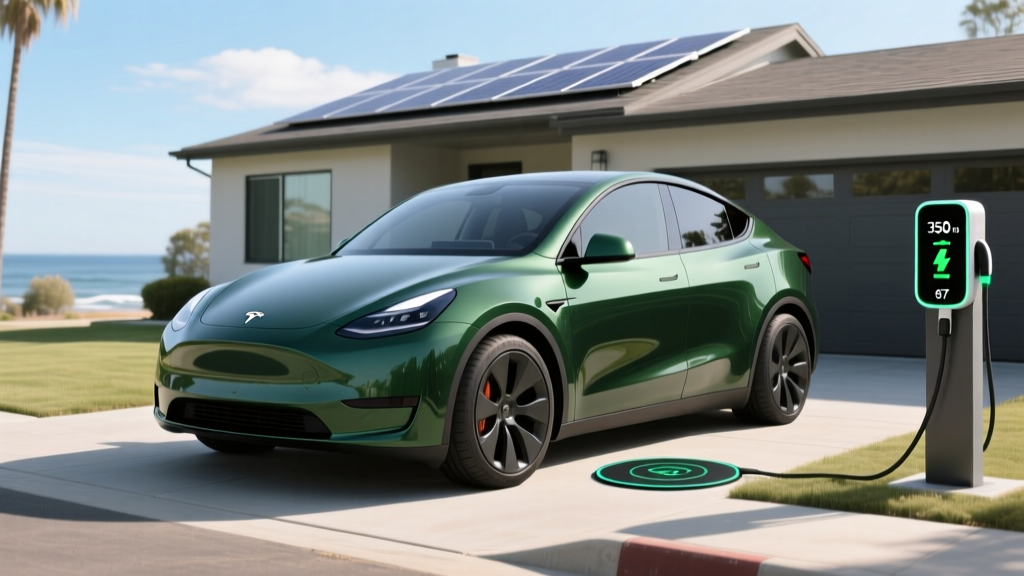
If you've been searching for tesla lease deals california, the 2026 Model Y Juniper refresh has likely crossed your screen. California remains Tesla's home market and the epicenter of EV leasing activity, where state rebates, federal tax credit point-of-sale transfers, and aggressive manufacturer lease money factors can stack into compelling monthly payments. But before you sign a 36-month lease, you need to understand exactly what you're getting — real-world range, charging behavior, battery chemistry, and whether leasing or buying makes more financial sense under current IRS §30D rules.
This review covers the 2026 Tesla Model Y lineup as it's configured for California buyers, with hard numbers on efficiency, charging curves, interior space, and total cost — the data you need to evaluate any lease offer a Fremont or Los Angeles dealer puts in front of you.
2026 Tesla Model Y: Quick Verdict
The refreshed Model Y (internally called "Juniper") entered production in early 2025 and carries into 2026 with meaningful updates: a quieter cabin, revised suspension tuning, ambient interior lighting, a rear-seat touchscreen, and slightly improved efficiency from aerodynamic tweaks. It remains the best-selling EV in the United States and the default crossover choice for California commuters who need Supercharger network access and strong software integration.
For lease shoppers specifically, the Model Y Long Range AWD is the sweet spot — it qualifies for the full $7,500 federal tax credit (transferable at point of sale to reduce your capitalized cost), delivers a 320-mile EPA range, and avoids the range compromises of the Performance trim. Lease deals in California typically run $399–$549/month depending on money-down structure, term length, and whether you apply the federal credit as a cap-cost reduction.
| Spec | Long Range AWD | Performance AWD | Rear-Wheel Drive |
|---|---|---|---|
| EPA Range | 320 mi | 295 mi | 279 mi |
| Battery (usable) | 75 kWh (est.) NMC | 75 kWh (est.) NMC | 60 kWh LFP |
| Peak DC Fast Charge | 250 kW | 250 kW | 175 kW |
| 10–80% DCFC Time | ~25 min | ~25 min | ~30 min |
| Level 2 Home Charge | 11.5 kW (~44 mi/hr) | 11.5 kW (~44 mi/hr) | 11.5 kW (~44 mi/hr) |
| 0–60 mph | 4.8 sec | 3.5 sec | 6.5 sec |
| Horsepower | 384 hp | 456 hp | 295 hp |
| Drivetrain | Dual-Motor AWD | Dual-Motor AWD | Single-Motor RWD |
| Efficiency | 122 MPGe / 28 kWh/100mi | 111 MPGe / 30 kWh/100mi | 127 MPGe / 26 kWh/100mi |
| Base MSRP | $48,990 | $53,990 | $44,990 |
| Cargo (rear seats up) | 30.2 cu ft | 30.2 cu ft | 30.2 cu ft |
| Cargo (rear seats folded) | 72.1 cu ft | 72.1 cu ft | 72.1 cu ft |
| Battery Warranty | 8 yr / 120,000 mi | 8 yr / 120,000 mi | 8 yr / 100,000 mi |
Real-World Range: What the EPA Sticker Doesn't Tell You
EPA Estimate: 320 miles (Long Range AWD)
Real-World Expectation: 265–290 miles highway at 70–75 mph; 300+ miles city/mixed driving; 220–250 miles in cold weather (below 40°F) with cabin heating.
The Model Y Long Range AWD's 320-mile EPA rating is competitive for the segment, but EPA testing uses a blended cycle that favors lower-speed driving with frequent regen opportunities. On California's Interstate 5 or Highway 101 at sustained 70–75 mph speeds, expect to consume roughly 310–330 Wh/mile, which translates to approximately 265–290 miles before hitting a comfortable 10% state of charge buffer.
City driving around Los Angeles or San Francisco, where regenerative braking recaptures energy at every stoplight, routinely yields 280–310 real-world miles. The Juniper refresh improved thermal management slightly, which helps preserve range in colder climates — relevant if you're driving from Sacramento to Tahoe in winter. Expect a 15–25% range reduction in sub-40°F conditions, primarily from cabin heating loads and reduced battery chemistry efficiency at low temperatures.
The RWD trim's LFP (lithium iron phosphate) battery has an important real-world advantage: Tesla recommends charging LFP to 100% regularly, meaning you can use the full 60 kWh daily. NMC owners in the Long Range and Performance trims should set daily charge limits to 80–90% to preserve long-term battery health, effectively giving you 256 usable miles on a daily commute cycle rather than the full 320.
Charging Speed: DC Fast, Home Level 2, and the Supercharger Advantage
Charging speed remains a top concern for EV buyers, and the Model Y's integration with the Tesla Supercharger network is its strongest competitive moat — especially now that the network has opened to NACS-equipped vehicles from Ford, Rivian, and others, increasing station congestion at popular corridors.
| Charging Level | Power (kW) | Miles Added per Hour | Typical Use Case |
|---|---|---|---|
| Level 1 (120V household) | ~1.4 kW | ~5 mi/hr | Emergency / overnight trickle |
| Level 2 (240V home Wall Connector) | 11.5 kW | ~44 mi/hr | Daily home charging (7–8 hrs for full) |
| Level 2 (public AC) | 7.2–19.2 kW | 28–72 mi/hr | Workplace / destination charging |
| DC Fast (V3 Supercharger) | Up to 250 kW peak | ~1,000+ mi/hr at peak | Road trips; 10–80% in ~25 min |
| DC Fast (V4 Supercharger) | Up to 250 kW (vehicle-limited) | Same as V3 for Model Y | Newer stations with cable management |
A critical detail on DC fast charging: the Model Y Long Range peaks at 250 kW only between roughly 10–30% state of charge. Above 50%, the charge curve tapers significantly — you'll see 100–120 kW in the 50–70% band and under 50 kW above 85%. This is normal lithium-ion behavior governed by the battery management system to protect cell longevity, but it means a 10–90% session takes closer to 40 minutes, not 25. Plan road-trip stops around 10–80% increments for the fastest throughput.
For California home charging, Tesla's Wall Connector at $420 (hardwired, 48-amp circuit) delivers 11.5 kW on a 60-amp breaker, adding roughly 44 miles of range per hour. Most California electrical panels support this with a straightforward install running $800–$2,000 depending on conduit length and whether your panel needs a 200-amp upgrade (common in older Bay Area and SoCal homes). Always get a quote from a licensed electrician before committing.
California Lease Pricing: What You'll Actually Pay Monthly
Tesla lease pricing in California fluctuates based on money factor adjustments, residual values, and available incentives. As of early 2026, here's the pricing landscape for the three Model Y trims:
| Trim | Base MSRP | Est. Monthly Lease (36 mo / 10k mi / $3,999 down) | §30D Credit Eligible? | Effective Price After Credit |
|---|---|---|---|---|
| RWD | $44,990 | $379–$429 | Yes — $7,500 | $37,490 |
| Long Range AWD | $48,990 | $429–$499 | Yes — $7,500 | $41,490 |
| Performance AWD | $53,990 | $489–$549 | Yes — $7,500 | $46,490 |
How the federal tax credit works on a lease: Under IRS §30D rules, the $7,500 credit can be transferred to the dealer (or in Tesla's case, applied as a capitalized cost reduction) at the point of sale. On a lease, the leasing entity technically claims the credit and passes the benefit to you through a lower cap cost — effectively reducing your monthly payment by roughly $130–$160/month over a 36-month term, or lowering your upfront drive-off amount.
Eligibility requirements are strict and subject to change. Current §30D rules require:
- Buyer income caps: $150,000 single / $225,000 head of household / $300,000 joint (modified AGI)
- MSRP caps: $80,000 for SUVs/pickups/vans — all Model Y trims qualify
- Battery sourcing: Critical minerals and battery components must meet escalating domestic/free-trade-partner thresholds. The Model Y's battery is assembled at Tesla's Nevada Gigafactory, and Tesla has worked to qualify its supply chain under current rules. Always verify current-year eligibility at fueleconomy.gov before signing.
- VIN verification: Tesla's checkout process confirms eligibility before delivery.
California-specific incentives: Beyond the federal credit, California's Clean Fuel Reward (if funded for the current year) and utility-specific rebates (PG&E, SCE, SDG&E offer $500–$1,500 for EV purchase/lease and home charger installation) can further reduce costs. Check energy.ca.gov and your local utility for current programs. These vary by jurisdiction and funding availability.
Interior, Cargo, and Daily Practicality
The Juniper refresh addressed the most common interior complaints from the prior Model Y: cabin noise, ride harshness, and rear-seat comfort. The 2026 model adds acoustic glass, revised damper tuning, ventilated front seats, ambient lighting, and an 8-inch rear touchscreen for passenger climate and media control.
Dimensions that matter for families:
- Rear legroom: 41.6 inches (competitive with the Hyundai Ioniq 5 at 41.7")
- Front headroom: 41.0 inches
- Cargo behind second row: 30.2 cu ft (fits two large suitcases + stroller)
- Cargo with seats folded: 72.1 cu ft (near-flat load floor, fits a queen mattress)
- Front trunk (frunk): 4.1 cu ft (charging cables, small bag)
- Towing capacity: 3,500 lbs (Long Range AWD with tow package)
The 15.4-inch center touchscreen runs Tesla's latest software with native navigation, Spotify/Apple Music integration, and over-the-air updates. Wireless phone charging, USB-C ports (front and rear), and a HEPA cabin air filter with Bioweapon Defense Mode round out the feature set. No Apple CarPlay or Android Auto — Tesla's proprietary system is the only interface, which is either a non-issue or a dealbreaker depending on your preference.
Driver Assistance: Autopilot and FSD Supervised
SAE Automation Level: Tesla Autopilot and Full Self-Driving (Supervised) are Level 2 driver-assistance systems. The driver must remain fully engaged, hands on or near the wheel, and eyes on the road at all times. These are not self-driving systems. Only Level 4 services like Waymo operate without a human driver in defined zones.
Standard Autopilot includes Traffic-Aware Cruise Control and Autosteer (lane centering) and is included on every Model Y at no extra cost. FSD (Supervised) — currently a $8,000 one-time purchase or $99/month subscription — adds automatic lane changes, Navigate on Autopilot (highway on/off-ramp handling), traffic light and stop sign recognition, and enhanced parking features.
In real-world California driving, FSD performs well on divided highways like I-280 and I-405 but requires active supervision in construction zones, on surface streets with faded lane markings, and during heavy rain. The steering-wheel torque sensor (not a camera-only eye-tracking system like GM's Super Cruise) means you need to apply periodic rotational force to confirm engagement. Plan on remaining an active driver, not a passenger.
Pros, Cons, and How It Compares
Pros
- Supercharger network access — still the most reliable DC fast-charging ecosystem in the US, with 6,000+ stalls in California alone
- Class-leading efficiency: 28 kWh/100mi (Long Range) means lower electricity costs per mile than most competitors
- Over-the-air updates add features post-purchase; strong software ecosystem
- Excellent cargo versatility with flat load floor and front trunk
- $7,500 federal tax credit eligibility across all trims (verify current-year sourcing rules)
- Strong resale value and lease residual support
Cons
- No Apple CarPlay / Android Auto — proprietary-only infotainment
- Ride quality improved with Juniper but still firmer than Hyundai Ioniq 5 or Kia EV6
- FSD (Supervised) remains a Level 2 system despite the "Full Self-Driving" name — buyer expectations often misaligned
- Increasing Supercharger congestion as non-Tesla NACS vehicles gain access
- Rear visibility limited by sloping roofline; no traditional rear wiper (camera-based washer only)
- Insurance premiums in California run 20–40% higher than comparable gas crossovers (average $2,200–$2,800/year)
Key competitors to cross-shop: The Hyundai Ioniq 5 (310 mi EPA, 800V architecture with 10–80% in ~18 min, softer ride) and Kia EV6 (310 mi, same E-GMP platform) offer faster peak charging and CarPlay. The Ford Mustang Mach-E (320 mi Extended Range) provides a more traditional crossover feel. However, none match Tesla's Supercharger integration or software maturity, which matters for California road-trippers heading to Yosemite, Joshua Tree, or up the Pacific Coast Highway.
Who Should Lease the Model Y in California?
Choose the Model Y Long Range AWD lease if: You commute 30–80 miles daily in California, have access to home Level 2 charging, take 2–4 road trips per year where Supercharger reliability matters, and want the $7,500 federal credit applied to reduce your monthly payment.
Choose the RWD trim if: Your commute is under 40 miles, you live in coastal SoCal or the Bay Area where AWD isn't necessary, you want the lowest monthly payment, and you prefer LFP battery chemistry (charge to 100% daily with no degradation concerns).
Look at competitors if: You need Apple CarPlay, prefer a softer ride, want 800V ultra-fast charging (Ioniq 5/EV6), or need a third row (Kia EV9).
Frequently Asked Questions
What is the real-world range of the 2026 Tesla Model Y?
The Long Range AWD is EPA-rated at 320 miles. In real-world California highway driving at 70–75 mph, expect 265–290 miles. City and mixed driving yields 280–310 miles. Cold-weather trips (Tahoe, Big Bear in winter) will drop range to 220–250 miles due to battery chemistry limitations and cabin heating demand.
How fast does the Model Y charge at home and on road trips?
At home on a 240V Tesla Wall Connector (11.5 kW), you'll add approximately 44 miles of range per hour — a full overnight charge from 20% to 90% takes about 7 hours. On a V3 or V4 Supercharger, the Long Range peaks at 250 kW and charges from 10–80% in roughly 25 minutes, though the charge curve tapers significantly above 50% SoC.
Does the 2026 Model Y qualify for the $7,500 federal EV tax credit?
All three Model Y trims currently qualify for the full $7,500 §30D credit, provided the buyer meets income caps ($150K single / $300K joint), the vehicle MSRP is under $80,000 (all trims qualify), and current battery-sourcing requirements are met. On a lease, the credit is typically applied as a cap-cost reduction. Always verify current eligibility at fueleconomy.gov and consult a tax professional for your specific situation.
Is leasing a Tesla better than buying in California?
Leasing makes sense if you want lower monthly payments, plan to upgrade every 3 years, and don't drive over 10,000–12,000 miles annually (excess mileage penalties apply). Buying makes more sense if you drive high annual miles, want to build equity, and plan to keep the vehicle 5+ years. The $7,500 federal credit applies in both scenarios — as a cap-cost reduction on leases or a direct credit on purchases.
What's the biggest drawback of the Model Y compared to competitors?
The lack of Apple CarPlay/Android Auto is the most cited complaint, followed by firmer ride quality versus the Hyundai Ioniq 5 and Kia EV6. Insurance costs also run notably higher than non-Tesla EVs in California, averaging $2,200–$2,800/year. Get insurance quotes before signing any lease.
How long will the Model Y battery last?
Tesla warranties the Long Range/Performance battery for 8 years or 120,000 miles (whichever comes first) with a minimum 70% capacity retention threshold. The RWD's LFP battery is warranted for 8 years or 100,000 miles. Real-world degradation data from Tesla's fleet suggests NMC packs lose approximately 10–12% capacity over 150,000 miles, while LFP packs show slightly less degradation but with a lower starting capacity. Battery replacement outside warranty currently runs $12,000–$16,000.
Sources: EPA range and efficiency data via fueleconomy.gov; federal tax credit rules via IRS.gov §30D; Tesla specifications via tesla.com/modely. All pricing and credit eligibility reflect 2026 model year and current rules — verify before purchase or lease.