The Quick Answer: What an Electric Car Conversion Actually Involves
Bottom line: An electric car conversion replaces a gas vehicle's engine, fuel tank, and exhaust with an electric motor, battery pack, and power electronics. In 2026, a competent conversion costs $15,000–$50,000+ (on top of the donor car), yields 60–200 miles of real-world range depending on battery size, and does not qualify for the federal §30D EV tax credit. For most drivers, a used or new production EV delivers more range, faster charging, full safety certification, and available incentives for a similar or lower total outlay.
Converting a classic or daily-driver to electric power is a genuine engineering path — but it's a niche one. Before you pull the engine on a '68 Mustang or a 2008 Civic, you need exact numbers on cost, range, charging, safety, and legality. This guide lays them out.
What Is an Electric Car Conversion (and What Isn't)?
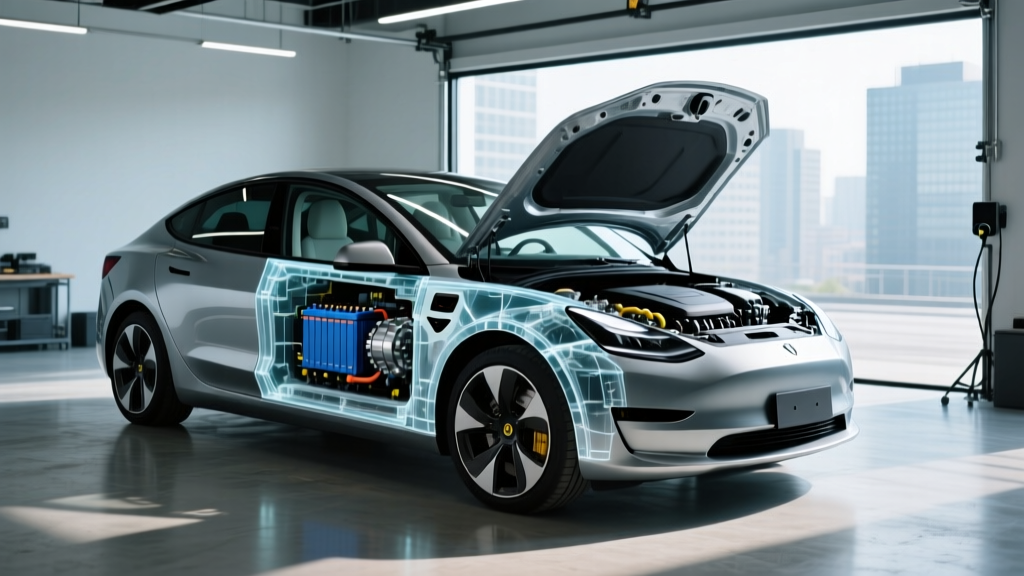
An EV conversion — sometimes called an "EV swap" or "e-RETROFIT" — involves:
- Removing the internal-combustion engine, transmission (sometimes retained), fuel tank, exhaust, and cooling system.
- Installing one or more electric motors (typically 50–200 kW / 67–268 hp).
- Mounting a traction battery pack (commonly 20–75 kWh, using salvaged Tesla modules, Nissan Leaf packs, or new LFP/NMC cells).
- Adding a charger (Level 2 onboard, typically 3.3–7.2 kW), DC-DC converter, BMS (battery management system), and throttle controller.
- Fabricating motor mounts, battery boxes, and high-voltage cabling to automotive standards.
This is not the same as a plug-in hybrid conversion (which keeps the ICE) or a simple hybrid swap. A true conversion is a full battery-electric vehicle (BEV) built on an existing chassis.
Electric Car Conversion Cost Breakdown (2026)
The single biggest shock for first-time converters is how quickly parts and labor stack up. Here's a realistic budget for a typical sedan or light truck conversion done by a professional shop:
| Component / Service | Budget Build | Mid-Range | High-End / Classic |
|---|---|---|---|
| Electric motor + controller | $2,500 | $5,500 | $12,000+ |
| Battery pack (20–75 kWh) | $4,000 | $10,000 | $22,000+ |
| Onboard charger + BMS + DC-DC | $1,800 | $3,200 | $5,500 |
| Fabrication, mounts, wiring | $3,000 | $7,000 | $15,000+ |
| Labor (shop rate $95–$150/hr) | $4,500 | $11,000 | $25,000+ |
| DMV / inspection / registration | $300 | $600 | $1,200 |
| Total (excl. donor car) | ~$16,100 | ~$37,300 | ~$80,700+ |
Source: Aggregated quotes from U.S. conversion shops (e.g., EV West, Legacy EV) and component suppliers; final costs vary widely by donor vehicle, battery chemistry, and local labor rates.
DIY builders can cut labor to near zero, but that demands high-voltage safety training, welding/fabrication skill, and 300–800 hours of work.
Range, Charging & Real-World Performance
Range is where most conversions disappoint compared to production EVs. Physics wins: older chassis are heavier and less aerodynamic than a 2026 Ioniq 6 or Tesla Model 3.
| Metric | Converted '90s–'00s Sedan (40 kWh pack) | 2026 Hyundai Kona Electric (base) |
|---|---|---|
| Battery (usable) | ~40 kWh (salvaged NMC) | 65 kWh (NMC) |
| EPA range | Not EPA-rated | 261 mi (EPA) |
| Real-world range (mixed) | ~90–130 mi | ~230–250 mi |
| Cold-weather range (20°F) | ~60–90 mi (no heat pump) | ~185–210 mi |
| Level 2 charging | 3.3–6.6 kW (8–12 hrs 0–100%) | 10.9 kW (~6 hrs) |
| DC fast charging | Rare / not available on most builds | 100+ kW, 10–80% in ~43 min |
| 0–60 mph | 9–14 sec (typical) | ~7.0 sec |
| Regen braking | Limited / single-mode | Multi-mode, i-Pedal |
Cold-weather caveat: Without a dedicated battery thermal management system and heat pump (rare in conversions), expect 30–40% range loss below freezing — significantly worse than most 2026 production EVs.
Charging caveat: Most conversions are Level 2 only. A 40 kWh pack at 3.3 kW takes ~12 hours from empty. Road-tripping is impractical without DC fast-charge integration, which adds $3,000–$8,000 and major engineering complexity.
Converted EV vs New EV vs Hybrid: Cost-to-Own Reality
The economics rarely favor a conversion as a daily driver. Compare a 5-year ownership window:
| Category | EV Conversion (~$37k + $5k donor) | 2026 Chevrolet Equinox EV 2LT (~$42k MSRP) | 2026 Toyota Prius HEV (~$29k MSRP) |
|---|---|---|---|
| Acquisition | $42,000 | $42,000 | $29,000 |
| Federal §30D credit | $0 (ineligible) | Up to $7,500* | $0 |
| Fuel / energy (5 yr) | ~$4,500 | ~$4,300 | ~$9,400 |
| Maintenance (5 yr) | $1,200–$3,500 (custom parts) | ~$2,800 | ~$3,500 |
| Insurance (5 yr avg) | $9,000–$14,000 (specialty) | ~$8,500 | ~$7,200 |
| Estimated 5-yr total | $56,700–$61,200 | $49,100 | $49,100 |
*§30D credit eligibility depends on buyer income caps, MSRP caps ($55k cars / $80k trucks/SUVs), battery critical-mineral and North American assembly rules per IRS.gov. Confirm eligibility with a tax professional.
The converted EV is usually the most expensive path and the least practical for commuting beyond ~40 miles round-trip.
Legal, Safety & Registration Realities
This is the part most YouTube conversion videos gloss over.
- Crash safety: A converted vehicle retains the crash structure of the donor car — which, for a '70s–'90s chassis, means no airbags, no crumple zones engineered for a 500-lb battery, and poor IIHS/NHTSA performance by modern standards. Check NHTSA.gov for donor crash ratings where available.
- FMVSS compliance: Once you modify a certified vehicle, you may be considered a manufacturer under NHTSA rules. Shops typically rely on state-level "specially constructed vehicle" (SPCNS) registration paths (California's SB100, for example, allows limited annual registrations).
- Insurance: Most mainstream insurers will not write a full-coverage policy on a conversion. Expect to use specialty carriers (Hagerty, Grundy) at higher premiums and agreed-value appraisals.
- Inspection: Many states require a high-voltage safety inspection, brake re-certification (EVs are heavier), and sometimes a referee station visit before titling.
Decision Framework: Should You Convert or Buy?
Choose an electric car conversion if:
- The donor car is a classic, collectible, or sentimental vehicle you intend to keep indefinitely.
- You want a unique, one-of-one build and accept the cost premium as hobby spending.
- You have home Level 2 charging and a daily commute under ~50 miles.
- You understand the vehicle will not be EPA-rated, may not qualify for HOV lanes, and is not eligible for §30D credits.
Buy a production EV (new or used) if:
- You need 200+ miles of real-world range and DC fast charging for road trips.
- You want warranty-backed battery coverage (8 yr / 100,000 mi is standard).
- You want modern ADAS (AEB, blind-spot, lane-keep) and crash-test ratings.
- You want to claim the federal §30D credit or state rebates (e.g., California's CVRP, Colorado's Innovative Motor Vehicle Credit — check local rules as amounts vary by jurisdiction).
- Your total budget is under $45,000 out-the-door.
Consider a hybrid / PHEV if:
- You lack reliable home charging or live in an apartment.
- You regularly drive in sub-freezing climates or take long rural trips where charging infrastructure is sparse.
- You want EV-like city driving (a PHEV like the 2026 Prius Prime offers ~44 mi electric-only) without range compromise.
Common Misconceptions — Myth vs Fact
| Myth | Fact |
|---|---|
| "Converting saves money vs buying an EV." | Most professional conversions total $35k–$80k+ with less range, slower charging, and no warranty. A used 2022–2024 Bolt EV or Model 3 often costs less and outperforms on every metric. |
| "I can use any old battery pack." | Mismatched cells, degraded modules, and lack of a proper BMS are the leading cause of conversion fires. Only use matched, characterized cells with a quality BMS. |
| "It'll be faster than a Tesla." | High-power builds (200+ kW motors, 60+ kWh packs) can be quick, but most daily-driver conversions run 50–100 kW and 0–60 times of 9–14 seconds. |
| "I'll get the $7,500 tax credit." | Federal §30D applies only to new qualified clean vehicles from certified OEMs. Conversions are ineligible. |
| "It's completely green." | A conversion reuses a chassis (good), but battery manufacturing and grid electricity mix still carry upstream emissions. Real-world lifecycle is often similar to a production EV. |
Frequently Asked Questions
How much does it cost to convert a car to electric?
In 2026, expect $15,000–$50,000 for parts and professional labor on a typical sedan, and $50,000–$150,000+ for classics or high-performance builds (Porsche 911, Ford Bronco, etc.). Add the cost of the donor vehicle. DIY builds can halve labor cost but require significant skill.
How far can a converted electric car go on a charge?
Real-world range depends on battery kWh, vehicle weight, and aerodynamics. Rule of thumb: a typical sedan uses ~300–400 Wh/mile, so a 40 kWh usable pack yields roughly 100–130 miles mixed driving, dropping to 60–90 miles in freezing weather without a heat pump.
Can I fast-charge a converted EV?
Technically yes, but it requires a CCS or NACS inlet, a high-power onboard charger or offboard DC-DC system, and a BMS that supports high C-rates. Adds $3,000–$8,000+ and significant engineering. Most conversions are Level 2 only.
Is a converted EV street legal?
Usually yes, through your state's specially constructed vehicle (SPCNS) or EV-conversion registration path. Requirements vary — California, Texas, and Florida have established processes; other states may require more legwork. Expect a safety inspection and brake re-certification.
Does an EV conversion qualify for the federal tax credit?
No. The IRS §30D clean vehicle credit applies only to new qualified plug-in vehicles from certified manufacturers. Conversions, kit cars, and aftermarket swaps are not eligible. Some states offer separate incentives for conversions — check your state energy office.
What's the best donor car for a conversion?
Light, manual-transmission, non-rusty vehicles from the 1980s–2000s are preferred: VW Beetle, Honda Civic, Mazda Miata, Toyota pickup, classic Porsche 911, and Ford Ranger are popular. Lighter weight = more range per kWh.
How long does an EV conversion take?
A professional shop typically quotes 3–6 months from donor drop-off to road-ready, depending on parts availability and fabrication complexity. DIY builds often stretch to 12–24 months of weekend work.
Final Take: A Passion Project, Not a Penny-Pincher
An electric car conversion is a legitimate, rewarding path for classic-car owners, engineering hobbyists, and anyone determined to keep a beloved chassis on the road without fossil fuels. For everyone else — commuters, families, road-trippers — a 2026 production EV or PHEV delivers more range, faster charging, real safety systems, warranty protection, and available tax credits for less total money. Treat a conversion as what it is: a custom build, not a budget hack.