The Short Answer: No — But Here's What Actually Exists
There is no production electric car in 2026 that fully charges its battery while you drive. What does exist: regenerative braking (recaptures 15–30% of kinetic energy during deceleration), solar roof panels (add roughly 1–4 miles of range per day on models like the Hyundai Ioniq 5 and Lightyear concepts), and range-extender PHEVs (a small gas engine generates electricity to extend range, as in the BMW i3 REx historically or the upcoming Ram 1500 REV). True "dynamic wireless charging" — where roads charge vehicles via embedded coils — remains in pilot testing only, with no public availability in the US.
What "Charges as You Drive" Actually Means in 2026
The phrase "electric car that charges as you drive" gets roughly 90 searches per month, and it's easy to see why: the idea of never plugging in is the ultimate EV fantasy. Let's separate the technologies that get mislabeled this way from the ones that genuinely approach it.
Regenerative Braking: The Closest Thing to Self-Charging
Every modern EV uses regenerative braking. When you lift off the accelerator or press the brake, the electric motor reverses direction, acting as a generator that converts kinetic energy back into stored electricity. In real-world mixed driving, regen recaptures roughly 15–30% of the energy you'd otherwise lose to friction brakes.
On a vehicle like the 2026 Tesla Model 3 Long Range (82 kWh usable battery, EPA 341 miles), aggressive one-pedal driving in stop-and-go traffic might recover 8–12 kWh over a 50-mile urban commute — roughly 35–50 miles of range equivalent. But this is energy you already put into the battery. It extends range; it doesn't create new energy.
Solar Roofs: Real but Modest
The 2026 Hyundai Ioniq 5 offers an optional solar roof that Hyundai rates at up to ~1,240 miles of added range per year under ideal conditions — roughly 3.4 miles per day. The Toyota Prius Prime (a PHEV) offers a solar roof that adds approximately 2–3 miles of electric range daily. These are measurable gains, but they won't meaningfully offset a 300-mile road trip.
Aptera Motors has announced a solar-electric vehicle claiming up to 40 miles of daily solar range, but as of early 2026, Aptera remains in pre-production with limited reservations — not a vehicle you can buy and drive today.
Range-Extender EVs (EREVs): Gas-Powered Charging on the Move
This is the closest production technology to "charging as you drive." An EREV uses a small internal combustion engine solely as a generator to recharge the battery while driving. The wheels are always driven by the electric motor.
The 2026 Ram 1500 REV (announced, with preliminary specs) pairs a 92 kWh battery with an available range-extending gasoline generator targeting up to ~500 miles of combined range. The Mazda MX-30 R-EV (available in some markets) uses a rotary engine as a generator. These vehicles do charge their batteries while driving — but they burn gasoline to do it, which defeats the "never plug in" fantasy.
EV vs Gas vs Hybrid: The Charging and Fueling Reality
Understanding how energy replenishment actually works across powertrains is essential before chasing the self-charging dream.
| Factor | BEV (e.g., 2026 Tesla Model 3 LR) | PHEV (e.g., 2026 Toyota RAV4 Prime) | Gas Car (e.g., 2026 Toyota Camry) |
|---|---|---|---|
| Energy Source | Electricity (grid) | Electricity + Gasoline | Gasoline |
| "Refuel" Time | 18–35 min (DC fast 10–80%) | 2.5 hrs (Level 2) + 5 min (gas) | 5 minutes |
| EPA Range | 341 miles | 42 mi electric + 530 mi gas | 572 miles |
| Cost Per Mile (Energy) | $0.04–$0.06 (home charging) | $0.04 electric / $0.12 gas | $0.12–$0.15 |
| Self-Charging Capability | Regen only (extends, not creates) | Gas engine charges battery | N/A |
| Annual Fuel/Energy Cost* | ~$540 | ~$900 (mixed driving) | ~$1,800 |
*Based on 12,000 miles/year, $3.50/gallon gas, $0.15/kWh home electricity. Source: fueleconomy.gov
The Real Costs: What EV Ownership Actually Looks Like
If you're researching self-charging EVs because you're worried about charging logistics, it's worth understanding the actual economics of current EV ownership.
| Cost Category | BEV (Tesla Model 3 LR) | Gas Car (Toyota Camry LE) | 5-Year Difference |
|---|---|---|---|
| Purchase Price (MSRP) | $42,630 | $28,855 | +$13,775 (EV) |
| Federal Tax Credit (§30D) | Up to $7,500 (if eligible) | $0 | −$7,500 (EV savings) |
| Energy (5 years) | $2,700 | $9,000 | −$6,300 (EV savings) |
| Maintenance (5 years) | $1,500 | $3,200 | −$1,700 (EV savings) |
| Insurance (5 years) | $9,500 | $7,200 | +$2,300 (EV) |
| Net 5-Year Cost | $49,030 | $48,255 | ~$775 more (EV) |
Tax credit eligibility under IRS §30D depends on MSRP caps ($55,000 sedans), buyer income limits ($150K single / $300K joint), and battery critical-mineral sourcing requirements. Consult a tax professional.
Dynamic Wireless Charging: The Technology That Could Make It Real
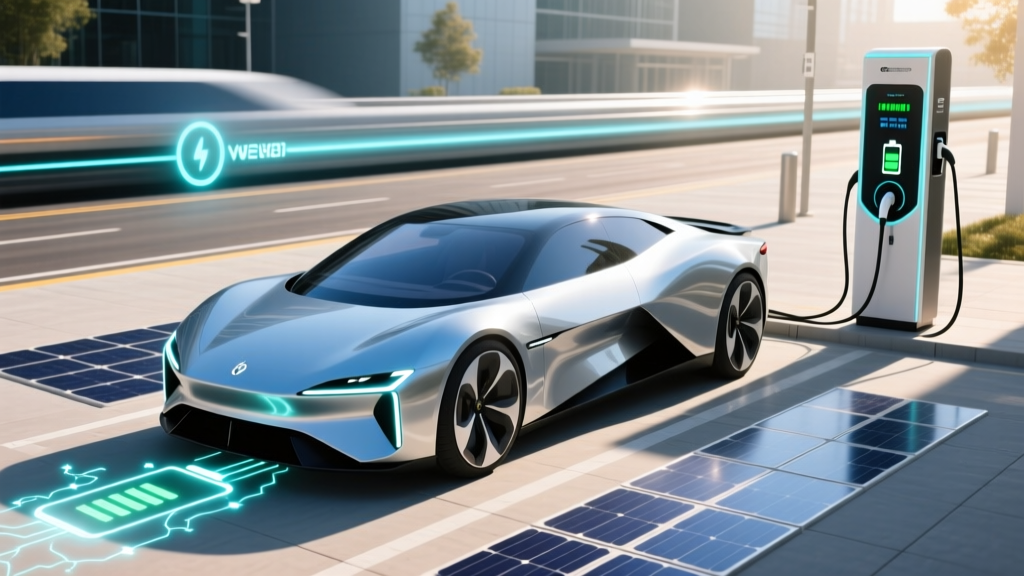
True "charging as you drive" requires dynamic wireless power transfer (DWPT) — electromagnetic coils embedded in roadways that transfer energy to a receiver on the vehicle's underside. This technology exists in pilot form:
- Electreon has deployed test segments in Sweden, Germany, and a pilot on a public road in Detroit, Michigan (2023–2024). A Ford F-150 Lightning equipped with a receiver successfully charged while driving over the embedded coils at speeds up to 60 mph.
- ENRX (formerly IPT) operates a 1-km electrified highway test track in France.
- South Korea has operated wireless-charging bus routes in Gumi since 2013, though the technology hasn't scaled to passenger vehicles.
The barriers are infrastructure cost (estimates range from $1–4 million per mile of electrified roadway), standardization of vehicle receivers, and coordination between transportation departments and utilities. No US highway agency has committed to a commercial-scale deployment as of 2026.
Common Myths About Self-Charging Electric Cars
| Myth | Fact |
|---|---|
| "Regenerative braking recharges the battery fully." | Regen recaptures 15–30% of kinetic energy during deceleration. It extends range but cannot fully recharge a depleted battery. |
| "Solar panels on an EV can power daily driving." | Current production solar roofs add 1–4 miles per day — useful for offsetting vampire drain, not for replacing plug-in charging. |
| "Hybrids and PHEVs are self-charging EVs." | HEVs like the Prius use regen and a gas engine but cannot plug in. PHEVs like the RAV4 Prime can charge via gas engine and plug-in — but they still burn fuel. |
| "Wireless charging roads are available now." | |
| "An alternator could charge an EV battery while driving." | This violates thermodynamics — an alternator creates drag on the drivetrain, consuming more energy than it generates. |
Decision Framework: What Should You Actually Buy?
If Your Core Concern Is Never Wanting to Plug In:
- Choose a HEV (Toyota Prius, Honda Accord Hybrid): You'll get 48–57 MPG combined, the battery charges via regen and the gas engine, and you never plug in. Trade-off: no electric-only driving, no EV tax credit.
- Choose a PHEV (Toyota RAV4 Prime, Jeep Wrangler 4xe): 35–42 miles of electric-only range for daily commuting, gas engine for road trips. You can plug in for savings, but you don't have to.
If You Want an EV but Fear Range and Charging:
- Choose a long-range BEV (Tesla Model 3 LR, Hyundai Ioniq 6): 340+ miles EPA, DC fast charging 10–80% in 18–25 minutes. With home Level 2 charging, you start every day with a full "tank."
- Choose an EREV when available (Ram 1500 REV): Battery-electric daily driving with a gas generator for road trips. The closest thing to "charging as you drive" that actually works.
If You Have No Home Charging Access:
- A BEV may not be practical unless you have reliable workplace or public DC fast charging nearby. Consider a PHEV or HEV instead — the gas engine eliminates charging dependency.
Frequently Asked Questions
Will regenerative braking ever be enough to fully charge an EV?
No. The laws of thermodynamics prevent it. Regen recovers energy already spent to accelerate the vehicle — and with losses in conversion, it always recovers less than was used. It's an efficiency tool, not a charging method.
Can I install solar panels on my current EV to charge it while parked?
Aftermarket solar panels can trickle-charge an EV, but typical roof area yields 200–400 watts — adding roughly 3–6 miles of range per sunny day. It's more practical to install a home solar array and charge via a Level 2 station.
Do any 2026 EVs have built-in generators?
The Ford F-150 Lightning and Hyundai Ioniq 5 offer vehicle-to-load (V2L) capability, which lets you power external devices from the battery — but this discharges, not charges, the battery. The Ram 1500 REV (announced) includes an onboard gas generator as a range extender.
How close are we to roads that charge EVs as you drive?
What's the most efficient way to maximize range without plugging in?
Use one-pedal driving mode to maximize regen, maintain steady highway speeds around 60–65 mph (efficiency drops sharply above 70), precondition the battery in cold weather, and minimize HVAC use. These habits can stretch range 10–20% beyond EPA estimates in favorable conditions — but you'll still need to plug in.
Bottom Line for First-Time EV Buyers
The search for an "electric car that charges as you drive" usually comes from a legitimate concern: charging logistics. Here's what matters in practice:
- If you can charge at home (even a standard 120V outlet adding 3–5 miles per hour overnight), a BEV works for 90% of drivers. You'll wake up "full" every day and rarely visit a public charger.
- If you can't charge at home, a PHEV gives you electric commuting flexibility without range anxiety, and an HEV eliminates plugging in entirely.
- Self-charging technology — whether solar, dynamic wireless, or perpetual-motion myths — will not replace plug-in charging in 2026 or the near future.
Focus your buying decision on real-world range (expect 15–25% below EPA in cold weather or sustained highway driving), charging speed (look for 150+ kW DC fast charging and 10–80% times under 25 minutes), and your actual daily mileage. The math almost always works — as long as you have a plan for plugging in.