The Short Answer
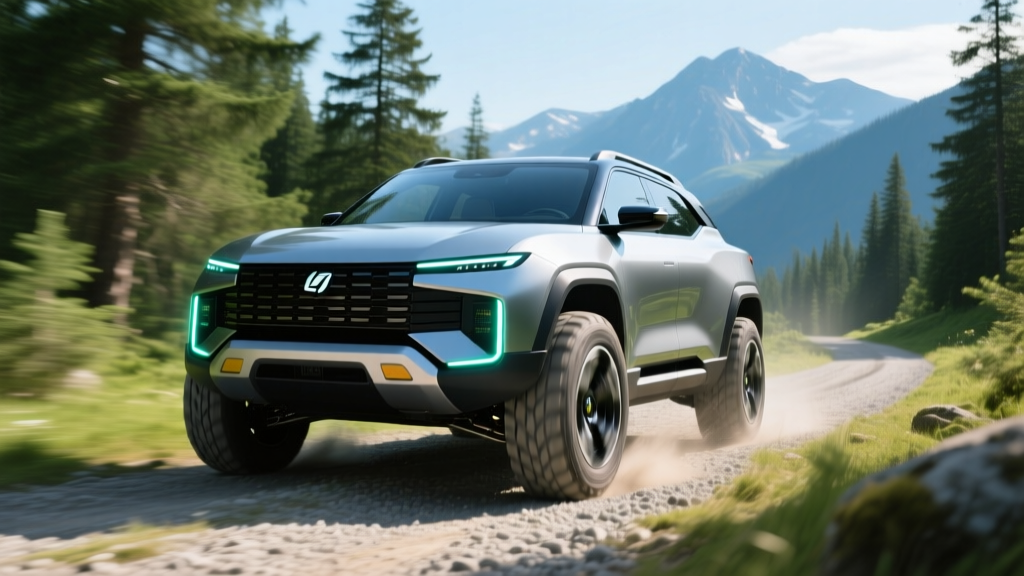
As of early 2026, BRP has not yet released an electric Can-Am Outlander for retail sale. The company has confirmed an electric ATV platform is in development — previewed by the Can-Am Origin (electric motorcycle) and the Pulse (electric street bike) — but no production Outlander EV has been announced with a firm on-sale date, battery capacity, range figure, or MSRP. If you are searching for an "electric Can-Am Outlander" today, what exists is a gas-powered Outlander lineup and BRP's stated intent to electrify its off-road portfolio over the coming years. This guide tracks every confirmed detail, provides realistic projections based on BRP's existing EV platforms, and compares what an electric Outlander would likely offer against today's gas models and competing electric UTVs.
Where BRP Stands on Electric Off-Road in 2026
BRP (Bombardier Recreational Products) entered the electric powersports market with the Can-Am Pulse (street motorcycle, ~15 kWh battery, ~100-mile range) and the Can-Am Origin (dual-sport, same platform). Both launched for the 2025 model year and established BRP's EV architecture: a liquid-cooled motor, a structural battery pack, and a focus on torque delivery for off-road and street use.
For the Outlander specifically — BRP's best-selling ATV nameplate — the company has signaled electrification is coming but has not committed to a model year. BRP CEO José Boisjoli has publicly stated the company plans to offer electric options across all product lines by 2035, with off-road vehicles in the pipeline after the street motorcycles.
What this means practically: If you want an electric Can-Am off-road vehicle today, it does not yet exist in production form. The closest analogs are the Pulse/Origin (motorcycles, not ATVs) or third-party electric UTVs from brands like Polaris (who shelved their electric Ranger concept) and newer entrants such as Volcon and Atlas.
Projected Specs: What an Electric Outlander Could Look Like
Based on BRP's existing EV platform architecture, the ATV/UTV segment's trajectory, and battery energy-density improvements through 2026, here is a realistic projection for a production electric Can-Am Outlander — all figures are estimates, not confirmed specifications:
| Attribute | Projected / Estimated | Basis |
|---|---|---|
| Battery Chemistry | NMC (nickel manganese cobalt) | Energy density needed for off-road weight targets |
| Battery Capacity | 15–25 kWh usable | Scaled from Pulse/Origin platform |
| EPA-Equivalent Range | 60–100 miles (mixed trail use) | Based on ATV energy consumption ~200–300 Wh/mi |
| Peak Motor Output | 75–110 HP equivalent | Comparable to Outlander 850 gas engine |
| Instant Torque | 120–180 lb-ft | Electric motor advantage over gas |
| Level 2 Charge Rate | 6.6–11 kW (J1772) | Standard powersports EV charging |
| Full Charge Time (Level 2) | 2–4 hours (0–100%) | Based on 15–25 kWh pack |
| DC Fast Charge | Unlikely on initial models | Cost/weight constraints for ATV segment |
| 0–60 mph (est.) | 4.0–5.5 seconds | Electric torque advantage |
| Estimated Base MSRP | $14,000–$18,000 | Premium over gas Outlander ($10k–$15k range) |
| Estimated Weight | 750–900 lbs | Battery mass penalty vs gas (~600–700 lbs) |
Key caveat on range: Unlike cars, ATVs don't have standardized EPA range ratings. Off-road energy consumption varies enormously based on terrain, throttle use, payload, and elevation changes. A 20 kWh battery might deliver 100 miles on flat fire roads at moderate speed but only 30–40 miles on aggressive technical trails with frequent acceleration. This is the single biggest uncertainty for any electric ATV buyer.
Electric Outlander vs. Gas Outlander: Projected Comparison
Here is how a hypothetical electric Outlander would stack up against the current gas-powered Can-Am Outlander 850 (2026 model year):
| Factor | Gas Outlander 850 | Electric Outlander (Projected) |
|---|---|---|
| MSRP | $11,299–$14,999 | $14,000–$18,000 (est.) |
| Fuel / Energy Cost per Hour | $8–$15 (gas at ~$3.50/gal) | $1.50–$4.00 (electricity at $0.15/kWh) |
| Range (real-world trail) | 80–120 miles (3.6-gal tank) | 60–100 miles (est.) |
| Refuel / Recharge Time | 2 minutes (gas can) | 2–4 hours (Level 2, full charge) |
| Peak Power | 78 HP | 75–110 HP (est.) |
| Torque Delivery | Linear with RPM | Instant from 0 RPM |
| Maintenance | Oil, filters, spark plugs, belts | Minimal (no fluids to change) |
| Noise | 75–85 dB at full throttle | 55–65 dB (motor whine only) |
| Weight | ~680 lbs | ~750–900 lbs (est.) |
| Cold-Weather Impact | Minimal (gas engine heat) | 15–30% range loss below 32°F |
Real Ownership Costs: What to Budget
Even without confirmed pricing, we can model likely ownership costs for an electric Outlander based on BRP's EV motorcycle pricing patterns and the broader powersports market:
| Cost Category | Gas Outlander 850 | Electric Outlander (Projected) |
|---|---|---|
| Purchase Price | $12,500 (avg trim) | $16,000 (est.) |
| Fuel / Electricity (Year 1, 500 hrs) | $1,800–$3,000 | $350–$700 |
| Annual Maintenance | $300–$600 | $50–$150 |
| Insurance (annual avg) | $400–$700 | $500–$900 (est., higher replacement cost) |
| 5-Year Fuel/Energy Total | $9,000–$15,000 | $1,750–$3,500 |
| 5-Year Maintenance Total | $1,500–$3,000 | $250–$750 |
| 5-Year Total Cost of Ownership | $23,000–$30,500 | $20,500–$26,000 (est.) |
The breakeven math: At roughly $3,500 higher purchase price, the electric Outlander would need about 3–4 years of regular use (300+ hours/year) to recoup the premium through fuel and maintenance savings. For weekend-only riders (50–100 hours/year), the gas model may remain more economical over a 5-year span.
Federal tax credit note: The IRS §30D clean vehicle credit applies to four-wheeled vehicles with a GVWR under 14,000 lbs that meet battery sourcing and MSRP caps. ATVs and side-by-sides generally do not qualify because they are not classified as highway motor vehicles for tax purposes. Always confirm with a tax professional — but do not count on a $7,500 credit for an off-road vehicle.
Charging Realities for Off-Road EVs
The biggest ownership question for any electric ATV is charging logistics. Unlike a commuter car you plug in at home every night, off-road vehicles face unique constraints:
Home Charging (Most Likely Scenario)
- Level 1 (120V standard outlet): A 20 kWh battery would take 15–20 hours for a full charge — adequate if you ride once a week and plug in after each ride.
- Level 2 (240V, 30–40A circuit): Full charge in 2–4 hours. Requires a dedicated circuit in your garage or shop. Expect $500–$1,500 for professional installation depending on panel proximity.
- Trailer/garage charging: Most ATV owners store their machines in a garage or shed. If your storage location lacks a 240V outlet, installation becomes the critical first step.
Trail/Remote Charging (The Hard Problem)
- Public DC fast chargers are designed for cars, not ATVs — you cannot roll an ATV up to an Electrify America stall.
- Portable generators (gas or solar) can provide Level 1 trickle charging in the field but add 2–4 hours for a partial top-off.
- Swappable battery systems would solve this but add significant cost and complexity; BRP has not confirmed this approach.
Cold-Weather Riding
Lithium-ion batteries lose 15–30% of usable capacity below freezing. For a projected 80-mile-range electric Outlander, that means 55–65 miles in winter conditions. Battery preconditioning (heating the pack before riding) helps but draws from the pack itself. If you ride primarily in sub-40°F climates, plan for significantly reduced range.
Common Misconceptions About Electric ATVs
| Myth | Fact |
|---|---|
| "Electric ATVs are toys — no real power." | Electric motors deliver peak torque at 0 RPM. BRP's Pulse motorcycle produces 140 lb-ft of torque — more than most gas ATVs. An electric Outlander would likely match or exceed the gas 850's grunt off the line. |
| "You can't ride far enough on battery." | Range is a legitimate concern for all-day trail rides, but most recreational ATV sessions last 2–4 hours covering 30–60 miles. A 60–100 mile estimated range covers the majority of use cases — just not multi-day expeditions without charging logistics. |
| "Batteries will die in 2 years." | Modern NMC and LFP packs are rated for 1,000–2,000+ charge cycles before reaching 80% capacity. At one full cycle per week, that is 20–40 years of use. BRP's motorcycle EVs carry multi-year battery warranties, and an Outlander would likely follow suit (projected 5-year/50,000-mile equivalent). |
| "It will qualify for the $7,500 EV tax credit." | §30D credits require the vehicle to be a highway-capable, four-wheeled motor vehicle. Off-road ATVs and UTVs generally do not meet this definition. Do not build your purchase budget around this credit. |
| "Electric means zero maintenance forever." | Suspension components, brakes, CV joints, and tires still wear. You eliminate oil changes, air filters, and spark plugs — but an electric ATV still needs regular mechanical maintenance. |
Should You Wait or Buy Gas Now?
Decision Framework
Wait for the electric Outlander if:
- You ride primarily on private property or short trail loops (under 60 miles per outing)
- You have reliable garage/shed access with 240V power or the ability to install it
- Noise restrictions matter (hunting, residential-adjacent trails, early-morning rides)
- You want minimal maintenance and are willing to pay a purchase premium for it
- Your current ATV is still functional and you can wait 1–3 years for BRP's timeline
Buy the gas Outlander now if:
- You regularly ride all-day trail systems covering 80+ miles without return-to-base charging
- You ride in remote areas where any form of charging is impractical
- You need to refuel in minutes, not hours (competitive events, work applications, ranch use)
- Your budget is firm and you cannot absorb the projected $3,000–$5,000 electric premium
- You ride extensively in sub-freezing conditions where battery range loss is unacceptable
Consider a competing electric UTV instead if:
- You want an electric off-road vehicle today and cannot wait for BRP's timeline
- You are open to newer brands (Volcon, Atlas, and others offer limited-production electric UTVs, though at $25,000–$35,000 price points with smaller dealer networks)
Frequently Asked Questions
When will the electric Can-Am Outlander be available to buy?
BRP has not announced a specific on-sale date for an electric Outlander as of early 2026. The company has confirmed electrification across all product lines by 2035, with off-road vehicles following the Pulse and Origin motorcycles. Industry observers expect a reveal or concept within 2026–2027, with production potentially following in the 2028–2029 timeframe. Monitor BRP's official Can-Am site for updates.
Will the electric Outlander be a side-by-side (UTV) or a traditional ATV?
The Outlander nameplate is BRP's traditional ATV (straddle-seat, handlebar-steered). The Defender and Maverick are the side-by-side lines. If BRP follows its naming convention, the electric Outlander would be a traditional ATV. However, BRP could also introduce an electric side-by-side under a different nameplate — this has not been confirmed.
How does the Can-Am Pulse motorcycle's battery compare to what an Outlander would need?
The Can-Am Pulse uses a ~15 kWh battery delivering approximately 100 miles of mixed street riding. An ATV requires more energy per mile due to off-road terrain, heavier loads, and lower-efficiency knobby tires. An electric Outlander would likely need a 20–25 kWh pack to deliver comparable usable range, which adds weight (roughly 150–200 lbs for the battery alone) and cost.
Can I charge an electric ATV from a standard household outlet?
Yes — Level 1 charging from a 120V/15A outlet would work, but slowly. Expect roughly 1.4 kW of charging power, meaning a 20 kWh battery would take approximately 14–16 hours for a full charge. This is viable if you ride once a week and plug in overnight after each ride, but impractical for back-to-back riding days. A 240V Level 2 circuit is strongly recommended.
Will an electric Outlander have enough torque for towing and hauling?
Almost certainly yes — and this is where electric motors excel. The current gas Outlander 850 produces 78 HP with torque that peaks around 6,000 RPM. An electric motor delivers maximum torque from 0 RPM, meaning stronger low-speed pulling power for towing, winching, and climbing. BRP has emphasized torque delivery as a core benefit of its EV platform.
What about battery replacement cost?
For powersports-grade NMC battery packs in the 15–25 kWh range, replacement costs currently run $150–$250 per kWh at retail. A 20 kWh pack replacement would cost approximately $3,000–$5,000 (parts only, before labor). However, battery replacement should rarely be needed — modern packs are designed to retain 70–80% capacity after 1,000+ full cycles, which translates to many years of typical recreational use.
Does BRP offer any electric off-road vehicle today?
As of 2026, BRP's electric lineup consists of the Can-Am Pulse (street motorcycle) and Can-Am Origin (dual-sport motorcycle). Both are on-road/dual-sport machines, not ATVs or UTVs. BRP's Ski-Doo snowmobile division has also previewed electric concepts, but no production electric off-road vehicle (ATV, UTV, or snowmobile) is currently available for purchase.