Quick Answer: Is an Electric Can-Am Right for You?
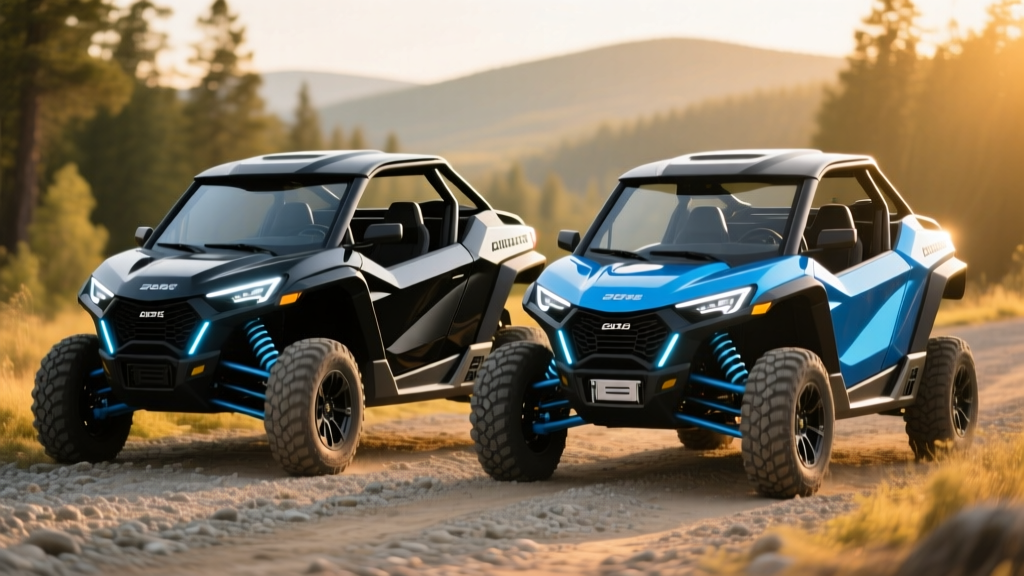
As of early 2026, BRP (Can-Am's parent company) has announced but not yet begun retail deliveries of its first electric off-road vehicles, including an electric Maverick side-by-side and electric Outlander ATV platform. These models are preliminary and not yet available for purchase. If you need an electric UTV today, competitors like the Polaris Ranger XP Kinetic (145 miles combined range, ~$30,000 MSRP) are already shipping. If you're set on the Can-Am brand, you'll likely wait until late 2026 or 2027 for confirmed specs, pricing, and dealer availability.
What We Know About the Electric Can-Am Lineup
BRP has been vocal about its electrification roadmap since CEO José Boisjoli committed the company to offering electric models in every product line by 2026. The off-road segment — home to the Maverick, Defender, and Outlander nameplates — is among the last to receive battery-electric powertrains, following the company's earlier electric snowmobile and personal watercraft efforts.
Based on BRP's public statements and patent filings, here's what we can reasonably expect from the electric Can-Am platform:
| Attribute | Estimated / Target | Status |
|---|---|---|
| Battery Chemistry | NMC (nickel manganese cobalt) likely for energy density | Unconfirmed |
| Usable Battery Capacity | ~40–60 kWh (estimated based on segment targets) | Preliminary |
| EPA-Estimated Range | 100–150 miles (combined off-road/trail use) | Unconfirmed |
| Peak DC Fast Charge Rate | ~80–120 kW (estimated) | Preliminary |
| Level 2 Charge Rate | ~7.2–11.5 kW (240V) | Preliminary |
| Horsepower | 200+ HP (electric motor, instant torque) | Target |
| 0–60 mph | ~4.5–5.5 seconds (estimated, AWD) | Preliminary |
| Towing Capacity | 2,500 lbs (target, matching gas Maverick) | Unconfirmed |
| Base MSRP | $32,000–$42,000 (estimated) | Preliminary |
| Warranty | TBD — industry norm is 3–5 yr battery | Unconfirmed |
Critical note: Every figure above is estimated or preliminary. BRP has not published final, buyable specifications as of this writing. Do not make purchasing decisions on these numbers — wait for official press releases and EPA certification data.
Electric UTV vs. Gas Side-by-Side: Real Cost Comparison
The core question for any off-road buyer is whether electrification makes financial sense for your use case. Let's compare using the closest existing benchmarks: the Polaris Ranger XP Kinetic (electric, shipping now) versus a typical gas-powered Can-Am Maverick X3 or Defender HD10.
| Cost Category | Electric UTV (est.) | Gas UTV (Can-Am Maverick) |
|---|---|---|
| Purchase Price (MSRP) | $30,000–$42,000 | $22,000–$32,000 |
| Fuel / Energy (5 yrs) | $600–$1,200 (home charging at $0.14/kWh) | $4,500–$6,500 (premium gas, ~8 MPG avg) |
| Maintenance (5 yrs) | $500–$1,000 (no oil, plugs, belts) | $2,500–$4,000 (oil, filters, belt, clutch) |
| Insurance (5 yrs avg) | $4,000–$6,000 | $3,500–$5,500 |
| Depreciation (est.) | 40–55% (EV off-road is unproven resale) | 35–50% (established market) |
| Est. 5-Year Total | $47,000–$67,000 | $42,000–$62,000 |
The electric UTV wins decisively on fuel and maintenance — you'll save roughly $5,000–$8,000 over five years in those two categories alone. But the higher upfront purchase price and uncertain resale value (electric off-road vehicles have no established used market yet) narrow the gap considerably. For high-mileage ranch or work users putting on 3,000+ miles per year, the electric model's savings compound faster. For weekend trail riders doing 500 miles a year, the payback period stretches well beyond five years.
Charging Realities: Trail, Ranch, and Home
Off-road EV ownership introduces charging challenges that pavement-dwelling EV drivers rarely face. Here's what you must plan for:
Home Charging (Where Most Off-Road EVs Will Charge)
A standard 120V household outlet (Level 1) delivers roughly 1.2–1.4 kW — that's about 3–5 miles of range per hour of charging for a UTV with a ~50 kWh battery. Fully replenishing a depleted pack at Level 1 would take 35–45 hours, which is impractical for anyone riding multiple days in a row.
A 240V Level 2 home charger at 7.2 kW adds roughly 20–25 miles of range per hour, bringing a full charge to 6–8 hours — overnight-ready. Installation typically costs $800–$2,000 including equipment and electrician labor, assuming your electrical panel has capacity. If you're in a rural area with a 100-amp panel, a service upgrade to 200 amps can add $1,500–$3,000.
Trail and Remote Charging
This is the electric UTV's biggest real-world limitation. Public DC fast chargers are concentrated along highways and in urban areas — not at trailheads, hunting leases, or remote ranches. If your riding area is more than 70 miles from your home charger, you need to plan carefully:
- Towing a portable generator — A 5–8 kW gas generator can provide emergency Level 1-style charging in the field, but it's slow (3–5 miles/hour) and defeats the emissions benefit.
- Solar trickle charging — Some off-road enthusiasts install 400–800W portable solar arrays, yielding 1–3 miles of range per hour in full sun. Useful for extending range, not for full recharges.
- Destination charging — A growing number of state parks and OHV areas are installing Level 2 chargers, but coverage remains sparse in 2026.
| Factor | Electric UTV (est.) | Gas UTV |
|---|---|---|
| Usable Range (real-world, mixed terrain) | 70–120 miles | 120–180 miles (10–12 gal tank) |
| Refuel / Recharge Time | 30–45 min (DC fast, 10–80%) / 6–8 hrs (L2 home) | 3–5 minutes |
| Remote Refueling Option | Generator or solar (slow) | Jerry can (instant) |
| Cold-Weather Range Loss | 15–30% below 32°F | Negligible |
| Noise Signature | Near-silent (stealth for hunting) | 75–90 dB (loud) |
Common Misconceptions About Electric Off-Road Vehicles
| Myth | Fact |
|---|---|
| "Electric UTVs can't tow or haul heavy loads." | Electric motors deliver peak torque at 0 RPM. The Polaris Ranger XP Kinetic tows 2,500 lbs — matching or exceeding many gas UTVs. Can-Am's electric platform targets similar capacity. |
| "The battery will die in two years." | NMC and LFP batteries in modern EVs retain 80–90% capacity after 1,000+ charge cycles. At 1,000 miles/year, that's 10+ years of typical off-road use before meaningful degradation. Warranties typically guarantee 70–80% capacity for 3–5 years. |
| "You can't ride an electric UTV in water or mud." | EV battery packs are sealed to IP67 or IP68 standards — submersible in shallow water. Electric motors have no air intake to flood. However, all electronics have limits; always follow manufacturer wading-depth ratings. |
| "Electric means no maintenance at all." | While you skip oil changes, spark plugs, and belt replacements, you still maintain suspension, brakes, tires, differential fluid, and cooling systems. Expect roughly 50–70% less maintenance cost, not zero. |
| "The $7,500 federal tax credit applies to UTVs." | The IRS §30D clean vehicle credit applies to vehicles rated for on-road use with 4+ wheels. Most side-by-sides and UTVs are classified as off-road vehicles and do not qualify for the federal EV tax credit. Always verify with a tax professional before assuming eligibility. |
Who Should Wait for the Electric Can-Am — and Who Shouldn't
Decision Framework: Is an Electric Can-Am Right for You?
Choose to WAIT for the electric Can-Am if:
- You primarily ride within 60–80 miles of home or your ranch and can charge overnight on Level 2.
- Noise reduction matters — hunting, wildlife observation, or noise-restricted areas are your primary use case.
- You put on moderate mileage (500–2,000 miles/year) and value lower per-mile energy costs.
- You're a loyal Can-Am brand buyer who wants the Maverick or Defender chassis with electric torque.
- You can afford a $32,000–$42,000+ purchase and don't need the vehicle for 12–18 more months.
Choose a GAS Can-Am or an EXISTING electric UTV if:
- You regularly ride in remote areas more than 100 miles from grid power with no way to charge.
- You need a vehicle today — the electric Can-Am is not yet available for purchase or delivery.
- Your budget is under $25,000 — gas Mavericks and Defenders start well below that.
- You tow heavy trailers over long distances and can't risk range limitations on remote roads.
- You ride in extreme cold (below 0°F regularly) where battery range loss of 20–30% is unacceptable.
What First-Time Electric Off-Road Buyers Must Know
If you've never owned an EV of any kind and you're considering an electric UTV, here are the ownership realities that don't appear in glossy brochures:
kWh is your fuel tank; kW is your fuel pump. The battery capacity (measured in kilowatt-hours, or kWh) determines how far you can go. The charge rate (measured in kilowatts, or kW) determines how fast you can refill. A 50 kWh battery with a 100 kW peak charge rate can theoretically go from 10–80% in roughly 25–35 minutes on a compatible DC fast charger — but only if the charger can deliver that rate and the battery's thermal management keeps it in the optimal temperature window.
Charge curves matter. Like all EVs, an electric UTV won't sustain its peak charge rate for the entire session. Charging slows significantly above 80% state of charge to protect battery health. Plan your stops around 10–80% sessions, not 0–100%.
Cold weather is real. Lithium-ion batteries lose 15–30% of their usable range in temperatures below freezing. If the EPA-equivalent range sticker says 140 miles, expect roughly 100–115 miles in winter riding conditions. Preconditioning the battery (warming it before charging) helps restore charge speed but consumes some energy.
Panel upgrades may be required. If your home or barn has a 100-amp electrical service, adding a 40-amp Level 2 charger may require a panel upgrade to 200 amps. Budget $1,500–$3,000 for this work and consult a licensed electrician before purchasing charging equipment.
How the Electric Can-Am Stacks Up Against Current Alternatives
Since the electric Can-Am isn't available yet, here's how the current market looks for buyers who need an electric or gas side-by-side today:
| Model | Powertrain | Est. Range | HP | Base MSRP | Availability |
|---|---|---|---|---|---|
| Polaris Ranger XP Kinetic | Electric (29 kWh battery) | 145 mi (combined) | 110 HP | ~$29,999 | Shipping now |
| Can-Am Maverick X3 (gas) | Gas (turbo 900cc) | ~150 mi (10.5 gal) | 200 HP | ~$26,499 | Shipping now |
| Can-Am Defender HD10 (gas) | Gas (V-twin 976cc) | ~140 mi (10.6 gal) | 82 HP | ~$16,599 | Shipping now |
| Electric Can-Am Maverick (announced) | Electric (~50 kWh est.) | 100–150 mi (est.) | 200+ HP (est.) | $32,000–$42,000 (est.) | Announced — not on sale |
The Polaris Ranger XP Kinetic remains the only mainstream electric UTV you can actually buy and take delivery of in 2026. It has established real-world credibility with ranchers and hunters who value silent operation and low running costs. The gas Can-Am Maverick X3 dominates the performance sport segment with its turbocharged 200 HP engine and long-proven suspension. The electric Can-Am, when it arrives, will need to bridge these worlds — delivering Maverick-level performance with Kinetic-level efficiency, at a price that justifies the premium over gas.
Frequently Asked Questions
When will the electric Can-Am Maverick be available to buy?
BRP has announced electrification plans for its off-road lineup but has not confirmed a specific retail delivery date. Industry watchers expect limited availability in late 2026 or 2027, but this is unconfirmed. Monitor Can-Am's official site for updates.
Will the electric Can-Am qualify for the $7,500 federal EV tax credit?
Almost certainly not. The IRS §30D credit requires the vehicle to be rated for on-road use, have 4+ wheels, and meet MSRP caps, income limits, and battery-sourcing requirements. Most UTVs and side-by-sides are classified as off-highway vehicles and do not meet the on-road requirement. Always confirm with a tax professional.
Can I charge an electric UTV from a standard household outlet?
Yes, but very slowly. A 120V Level 1 outlet delivers about 1.2–1.4 kW, adding roughly 3–5 miles of range per hour. A full charge from empty could take 35+ hours. For practical daily use, a 240V Level 2 charger ($800–$2,000 installed) is strongly recommended.
How does electric UTV range hold up in cold weather?
Expect 15–30% range reduction in temperatures below 32°F. A UTV with a 140-mile rated range may deliver only 100–115 miles in freezing conditions. This is a fundamental characteristic of lithium-ion chemistry, not a defect.
Is an electric UTV better for hunting?
For many hunters, yes. Electric UTVs produce near-zero noise at low speeds, eliminating the engine roar that alerts game. The lack of exhaust fumes is also an advantage in enclosed blinds or tight terrain. However, the limited range and lack of remote refueling options mean you must plan access routes carefully.
What happens if the battery needs replacement?
Off-road EV battery replacement costs are not yet well-established since the segment is new. For reference, automotive EV battery replacements range from $5,000–$20,000 depending on capacity. A UTV with a ~50 kWh pack might cost $8,000–$15,000 for a replacement out of warranty. However, modern lithium-ion packs are designed to last 1,000–2,000 charge cycles before dropping to 80% capacity — which translates to 100,000+ miles for most off-road use patterns.