The Short Answer on Towing an Electric Camping Trailer
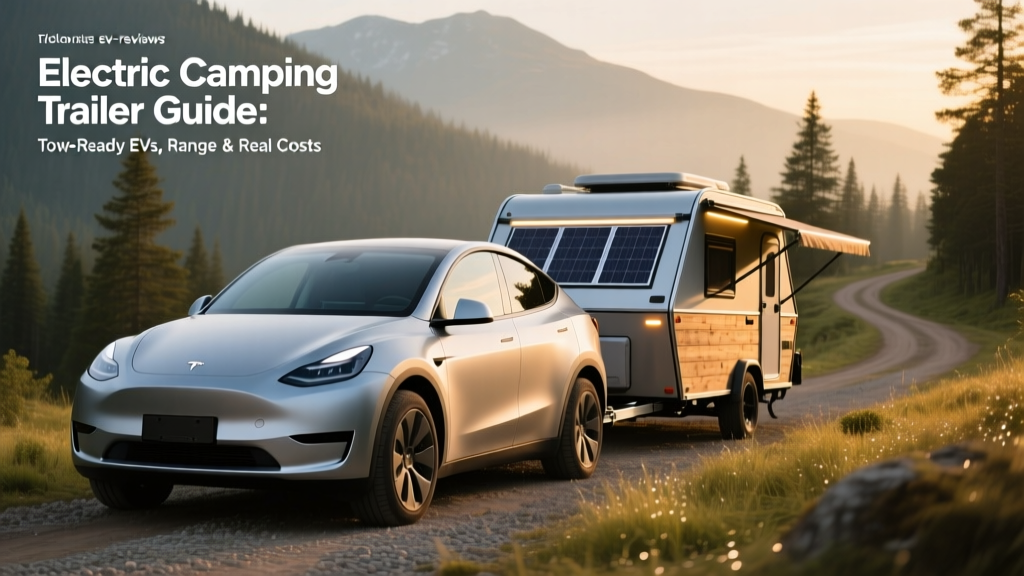
An electric camping trailer — whether a lightweight teardrop with onboard solar and battery or a full travel trailer you tow behind an EV — will typically reduce your electric vehicle's range by 30% to 50% depending on weight, aerodynamics, and terrain. A 3,500-lb trailer behind an EV rated for 320 miles of EPA range usually nets 170–220 real-world highway miles before needing a charge. The key to making it work: choose a tow-rated EV with a large battery (100+ kWh), plan routes around DC fast chargers that can accommodate trailers, and budget for higher electricity costs on the road. If you camp within 150 miles of home and charge overnight at your campsite on Level 1 or a portable Level 2, the math works beautifully. Cross-country towing in an EV is doable but demands meticulous route planning and patience at 25–40 minute charge stops every 150–200 miles.
What Is an Electric Camping Trailer (And What It Isn't)?
The term "electric camping trailer" covers two distinct categories that buyers frequently conflate:
- Trailers towed by an EV: Conventional travel trailers, teardrops, or pop-ups pulled by an electric truck or SUV. The trailer itself may have no drivetrain — the EV does all the work.
- Trailers with onboard electric systems: Campers equipped with lithium iron phosphate (LFP) house batteries (typically 5–15 kWh), solar panels (200–800W), and electric appliances (induction cooktops, heat pumps, electric awnings) that eliminate propane. Some premium models like the Airstream Basecamp or the Lightship L1 even include regenerative axles or propulsion assist.
For this guide, we address both — because the real ownership question is how your EV handles the towing load and what electrical infrastructure your campsite requires.
EVs Rated to Tow a Camping Trailer: 2026 Specs
Not every EV can tow. Many sedans and crossovers have zero or minimal tow ratings. Here are the current production EVs with legitimate towing capability for a camping trailer:
| Vehicle (2026 MY) | Max Tow Rating | Battery (kWh) | EPA Range | Est. Range w/ 3,500-lb Trailer | Base MSRP |
|---|---|---|---|---|---|
| Ford F-150 Lightning (Ext. Range) | 10,000 lbs | 131 kWh (NMC) | 320 mi | 170–210 mi | $62,995 |
| Rivian R1T (Dual Max) | 11,000 lbs | 149 kWh (NMC) | 352 mi | 190–230 mi | $82,700 |
| Chevrolet Silverado EV (4WT) | 10,000 lbs | 200+ kWh (NMC) | 400 mi | 220–280 mi | $74,800 |
| Tesla Cybertruck (AWD) | 11,000 lbs | 123 kWh (NMC) | 340 mi | 180–220 mi | $79,990 |
| Hyundai Ioniq 5 (AWD) | 2,300 lbs | 84 kWh (NMC) | 290 mi | 170–200 mi | $49,850 |
| Kia EV9 (GT-Line AWD) | 5,000 lbs | 100 kWh (NMC) | 270 mi | 150–180 mi | $63,900 |
Real-world caveat: EPA range assumes flat terrain, moderate temperatures (65–75°F), and no cargo. Towing a boxy camping trailer at 65–70 mph on the highway compounds aerodynamic drag and rolling resistance. Expect the lower end of these estimates in headwinds, mountain passes, or temperatures below 40°F. Cold weather alone can reduce EV range by 20–30%, and combined with towing, you may see 50–60% total range loss.
Range Reality: What Happens When You Hitch Up
EPA Sticker vs. Towing Reality: A Ford F-150 Lightning Extended Range posts 320 miles on the EPA cycle. Hitch a 4,200-lb travel trailer and maintain 65 mph on a flat interstate at 70°F, and you'll realistically cover 180–200 miles before hitting 10% state of charge. In 30°F weather with elevation gains, that drops to 140–160 miles. Always plan to charge at 20% remaining to protect battery health and avoid range-anxiety stranding.
The physics are straightforward: towing doubles or triples the energy demand per mile. An unladen F-150 Lightning consumes roughly 48 kWh/100 mi (about 2.1 mi/kWh). With a 4,000-lb aerodynamic trailer, consumption climbs to 85–110 kWh/100 mi, effectively cutting your usable range in half. Headwinds and grades above 3% make this worse. Regenerative braking recovers some energy on descents, but never enough to offset the climbing cost.
Charging on the Road: DC Fast Stops With a Trailer
This is where EV towing diverges sharply from gas towing. With a gas truck, you pull into any fuel station, fill in five minutes, and leave. With an EV and trailer, the logistics demand more planning:
| Charging Level | Power (kW) | Miles Added/Hour (Unladen) | Miles Added/Hour (Towing) | Typical Use Case |
|---|---|---|---|---|
| Level 1 (120V household) | 1.2–1.9 kW | 3–5 mi/hr | 2–3 mi/hr | Overnight at campsite (emergency top-up) |
| Level 2 (240V / 40A) | 9.6 kW | 20–30 mi/hr | 12–18 mi/hr | Campground pedestal, full overnight charge |
| DC Fast Charge (150 kW) | 150 kW | ~180 mi in 30 min | ~100 mi in 30 min | Highway rest stop (if trailer-accessible) |
| DC Fast Charge (350 kW) | Up to 350 kW | ~250 mi in 30 min | ~140 mi in 30 min | Major charging hubs; peak rate rarely sustained |
Key towing-charge constraint: Most DC fast charging stations are designed for pull-through or standard parking spots. Backing a 20-foot trailer into a charging stall is often impractical. Networks like Electrify America and Tesla Superchargers have begun adding pull-through stalls at select locations, but coverage remains limited. Apps like PlugShare and A Better Routeplanner (ABRP) now flag pull-through-compatible stations — always check before departing.
The charge curve also matters. Most EVs peak at their maximum kW rate only between 10–40% state of charge, then taper significantly above 80%. When towing, plan to charge from 15% to 75% rather than topping to 100% — the last 20% can take as long as the first 60%, and you rarely need it for a 150-mile hop to the next charger.
Cost Breakdown: EV Towing vs. Gas Truck Towing
| Cost Factor | EV (F-150 Lightning) | Gas (F-150 3.5L EcoBoost) | Notes |
|---|---|---|---|
| Vehicle MSRP (comparable trim) | $67,995 (Lariat Ext. Range) | $58,775 (Lariat SuperCrew) | EV premium ~$9,200 before credits |
| Federal tax credit (§30D) | Up to $7,500 (if eligible) | $0 | Subject to income, MSRP, sourcing rules — see IRS §30D |
| Fuel/energy per mile (towing) | $0.17–$0.35/mi | $0.42–$0.55/mi | EV: $0.15/kWh home, $0.45/kWh DCFC; Gas: $3.40/gal, 10 MPG towing |
| 300-mile tow trip fuel cost | $51–$105 | $126–$165 | Savings widen with home charging |
| Annual maintenance | ~$300–$500 | ~$800–$1,200 | EV: no oil, plugs, transmission fluid; brake wear reduced via regen |
| Insurance (annual avg.) | $2,200–$2,800 | $1,600–$2,100 | EV premiums run 15–30% higher on average |
The bottom line on cost: If you tow frequently and charge primarily at home ($0.12–$0.18/kWh national average), the EV pays back its premium over 4–6 years through fuel and maintenance savings. If you tow cross-country often and rely on DC fast charging ($0.40–$0.55/kWh at Electrify America or EVgo), the per-mile energy cost nearly matches gasoline, and the payback stretches considerably. Home charging access is the single largest variable in EV towing economics.
Electric Camping Trailers With Onboard Power Systems
Beyond the tow vehicle, a growing class of trailers replaces propane with electric-only systems powered by LFP batteries and solar. Here's what's available or announced for 2026:
- Lightship L1 (announced, expected late 2026): An all-electric travel trailer with a proprietary electric axle that provides propulsion assist, reducing tow-vehicle range loss by up to 40%. Features a 80 kWh battery pack, 3,000W solar roof, and fully electric appliances. Preliminary specs suggest a 150-mile self-propelled range when unhitched. Pricing announced at approximately $125,000 base.
- Airstream Basecamp (2026): Available with a dealer-installed solar and LFP battery package (approximately 6 kWh). No propulsion assist, but eliminates propane for cooking and heating via a heat pump. MSRP starts around $48,000.
- Winnebago e-RV (concept/limited production): Fully electric motorhome (not a trailer) built on a Ford E-Transit chassis. ~108-mile range. Not practical for towing, but signals the industry direction.
- Colorado Teardrop / Escapod with solar packages: Smaller teardrop trailers (1,200–2,000 lbs) that pair well with lower-tow-rated EVs like the Hyundai Ioniq 5 or Subaru Solterra. Aftermarket solar/LFP packages add $3,000–$6,000 and provide off-grid electric cooking and lighting for 2–3 days.
Myths vs. Facts About EV Towing
| Common Misconception | What the Data Shows |
|---|---|
| "EVs can't tow heavy trailers." | The F-150 Lightning and Rivian R1T tow 10,000–11,000 lbs — matching or exceeding many gas half-ton trucks. The limitation isn't capability; it's range. |
| "You'll be stranded with no chargers near campgrounds." | Many state and national park campgrounds now install Level 2 pedestals (240V/50A). Private RV parks increasingly offer 50-amp shore power compatible with portable EVSE units. Always call ahead to confirm amperage. |
| "Towing destroys the EV battery." | Towing increases cycle count and thermal load, but modern thermal management systems keep cells within safe operating range. Battery warranties (typically 8 years/100,000 miles, guaranteeing 70% capacity retention) still apply. Expect slightly faster long-term degradation — perhaps 2–3% additional loss over 100,000 miles — not catastrophic failure. |
| "Solar on the trailer recharges the EV." | Trailer-mounted solar (200–800W) produces 1–5 kWh per day — enough to power the trailer's house systems (lights, fridge, cooktop) but not meaningful for the tow vehicle's traction battery. A full EV charge requires 80–130 kWh. |
| "You need a special license to tow with an EV." | Standard driver's license towing regulations apply regardless of powertrain. Check your state's weight thresholds — most states require no endorsement for combined weights under 26,000 lbs. |
Decision Framework: Should You Tow a Camping Trailer With an EV?
Choose an EV for towing if:
- You camp within 150–200 miles of home and can charge overnight at your campsite (Level 2 or 50A shore power)
- You have reliable home charging (Level 2, 240V/40A+ installation) for daily use and pre-trip full charges
- Your trailer weighs under 5,000 lbs (teardrop, pop-up, or small travel trailer) and you own a mid-size EV SUV or truck
- You value off-grid electric camping with no propane — quiet generator-free operation, induction cooking, and heat pump climate control
- You tow 5–10 trips per year and the fuel savings offset the higher vehicle cost within your ownership timeline
Stick with gas or hybrid for towing if:
- You regularly tow 300+ miles one-way through rural areas with sparse DC fast charging (e.g., Great Plains, rural Mountain West)
- Your trailer exceeds 7,000 lbs and you need sustained highway range without 30-minute charge stops every 2 hours
- You lack home charging access (apartment/condo, street parking) and would rely entirely on public infrastructure
- You boondock in remote areas for a week or more with no electrical hookups and need the energy density of propane and gasoline
- Your budget prioritizes lowest upfront cost over long-term operating savings
First-Time EV Towing Buyer Checklist
- Verify your EV's tow rating: Check the owner's manual or manufacturer spec — not all trims of the same model are rated equally. The F-150 Lightning Standard Range tows 7,700 lbs; Extended Range tows 10,000 lbs.
- Install a proper hitch and brake controller: Most EV trucks and SUVs require a Class III or IV receiver and an integrated trailer brake controller. Aftermarket installs run $800–$1,500.
- Plan your route with EV-towing-specific tools: Use A Better Routeplanner (ABRP) with your trailer weight and drag coefficient entered. It adjusts range estimates and routes you through compatible chargers.
- Confirm campsite electrical before booking: Ask specifically for "50-amp or 30-amp shore power" and whether the pedestal uses a NEMA 14-50 or TT-30 outlet. Bring a compatible adapter and your portable EVSE.
- Budget for a home Level 2 charger: A 48A Level 2 home charger (e.g., ChargePoint Home Flex, Grizzl-E Smart) costs $500–$800 for equipment plus $500–$2,000 for electrician installation depending on panel capacity. A 200A panel upgrade adds $1,500–$3,000 if needed.
- Check §30D tax credit eligibility: The federal EV tax credit offers up to $7,500 but requires meeting buyer income caps ($150K single / $300K joint), vehicle MSRP caps ($80K for trucks/SUVs), and battery critical-mineral sourcing thresholds. Verify current-year rules at irs.gov and consult a tax professional.
Frequently Asked Questions
Can I tow a 5,000-lb camping trailer with a Tesla Model Y?
The 2026 Tesla Model Y Long Range AWD has a maximum tow rating of 3,500 lbs. A 5,000-lb trailer exceeds this rating and is unsafe and potentially illegal. For trailers above 3,500 lbs, you need an EV truck (F-150 Lightning, Rivian R1T, Silverado EV) or a large SUV like the Kia EV9 (5,000-lb rating).
How much range will I lose towing a teardrop trailer?
A lightweight teardrop (1,200–2,000 lbs) with a streamlined profile typically reduces EV range by 25–35%. A boxy 4,000-lb travel trailer causes 40–50% loss. Aerodynamics matter as much as weight — a teardrop's smooth shape creates far less drag than a flat-front travel trailer at highway speeds.
Are there DC fast chargers I can use without unhitching my trailer?
Yes, but they're still limited. Electrify America, Tesla, and EVgo have added pull-through stalls at select locations. Tesla's Supercharger network began opening pull-through sites in 2024–2025, and the expansion continues. Always verify pull-through availability on PlugShare or the network's app before relying on a specific station.
Does towing void my EV's battery warranty?
No. Towing within the manufacturer's rated capacity is a normal use case covered under the standard battery warranty (typically 8 years / 100,000 miles with a 70% capacity retention guarantee). Exceeding the rated tow capacity could void coverage if damage is attributed to overloading.
Can I run my trailer's air conditioning off the EV's battery?
Some EVs with vehicle-to-load (V2L) capability — like the Ford F-150 Lightning (Pro Power Onboard, up to 9.6 kW) and the Hyundai Ioniq 5 (V2L adapter, 3.6 kW) — can power external devices through their charge port or bed outlets. A typical RV air conditioner draws 1.5–2 kW, which V2L can sustain for limited periods. However, this drains your traction battery and reduces your driving range, so use it strategically.
What's the best EV for towing a camping trailer under $60,000?
At current pricing, the Kia EV9 GT-Line AWD ($63,900 MSRP, but lower trims start around $54,900) offers a 5,000-lb tow rating and 270-mile range, making it the most affordable three-row EV SUV capable of towing a mid-size trailer. For heavier trailers, the F-150 Lightning Pro ($55,990) provides 7,700-lb towing but with the Standard Range battery (230-mile EPA, reduced further when towing).