If you're cross-shopping a Tesla for the first time and coming from a BMW, Ford, or Hyundai, one question almost always surfaces before you even sit in the driver's seat: does Tesla have CarPlay?
The short answer is no. Tesla does not support Apple CarPlay or Android Auto in any of its vehicles — not the Model 3, Model Y, Model S, Model X, or the Cybertruck. Instead, Tesla runs a proprietary, vertically integrated infotainment system that handles navigation, media, vehicle controls, and over-the-air updates natively.
Whether that's a dealbreaker or a relief depends entirely on how you use your phone in the car. This guide breaks down exactly what Tesla's system offers (and omits), why the company refuses to cede the screen to Apple, and how the 2026 Model 3 — Tesla's highest-volume sedan — stacks up on the metrics that actually matter: range, charging speed, cost, and daily usability.
Why Tesla Refuses to Adopt Apple CarPlay
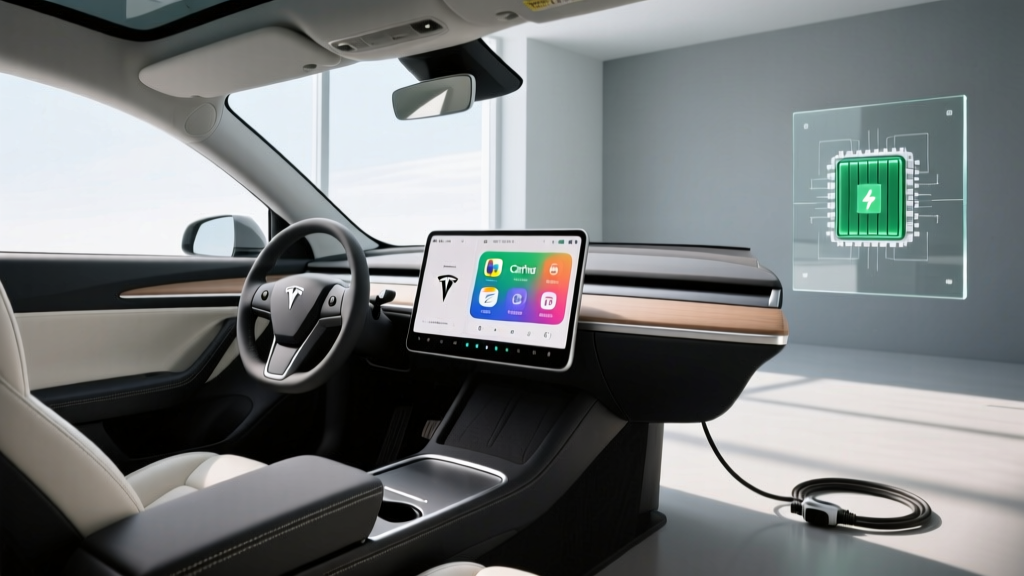
Most automakers treat their infotainment screen as a portal to your phone. Tesla treats it as the vehicle's central nervous system. Nearly every car function — climate control, glovebox release, mirror adjustment, regenerative braking strength, suspension height (on equipped models), and even the windshield wipers — is controlled through the 15.4-inch center touchscreen.
Handing that screen over to CarPlay would mean surrendering the interface Tesla has spent over a decade refining. It would also fracture the user experience: half the screen running Apple's mapping, the other half managing battery preconditioning and Supercharger routing.
Tesla's native navigation is deeply integrated with the powertrain. It accounts for elevation changes, ambient temperature, and traffic to estimate arrival state of charge, automatically routes you through Superchargers when needed, and preconditions the battery — warming it to optimal temperature — before you arrive at a DC fast charger. CarPlay simply cannot do this because it has no access to the vehicle's thermal management system or battery state.
For Apple Music and Spotify users, Tesla's native apps stream directly over the car's LTE connection (included with Premium Connectivity, $10/month) or via Bluetooth from your phone. Podcasts, audiobooks through Audible, and YouTube/Netflix (while parked) are all built in.
2026 Tesla Model 3: Complete Spec Breakdown
The refreshed Model 3 (internally called "Highland" and updated further for 2026) remains Tesla's entry point for most sedan buyers. Here are the numbers across the current lineup.
| Spec | Long Range RWD | Long Range AWD | Performance |
|---|---|---|---|
| EPA Range | 363 mi | 346 mi | 315 mi |
| Battery (usable) | ~79 kWh (NMC) | ~79 kWh (NMC) | ~79 kWh (NMC) |
| Drivetrain | Rear-Wheel Drive | Dual Motor AWD | Dual Motor AWD |
| Horsepower | ~271 hp | ~384 hp | ~510 hp |
| 0–60 mph | 5.8 sec | 4.2 sec | 2.9 sec |
| MPGe (combined) | 132 MPGe | 125 MPGe | 115 MPGe |
| Efficiency | 25 kWh/100 mi | 27 kWh/100 mi | 29 kWh/100 mi |
| Peak DC Charge | 250 kW | 250 kW | 250 kW |
| 10–80% DC Time | ~25 min | ~25 min | ~25 min |
| Base MSRP | $42,380 | $47,380 | $54,380 |
Source: fueleconomy.gov and Tesla.com. Prices exclude destination fee. Specs reflect 2026 model year.
Real-World Range: What the EPA Sticker Doesn't Tell You
- Mixed city/suburban driving (65°F): ~320–340 mi achievable
- Sustained highway (75 mph, 70°F): ~275–300 mi
- Cold weather highway (30°F, heater on): ~230–260 mi
- Extreme cold (10°F, short trips): ~200–230 mi
Tesla's heat pump (standard on all 2026 Model 3 trims) significantly reduces cold-weather cabin heating losses compared to resistive heaters, but battery chemistry still loses efficiency below freezing. Expect a 20–30% range reduction in sustained sub-40°F highway driving.
The Model 3 Long Range remains one of the most efficient EVs on the market. Its 25–27 kWh/100 mi combined efficiency beats most competitors in this price class, meaning you spend less per mile at the charger — and more of the battery's capacity translates directly into miles.
Charging Speed: Supercharger Network Advantage
Charging is where Tesla ownership still diverges sharply from the rest of the EV market. The Model 3 peaks at 250 kW on DC fast charging via Tesla's V3 and V4 Superchargers, reaching 10–80% in approximately 25 minutes. The charging curve is aggressive: you'll see sustained rates above 200 kW from roughly 10–35% state of charge, tapering gradually through the 50s and more sharply past 70%.
One critical nuance: peak kW is not sustained kW. No EV charges at its peak rate for the entire session. Tesla's curve is among the best in the industry, but you should plan stops around the 10–80% window for efficiency. Charging from 80–100% can add another 20+ minutes for only ~70 miles of range.
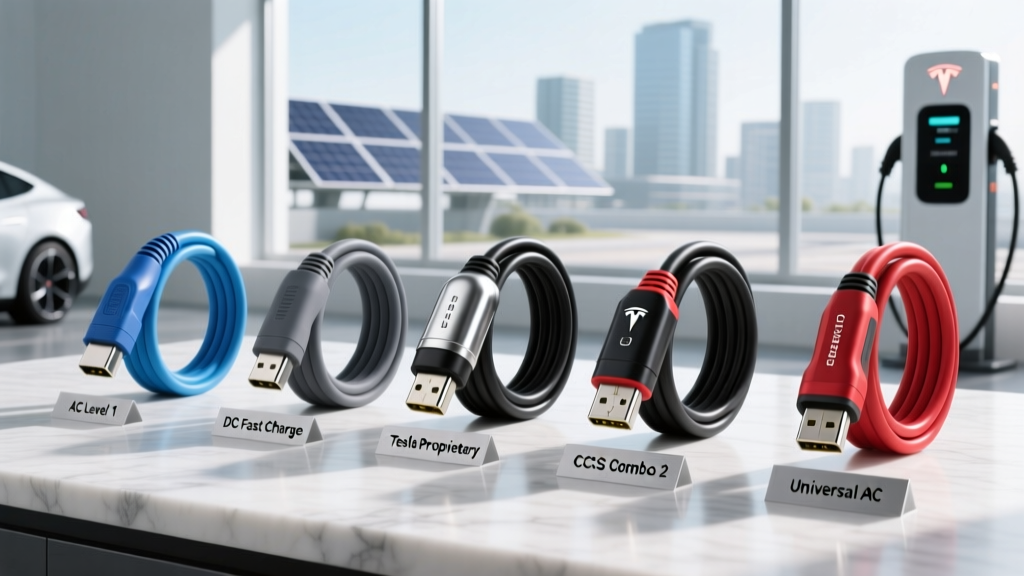
| Charging Method | Power (kW) | Speed (mi/hr added) | Notes |
|---|---|---|---|
| Level 1 (120V household) | ~1.2 kW | ~3–4 mi/hr | Emergency/trickle only |
| Level 2 (240V, 32A Mobile Connector) | 7.7 kW | ~30 mi/hr | Included with vehicle |
| Level 2 (240V, 48A Wall Connector) | 11.5 kW | ~44 mi/hr | Recommended home setup |
| DC Fast Charge (Supercharger V3/V4) | Up to 250 kW | ~170 mi in 15 min | Peak rate, 10–80% ~25 min |
| DC Fast Charge (CCS adapter, non-Tesla) | Up to ~200 kW | Varies by station | CCS adapter sold separately (~$175) |
At home on a 48-amp Tesla Wall Connector (240V), you'll add roughly 44 miles of range per hour of charging. Most owners who plug in overnight start every morning with a full battery. A typical home Level 2 installation runs $500–$1,500 depending on panel proximity and local permit costs.
Tesla opened its Supercharger network to non-Tesla EVs (via NACS or Magic Dock adapters), but Tesla owners still benefit from native integration: the car navigates to chargers, preconditions the battery en route, and initiates charging the moment you plug in — no app, no RFID card, no payment screen.
What Tesla's Infotainment Actually Gives You (Instead of CarPlay)
For CarPlay skeptics, here's what lives on that 15.4-inch screen natively:
- Navigation: Tesla's maps include real-time Supercharger availability, arrival SoC prediction, and automatic battery preconditioning. Google Maps data powers the base layer.
- Music: Native apps for Spotify, Apple Music, Tidal, Amazon Music, and TuneIn radio. Bluetooth audio streaming for anything else.
- Phone integration: Bluetooth calls and contacts sync. You can initiate calls and dictate texts via voice, but there's no full messaging UI — by design, to limit distraction.
- Entertainment (parked): YouTube, Netflix, Disney+, Twitch, and a full web browser. Arcade games including Cyberpunk 2077 on the Performance trim's AMD Ryzen processor.
- Dashcam & Sentry Mode: Built-in multi-camera recording with USB export — no aftermarket dashcam needed.
- Phone-as-key: Bluetooth proximity unlock, no fob required. UWB (Ultra-Wideband) support for precise location on newer phones.
What you lose without CarPlay: Familiar interface continuity from your iPhone, Waze (though Tesla's native nav is competitive), Siri integration beyond basic voice commands, and the ability to use your phone's existing app subscriptions seamlessly without re-logging in on the car's screen.
Pricing, Trims & Federal Tax Credit Eligibility
| Trim | Base MSRP | Est. After §30D Credit* | Eligible? |
|---|---|---|---|
| Long Range RWD | $42,380 | ~$34,880 | Yes — if buyer & sourcing qualify |
| Long Range AWD | $47,380 | ~$39,880 | Yes — if buyer & sourcing qualify |
| Performance | $54,380 | ~$46,880 | Yes — if buyer & sourcing qualify |
*Federal EV tax credit (§30D) — critical caveats:
The IRS §30D Clean Vehicle Credit provides up to $7,500, but eligibility depends on several requirements that change periodically:
- Buyer income caps: Modified AGI ≤ $150,000 (single), ≤ $300,000 (joint filing)
- MSRP cap: Sedans must be ≤ $55,000 (all Model 3 trims qualify)
- Battery sourcing: Critical minerals and battery components must meet phased-in domestic/free-trade sourcing thresholds — Tesla has generally met these requirements for US-built Model 3 vehicles, but verify at purchase
- Point-of-sale transfer: As of 2024+, you can transfer the credit to the dealer for an upfront price reduction rather than waiting to claim it on your tax return
Always confirm current eligibility with your tax professional and the IRS before purchase. Rules are subject to legislative change.
Pros, Cons & Who the Model 3 Suits Best
Pros
- Class-leading efficiency (25–27 kWh/100 mi) maximizes every kWh
- Supercharger network remains the most reliable DC fast-charging ecosystem in North America
- Over-the-air updates continuously add features post-purchase
- Standard Autopilot provides solid SAE Level 2 highway assistance
- Excellent safety ratings — IIHS Top Safety Pick+ and NHTSA 5-star
- Minimal maintenance costs — no oil, filters, or transmission fluid
- Strong resale value relative to EV segment average
Cons
- No Apple CarPlay or Android Auto — a dealbreaker for some buyers
- Nearly all controls are screen-dependent; no physical buttons for climate or volume
- Turn signals are on a steering-wheel-mounted button (post-refresh), not a stalk
- Rear visibility is limited; relies heavily on backup camera
- Rear seat is tighter than a Hyundai Ioniq 6 or BMW i4 for tall passengers
- FSD (Supervised) costs $8,000 extra or $99/mo and remains Level 2 — not autonomous
Who should buy the Model 3: Tech-forward commuters and road-trippers who value charging-network reliability, efficiency, and a minimalist cabin. If you already live in the Apple/Spotify ecosystem and don't mind logging in once on the car's screen, the absence of CarPlay fades quickly.
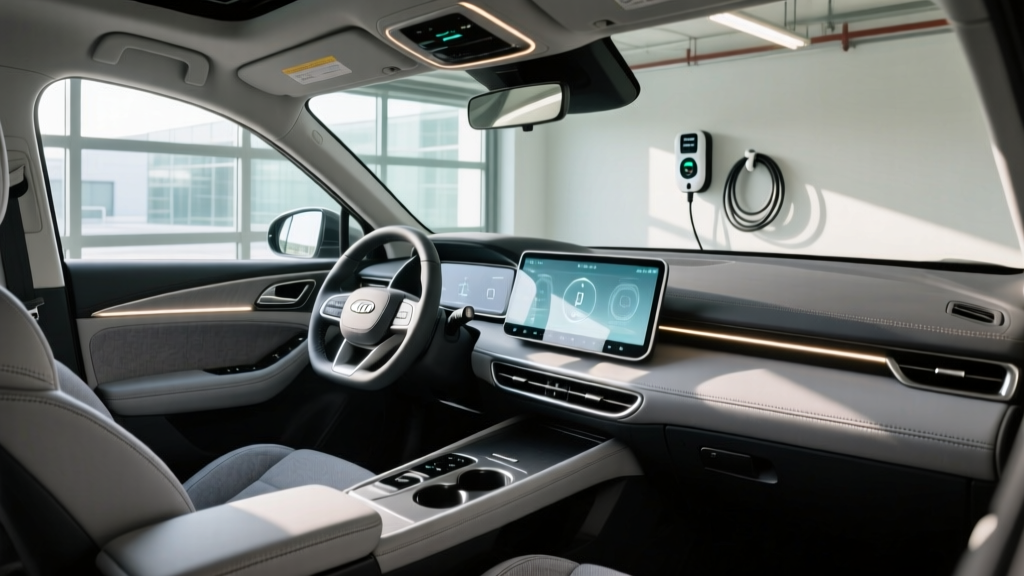
Who should look elsewhere: Buyers who rely heavily on Waze, prefer Siri-driven interfaces, share the car with drivers who want familiar phone-mirroring, or want physical buttons for climate and volume. The Hyundai Ioniq 6, BMW i4, and Polestar 2 all offer CarPlay with competitive range.
Warranty, Cargo & Practical Ownership Details
Tesla covers the Model 3 with a 4-year/50,000-mile basic vehicle warranty and an 8-year/100,000-mile battery and drive unit warranty (Long Range and Performance trims; RWD Standard Range gets 8 yr/100,000 mi as well). The battery warranty guarantees at least 70% capacity retention over the warranty period — a threshold consistent with industry norms.
Cargo space measures 23 cubic feet between the rear trunk (with a power liftgate on the refresh) and the front trunk (frunk). The frunk is modest — about enough for a charging cable bag and a small duffel — but it adds useful sealed storage that most sedans lack entirely.
Rear legroom is 35.3 inches, which is adequate for adults under 6 feet but noticeably tighter than the Hyundai Ioniq 6 (37.1 in) or even the Toyota Camry. Headroom is fine thanks to the glass roof, though that roof does let in significant solar heat in summer — a sunshade is advisable in hot climates.
Frequently Asked Questions
Does Tesla have CarPlay in the 2026 Model 3?
No. Tesla does not offer Apple CarPlay or Android Auto in any current or past vehicle. Tesla uses its own proprietary infotainment system with native apps for navigation, music, and entertainment.
Can I use my iPhone with a Tesla at all?
Yes. Your iPhone connects via Bluetooth for phone calls, and you can stream audio from any app. Tesla's phone app serves as the key fob, lets you precondition the cabin, check charging status, and locate the vehicle. Apple Music also has a native Tesla app for direct streaming.
What is the real-world range of the 2026 Model 3?
The Long Range AWD is EPA-rated at 346 miles. In real-world mixed driving at moderate temperatures, expect 320–340 miles. Sustained highway driving at 75 mph drops this to roughly 275–300 miles, and cold weather (below 30°F) can reduce range to 230–260 miles depending on cabin heat usage and trip length.
How fast does the Model 3 charge at home and on road trips?
At home on a 48-amp Level 2 Tesla Wall Connector (240V), the Model 3 adds about 44 miles of range per hour — enough for a full overnight charge. On DC fast charging via a V3 or V4 Supercharger, it peaks at 250 kW and charges from 10–80% in approximately 25 minutes.
Does the 2026 Tesla Model 3 qualify for the federal EV tax credit?
The Model 3 is generally eligible for up to $7,500 under IRS §30D, provided the buyer meets income caps (≤$150K single / ≤$300K joint), the vehicle MSRP is under $55,000 (all trims qualify), and battery sourcing requirements are met. Tesla's US-built Model 3 has historically met sourcing rules, but always verify current eligibility via the IRS before purchase. The credit can be transferred at the point of sale for an immediate price reduction.
Is the Model 3 worth buying over competitors like the Ioniq 6 or BMW i4?
The Model 3 wins on charging-network access (Superchargers), efficiency, and over-the-air feature updates. The Ioniq 6 offers more rear-seat room and CarPlay; the BMW i4 provides a more traditional luxury interior with physical controls. If CarPlay is a hard requirement, the Model 3 is off the table. If charging reliability and efficiency matter most, it remains a top pick.
Is Tesla's Autopilot self-driving?
No. Tesla's Autopilot and optional Full Self-Driving (Supervised) are SAE Level 2 driver-assistance systems. The driver must remain attentive, keep hands on the wheel, and be prepared to take over at any time. Tesla's system is competitive for highway lane-centering and adaptive cruise, but it does not make the vehicle autonomous.
Verdict: CarPlay Absence Is a Feature, Not a Bug — for Tesla
So, does Tesla have CarPlay? No — and it never will under Tesla's current philosophy. The company views its software as a core differentiator, not a commodity layer to be replaced by Apple or Google.
For most Tesla owners, the native system's deep powertrain integration — especially Supercharger routing and battery preconditioning — makes CarPlay's absence a non-issue within the first few weeks of ownership. For others, particularly those who live in Waze, rely on Siri, or share the car with non-Tesla-app users, it remains a legitimate friction point.
The 2026 Model 3 itself is an outstanding electric sedan: efficient, quick-charging, well-priced after the federal credit, and backed by the best DC fast-charging network in the country. If CarPlay isn't a dealbreaker for you, it's one of the strongest EV values available today. If it is, the Ioniq 6, BMW i4, and Polestar 2 are worthy alternatives that won't ask you to change your digital habits.