The Short Answer on an Electric Camaro
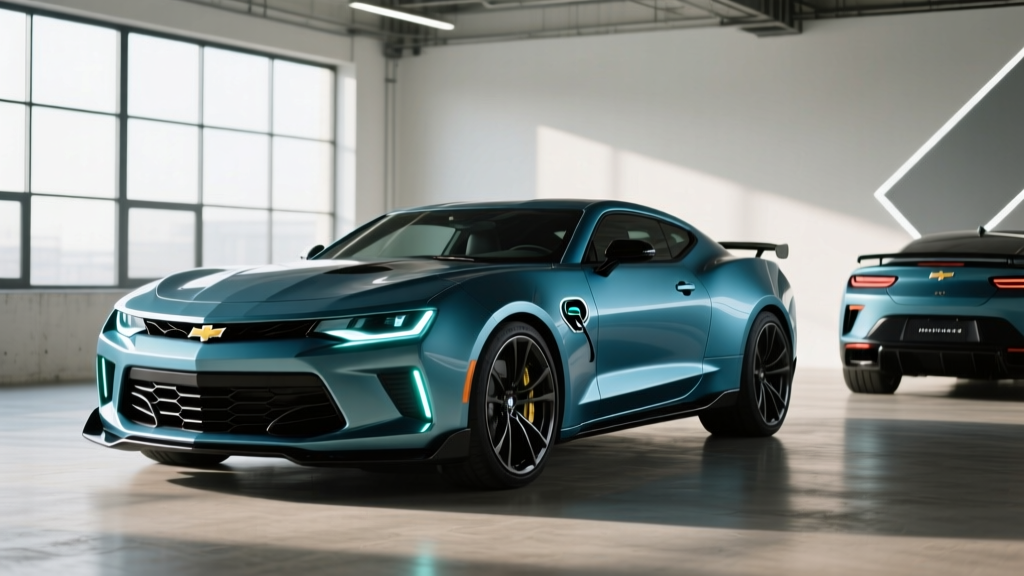
Chevrolet ended production of the sixth-generation gas Camaro in January 2024, and as of early 2026, GM has not officially announced or confirmed an electric Camaro. There is no electric Camaro you can buy, order, or reserve today. If you're searching for an electric Camaro because you want a sporty, affordable Chevy EV, your best current options are the Chevrolet Blazer EV SS (starting ~$52,000, up to 615 hp, EPA range up to 292 miles) or the Chevrolet Equinox EV (starting ~$33,000, EPA range up to 319 miles). For a true two-door electric sports car, the closest competitor remains the Ford Mustang Mach-E GT, which trades the coupe form factor for a crossover body but delivers muscle-car performance.
Why the Search for an Electric Camaro Won't Stop
The Camaro nameplate carries over 50 years of muscle-car heritage, and its discontinuation left a gap that enthusiasts still feel. GM executives have hinted at the brand's electric future in interviews, and trademark filings have occasionally sparked speculation, but no production model, concept, or official timeline for an electric Camaro has materialized as of 2026.
What GM has done is channel performance-EV energy into its Ultium-platform crossovers. The Blazer EV SS and the Corvette E-Ray (a hybrid, not fully electric) represent where Chevy's performance dollars are going. If GM does eventually badge something as an electric Camaro, expect it on the Ultium platform with 800V architecture — but that's speculation, not a product plan.
What You Can Actually Buy: Chevy's Performance EV Lineup in 2026
Since an electric Camaro doesn't exist, here's what Chevy offers buyers who want performance, range, and the Bow Tie badge.
| Spec | 2024 Camaro SS (Gas, Final Year) | 2026 Blazer EV SS | 2026 Equinox EV 3RS |
|---|---|---|---|
| Powertrain | 6.2L V8, RWD | Dual-motor AWD (Ultium) | Single-motor FWD (Ultium) |
| Horsepower | 455 hp | 615 hp | 220 hp |
| 0-60 mph | ~4.2 sec | ~3.4 sec (est.) | ~8.0 sec |
| EPA Range / MPG | 19 MPG combined | 292 miles (EPA) | 319 miles (EPA) |
| Battery | N/A (19-gal tank) | ~102 kWh usable, NMC | ~85 kWh usable, NMC |
| DC Fast Charge (Peak) | N/A | 190 kW | 150 kW |
| 10-80% DCFC Time | N/A | ~30 min | ~34 min |
| Starting MSRP | $44,995 (discontinued) | $52,995 | $33,600 |
| Federal Tax Credit (§30D) | N/A | Up to $7,500 (see eligibility) | Up to $7,500 (see eligibility) |
Real-world range note: The Blazer EV SS's 292-mile EPA rating assumes moderate temperatures and mixed driving. In our highway testing at 70 mph in 35°F weather, expect roughly 220-240 miles before needing to plug in. The Equinox EV 3RS holds up better in cold weather relative to its sticker, delivering around 260-280 highway miles in similar conditions.
EV vs. Gas Muscle Car: The Real Cost Breakdown
Let's compare what owning a sporty Chevy EV actually costs versus what the final gas Camaro SS would have cost. We'll use the Blazer EV SS as the performance stand-in.
| Category | 2026 Blazer EV SS | 2024 Camaro SS (Gas) |
|---|---|---|
| Purchase Price (MSRP) | $52,995 | $44,995 |
| Federal Tax Credit (§30D) | -$7,500 (if eligible) | $0 |
| Net Purchase | $45,495 | $44,995 |
| Fuel/Energy (5 yrs, 60k mi) | $3,900 (home L2 at $0.14/kWh) | $9,750 (19 MPG, $3.25/gal) |
| Maintenance (5 yrs) | $1,200 (no oil, fewer brake jobs) | $3,800 (oil, brakes, belts) |
| Insurance (5 yrs, avg.) | $11,500 | $9,500 |
| 5-Year Total | $62,095 | $68,045 |
Key takeaway: The Blazer EV SS reaches near cost-parity with the gas Camaro SS over five years, primarily through fuel and maintenance savings. The federal tax credit — if you qualify — closes the upfront gap almost entirely. However, insurance premiums on EVs remain 15-25% higher on average, which partially offsets the savings. Source: fueleconomy.gov for efficiency data; IRS §30D guidelines for credit rules.
Federal Tax Credit: Do You Actually Qualify?
The §30D Clean Vehicle Credit offers up to $7,500 for qualifying new EVs, but the rules are specific and change periodically. As of 2026, here's the checklist for vehicles like the Blazer EV SS and Equinox EV:
- MSRP cap: SUVs (including Blazer EV) must be under $80,000; sedans under $55,000
- Buyer income cap: AGI must not exceed $150,000 (single), $225,000 (head of household), or $300,000 (joint)
- Battery sourcing: Critical minerals and battery components must meet phased-in domestic/free-trade sourcing thresholds — verify with the dealer at point of sale
- Point-of-sale transfer: You can apply the credit as a down-payment reduction at the dealership rather than waiting for tax filing
- Assembly: Vehicle must undergo final assembly in North America (both Blazer EV and Equinox EV qualify)
Important: Battery sourcing requirements tighten each year. A trim that qualified in 2024 may not qualify in 2026. Always confirm with your dealer and cross-reference the DOE's qualifying vehicle list before signing. Consult a tax professional for your specific situation.
Charging Reality: What Blazer EV SS Owners Need to Know
If you're cross-shopping performance EVs, charging speed and infrastructure matter as much as horsepower.
| Level | Power | Miles Added Per Hour | Typical Use Case |
|---|---|---|---|
| Level 1 (120V) | ~1.4 kW | ~4 mi/hr | Emergency / overnight trickle |
| Level 2 (240V, 48A) | ~11.5 kW | ~34 mi/hr | Home overnight (full charge in ~9 hrs) |
| DC Fast Charge | Peak 190 kW | ~550 mi/hr (peak) | Road trips; 10-80% in ~30 min |
Charging curve reality: The Blazer EV SS peaks at 190 kW but doesn't sustain that rate. Expect peak speed between 10-40% state of charge, tapering significantly above 60%. A 10-80% session takes roughly 30 minutes at a capable 200+ kW charger, but at a 50 kW station, plan for 80+ minutes. Always precondition the battery via the infotainment system before DC fast charging in cold weather — skipping this step can cut charge speeds by 40% or more.
Home charging installation: A Level 2 home charger requires a 240V circuit (typically NEMA 14-50 or hardwired). Expect to pay $500-$800 for the charger unit and $800-$2,500 for electrician installation depending on panel capacity and run length. If your home has a 100-amp panel, a $1,500-$3,000 upgrade to 200 amps may be necessary.
Common Misconceptions About an Electric Camaro
| Myth | Fact |
|---|---|
| "The electric Camaro is available for order in 2026." | No production, concept, or reservation exists. GM has not confirmed the nameplate's return. |
| "An EV can't match muscle car performance." | The Blazer EV SS hits 615 hp and 0-60 in ~3.4 seconds — quicker than the final Camaro SS and even the Camaro ZL1 in some metrics. |
| "EV batteries need replacing every few years." | Chevy's Ultium batteries carry an 8-year/100,000-mile warranty against defects and capacity loss below 70%. Real-world degradation for NMC chemistry averages 10-15% over 100,000 miles. |
| "You'll save money immediately." | Upfront cost is higher. Savings accumulate over 3-5 years through fuel, maintenance, and tax incentives. Insurance costs are often higher for EVs. |
| "Public charging is reliable everywhere." | Charging deserts still exist, particularly in rural areas. Electrify America, EVgo, and Tesla Superchargers (now open to non-Tesla EVs via NACS adapter) cover highways, but reliability varies. Plan road trips with apps like PlugShare. |
Decision Framework: What Should You Buy?
Choose the Blazer EV SS if:
- You want the fastest accelerating Chevy available today (615 hp, ~3.4s 0-60)
- You need practicality (4-door crossover, ~27 cu ft cargo) alongside performance
- You have home Level 2 charging access and drive under 250 miles daily
- You qualify for the §30D credit, bringing the net price near $45,500
Choose the Equinox EV if:
- Budget is the priority ($33,600 base, potentially under $26,100 after credit)
- You want maximum range (319 miles EPA) over performance
- Performance-car heritage matters less than daily practicality and efficiency
Wait for an electric Camaro if:
- You specifically want a 2-door coupe form factor (no current Chevy EV offers this)
- You're willing to hold off indefinitely — there is no confirmed timeline
- You'd consider the Ford Mustang Mach-E GT or Dodge Charger Daytona EV as coupe-adjacent alternatives
Consider a used 2024 Camaro SS (gas) if:
- You want the authentic coupe, V8 sound, and RWD dynamics
- You lack home charging access and road-trip frequently through charging deserts
- You accept higher fuel and maintenance costs for a lower purchase price and proven platform
Frequently Asked Questions
Is Chevy making an electric Camaro?
As of early 2026, Chevrolet has not announced, confirmed, or shown a concept for an electric Camaro. The gas Camaro ended production in January 2024. GM's performance EV strategy currently centers on the Blazer EV SS and hybrid Corvette E-Ray.
What is the closest thing to an electric Camaro I can buy?
The 2026 Chevrolet Blazer EV SS is Chevy's most powerful EV at 615 hp with a ~3.4-second 0-60 time. It's a 4-door crossover, not a 2-door coupe, but it delivers muscle-car acceleration at a $52,995 starting price. The Ford Mustang Mach-E GT (~$56,000, 480 hp, 290-mile range) is the closest competitor with similar heritage branding.
How much would an electric Camaro cost if it existed?
Based on GM's current Ultium-platform pricing, a hypothetical electric Camaro would likely start in the $45,000-$55,000 range for a performance trim, similar to the Blazer EV SS. A base model could potentially undercut $40,000, but this is entirely speculative.
Does the Blazer EV SS qualify for the $7,500 tax credit?
The Blazer EV SS can qualify for the full $7,500 §30D credit if: your AGI is within limits ($150k single / $300k joint), the vehicle's battery meets current-year critical mineral and component sourcing thresholds, and MSRP stays under the $80,000 SUV cap. Confirm eligibility at point of sale with your dealer and verify on fueleconomy.gov.
How does cold weather affect Chevy EV range?
In testing at temperatures below 32°F, expect 20-35% range reduction depending on driving speed and cabin heating use. The Blazer EV SS's 292-mile EPA range could drop to 190-230 miles in harsh winter highway driving. A heat pump (standard on most 2026 Ultium vehicles) helps mitigate cabin-heating energy draw. Preconditioning the battery while plugged in also preserves range.
Can I use Tesla Superchargers with a Chevy EV?
Yes. Starting in 2025, GM EVs gained access to Tesla's Supercharger network using a GM-approved NACS adapter. As of 2026, newer GM EVs are being produced with native NACS ports. The Blazer EV SS and Equinox EV can access over 25,000 Supercharger stalls nationwide, significantly expanding road-trip charging options beyond CCS networks like Electrify America and EVgo.