The Short Answer on the Electric Camaro 2025
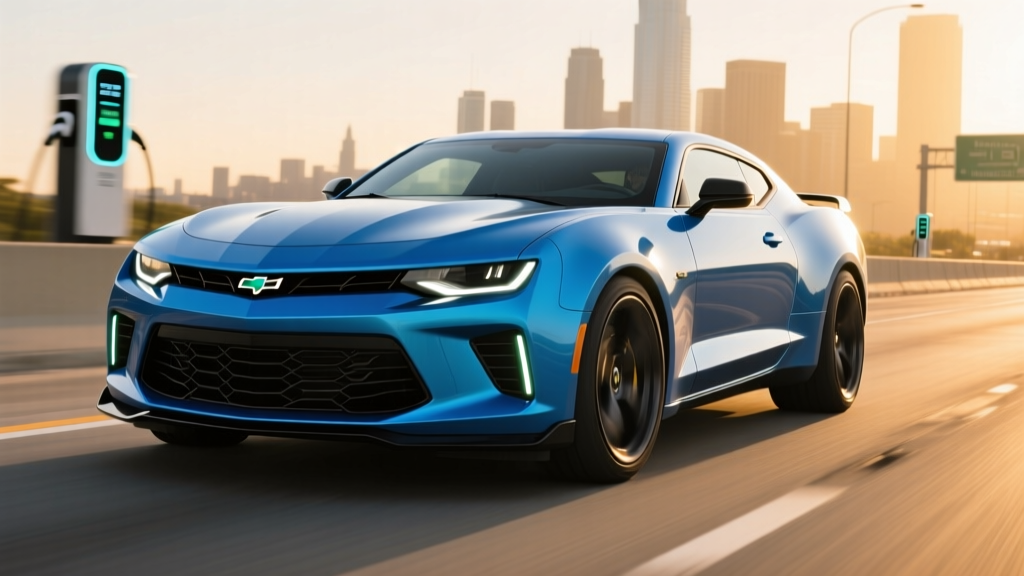
There is no "electric Camaro" in the traditional sense. The 2025 Chevrolet Camaro as a dedicated model was discontinued after the 2024 model year. However, Chevrolet has applied the Camaro nameplate to its electric performance lineup through the 2025 Chevy Blazer EV SS and the broader Ultium-based performance strategy. If you're searching for an electric Camaro 2025, you're likely looking for Chevy's electric muscle car offering — and that currently centers on the Blazer EV SS (up to 557 hp, ~290-mile EPA range, starting around $56,595) and the upcoming electric Corvette/Camaro spiritual successors on the Ultium platform.
This guide breaks down what Chevy actually offers in the electric performance space for 2025, how it compares to the gas Camaro you remember, real ownership costs, and whether it fits your garage and budget.
What Happened to the Camaro? Chevy's Electric Pivot
Chevrolet ended production of the sixth-generation Camaro in January 2024. The decision wasn't about electrification alone — Camaro sales had been declining for years, dropping from over 72,000 units in 2015 to roughly 31,000 by 2023. But the discontinuation cleared the way for Chevy to channel its performance identity into EVs built on the Ultium battery platform.
For 2025, the closest production vehicle to an "electric Camaro" is the Blazer EV SS, a performance-oriented electric SUV wearing Chevy's SS badge for the first time on an EV. Additionally, the Silverado EV RST and the confirmed next-generation electric performance models (expected 2026-2027) carry the brand's muscle car DNA forward.
Chevy also showcased the Camaro EV concept direction through various Ultium platform demonstrations, signaling that a dedicated electric coupe wearing the Camaro name could return — but as of early 2025, nothing is officially announced for production.
2025 Chevy Blazer EV SS: The Closest Thing to an Electric Camaro
| Spec | Value |
|---|---|
| Powertrain | Dual-motor AWD (Ultium platform) |
| Horsepower | Up to 557 hp (with Wide Open Watts mode) |
| Torque | 648 lb-ft |
| 0-60 mph | Under 4.0 seconds (est.) |
| Battery (usable) | ~102 kWh, NMC chemistry |
| EPA Range | ~290 miles (est., AWD SS trim) |
| Max DC Fast Charge | 190 kW peak |
| 10-80% DC Charge Time | ~28 minutes |
| Level 2 Charging (AC) | 11.5 kW (up to 19.2 kW optional) |
| Starting MSRP | ~$56,595 (SS trim) |
| Battery/Powertrain Warranty | 8 years / 100,000 miles |
Real-World Range Expectations
The Blazer EV SS targets approximately 290 miles of EPA-estimated range. In real-world highway driving at 70-75 mph, expect 240-260 miles before needing a charge. In cold weather (below 32°F), range can drop an additional 15-25%, putting realistic winter highway range closer to 200-220 miles. The 102 kWh NMC battery pack provides solid energy density, but the SS's performance tuning and heavier AWD system reduce efficiency compared to the standard Blazer EV trims.
Electric vs. Gas Camaro: Performance and Cost Compared
If you're cross-shopping Chevy's electric performance offering against the last-generation gas Camaro, here's how the numbers stack up:
| Metric | 2025 Blazer EV SS | 2024 Camaro SS (6.2L V8) |
|---|---|---|
| Horsepower | 557 hp | 455 hp |
| 0-60 mph | ~3.9 sec | 4.0 sec (1LE: 3.8 sec) |
| Drivetrain | AWD (dual motor) | RWD |
| Fuel/Energy Cost per Mile | ~$0.04-$0.06 (home charging) | ~$0.18-$0.22 (premium gas) |
| Annual Fuel/Energy (12k mi) | $480-$720 | $2,160-$2,640 |
| Starting MSRP | ~$56,595 | $44,495 |
| Annual Maintenance | ~$300-$500 | ~$800-$1,200 |
| Cargo Space | ~27 cu ft (rear seats up) | 9.1 cu ft (trunk) |
| Body Style | SUV/Crossover | 2-door coupe/convertible |
The trade-off is clear: the Blazer EV SS delivers more horsepower, lower running costs, and far more practicality. What it doesn't deliver is the coupe form factor, the V8 soundtrack, or the sub-$45,000 entry price that defined the gas Camaro SS. If a two-door performance coupe is non-negotiable, the electric Camaro you want doesn't exist yet.
Real Ownership Costs: 5-Year Breakdown
Understanding what an electric Chevy performance vehicle actually costs to own requires looking beyond the sticker price. Here's a 5-year / 60,000-mile projection:
| Cost Category | Blazer EV SS | Camaro SS (V8) |
|---|---|---|
| Purchase Price (base MSRP) | $56,595 | $44,495 |
| Federal Tax Credit (§30D) | Up to $7,500* | $0 |
| Effective Purchase Price | ~$49,095 | $44,495 |
| Energy/Fuel (60k miles) | $2,400-$3,600 | $10,800-$13,200 |
| Maintenance (5 years) | $1,500-$2,500 | $4,000-$6,000 |
| Insurance (5 years, avg.) | $12,000-$15,000 | $10,000-$13,000 |
| Estimated Depreciation | $22,000-$28,000 | $16,000-$20,000 |
| Total 5-Year Cost (est.) | $87,000-$98,200 | $75,300-$96,700 |
*Federal §30D tax credit eligibility depends on MSRP caps (SUVs: $80,000), buyer income limits ($150k single / $300k joint AGI), battery component sourcing, and critical mineral requirements. The Blazer EV SS may qualify for partial or full credit depending on your tax year and IRS sourcing rules. Check IRS.gov §30D guidelines and consult a tax professional. Point-of-sale transfer is available for 2024+ purchases.
The EV's energy and maintenance savings are substantial — roughly $10,000-$14,000 over five years. But higher insurance premiums (EVs typically cost 15-25% more to insure due to repair complexity and battery replacement costs) and steeper depreciation narrow the gap. The total cost of ownership can be comparable, with the EV pulling ahead in years 6 and beyond.
Charging at Home and on the Road: What You Actually Need
Home Charging (Level 2)
The Blazer EV SS accepts up to 11.5 kW on Level 2 AC charging (19.2 kW optional with the right onboard charger and home electrical setup). At 11.5 kW, you'll add roughly 30-34 miles of range per hour of charging — enough to fully replenish the ~102 kWh battery overnight in about 9-10 hours.
Home Level 2 installation typically costs:
- Charger hardware: $400-$700 (ChargePoint Home Flex, Emporia Vue, Wallbox Pulsar Plus)
- Electrician labor + permit: $800-$2,500 (depends on panel proximity, conduit run, and local code)
- Electrical panel upgrade (if needed): $1,500-$3,500 (common in older homes with 100A service; you'll want 200A for a 48A continuous circuit)
- Total typical install: $1,200-$3,200 without panel upgrade; $2,700-$6,700 with panel upgrade
If you live in an apartment or lack dedicated parking, home charging isn't an option — and relying solely on public DC fast charging will cost significantly more ($0.30-$0.50/kWh vs. $0.12-$0.16/kWh at home) and accelerate battery wear from repeated high-power charging sessions.
Public DC Fast Charging
At its 190 kW peak rate on a compatible CCS1 station (Electrify America, EVgo, or any 200+ kW charger), the Blazer EV SS can charge from 10-80% in roughly 28 minutes. However, the charge curve tapers significantly above 80% — going from 80-100% can take an additional 25-35 minutes. For road trips, plan your stops around the 10-80% window to minimize time at the charger.
Note: Chevy uses the CCS1 connector for 2025 models. GM has committed to adopting the NACS (Tesla-style) connector starting with 2025 model-year vehicles for access to Tesla Superchargers, but availability varies by model and production date. Confirm your specific vehicle's connector before purchase.
Common Misconceptions About Chevy's Electric Performance Cars
| Myth | Fact |
|---|---|
| "The electric Camaro exists and you can buy one now." | No dedicated electric Camaro is in production. The Blazer EV SS is Chevy's current electric performance flagship. A future electric coupe has been hinted at but is not announced for 2025. |
| "EVs are slower than gas muscle cars." | The Blazer EV SS produces 557 hp and hits 60 mph in under 4 seconds — quicker than most gas Camaro SS variants. Instant electric torque eliminates the need for high-RPM power delivery. |
| "I'll save $7,500 on taxes automatically." | The §30D credit has strict income caps, MSRP limits, and battery-sourcing requirements. Not every buyer or every vehicle qualifies. Check fueleconomy.gov for current eligibility. |
| "EV batteries need replacing every few years." | GM's Ultium battery warranty covers 8 years / 100,000 miles against defects and excessive degradation (below ~70% capacity). Real-world data from GM's Bolt EV shows average degradation of 5-8% over 100,000 miles. |
| "I can charge anywhere, anytime." | Public charging infrastructure remains uneven. Rural areas, apartment dwellers, and street-parkers face real access challenges. Plan your ownership around reliable home or workplace charging. |
Decision Framework: Is Chevy's Electric Performance EV Right for You?
Choose the Blazer EV SS (or wait for a future electric Chevy coupe) if:
- You have reliable home or workplace Level 2 charging access
- Your daily commute is under 100 miles round-trip (covers ~95% of American drivers)
- You want performance-car acceleration (sub-4-second 0-60) with SUV practicality
- You're willing to pay a $10,000-$15,000 premium over the gas Camaro for lower running costs and more cargo space
- You take road trips 2-4 times per year and can plan around DC fast charging stops every ~220-240 highway miles
- You qualify for at least a partial §30D federal tax credit based on your income and the vehicle's sourcing compliance
Look elsewhere (or wait for a dedicated electric coupe) if:
- You specifically want a 2-door coupe form factor — no current Chevy EV offers this
- You lack any access to home or workplace charging and would rely entirely on public infrastructure
- Your budget is strictly under $45,000 — the Blazer EV SS starts above $56,000
- You frequently tow — the Blazer EV is not rated for heavy towing like the Silverado EV
- You live in an extreme cold-weather climate and regularly drive 300+ miles between stops in winter (range loss compounds)
What First-Time EV Buyers Should Know Before Purchasing
If the Blazer EV SS (or any future electric Chevy performance model) would be your first EV, here are the ownership realities that don't appear on the window sticker:
Preconditioning matters. The Ultium battery performs best when warmed to optimal temperature before DC fast charging. Use the vehicle's navigation-based preconditioning feature — routing to a charger through the built-in nav system activates battery heating, which can reduce your 10-80% charge time by 5-10 minutes in cold weather.
Insurance will be higher. EV insurance premiums run 15-25% above comparable gas vehicles. Get quotes from at least three insurers before committing. Some companies (GEICO, Progressive, State Farm) offer specific EV discounts, but repair cost assumptions often offset them.
Tires wear faster. The Blazer EV SS's instant torque and heavier curb weight (~5,800 lbs) accelerate tire wear. Budget for replacement tires every 25,000-35,000 miles rather than the 40,000-50,000 miles typical for gas vehicles.
The 12V battery still dies. Like all modern EVs, the Blazer EV has a conventional 12V auxiliary battery that powers electronics. If it dies, the vehicle won't start — even with a full traction battery. Keep a portable lithium jump-starter in the car.
Regenerative braking changes how you drive. Chevy's one-pedal driving mode uses aggressive regen to slow the car when you lift off the accelerator. Most EV owners prefer this after a week of adjustment, and it significantly reduces brake pad wear (expect brake pads to last 80,000+ miles).
Frequently Asked Questions
Will Chevy make an electric Camaro coupe?
Chevrolet has not officially announced a dedicated electric Camaro coupe as of early 2025. GM executives have hinted that the Camaro nameplate could return on an Ultium-based electric performance vehicle, but no production timeline, specs, or pricing has been confirmed. The Blazer EV SS is currently Chevy's electric performance flagship.
Does the 2025 Blazer EV SS qualify for the $7,500 federal tax credit?
Eligibility depends on several factors per IRS §30D rules: your modified adjusted gross income must not exceed $150,000 (single) or $300,000 (joint), the vehicle MSRP must be under $80,000 (SUV classification), and the battery must meet critical mineral and component sourcing thresholds that change annually. Some buyers may qualify for a partial credit ($3,750) if only one of the two sourcing requirements is met. Consult a tax professional and check fueleconomy.gov for the most current eligibility data.
How does the Blazer EV SS compare to the Tesla Model Y Performance?
The Model Y Performance offers more EPA range (~303 miles), faster DC charging (250 kW peak, 10-80% in ~18 minutes), access to the Supercharger network, and a lower starting price (~$52,490). The Blazer EV SS counters with a more traditional SUV design, GM's dealer service network, and potentially more competitive insurance rates. If charging network access is your top priority, Tesla's Supercharger ecosystem remains the most reliable in the U.S.
What's the real-world highway range in cold weather?
In temperatures below 32°F, expect the Blazer EV SS's range to drop 20-30% from its EPA estimate. That means roughly 200-230 miles of real highway range in winter conditions. Using seat heaters and steering wheel heat instead of cabin air heating can recover 5-10% of that loss. Preconditioning the battery while plugged in before departure also helps maintain range.
Can I install a Level 2 charger in an older home?
Most homes with a 200-amp electrical panel can support a 48-amp Level 2 charger (requiring a 60-amp breaker). Homes with older 100-amp panels may need a panel upgrade ($1,500-$3,500) to safely add a dedicated EV circuit. A licensed electrician should evaluate your panel capacity, conduit routing, and local permit requirements before installation. Never use extension cords or undersized wiring for EV charging.