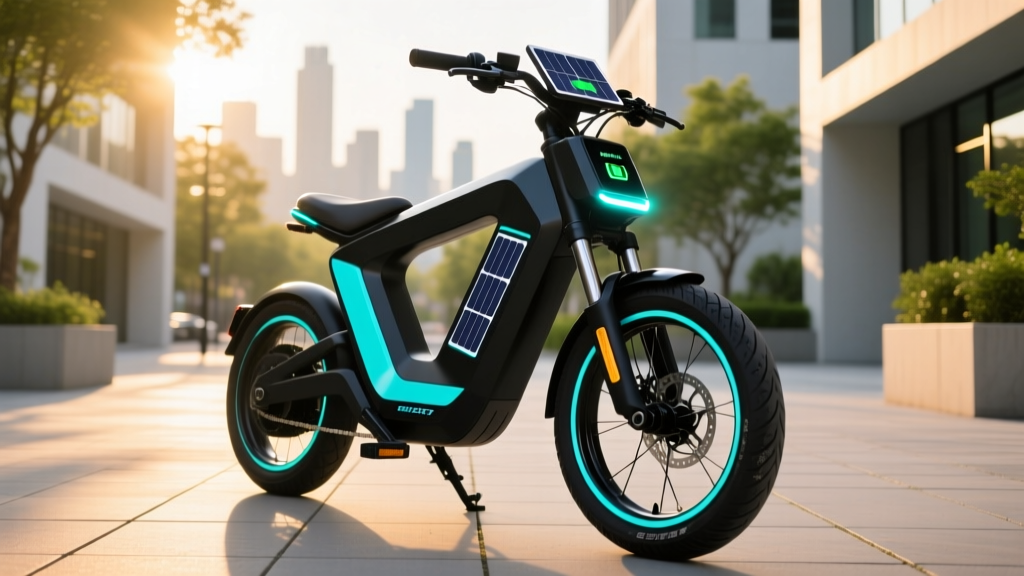
Electric cafe bikes — retro-styled electric motorcycles that blend classic café racer aesthetics with modern EV powertrains — have carved out a niche in the two-wheeled electric market. If you're researching an electric cafe bike purchase, here's what matters most: expect real-world range between 60 and 120 miles per charge depending on the model, battery capacities typically between 7 and 15 kWh, Level 2 charging times of 2 to 4 hours (10-100%), and purchase prices ranging from $8,000 to $25,000 before incentives. Unlike four-wheeled EVs, most electric cafe bikes charge on standard 120V household outlets (Level 1) in 6-10 hours, making home charging straightforward but slow. The economics favor riders who commute under 50 miles daily, have access to a standard outlet or Level 2 charger at home, and live in moderate climates where battery performance stays consistent.
Note: AutoEdgeView focuses primarily on electric cars, trucks, and SUVs. This guide addresses the electric cafe bike segment because reader interest in electric two-wheelers has grown substantially, and the ownership economics share important parallels with — and differences from — four-wheeled EVs. Where relevant, we'll compare electric cafe bikes to both gas motorcycles and electric cars to contextualize the decision.
What Is an Electric Cafe Bike? Defining the Category
A cafe bike (or café racer) traditionally refers to a lightweight, minimalist motorcycle optimized for speed and handling over comfort, with design roots in 1960s British motorcycle culture. An electric cafe bike replaces the internal combustion engine with a battery-electric powertrain while retaining the signature low-slung riding position, clip-on handlebars, rear-set footpegs, and stripped-down aesthetic.
The leading models in this space for 2026 include the Energica EsseEsse9 (Italian-made, ~$22,000), the Zero SR/S (~$19,000-$22,000 depending on trim and battery option), the Maeving RM1S (British, ~$7,500-$9,000), and the Super73-RX (US-made, technically classified as an electric bicycle/moped hybrid, ~$4,500-$5,500). These machines span a wide spectrum from street-legal full-power motorcycles to lower-power urban commuters, but all share the cafe racer design language.
Quick Answer: Is an Electric Cafe Bike Right for You?
Buy one if: You ride under 60 miles daily, have home charging access, value low operating costs and near-silent riding, and want a distinctive retro-styled machine with minimal maintenance.
Look elsewhere if: You regularly tour over 150 miles per day, lack reliable home charging, ride frequently in sub-30°F temperatures, or need passenger capacity and luggage space for long trips.
Electric Cafe Bike vs. Gas Motorcycle: The Real Numbers
The most common question from prospective buyers is whether an electric cafe bike actually saves money compared to a traditional gas-powered café racer like the Triumph Thruxton RS (~$16,500) or the Royal Continental GT 650 (~$6,500). Let's break down the comparison with concrete figures.
| Category | Electric Cafe Bike (Zero SR/S) | Gas Cafe Racer (Triumph Thruxton RS) |
|---|---|---|
| Purchase Price (MSRP) | $19,995 | $16,500 |
| Federal Tax Credit (§30D) | $0 (motorcycles excluded post-2024)* | $0 |
| Fuel/Energy Cost (5 yrs, 12k mi/yr) | ~$600-$900 | ~$3,500-$4,500 |
| Maintenance (5 yrs) | ~$400-$600 | ~$2,500-$3,500 |
| Insurance (avg annual) | $800-$1,400/yr | $600-$1,100/yr |
| Estimated Resale Value (5 yr) | ~$8,000-$10,000 | ~$9,000-$11,000 |
| Total 5-Year Cost | ~$27,000-$32,000 | ~$30,000-$35,000 |
*Important: The Inflation Reduction Act's §30D clean vehicle credit applies to four-wheeled vehicles. Electric motorcycles were eligible under the older Qualified Plug-In Electric Drive Motor Vehicle Credit (IRC §30D predecessor provisions), but that credit expired for two- and three-wheeled vehicles after 2024. Some state-level incentives still apply — check your local DMV and energy office. Source: IRS Clean Vehicle Credits.
The numbers reveal a critical pattern: electric cafe bikes cost more upfront but recoup the difference through dramatically lower fuel and maintenance costs. The Zero SR/S uses approximately 0.15-0.20 kWh per mile; at the US average electricity rate of $0.17/kWh (EIA, 2025 data), that's roughly $0.03 per mile. A Triumph Thruxton RS averaging 45 MPG on premium fuel at $4.20/gallon costs about $0.09 per mile — three times as much.
Battery, Range, and Charging: What to Actually Expect
Range is the single most important specification for any electric vehicle, and electric cafe bikes are no exception. But manufacturer claims require context.
| Model | Battery (kWh) | Claimed Range (mi) | Real-World Range (mi) | Level 1 Charge (120V) | Level 2 Charge (240V) |
|---|---|---|---|---|---|
| Zero SR/S (15.8 kWh pack) | 15.8 kWh (Z-Force Li-Ion NMC) | 161 city / 82 hwy | 90-110 mixed | ~10 hrs (0-100%) | ~2.5 hrs (0-100%) |
| Energica EsseEsse9 (21.5 kWh) | 21.5 kWh (NMC) | 160 city / 105 hwy | 100-130 mixed | ~14 hrs | ~3.5 hrs (with DC option: 40 min 0-80%) |
| Maeving RM1S (dual battery) | 2 × 2.5 kWh = 5.0 kWh (removable, NMC) | 80 (dual battery) | 50-65 mixed | ~4 hrs per battery | N/A (removable batteries) |
| Super73-RX (e-bike class) | 1.2 kWh (removable, NMC) | 40-50 (pedal assist) | 25-35 (throttle only) | ~5 hrs | N/A |
Key distinction — kW vs. kWh: Battery capacity is measured in kilowatt-hours (kWh), which is the total energy stored — think of it as the size of the "fuel tank." Charging speed is measured in kilowatts (kW), which is how fast energy flows into the battery — like the diameter of the "fuel hose." A Zero SR/S with a 15.8 kWh battery charging at a 6.6 kW Level 2 station will fill in roughly 2.5 hours (15.8 ÷ 6.6 ≈ 2.4 hrs, plus taper time).
Real-World Range Reality Check
Manufacturer range claims for electric motorcycles follow less standardized testing than the EPA's automobile procedures. Zero Motorcycles, for example, publishes separate "city" and "highway" range figures — and the gap between them is enormous. City range benefits from regenerative braking during frequent stops, while highway riding at 70+ mph drains the battery far faster due to aerodynamic drag, which increases with the square of velocity.
For practical planning, use the highway range figure minus 15-20% as your realistic daily maximum. Cold weather (below 40°F) reduces lithium-ion battery performance by 15-30%, meaning a Zero SR/S rated for 82 highway miles may deliver only 55-65 miles in winter conditions. This isn't a defect — it's electrochemistry. The electrolyte in NMC cells becomes more viscous at low temperatures, increasing internal resistance and reducing usable capacity.
Home Charging Setup: What You Actually Need
One of the biggest advantages electric cafe bikes have over electric cars is charging simplicity. Most models can charge on a standard 120V household outlet, which means many buyers won't need a professional electrical installation.
| Setup Type | Equipment Cost | Installation Cost | Charge Time (0-100%) | When You Need It |
|---|---|---|---|---|
| Standard 120V Outlet (Level 1) | $0 (bike's included charger) | $0 (existing outlet) | 6-14 hours | Most riders — overnight charging |
| 240V Outlet Install (Level 2) | $300-$600 (EVSE unit) | $500-$1,500 (electrician) | 2-4 hours | High-mileage riders or multi-EV households |
| Dedicated 240V Circuit + Panel Upgrade | $300-$600 | $1,500-$3,500 | 2-4 hours | Older homes with 100A panels |
Important: If you already own or plan to buy an electric car with a Level 2 home charger, your electric cafe bike can typically share that infrastructure using a J1772 adapter (most Zero and Energica models accept J1772 Level 2 input). This eliminates redundant installation costs.
For riders in apartments or without garage access, removable-battery models like the Maeving RM1S or Super73-RX offer a practical workaround — carry the battery indoors and charge it like a laptop. This is a significant advantage for urban riders, though it limits total range to what a smaller battery can provide.
Ownership Economics: The Full Cost Picture
Beyond the purchase price, electric cafe bike ownership involves several cost categories that differ meaningfully from both gas motorcycles and electric cars.
Maintenance Savings (The Hidden Advantage)
Gas motorcycles require oil changes ($50-$100 each, 2-3 times per year), chain lubrication and periodic replacement ($150-$300), valve adjustments ($300-$600 at major service intervals), air filter replacement, spark plugs, and coolant flushes. Over five years and 60,000 miles, these costs add up to $2,500-$3,500 for a typical gas café racer.
Electric cafe bikes eliminate nearly all of this. The electric motor has one moving part. There's no oil, no coolant, no spark plugs, no valve train. Maintenance is limited to:
- Tire replacement: Every 8,000-12,000 miles ($200-$400 per set)
- Brake pads: Last significantly longer due to regenerative braking (often 20,000+ miles)
- Brake fluid: Flush every 2 years ($50-$100)
- Belt/chain: Belt drive models (most Zero models) need replacement around 30,000 miles ($200-$350)
- Battery health monitoring: Free via the manufacturer's app
Five-year maintenance for an electric cafe bike: approximately $400-$600. That's a savings of $2,000-$3,000 versus gas.
Insurance Considerations
Electric motorcycle insurance tends to run 15-30% higher than equivalent gas motorcycles, primarily because insurers factor in higher replacement costs for battery packs and less historical claims data. Expect annual premiums of $800-$1,400 for a Zero SR/S or Energica, compared to $600-$1,100 for a Triumph Thruxton. Get quotes before purchasing — the spread varies significantly by insurer, state, and rider profile.
Battery Degradation and Replacement
This is the concern that keeps potential buyers up at night, and it deserves an honest answer. Lithium-ion NMC batteries in electric motorcycles degrade similarly to those in electric cars — expect approximately 2-3% capacity loss per year under normal use, or roughly 10-15% over five years. Zero Motorcycles warranties their battery for 5 years with unlimited mileage, guaranteeing it will retain at least 70% of original capacity. Energica offers a 4-year battery warranty with the same 70% threshold.
A full battery replacement for a Zero SR/S currently costs approximately $4,500-$5,500. That's a significant expense, but it's comparable to a major engine or transmission rebuild on a gas motorcycle — and statistically far less likely to be needed within the first decade of ownership. Battery prices continue to decline; by the time a replacement might be necessary (year 8-12), costs are projected to be 30-40% lower than today.
Common Misconceptions About Electric Cafe Bikes
| Myth | Fact |
|---|---|
| "Electric motorcycles have no power." | The Zero SR/S produces 140 lb-ft of torque available from 0 RPM and hits 0-60 mph in 3.3 seconds. That outperforms most gas superbikes off the line. |
| "You can't ride in the rain." | All major electric cafe bikes carry IP67-rated battery enclosures and sealed motor housings. They're fully rated for wet-weather riding — same as any gas motorcycle. |
| "Charging takes all day." | On a Level 2 (240V) connection, a Zero SR/S charges 0-100% in ~2.5 hours. Overnight on a standard 120V outlet, it's full by morning. For most riders, charging is a non-issue. |
| "The battery will die in 3 years." | NMC motorcycle batteries are warrantied for 4-5 years and typically deliver 80%+ capacity after 100,000 miles. Real-world fleet data from Zero Motorcycles shows most packs retain 85%+ at 50,000 miles. |
| "You'll get the $7,500 federal tax credit." | Federal clean vehicle credits under §30D apply to four-wheeled vehicles only. Electric motorcycles lost federal incentive eligibility after 2024. Check your state — California, New York, and others offer separate EV motorcycle rebates. |
Decision Framework: Should You Buy an Electric Cafe Bike?
If-Then Decision Guide
IF your daily riding is under 50 miles round-trip AND you have access to a standard 120V outlet at home → An electric cafe bike is an excellent fit. You'll charge overnight, spend pennies per mile, and eliminate virtually all routine maintenance.
IF you ride 50-100 miles daily AND can install a Level 2 (240V) charger → Still a strong fit, but choose a model with 10+ kWh of battery capacity (Zero SR/S, Energica EsseEsse9) and plan rides around the real-world highway range.
IF you regularly ride 100+ miles per day or take weekend tours of 200+ miles → Not recommended. Public DC fast-charging infrastructure for electric motorcycles is extremely sparse compared to the Tesla Supercharger or Electrify America networks for cars. You'll spend significant time waiting for charges on longer rides.
IF you live in a climate with sustained sub-30°F winters → Proceed with caution. Expect 20-30% range loss in cold weather, and factor in reduced regenerative braking effectiveness when the battery is cold. A gas motorcycle may be more practical as a winter rider.
IF you're comparing an electric cafe bike to buying an electric car → These serve different needs. A used Chevrolet Bolt EV (~$15,000-$18,000 used, EPA range 259 mi) offers weather protection, cargo space, passenger capacity, and access to the full public charging network. An electric cafe bike is a lifestyle and commuting choice, not a practical replacement for a primary vehicle for most households.
What First-Time Electric Cafe Bike Buyers Must Know
If you're transitioning from a gas motorcycle — or from an electric car — to an electric cafe bike, prepare for these ownership realities:
- Instant torque demands respect. Electric motors deliver maximum torque at 0 RPM. There's no powerband to climb into. Twist the throttle and the bike launches immediately. New riders should start in the lowest power mode (most models offer Eco/Rain/Sport modes) and work up gradually.
- Plan your rides around the battery, not the tank. Unlike a gas motorcycle where you can refuel in 3 minutes at any station, running an electric cafe bike to zero means a long wait. Adopt the "20% rule" — start heading home or to a charger when you hit 20% state of charge (SoC).
- Regenerative braking changes how you ride. Most electric cafe bikes offer adjustable regen levels. At maximum regen, you can ride with minimal use of the friction brakes ("one-throttle riding," analogous to one-pedal driving in EVs). This extends range and reduces brake wear, but requires practice.
- Tire wear may surprise you. The instant torque and heavier weight of the battery pack (a Zero SR/S weighs approximately 498 lbs — about 80 lbs more than a Thruxton RS) can accelerate rear tire wear. Budget for slightly more frequent tire replacement than you might expect on a gas bike.
- Check your state's motorcycle incentive programs. While the federal §30D credit no longer covers two-wheelers, states like California (CVRP), Colorado, and Connecticut have offered rebates of $500-$2,500 for electric motorcycles. These programs change frequently — verify current availability with your state energy office.
Frequently Asked Questions
How long does an electric cafe bike battery last?
Based on current NMC cell chemistry data, expect an electric cafe bike battery to retain 80-85% of its original capacity after 5 years or 50,000 miles of normal use. Most manufacturers warranty the battery for 4-5 years at a 70% capacity retention threshold. With proper care — avoiding frequent 100% charges, not storing the bike at 0% SoC for extended periods, and minimizing DC fast-charging — many packs last 100,000+ miles before dropping below 70%.
Can I charge an electric cafe bike at a public EV charging station?
It depends on the model and the station. Most full-power electric motorcycles (Zero, Energica) use a J1772 connector for Level 2 AC charging, which is the same connector used by most non-Tesla electric cars. However, DC fast charging compatibility is limited — only the Energica models support CCS DC fast charging natively. You cannot use a Tesla Supercharger (NACS connector) without an adapter, and Tesla's network terms of service currently restrict access to four-wheeled vehicles only at most locations.
Is an electric cafe bike cheaper to own than a gas motorcycle?
Over a 5-year period with 12,000 miles per year, total cost of ownership is generally comparable to or slightly lower than an equivalent gas café racer, primarily due to fuel and maintenance savings of $4,000-$6,000 combined. However, the electric bike's higher purchase price (typically $3,000-$6,000 more) and potentially higher insurance premiums offset some of that advantage. The breakeven point typically occurs around year 3-4 of ownership. For riders covering fewer miles, the breakeven extends; for high-mileage commuters, it arrives sooner.
Do electric cafe bikes require a motorcycle license?
Yes, for full-power models. The Zero SR/S, Energica EsseEsse9, and similar machines are classified as motorcycles and require a standard motorcycle endorsement (M1 in most states). Lower-power models like the Super73-RX may fall into the e-bike or moped classification depending on your state's laws — some states allow these with a standard driver's license, while others require a moped permit. Always check your state's DMV requirements before purchasing.
What happens if I run out of charge on the road?
Unlike a gas motorcycle where a friend can bring you a jerry can, a depleted electric cafe bike requires either a tow or access to a standard electrical outlet. Most manufacturers include roadside assistance in their warranty package (Zero includes 2 years). Some riders carry a portable Level 1 charging cord and identify outlets at coffee shops or restaurants along their route as emergency top-up options — 30 minutes on a 120V outlet can add 5-8 miles of range, enough to limp home in some cases.
Sources consulted: Zero Motorcycles official specifications, Energica Motor Company technical data, IRS Clean Vehicle Credits (irs.gov), U.S. Energy Information Administration electricity pricing, fueleconomy.gov for comparable vehicle efficiency data.