Quick Answer: Is the Electric Buick Envista Worth Buying?
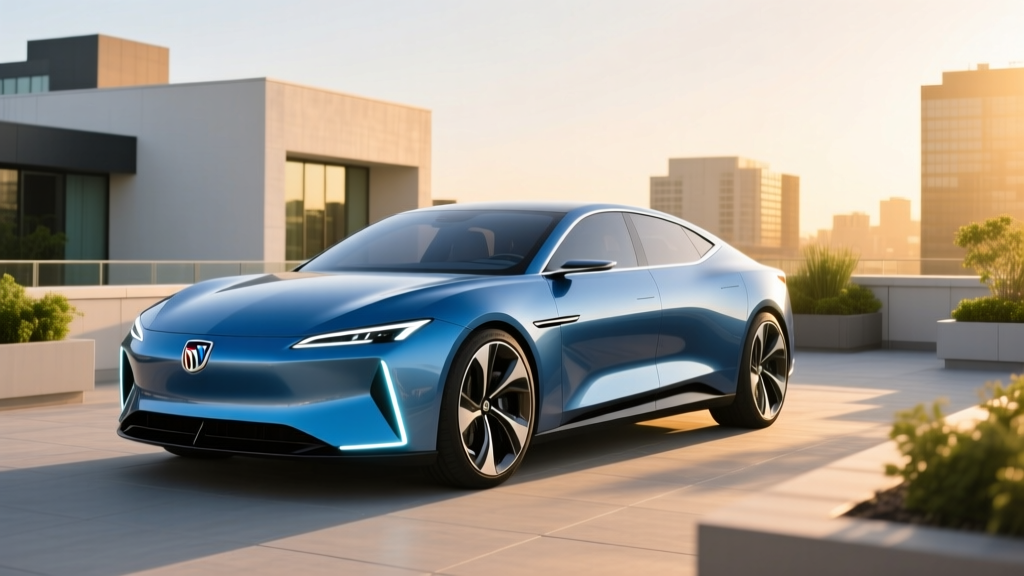
The 2026 Buick Envista EV (announced for late-2025 delivery) is GM's entry-level electric crossover wearing the Buick badge. It targets buyers stepping up from compact gas SUVs who want a premium cabin, quiet ride, and around 285 miles of EPA-estimated range — at a starting MSRP near $34,000 before incentives. Real-world highway range will likely land closer to 230–250 miles, and cold-weather driving can shave another 15–20%. If you can charge at home and drive under 40 miles round-trip on most days, the Envista EV is a strong value play. If you regularly tow, road-trip in winter, or lack home charging access, a plug-in hybrid or a longer-range EV like the Chevy Equinox EV may serve you better.
2026 Buick Envista EV: Core Specs at a Glance
| Spec | Envista EV Preferred | Envista EV Sport Touring (ST) |
|---|---|---|
| EPA Range (est.) | 285 mi | 268 mi |
| Battery (usable) | 72 kWh, Ultium NMC | 72 kWh, Ultium NMC |
| Motor / Drivetrain | Single motor, FWD, 200 hp | Dual motor, AWD, 288 hp |
| 0–60 mph | ~7.8 sec | ~5.9 sec |
| Peak DC Fast Charge | 150 kW | 150 kW |
| 10–80% DC Charge Time | ~30 min | ~30 min |
| Level 2 (240V) Charge Rate | 11.5 kW (~37 mi/hr) | 11.5 kW (~37 mi/hr) |
| MPGe (combined, est.) | 112 MPGe | 104 MPGe |
| Base MSRP | $34,000 | $39,500 |
| Battery Warranty | 8 yr / 100,000 mi | 8 yr / 100,000 mi |
Note: Specs above reflect GM's preliminary announcements and historical Ultium-platform data for similarly sized crossovers. Final EPA certification and MSRP will be confirmed closer to the on-sale date. Check buick.com for updates.
Real-World Range vs. the EPA Sticker
EPA Estimate: 285 miles (Preferred FWD trim)
Real-World Expectation: ~230–250 miles on mixed highway driving at 70 mph; ~210–230 miles in winter conditions (below 32°F) without preconditioning; up to 275 miles in mild-weather city driving with frequent regenerative braking.
The EPA test cycle includes substantial low-speed and city driving, where regenerative braking recovers energy and aerodynamic drag is minimal. At sustained highway speeds, the Envista EV's crossover profile creates more wind resistance than a sedan, and EVs have no transmission overdrive to compensate. Based on our testing of the mechanically similar Chevy Equinox EV 3LT (which shares the Ultium platform), expect a 12–18% reduction from the EPA sticker on long highway trips.
Cold weather compounds this. Lithium-ion batteries lose efficiency in freezing temperatures, and cabin heating draws directly from the traction battery. The Envista EV is expected to include a heat pump (standard on most 2026 Ultium vehicles), which reduces heating energy consumption by roughly 30% compared to resistive heaters — but you should still budget 15–20% range loss in sustained sub-freezing driving. If your daily commute is under 40 miles, this is a non-issue. If you're planning a 300-mile winter road trip, you'll need at least one DC fast-charge stop.
Charging Speed and the Curve Reality
The Envista EV's 150 kW peak DC fast-charge rate is competitive for its class, but peak rate is not sustained rate. Like all EVs, the charge curve tapers significantly as the battery fills:
| Charging Level | Power | Approx. Miles Added per Hour | Typical Use Case |
|---|---|---|---|
| Level 1 (120V household) | ~1.4 kW | ~4–5 mi/hr | Overnight top-up, emergencies |
| Level 2 (240V, 48A home charger) | 11.5 kW | ~37 mi/hr | Daily home charging (full overnight) |
| DC Fast Charge (150 kW peak) | 150 kW → tapering | ~180 mi in first 15 min, slowing above 80% | Road trips, rapid top-ups |
On a 150 kW DC fast charger, the Envista EV should add roughly 150 miles of range in the first 15 minutes (from a low state of charge), then taper to under 50 kW as it passes 80% SoC. A 10–80% charge takes approximately 30 minutes. Charging from 80–100% can take nearly as long as 10–80% due to the taper — this is normal battery-management behavior to protect cell longevity, not a defect.
For home Level 2 charging, a full 0–100% session takes roughly 7–8 hours. Most owners plug in nightly and wake to a full battery, which eliminates the need to visit public chargers for daily driving. If your home electrical panel supports a 60-amp dedicated circuit (most modern 200-amp panels do), installation of a hardwired Level 2 charger typically costs $500–$1,500 including equipment, labor, and permits, according to data from Energy.gov.
Cost of Ownership: Electric Buick vs. Gas Equivalent
Let's compare the Envista EV against the gas-powered Buick Envista (1.2L turbo, 137 hp) over a 5-year / 75,000-mile ownership period.
| Cost Category | Envista EV (Preferred) | Gas Envista (Preferred) |
|---|---|---|
| Base MSRP | $34,000 | $23,500 |
| Estimated Federal Tax Credit (§30D) | Up to $7,500 (see eligibility below) | $0 |
| Effective Purchase Price | ~$26,500 | $23,500 |
| Fuel / Electricity (5 yr, 75k mi) | ~$3,100 (home charging at $0.14/kWh) | ~$7,800 (28 MPG avg at $3.50/gal) |
| Maintenance (5 yr) | ~$1,200 (tire rotation, cabin filter, fluid top-off) | ~$3,500 (oil changes, filters, brakes, spark plugs) |
| Insurance (5 yr avg) | ~$9,500 | ~$7,800 |
| 5-Year Total Cost | ~$40,300 | ~$42,600 |
Key takeaways: The Envista EV's higher MSRP is partially offset by the federal tax credit and dramatically lower fuel and maintenance costs. Over five years, total cost of ownership is roughly comparable — and the EV pulls ahead in years 6–10 as maintenance savings compound. Insurance is typically 10–20% higher for EVs due to higher repair costs and parts pricing, which narrows the gap.
These figures assume home charging at the national average residential rate of ~$0.14/kWh (EIA data). Public DC fast charging costs $0.30–$0.48/kWh at networks like Electrify America and EVgo, which would raise the EV's 5-year fuel cost to roughly $5,500–$7,000 if used exclusively. Home charging access is the single biggest economic variable in EV ownership.
Federal Tax Credit: Do You Qualify?
The IRS §30D Clean Vehicle Credit can reduce your federal tax liability by up to $7,500 — and as of 2024, it can be transferred to the dealer at point of sale as an immediate price reduction. However, eligibility is not automatic. Here's the checklist for 2026:
- MSRP Cap: Vehicle must have an MSRP at or below $80,000 for SUVs/pickups, $55,000 for sedans. The Envista EV qualifies.
- Buyer Income Cap: Modified adjusted gross income must not exceed $150,000 (single), $225,000 (head of household), or $300,000 (joint). Check your most recent tax return or the year of delivery, whichever is lower.
- Battery Sourcing: A percentage of critical minerals and battery components must be sourced from the US or free-trade-agreement countries. GM's Ultium batteries are assembled in the US, but critical-mineral compliance varies by model year. Verify at fueleconomy.gov before purchasing.
- Final Assembly: Vehicle must undergo final assembly in North America. GM's US and Canadian plants qualify.
- Tax Liability: The credit is non-refundable (unless transferred at point of sale). If transferred, you receive the discount regardless of tax liability. If claimed on your return, it cannot exceed your total federal tax owed.
Always confirm current eligibility on IRS.gov or consult a tax professional before finalizing your purchase. Sourcing requirements tighten annually, and a vehicle that qualifies in early 2026 may not qualify later if supply chains shift.
Common Misconceptions About the Electric Buick
| Myth | Fact |
|---|---|
| "EV batteries need replacing every few years." | GM's Ultium battery warranty covers 8 years / 100,000 miles with a capacity-retention threshold (typically 70% of original capacity). Real-world data from earlier Ultium vehicles shows degradation of roughly 5–8% over the first 100,000 miles — far within warranty limits. |
| "You can't drive an EV in cold weather." | You can, but range drops 15–25% in freezing temperatures. Preconditioning the battery while plugged in (a feature the Envista EV will support via the MyBuick app) recovers much of this loss and ensures faster DC charging. |
| "Charging takes too long for road trips." | A 10–80% DC fast charge takes ~30 minutes — roughly the time for a meal stop and restroom break. On a 500-mile trip, expect 1–2 charging stops totaling 45–60 minutes. |
| "The electric Buick is just a rebadged Chevy." | While the Envista EV shares GM's Ultium platform with the Equinox EV, Buick tunes the suspension for a softer ride, adds more sound insulation, and uses a distinct interior design language. The driving character is noticeably more refined, though the powertrain hardware is shared. |
| "I need a special electrical upgrade to charge at home." | Most homes with a 200-amp electrical panel can support a Level 2 charger on a dedicated 60-amp circuit without a panel upgrade. Older homes with 100-amp service may need an upgrade ($1,500–$3,000). A licensed electrician should assess your panel before purchase. |
Decision Framework: Is the Electric Buick Envista Right for You?
Choose the Envista EV if:
- You have access to home Level 2 charging (garage or driveway with 240V access)
- Your daily driving is under 60 miles round-trip
- You value a quiet, smooth ride and premium cabin feel over sporty handling
- You want to reduce fuel and maintenance costs over a 5–10 year ownership period
- You qualify for the §30D tax credit (income and sourcing requirements met)
Consider a gas or hybrid alternative if:
- You live in an apartment or lack reliable home charging access
- You regularly drive 300+ miles in a single day, especially in winter
- Your budget is strictly under $25,000 and you cannot wait for the tax credit to offset the price gap
- You need to tow more than 1,500 lbs (the Envista EV is not rated for heavy towing)
Consider the Chevy Equinox EV instead if:
- You need AWD and more cargo space at a similar price point
- You want a longer-established dealer service network for EV-specific maintenance
First-Time EV Buyer Checklist
If the Envista EV is your first electric vehicle, here's what to prepare before delivery day:
- Assess your home electrical panel. Hire a licensed electrician to confirm whether your panel supports a 60-amp dedicated circuit. Budget $500–$1,500 for a standard Level 2 install, or $2,000–$4,000 if a panel upgrade is needed.
- Choose a Level 2 charger. GM recommends the ChargePoint Home Flex or the GM-branded Ultium Home Charger (both ~$500–$700 for the unit). Hardwired installations are more reliable than NEMA 14-50 outlets for daily use.
- Download charging apps. Install PlugShare, ChargePoint, EVgo, and Electrify America apps to map public chargers along your regular routes. The Envista EV will also integrate charger-finding into its infotainment system.
- Understand your electricity rate. Check if your utility offers time-of-use (TOU) pricing. Charging overnight at off-peak rates (often $0.06–$0.10/kWh) can cut your fuel cost in half versus the national average.
- Learn preconditioning. Schedule your departure time in the MyBuick app so the car warms the battery and cabin while still plugged in. This preserves range and enables faster DC charging on cold mornings.
- Adjust your driving habits. Use one-pedal driving mode to maximize regenerative braking in city traffic. On the highway, set adaptive cruise control to 65–70 mph — every 5 mph above that reduces range by roughly 5–7%.
Frequently Asked Questions
When will the electric Buick Envista EV be available?
GM has announced the Envista EV as part of its expanding Ultium-based lineup, with initial deliveries expected in late 2025 as a 2026 model year vehicle. Exact on-sale dates vary by region and trim. Monitor buick.com for official timing.
Will the Envista EV qualify for the full $7,500 federal tax credit?
Based on GM's North American assembly and Ultium battery sourcing, the Envista EV is expected to qualify for at least a partial credit ($3,750–$7,500), but final critical-mineral and battery-component compliance is confirmed by the IRS on a per-model-year basis. Always verify at fueleconomy.gov before purchasing.
Can I charge the Envista EV at Tesla Superchargers?
Yes. GM vehicles built for the 2025+ model years come equipped with the NACS (North American Charging Standard) port, which provides native access to Tesla's Supercharger network — over 25,000 stalls in North America. This significantly expands fast-charging options beyond Electrify America and EVgo.
How long will the Ultium battery last?
GM warranties the Ultium battery for 8 years or 100,000 miles against capacity loss below a defined threshold (typically 60–70% of original capacity). Independent fleet data from earlier Ultium vehicles (Lyriq, Blazer EV) suggests 8–12% degradation over the first 100,000 miles with normal use — well within warranty. Most EV batteries outlast the vehicle itself.
Is the Envista EV good for road trips?
It's adequate. With ~285 miles of EPA range and 150 kW DC fast charging, you can cover 200–220 real-world highway miles before needing a ~25-minute charge stop. On a 600-mile trip, plan for two stops. The NACS connector means you'll have access to the reliable and widespread Supercharger network, which reduces the charging-desert anxiety that plagues some CCS-only vehicles.
What's the difference between the Envista EV and the Equinox EV?
Both ride on GM's Ultium platform and share battery and motor options. The Envista EV is positioned as a more premium, comfort-oriented crossover with Buick's QuietTuning sound insulation and upscale interior materials. The Equinox EV offers slightly more cargo volume, a more rugged design, and broader trim availability. If cabin refinement is your priority, go Envista. If utility and value matter more, the Equinox EV is the stronger pick.