Quick Answer: The primary electric British cars available to US buyers in 2026 are the Mini Cooper SE (EPA est. ~114 miles range, ~$30,900 base MSRP) and the Lotus Eletre (EPA est. ~300+ miles, ~$107,000+). While British EV heritage brands like Mini and Lotus are transitioning to full electric lineups, most electric British vehicles remain limited in US availability compared to mainstream EV brands. For buyers drawn to British styling, the Mini Cooper EV offers the most accessible entry point with real-world range closer to 90-100 miles in mixed driving.
What Electric British Cars Are Available in 2026?
The electric British vehicle segment in the US market centers on two brands with deep UK heritage: Mini (owned by BMW Group) and Lotus (majority-owned by Geely). Both have committed to full electrification, but their US footprints differ dramatically.
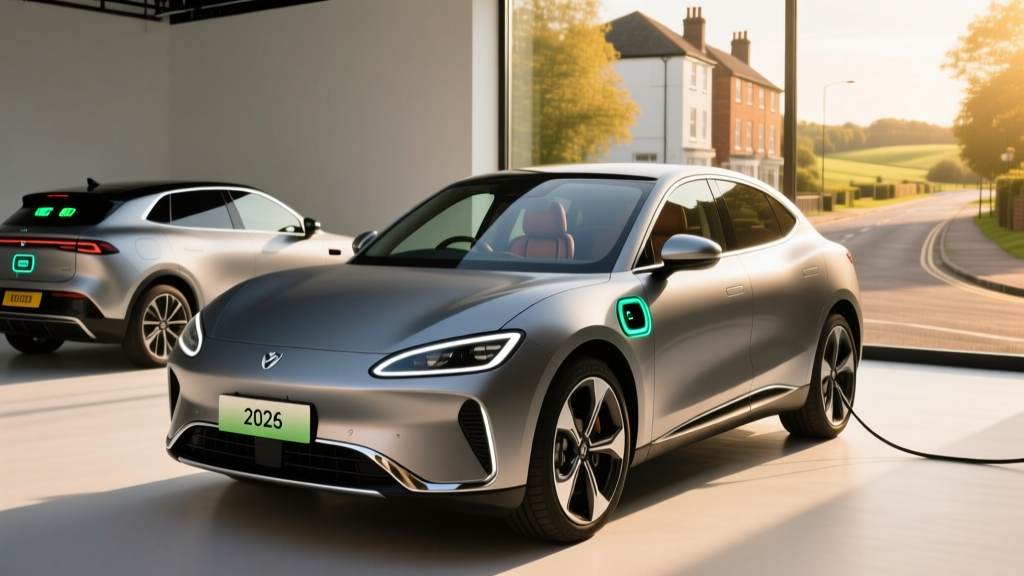
The Mini Cooper SE (2025-2026 generation) represents the accessible end of electric British motoring. Built on BMW's EV architecture, it maintains the iconic Mini silhouette while trading the internal combustion engine for a battery-electric powertrain. The Lotus Eletre occupies the luxury performance SUV segment, competing with the Porsche Macan EV and Tesla Model X.
Other British marques—Jaguar, Bentley, Rolls-Royce, Aston Martin—have announced electrification timelines, but as of early 2026, their EV offerings remain either limited to non-US markets, in pre-production phases, or positioned at price points exceeding $200,000.
Mini Cooper SE: Range, Charging, and Real-World Performance
The 2026 Mini Cooper SE carries forward the updated platform introduced for the 2025 model year. Here's what the spec sheet shows:
| Specification | 2026 Mini Cooper SE |
|---|---|
| EPA Range (est.) | ~114 miles |
| Battery Capacity | ~40.7 kWh usable (NMC chemistry) |
| Motor Output | 184 hp / 203 lb-ft torque |
| 0-60 mph | ~6.7 seconds |
| DC Fast Charge (peak) | ~95 kW |
| 10-80% DC Charge Time | ~30 minutes |
| Level 2 Charge Rate | 11 kW ( onboard charger) |
| Base MSRP | ~$30,900 |
| Battery Warranty | 8 years / 100,000 miles |
Real-World Range Reality: The EPA estimate of ~114 miles assumes mixed driving at moderate temperatures. Expect 90-100 miles in real-world conditions with highway-heavy driving, and as low as 75-85 miles in cold weather (below 32°F) without consistent preconditioning. This range suits urban commuting and short errands but requires planning for trips beyond 50 miles from home.
The Mini Cooper SE's charging curve peaks around 95 kW but tapers significantly above 80% state of charge. For daily use, most owners will charge to 80% on Level 2 overnight at home, adding roughly 30-35 miles per hour of charging. Public DC fast charging works for occasional road trips, but the 30-minute 10-80% window means you'll want to combine charging stops with meals or errands.
Lotus Eletre: The Luxury Electric British SUV
Lotus, historically known for lightweight sports cars, entered the electric SUV market with the Eletre. US deliveries began in limited volumes for the 2024-2025 model years, with 2026 availability continuing through select dealerships.
| Specification | 2026 Lotus Eletre (Base/R+) |
|---|---|
| EPA Range (est.) | ~300-310 miles (varies by trim) |
| Battery Capacity | ~112 kWh usable (NMC) |
| Motor Output | 603 hp (Base) / 905 hp (R+) |
| 0-60 mph | ~4.5 sec (Base) / ~2.95 sec (R+) |
| DC Fast Charge (peak) | ~350 kW (800V architecture) |
| 10-80% DC Charge Time | ~20 minutes |
| Level 2 Charge Rate | 22 kW |
| Base MSRP | ~$107,000 (Base) / ~$145,000 (R+) |
| Battery Warranty | 8 years / 100,000 miles |
The Eletre's 800V electrical architecture enables some of the fastest DC charging in the luxury SUV segment. At a 350 kW-capable charger (like Electrify America's newest stations), you can add 100+ miles of range in under 10 minutes under optimal conditions. However, sustained charge rates depend on battery temperature and state of charge—expect the curve to taper above 60% SoC.
For context on EPA efficiency and official figures, check fueleconomy.gov once Lotus listings are finalized for the 2026 model year.
Cost Comparison: Electric British Cars vs. Gas Equivalents
How do electric British vehicles stack up against their gasoline counterparts in total ownership cost? Let's compare the Mini Cooper SE against the gas-powered Mini Cooper Hardtop (2026 model, ~$28,000 MSRP, EPA 32 MPG combined).
| Cost Factor (5-Year Estimate) | Mini Cooper SE (EV) | Mini Cooper Gas (32 MPG) |
|---|---|---|
| Purchase Price (MSRP) | $30,900 | $28,000 |
| Federal Tax Credit (§30D) | Up to $7,500 (eligibility varies) | $0 |
| Effective Purchase Price | ~$23,400 (if credit applies) | $28,000 |
| Fuel/Energy (60,000 miles) | ~$2,700 (electricity at $0.15/kWh) | ~$6,750 (gas at $3.60/gal) |
| Maintenance (5 years) | ~$1,200 | ~$3,000 |
| Insurance (5-year avg.) | ~$7,500 | ~$6,500 |
| Total 5-Year Cost | ~$34,800 | ~$44,250 |
The Mini Cooper SE can save roughly $9,000-$10,000 over five years if you qualify for the full federal tax credit and have access to affordable home charging. Without the tax credit (due to income limits, MSRP caps, or battery sourcing rules), the savings narrow to $2,000-$3,000, primarily from fuel and maintenance reductions.
For the Lotus Eletre, the calculus shifts. At $107,000+, the Eletre exceeds the §30D MSRP cap for SUVs ($80,000), meaning no federal tax credit applies. Buyers at this price point typically prioritize performance and exclusivity over cost savings. Electricity costs for the Eletre (roughly $3,500 over 60,000 miles) still undercut premium gasoline ($7,000+ for a comparable luxury SUV at 20 MPG), but the upfront premium is substantial.
Federal Tax Credit Eligibility for Electric British Cars
The IRS §30D clean vehicle credit offers up to $7,500 for qualifying new EVs, but eligibility depends on multiple factors that change annually:
- MSRP Cap: Vans, SUVs, and trucks must be under $80,000; sedans and other vehicles under $55,000. The Mini Cooper SE qualifies; the Lotus Eletre does not.
- Buyer Income Limits: Modified adjusted gross income must not exceed $300,000 (joint), $225,000 (head of household), or $150,000 (single).
- Battery Sourcing Requirements: A percentage of critical minerals and battery components must be sourced from the US or free-trade-agreement countries. This requirement tightens annually through 2030.
- Point-of-Sale Transfer: As of 2024, buyers can transfer the credit to the dealer for an immediate price reduction rather than claiming it on their tax return.
For the Mini Cooper SE, the tax credit eligibility is plausible but not guaranteed. BMW Group (Mini's parent) has worked to qualify vehicles under §30D, but battery sourcing rules may limit availability in certain model years. Always verify current-year eligibility on the IRS website or consult a tax professional before purchasing.
Real-World Ownership: What First-Time EV Buyers Should Know
Owning an electric British car—or any EV—requires adjustments that gas car owners don't face. Here are the practical realities:
Home Charging Access Is Critical
For the Mini Cooper SE's ~114-mile range, home charging is nearly mandatory. Without a Level 2 home charger (240V, 32-40 amp circuit), you'll rely on Level 1 (120V) charging, which adds only 3-5 miles per hour—insufficient for daily driving beyond 30-40 miles.
Level 2 home charger installation costs range from $500-$2,500 depending on electrical panel capacity, wiring distance, and local permit requirements. If your home has a 200-amp panel with spare capacity, expect the lower end. Older homes with 100-amp panels may need a $2,000-$5,000 panel upgrade.
Cold Weather Reduces Range 20-40%
Battery chemistry (NMC in both the Mini and Lotus) loses efficiency in cold temperatures. At 20°F, expect the Mini Cooper SE's range to drop from 114 miles to 70-85 miles. Preconditioning the battery while plugged in mitigates this loss, but only if you have home or workplace charging.
Public Charging Reliability Varies
For road trips beyond the Mini's range, you'll use DC fast-charging networks like Electrify America, EVgo, or ChargePoint. Reliability has improved since 2023, but expect occasional out-of-service chargers, payment app glitches, or slower-than-advertised charge rates. The Lotus Eletre's 350 kW capability is only useful at compatible stations—most public chargers max out at 150-250 kW.
Decision Framework: Should You Buy an Electric British Car?
Choose the Mini Cooper SE if:
- Your daily driving is under 60 miles round-trip
- You have access to Level 2 home charging
- You prioritize urban maneuverability and British styling over range
- You qualify for the §30D tax credit (income under $150k single / $300k joint)
- You want an EV under $35,000 (before incentives)
Choose the Lotus Eletre if:
- You need 300+ miles of range for frequent long-distance driving
- You want luxury SUV performance (600+ hp, 20-minute fast charging)
- Your budget exceeds $100,000 and tax credits are not a priority
- You value exclusivity and Lotus's handling heritage
Consider alternatives if:
- You live in a cold climate without home charging (range limitations become severe)
- You need seating for more than 4 (Mini) or cargo space beyond what the Eletre offers
- You want mainstream EV support networks (Tesla Supercharger access, widespread service centers)
Common Misconceptions About Electric British Cars
| Myth | Fact |
|---|---|
| "British EVs are unreliable because of brand history" | Modern Mini and Lotus EVs use proven BMW and Geely platforms with 8-year/100,000-mile battery warranties. Reliability data is still accumulating, but powertrain complexity is lower than gas equivalents. |
| "The Mini Cooper SE can't handle road trips" | It can, with planning. DC fast charging adds ~80 miles in 30 minutes. For 300+ mile trips, expect 2-3 charging stops. It's less convenient than a gas car but feasible for occasional use. |
| "All electric British cars qualify for the $7,500 tax credit" | Only vehicles under the MSRP cap ($55k sedans, $80k SUVs) with compliant battery sourcing qualify. The Lotus Eletre does not qualify; the Mini Cooper SE may, depending on model year and sourcing. |
| "I don't need home charging if I live near public chargers" | Public DC fast charging costs 2-3x more per kWh than home charging and is less convenient for daily use. Without home charging, EV ownership becomes significantly more expensive and time-consuming. |
Frequently Asked Questions
Are there other electric British cars coming to the US?
Jaguar has announced a full electric lineup by 2025-2026, but US availability and pricing remain limited as of early 2026. Bentley and Rolls-Royce have EV concepts but are targeting 2027-2030 for production models. Aston Martin's EV plans have been delayed multiple times. For now, Mini and Lotus are the primary options.
How does the Mini Cooper SE compare to a Tesla Model 3 or Chevrolet Bolt?
The Tesla Model 3 (EPA ~340 miles, ~$38,990) and Chevrolet Bolt EV (EPA ~259 miles, ~$26,500 before discontinuation) both offer significantly more range than the Mini Cooper SE. The Mini trades range for compact size, lower price (after tax credit), and distinctive styling. If range is your priority, the Mini is not competitive; if urban driving and character matter more, it fills a niche.
Can I charge a Mini or Lotus at Tesla Superchargers?
As of 2026, Tesla has opened select Superchargers to non-Tesla vehicles via the NACS (North American Charging Standard) connector. However, Mini and Lotus vehicles use CCS1 connectors in the US market. You'll need a NACS-to-CCS adapter (if Tesla approves your vehicle model) or rely on Electrify America, EVgo, and ChargePoint networks.
What's the battery replacement cost for these vehicles?
Battery replacement costs are rarely published by manufacturers, but industry estimates for a 40 kWh pack (Mini Cooper SE) range from $8,000-$15,000, while the 112 kWh Lotus Eletre pack could cost $20,000-$35,000. However, battery degradation data suggests most EV batteries retain 85-90% capacity after 100,000 miles, and full replacements are uncommon within the warranty period.
Is an electric British car a good first EV?
The Mini Cooper SE works as a first EV if you have home charging, short commutes, and realistic range expectations. The Lotus Eletre is a viable first EV for luxury buyers who need long range and fast charging. For buyers without home charging or with range anxiety, a longer-range EV (300+ miles) or a plug-in hybrid may be a safer first step.