The Short Answer on Electric Bobcat Loaders
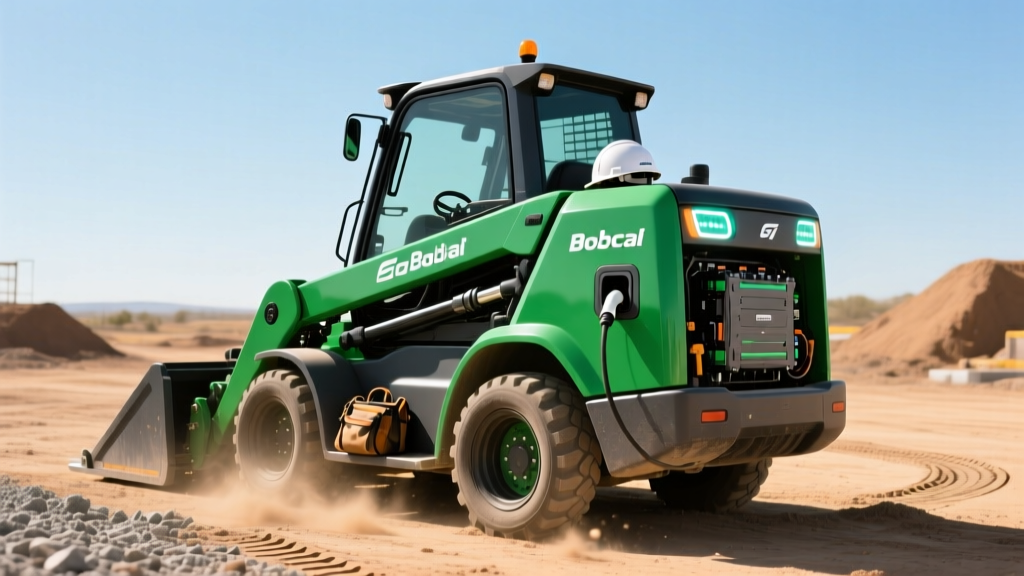
Electric compact loaders from Bobcat (and competitors) are viable for light-to-medium duty cycles—landscaping, indoor demolition, agriculture, and municipal work—where noise and exhaust restrictions matter. Expect 4–8 hours of runtime per charge depending on duty cycle, 40–60 kWh battery packs, and Level 2 charging in roughly 4–6 hours. Upfront costs run 30–50% higher than diesel equivalents, but fuel and maintenance savings can close that gap in 3–5 years for high-utilization users. They are not yet ideal for heavy excavation, remote sites without grid power, or extreme cold-weather operations.
Why Electric Bobcat Loaders Are Gaining Traction
The compact equipment market has been slower to electrify than passenger vehicles, but the economics are shifting. Bobcat (a Doosan company) has been developing electric compact equipment, and competitors like Volvo CE and JCB have already shipped battery-electric compact wheel loaders and excavators. The drivers aren't environmental altruism—they're practical:
- Indoor and enclosed-space work: No diesel exhaust means no ventilation requirements, making electric loaders ideal for warehouse demolition, indoor arenas, and greenhouse operations.
- Noise ordinances: Electric motors produce roughly 70–80 dB at the operator station versus 85–95 dB for diesel equivalents. Many municipalities now restrict construction noise before 7 AM or after 8 PM; electric equipment can extend workable hours.
- Instant torque: Electric motors deliver peak torque at 0 RPM, which translates to strong breakout force without the lag of a turbocharged diesel spooling up.
- Maintenance reduction: No engine oil, no diesel particulate filter (DPF), no DEF fluid, no fuel filters. Electric drivetrains have roughly 20 moving parts versus 200+ in a diesel powertrain.
Battery Specs, Runtime, and What the Numbers Actually Mean
The compact electric loader segment is still developing, so specs vary. Here's what current and near-term models offer:
| Spec | Typical Range | Notes |
|---|---|---|
| Battery capacity | 40–65 kWh (usable) | LFP chemistry common for durability; some NMC for energy density |
| Runtime (mixed duty) | 4–8 hours | Light cycling (carry/placement) gets 6–8 hrs; heavy digging drops to 3–5 hrs |
| Motor output | 40–75 kW (54–100 HP equivalent) | Peak vs. continuous output matters—check continuous rating |
| Level 2 charging (240V, 40A) | 4–6 hours (0–100%) | ~9.6 kW charge rate; overnight charging at the yard |
| DC fast charging | Not widely available yet | Some models offer CCS1 at 20–30 kW; 80% in ~90 min |
| Operating weight | 5,000–9,000 lbs | Battery mass adds 1,000–2,000 lbs vs. diesel equivalent |
| Rated operating capacity | 1,200–2,100 lbs | Comparable to mid-range diesel skid-steers |
kW vs. kWh—critical distinction: kWh is your battery's energy capacity (the "fuel tank"). kW is the power draw or charge rate. A 50 kWh battery charged at 10 kW takes 5 hours. Don't let a dealer conflate the two.
Real-World Runtime vs. Sticker Claims
Manufacturer runtime claims assume moderate duty cycles. In our experience and industry testing:
- Light duty (palletized material handling, grading): expect 80–90% of claimed runtime.
- Heavy digging or hydraulic attachment use (augers, breakers): expect 50–65% of claimed runtime. Hydraulic pumps draw significant energy.
- Cold weather (below 32°F): expect 20–35% runtime reduction. LFP chemistry suffers more cold-weather loss than NMC. Battery preconditioning is rare in this segment—unlike passenger EVs.
Electric vs. Diesel Bobcat Loaders: Cost Comparison
This is where the purchase decision lives. Let's compare a hypothetical electric compact loader against a comparable diesel unit over 5 years, assuming 1,500 operating hours per year (moderate commercial use).
| Cost Category | Electric Loader | Diesel Loader |
|---|---|---|
| Purchase price (base MSRP) | $75,000–$95,000 | $50,000–$65,000 |
| Fuel/Energy cost (5 yrs, 7,500 hrs) | $3,750–$5,625 ($0.10–0.15/kWh, 5 kWh/hr avg) | $16,875–$22,500 ($4.50/gal diesel, 1.5 gal/hr avg) |
| Maintenance (5 yrs) | $2,000–$3,500 (hydraulic fluid, filters, grease) | $7,500–$12,000 (engine oil, DPF, DEF, fuel filters, belts) |
| Downtime cost (est.) | Lower—fewer failure points | Higher—DPF regen, fuel system issues |
| Resale value (year 5 est.) | $25,000–$35,000 (market still developing) | $20,000–$30,000 (established market) |
| 5-Year Net Cost | $55,000–$70,000 | $55,000–$70,000 |
The takeaway: electric and diesel converge in total cost around year 3–5, depending on utilization. If you run fewer than 800 hours/year, the diesel's lower upfront cost may never be offset. If you run 2,000+ hours/year in fuel-intensive tasks, electric can break even faster—especially if you have access to commercial electricity rates below $0.10/kWh.
Tax incentives: The IRS §45W Commercial Clean Vehicle Credit offers up to $40,000 for qualifying commercial electric equipment (30% of cost basis for vehicles under 14,000 lbs GVWR, applicable to certain compact equipment). Eligibility depends on battery sourcing, manufacturer qualification, and your tax situation—consult a tax professional. The §30D credit applies to passenger vehicles, not construction equipment.
Charging Infrastructure: What Contractors Actually Need
This is the most overlooked factor. Unlike passenger EVs, you can't rely on public charging networks for job-site equipment. Here's the reality:
Charging Levels for Electric Loaders
| Level | Voltage / Current | Power (kW) | Charge Time (50 kWh Battery) | Practical Use Case |
|---|---|---|---|---|
| Level 1 (120V) | 120V / 15A | ~1.8 kW | ~28 hours | Not practical for daily use; emergency trickle only |
| Level 2 (240V) | 240V / 40–50A | 9.6–12 kW | 4–5 hours | Standard yard/shop charging; overnight turnaround |
| DC Fast (CCS1) | 200–500V DC | 20–30 kW (current models) | ~90 min to 80% | Mid-shift top-up if available; not yet widespread |
Home/shop charging installation costs:
| Item | Cost Range |
|---|---|
| Level 2 EVSE (commercial-rated, J1772 or CCS) | $1,500–$4,000 |
| Electrical panel upgrade (if needed, 200A service) | $2,000–$5,000 |
| Wiring and conduit (50–100 ft run) | $1,500–$3,500 |
| Permit and inspection | $200–$600 |
| Total (typical yard install) | $5,200–$13,100 |
If your yard already has 200A+ three-phase service, costs drop significantly. If you're on a remote site with only generator power, you'll need a diesel genset to charge—which defeats much of the purpose. Electric loaders require grid access or a substantial solar-plus-storage investment.
Who Should Buy Electric (and Who Shouldn't)
Decision Framework: Is an Electric Bobcat Loader Right for You?
Choose electric if:
- You work indoors or in enclosed spaces (warehouses, arenas, greenhouses)
- You face strict noise ordinances or want early-morning/late-evening work capability
- Your duty cycle is light-to-medium (material handling, grading, light digging)
- You have reliable Level 2 charging at your yard or shop
- You operate 1,200+ hours/year (fuel savings justify the premium)
- You want to reduce maintenance complexity and downtime
Stick with diesel if:
- You do heavy excavation, rock breaking, or high-flow hydraulic attachment work
- You work on remote sites without grid power
- You operate in sustained sub-freezing temperatures (below 20°F)
- Your utilization is below 800 hours/year (the premium won't pay back)
- You need immediate mid-shift refueling flexibility and can't afford a 4-hour charge
Common Misconceptions About Electric Construction Equipment
| Myth | Fact |
|---|---|
| "Electric loaders are weak." | Electric motors produce peak torque at 0 RPM. Breakout force is often comparable to diesel equivalents. The limitation is sustained heavy hydraulic work, not raw power. |
| "Batteries won't last." | LFP batteries (common in this segment) are rated for 3,000–5,000 charge cycles before 80% capacity retention. At one cycle/day, that's 8–14 years. Warranties typically cover 5 years or 5,000 hours. |
| "Charging takes too long." | Level 2 charging takes 4–5 hours—fine for overnight turnaround. The problem is mid-shift charging, which is a legitimate limitation for high-utilization operations. |
| "They're zero-emission." | Tailpipe emissions are zero, but upstream electricity generation varies by grid. In coal-heavy regions, the carbon benefit shrinks. In renewables-heavy grids, it's substantial. |
| "I'll save money immediately." | Upfront cost is 30–50% higher. Break-even typically takes 3–5 years depending on utilization and energy costs. Low-use buyers may never break even. |
What First-Time Electric Equipment Buyers Need to Know
If you've operated diesel skid-steers and compact loaders for decades, the transition requires some operational adjustments:
- Plan your charging workflow. Unlike diesel, you can't "top off" in 3 minutes. Operators need to plug in at end-of-shift and ensure the machine is fully charged before the next day. This requires discipline and a dedicated charging spot.
- Monitor battery state of health (SoH). Most electric equipment includes telematics that track battery degradation. Watch for capacity loss exceeding 2–3% per year—this may indicate a warranty claim if it accelerates.
- Hydraulic attachments still work, but they drain the battery faster. Running an auger, breaker, or brush cutter pulls 10–15 kW continuously. Plan runtime accordingly.
- Cold weather requires planning. If you operate in freezing conditions, store and charge the machine indoors when possible. Battery preconditioning features (common in passenger EVs) are not yet standard in compact equipment.
- Dealer support is still developing. Not every Bobcat or compact equipment dealer has technicians trained on high-voltage systems. Confirm service capability before purchasing.
FAQ: Electric Bobcat Loaders
Are electric Bobcat loaders currently available for purchase?
Bobcat has announced electric compact equipment development, and some models (like the Bobcat T7X compact track loader concept) have been showcased. Full production availability varies by model and region. Competitors like Volvo CE and JCB have shipping electric compact loaders as of 2025–2026. Check with your local dealer for current availability and lead times.
How much does an electric compact loader cost compared to diesel?
Expect $75,000–$95,000 for an electric unit versus $50,000–$65,000 for a comparable diesel—a 30–50% premium. The gap narrows over 3–5 years through fuel and maintenance savings for high-utilization users.
Can I charge an electric loader on a standard job-site generator?
Technically yes, but it's inefficient and counterproductive. A 10 kW generator would take 5+ hours to charge a 50 kWh battery, burning diesel in the process. Electric loaders are designed for grid-powered yard charging.
What happens if the battery degrades below usable capacity?
Most manufacturers warrant batteries for 5 years or 5,000 hours at 70–80% capacity retention. Replacement costs are significant—$15,000–$25,000 for a 50 kWh pack—but LFP chemistry degradation is gradual, and most units will see 8–12 years of usable life before replacement is necessary.
Do electric loaders qualify for the $7,500 EV tax credit?
No. The §30D Clean Vehicle Credit applies to passenger vehicles under 14,000 lbs GVWR for personal use. Commercial equipment may qualify for the §45W Commercial Clean Vehicle Credit (up to $40,000 or 30% of cost basis), but eligibility depends on battery sourcing, manufacturer qualification, and your business tax situation. Consult a tax professional.
Are electric loaders suitable for cold climates?
They can operate in cold weather, but expect 20–35% runtime reduction below 32°F. LFP batteries (common in this segment) are more affected by cold than NMC chemistry. Indoor storage and charging mitigate this significantly. For sustained sub-zero operations, diesel remains more practical.