Quick Answer: Which Electric BMW SUV Fits Your Budget?
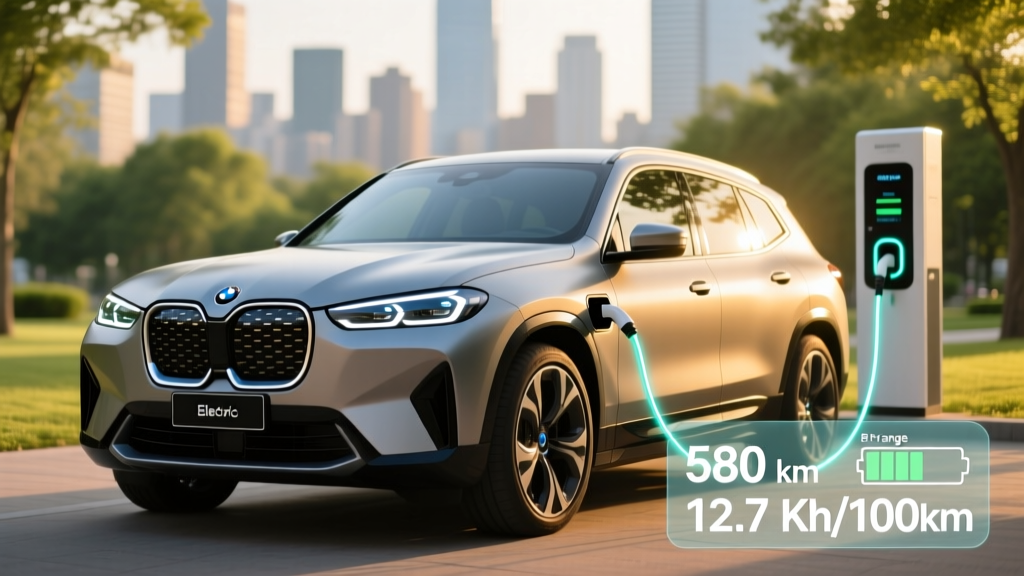
If you're shopping for electric BMW SUVs in 2026, the lineup spans from the compact iX3 (starting around $52,000, ~270 miles EPA range) to the flagship iX xDrive50 (starting ~$87,000, ~324 miles EPA range). The iX qualifies for the full $7,500 federal tax credit under current §30D rules if you meet income caps and battery-sourcing requirements. Expect real-world highway range to drop 15–20% below EPA estimates, and plan on $1,200–$2,200 for a home Level 2 charger installation if your electrical panel supports a 60-amp circuit.
The 2026 BMW EV SUV Lineup at a Glance
BMW's electric SUV strategy in 2026 centers on three models built on dedicated EV architectures. The iX remains the brand's technology flagship, the iX3 fills the compact luxury segment, and the iX1 serves as the entry point for buyers transitioning from gas-powered X1s. Each uses BMW's fifth-generation eDrive powertrain with varying battery chemistries and charging capabilities.
| Model | Battery (kWh) | EPA Range | Peak DC Charge | 10–80% Time | 0–60 mph | Base MSRP |
|---|---|---|---|---|---|---|
| iX1 xDrive28 | 66.5 (NMC) | ~230 mi | 130 kW | ~29 min | 5.6 sec | $44,000 |
| iX3 M Sport | 80.0 (NMC) | ~270 mi | 175 kW | ~25 min | 5.2 sec | $52,500 |
| iX xDrive50 | 111.5 (NMC) | ~324 mi | 195 kW | ~31 min | 4.4 sec | $87,250 |
| iX M60 | 111.5 (NMC) | ~296 mi | 195 kW | ~31 min | 3.6 sec | $111,500 |
All figures reflect 2026 model-year manufacturer estimates. EPA certification numbers may vary slightly by trim and wheel configuration. Source: fueleconomy.gov and BMW USA press materials.
Real-World Range vs. EPA Sticker Numbers
EPA range estimates for electric BMW SUVs assume a mix of city and highway driving at moderate temperatures. Real-world ownership tells a different story, especially for buyers in colder climates or those who spend most of their miles on interstates.
What to Actually Expect from Your BMW iX
EPA sticker: 324 miles (iX xDrive50 with 20" wheels)
Highway-only at 75 mph: ~265–280 miles
Highway at 75 mph in 20°F weather: ~215–240 miles
Combined real-world (mixed driving, moderate climate): ~285–305 miles
The iX's large 111.5 kWh battery provides a buffer that partially absorbs cold-weather losses, but BMW's heat pump — standard on all 2026 iX trims — still can't fully offset the physics of lithium-ion chemistry in freezing temperatures. Expect a 20–25% range reduction in sustained sub-30°F highway driving.
The smaller iX1 and iX3 face proportionally larger real-world penalties because their batteries have less absolute capacity to absorb losses. iX1 owners in northern states should budget for ~175–185 miles of usable winter range — sufficient for commuting but tight for road trips without mid-route charging.
Charging Speed and Infrastructure: What You'll Actually Use
BMW's 2026 electric SUVs all use the NACS (North American Charging Standard) connector natively, giving them direct access to Tesla Supercharger stations without an adapter. This is a significant shift from the CCS1 connector BMW used through 2024, and it meaningfully expands the fast-charging network available to owners.
| Charging Level | Power (kW) | Connector | Miles Added per Hour | Typical Use Case |
|---|---|---|---|---|
| Level 1 (120V) | 1.4 kW | NACS/J1772 | ~4 mi/hr | Emergency/overnight trickle |
| Level 2 (240V, 48A) | 11.5 kW | NACS | ~35 mi/hr | Home daily charging |
| DC Fast (iX1/iX3) | 130–175 kW | NACS | ~500–650 mi/hr | Road trips, 10–80% in ~25–29 min |
| DC Fast (iX) | 195 kW | NACS | ~700 mi/hr | Road trips, 10–80% in ~31 min |
Charging curve reality: The 195 kW peak rate on the iX applies only between roughly 10–35% state of charge. From 35–60%, the rate tapers to ~150 kW, and above 80% it drops sharply to ~50 kW or less to protect the NMC cells. This is why BMW quotes 10–80% times rather than 0–100% — charging the final 20% can add another 25–35 minutes. On road trips, plan to charge to 80% and move on rather than waiting for a full battery.
Purchase Price, Tax Credits, and What You'll Actually Pay
The sticker price is only the starting point. Federal and state incentives, plus dealer markups or discounts, determine your actual out-of-pocket cost.
| Model | Base MSRP | Federal Credit (§30D) | Effective Price* | Est. State Incentive |
|---|---|---|---|---|
| iX1 xDrive28 | $44,000 | Up to $7,500 | ~$36,500 | $0–$2,500 (varies) |
| iX3 M Sport | $52,500 | Up to $7,500 | ~$45,000 | $0–$2,500 (varies) |
| iX xDrive50 | $87,250 | Up to $7,500 | ~$79,750 | $0–$2,500 (varies) |
| iX M60 | $111,500 | $0 (exceeds MSRP cap) | $111,500 | $0–$2,500 (varies) |
*Effective price assumes full credit eligibility. Actual credit depends on battery sourcing, buyer income, and point-of-sale transfer rules.
Federal §30D Tax Credit Requirements (2026)
- MSRP cap: SUVs must be priced at or below $80,000 — this eliminates the iX M60 and some highly optioned iX xDrive50 builds
- Income cap: Modified AGI must not exceed $150,000 (single), $225,000 (head of household), or $300,000 (joint)
- Battery sourcing: A percentage of critical minerals and battery components must be sourced from the US or FTA partners — BMW's supply chain qualifies for partial or full credit depending on the model year and production batch
- Point-of-sale transfer: You can transfer the credit to the dealer at purchase, reducing your down payment rather than waiting for a tax refund
Rules change frequently. Always verify current eligibility on IRS.gov and consult a tax professional before relying on credit amounts in your purchase decision.
Electric BMW SUV vs. Gas Equivalent: The Ownership Math
How do electric BMW SUVs compare to their gas-powered counterparts over five years of ownership? Let's compare the iX xDrive50 against the BMW X5 xDrive40i, its closest gas sibling, using realistic driving and cost assumptions.
| Factor | iX xDrive50 (EV) | X5 xDrive40i (Gas) |
|---|---|---|
| Base MSRP | $87,250 | $68,200 |
| Federal tax credit | –$7,500 | $0 |
| Effective purchase price | $79,750 | $68,200 |
| Efficiency | 86 MPGe / 39 kWh/100mi | 23 MPG combined |
| Fuel/energy cost (5 yr, 60,000 mi) | $4,800 (home + public mix) | $10,200 ($3.40/gal avg) |
| Maintenance (5 yr) | ~$1,800 | ~$4,200 |
| Insurance (5 yr avg) | ~$14,400 | ~$11,400 |
| Estimated depreciation (5 yr) | ~$35,000 | ~$28,000 |
| Total 5-year cost | ~$135,750 | ~$122,000 |
Assumptions: 12,000 miles/year, $0.14/kWh average home electricity, 20% public DC fast charging at $0.45/kWh, premium gasoline at $3.40/gallon average. Insurance is higher for the iX due to higher replacement cost and EV-specific repair considerations. Source: fueleconomy.gov and industry depreciation data.
The takeaway: The iX costs roughly $13,000 more over five years, driven primarily by higher purchase price and steeper depreciation. The fuel and maintenance savings (~$7,800 combined) narrow the gap but don't close it. Buyers who prioritize driving refinement, instant torque, and lower tailpipe emissions will find the premium justified. Purely economic buyers may find the X5 or a PHEV alternative more rational.
Home Charging Setup: The Hidden First Cost
Most electric BMW SUV owners charge at home 85–90% of the time, making your Level 2 installation the most important infrastructure investment you'll make. Here's what to budget for:
| Component | Cost Range | Notes |
|---|---|---|
| Level 2 charger (48A, hardwired) | $400–$750 | BMW Wallbox or third-party (ChargePoint, Emporia) |
| Electrician labor (60A circuit) | $500–$1,500 | Depends on panel proximity and conduit run length |
| Permit and inspection | $100–$300 | Required in most jurisdictions |
| Electrical panel upgrade (if needed) | $1,500–$3,500 | Older homes with 100A service may need 200A upgrade |
| Total (no panel upgrade) | $1,000–$2,550 | Typical for homes built after 2000 |
| Total (with panel upgrade) | $2,500–$6,050 | Common for pre-1990 homes |
The BMW Wallbox Connect delivers 11.5 kW on a 48-amp circuit, adding roughly 35 miles of range per hour — enough to fully replenish an iX1 overnight and an iX in about 10 hours. If you don't have access to home charging (apartment dwellers, street parking), relying exclusively on public DC fast charging will roughly double your per-mile energy cost and accelerate battery wear over time.
Common Misconceptions About Electric BMW SUVs
| Myth | Fact |
|---|---|
| "BMW EV batteries need replacing every 5 years" | BMW warranties the high-voltage battery for 8 years/100,000 miles against capacity dropping below 70%. Real-world degradation data from earlier iX models shows ~8–10% loss over 5 years and 60,000 miles — well above the warranty threshold. |
| "The iX charges as fast as a Tesla Model X" | The iX peaks at 195 kW vs. the Model X's ~250 kW on V3/V4 Superchargers. The iX takes ~31 minutes for 10–80% vs. ~25 minutes for the Model X. Meaningful on road trips, negligible for daily use. |
| "You can't take an EV on road trips" | With the NACS connector, iX owners have access to 25,000+ Supercharger stalls plus Electrify America and EVgo networks. A 600-mile trip requires two 25-minute charging stops — comparable to gas-car rest and food breaks. |
| "EVs are worse in winter" | Range drops 20–25% in sustained cold, but EVs start instantly (no cold cranking), heat pump cabins warm quickly with preconditioning, and regenerative braking works normally once the battery warms. Winter is manageable, not prohibitive. |
| "The iX M60 gets the full tax credit" | The iX M60's $111,500 MSRP exceeds the §30D $80,000 SUV cap. It qualifies for $0 in federal credits regardless of buyer income or battery sourcing. |
Decision Framework: Which Electric BMW SUV Should You Buy?
Match Your Situation to the Right Model
Choose the iX1 xDrive28 if: You're a first-time EV buyer with a commute under 40 miles, you have reliable home charging, and your budget is under $50,000 after incentives. It's the most accessible entry point and qualifies for the full $7,500 credit.
Choose the iX3 M Sport if: You need more cargo space than the iX1 offers, you take monthly road trips of 200–300 miles, and you want the sweet spot of range (270 mi EPA), charging speed (175 kW), and price (~$45,000 after credit). This is the best value in the lineup for most buyers.
Choose the iX xDrive50 if: You want flagship luxury, you regularly drive 300+ miles between charges, and your budget accommodates the ~$80,000 effective price after the tax credit. The 111.5 kWh battery provides the best real-world range buffer for cold climates and highway-heavy driving patterns.
Choose the iX M60 if: Performance is the priority, tax credits are irrelevant to your purchase decision, and you accept 296 miles of EPA range as the trade-off for 532 hp and a 3.6-second 0–60 time.
Consider a BMW PHEV (X5 xDrive50e) instead if: You lack home charging access, you frequently drive in rural areas with limited charging infrastructure, or you want EV-like commuting with gas-powered road-trip flexibility. The X5 xDrive50e offers ~38 miles of electric-only range and 56 MPGe combined.
Battery Longevity, Warranty, and What Replacement Costs
BMW covers the high-voltage battery in all 2026 electric SUVs with an 8-year/100,000-mile warranty that guarantees capacity retention above 70% of original. All current BMW EV batteries use NMC (nickel manganese cobalt) chemistry, which offers higher energy density than LFP (lithium iron phosphate) but slightly faster long-term degradation.
Based on fleet data from 2022–2024 iX models, typical degradation is approximately:
- Year 1: 2–3% loss (initial settling)
- Years 2–5: ~1–1.5% per year
- Year 8 projection: ~90–92% state of health (SoH) remaining
Out-of-warranty battery replacement for the iX currently ranges from $18,000 to $24,000 including labor — a figure worth considering if you plan to own the vehicle beyond the warranty period. The iX1's smaller battery costs proportionally less (~$12,000–$15,000) but is also less likely to need replacement given its lower absolute degradation in kWh terms.
To maximize battery lifespan, BMW recommends keeping state of charge between 20–80% for daily use, using preconditioning before DC fast charging, and limiting consecutive 100% charges to road-trip necessity. The iDrive system includes a configurable charge limit setting specifically for this purpose.
Do electric BMW SUVs qualify for the $7,500 federal tax credit?
The iX1 and iX3 qualify for up to $7,500 under §30D if the buyer meets income caps and the vehicle's battery meets critical-mineral and component sourcing requirements. The iX xDrive50 qualifies only when optioned below the $80,000 MSRP cap. The iX M60 does not qualify. Always check IRS.gov for the current eligible vehicle list before purchasing.
How much does it cost to charge a BMW iX at home vs. public chargers?
At the US average residential rate of $0.14/kWh, fully charging the iX's 111.5 kWh battery costs about $15.60, yielding roughly 4.8 cents per mile. Public DC fast charging averages $0.35–$0.50/kWh, making it $39–$56 for a full charge and 12–17 cents per mile — still cheaper than premium gasoline in the X5, but the gap narrows significantly.
Is the BMW iX reliable compared to gas BMWs?
Early reliability data from 2022–2025 iX models is generally positive, with fewer drivetrain-related complaints than equivalent V8 X5 models. Common issues center on software glitches in the iDrive 8.5 system and occasional charging handshake failures with third-party networks — both typically resolved via over-the-air updates. BMW's EV powertrains have fewer moving parts than their ICE counterparts, which historically translates to lower long-term mechanical failure rates.
What happens if I can't install a home charger?
Without home charging, you'll rely on public Level 2 chargers ($0.20–$0.35/kWh) and DC fast chargers, roughly doubling your energy costs compared to home charging. You'll also need to budget 20–40 minutes per charging session, 2–3 times per week. If your workplace offers Level 2 charging, that can offset the gap. If neither home nor workplace charging is available, a BMW PHEV like the X5 xDrive50e may be a more practical choice.
Can I tow with an electric BMW SUV?
The iX xDrive50 and M60 are rated to tow up to 3,500 pounds with the factory hitch. However, towing reduces range by roughly 30–40%, cutting the iX's real-world highway range to ~170–200 miles. If you tow frequently, plan your charging stops accordingly and consider the X5 PHEV as a more range-flexible alternative.