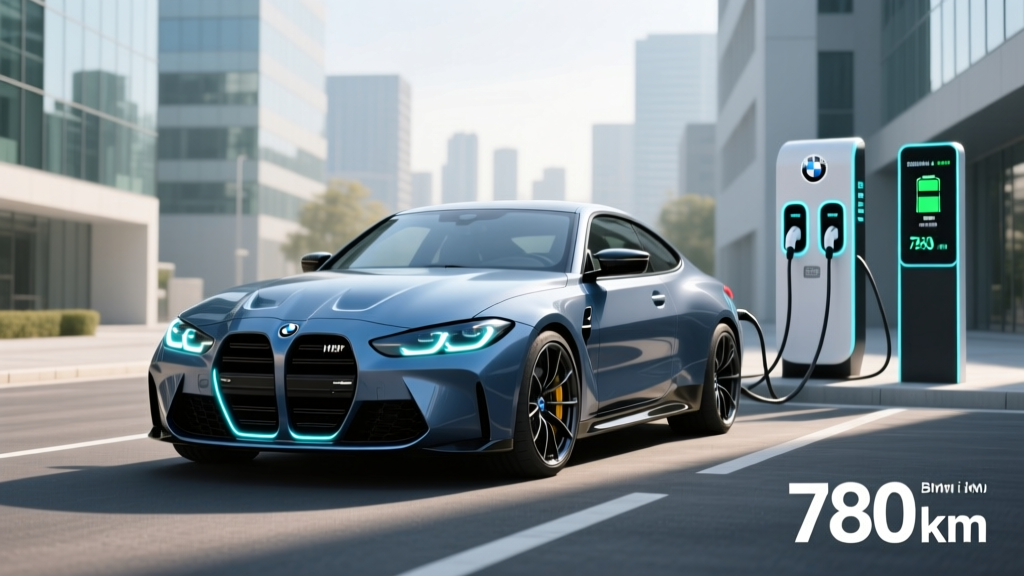
Quick Answer: As of early 2026, BMW has not yet released a fully electric M3 for sale. The electric BMW M3 — widely expected to debut as a high-performance variant of the Neue Klasse 3 Series (i3) — remains in the announced/testing phase, with production anticipated in late 2026 or 2027. Current BMW M3 buyers seeking electrification can opt for the BMW M3 Competition with mild-hybrid assist (still gasoline-powered) or consider the all-electric BMW i4 M50 as the closest available electric performance sedan in BMW's lineup. This guide covers confirmed data on BMW's electric M-car roadmap, what we know about the upcoming model, and how to plan your purchase.
What We Know About the Electric BMW M3
BMW has confirmed that the next-generation 3 Series will ride on the Neue Klasse platform, a dedicated EV architecture debuting with the i3 sedan around 2026. A high-performance M variant — effectively the electric BMW M3 — is expected to follow, though BMW M GmbH has not published final specifications.
Based on BMW's official statements, patent filings, and testing prototypes spotted at the Nürburgring, here is what is known or strongly projected for the electric M3:
- Platform: Neue Klasse (800V architecture confirmed by BMW)
- Battery chemistry: New-generation cylindrical cells (similar format to Tesla 4680), with BMW citing up to 20% higher energy density and 30% faster charging vs. current prismatic cells
- Estimated battery capacity: ~100 kWh usable (projected based on Neue Klasse announcements)
- Drivetrain: Quad-motor AWD (confirmed by BMW M for future M EVs) — one motor per wheel enabling torque vectoring
- Estimated power output: 600+ hp (BMW M CEO Frank van Meel has referenced outputs "well beyond" the current M3's 503 hp)
- Estimated 0-60 mph: Sub-3.0 seconds (projected)
- Estimated EPA range: 300-350 miles (preliminary, based on Neue Klasse efficiency targets)
- DC fast charging: 800V system should support 250-350 kW peak (projected 10-80% in ~15-20 minutes)
- Estimated MSRP: $85,000-$100,000+ (based on current M3 pricing trajectory and EV premium)
Important caveat: These figures are preliminary estimates based on BMW's public roadmap statements and industry analysis. Final EPA range, pricing, and specifications will not be confirmed until BMW's official reveal, likely in late 2026 or 2027. We will update this guide when official numbers are published.
The Closest Available Alternative: BMW i4 M50
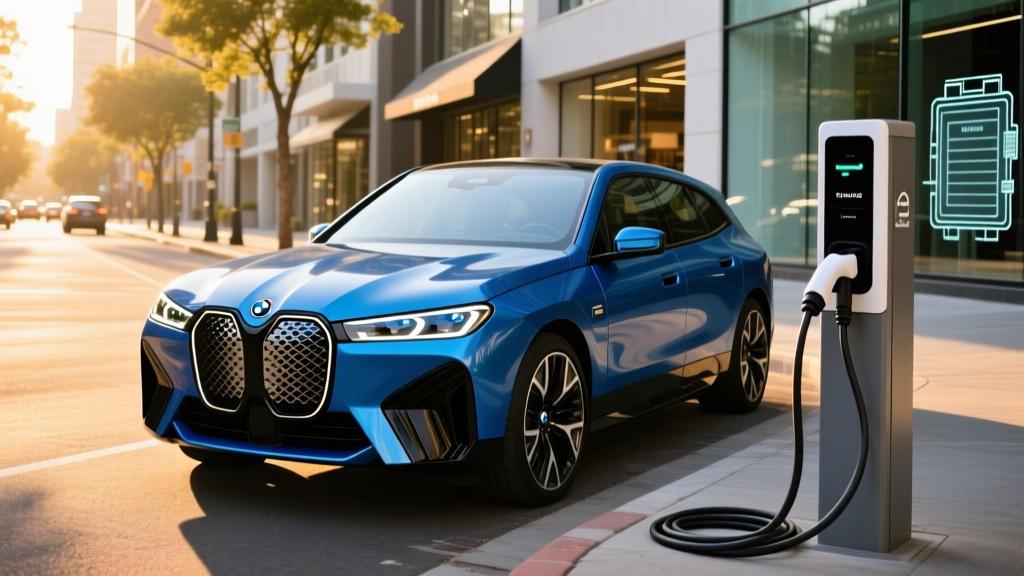
If you need an electric BMW performance sedan today, the 2026 BMW i4 M50 is the closest proxy to an electric M3 in BMW's current showroom. While not a true M car (it carries the "M Performance" badge rather than a full M GmbH designation), it delivers serious capability:
| Specification | 2026 BMW i4 M50 | 2026 BMW M3 Competition (Gas) |
|---|---|---|
| Powertrain | Dual-motor AWD (electric) | 3.0L Twin-Turbo I6 + 48V mild hybrid |
| Horsepower | 593 hp | 503 hp |
| 0-60 mph | 3.7 seconds | 3.4 seconds |
| EPA Range / Fuel Economy | 245 miles (EPA) / 86 MPGe | 19 MPG combined |
| Battery / Fuel Tank | 81.5 kWh usable (NMC) | 15.6 gal fuel tank |
| Peak DC Fast Charge | 205 kW (10-80% in ~31 min) | N/A |
| Level 2 Charging (11 kW) | ~8 hours (0-100%) | N/A |
| Base MSRP | ~$70,700 | ~$80,200 |
| Federal EV Tax Credit (§30D) | Eligibility varies — check IRS rules | Not eligible |
| Battery Warranty | 8 years / 100,000 miles | N/A |
The i4 M50 is heavier than the M3 (approximately 4,900 lbs vs. 3,850 lbs), and its EPA range of 245 miles is modest for a luxury EV in 2026. Real-world highway driving at 75+ mph typically yields 200-220 miles, and cold-weather conditions (below 32°F) can reduce that by another 15-25%. However, the instant torque and low center of gravity deliver a driving experience that feels distinctly M-like, even if the chassis isn't developed by M GmbH.
Real-World Ownership Costs: Electric BMW vs. Gas M3
Let's compare the five-year ownership economics of the available BMW i4 M50 against the gasoline BMW M3 Competition. This analysis assumes 12,000 miles/year, $0.16/kWh average home electricity (national average per EIA), $3.80/gallon premium fuel, and 80% home charging / 20% public DC fast charging.
| Cost Category (5 Years) | BMW i4 M50 (Electric) | BMW M3 Competition (Gas) |
|---|---|---|
| Purchase Price (base MSRP) | $70,700 | $80,200 |
| Federal Tax Credit (§30D) | Up to $7,500 (eligibility varies by battery sourcing and buyer income — see IRS §30D) | $0 |
| Effective Purchase Price | ~$63,200 | $80,200 |
| Fuel / Electricity (60,000 mi) | ~$4,800 (home + public mix) | ~$11,400 (premium 93 octane) |
| Maintenance (5 yr) | ~$2,500 (no oil changes, fewer brake replacements due to regen) | ~$5,500 (oil, filters, brakes, spark plugs) |
| Insurance (est. annual avg) | ~$3,200/yr ($16,000 total) | ~$2,800/yr ($14,000 total) |
| Estimated Depreciation (5 yr) | ~$35,000 | ~$38,000 |
| Total 5-Year Cost | ~$121,500 | ~$149,100 |
Key takeaway: The i4 M50 saves roughly $27,600 over five years compared to the gas M3 Competition, primarily driven by the purchase price gap, fuel savings, and potential tax credit. However, insurance costs are typically 10-15% higher for EVs due to repair complexity and battery replacement cost exposure.
What First-Time EV Buyers Need to Know
If you're coming from a gas-powered M3 or any performance sedan, the transition to an electric BMW involves several practical adjustments:
Home Charging Is Essential
Public DC fast charging works for road trips, but daily ownership hinges on Level 2 home charging. A BMW i4 M50 with an 81.5 kWh battery needs roughly 8 hours on an 11 kW Level 2 charger to go from 10% to 100%. Most buyers install a 48-amp (11.5 kW) hardwired Level 2 station.
Installation cost breakdown:
- Level 2 charger hardware (e.g., ChargePoint Home Flex, Wallbox Pulsar Plus): $500-$700
- Electrician labor (240V/50A circuit run): $800-$2,500 depending on panel proximity
- Electrical panel upgrade (if needed — older homes with 100A service may need 200A upgrade): $1,500-$4,000
- Permit and inspection: $100-$300
- Total typical install: $1,400-$3,500 (without panel upgrade); $3,000-$7,000 (with panel upgrade)
Always hire a licensed electrician and pull permits. Final specifications depend on your home's electrical capacity — consult a professional before purchasing equipment.
Charging Speed: kW vs. kWh Explained
This is the most common confusion for new EV buyers:
- kWh (kilowatt-hours) = energy capacity. Think of it as your "fuel tank size." The i4 M50 has 81.5 kWh usable.
- kW (kilowatts) = power/charge rate. Think of it as "how fast the pump flows." The i4 M50 peaks at 205 kW on DC fast chargers.
At peak rate, 205 kW could theoretically add ~205 kWh in one hour — but charging slows significantly above 80% State of Charge (SoC) to protect battery health. This is called the charge curve taper. Real-world 10-80% charging on the i4 M50 takes about 31 minutes at a capable DC fast charger.
Real-World Range vs. EPA Sticker
The EPA range figure is a laboratory estimate. Real-world range varies based on:
- Highway speed: Sustained 75-80 mph driving reduces range by 10-15% vs. EPA
- Cold weather: Below-freezing temperatures can reduce range by 20-30% (battery chemistry becomes less efficient, and cabin heating draws significant energy unless equipped with a heat pump)
- Terrain: Mountain driving with sustained climbs consumes more energy, though regenerative braking on descents recovers some
- Tire selection: Performance summer tires (common on M-badged models) increase rolling resistance vs. all-season low-rolling-resistance tires
BMW i4 M50 Range Reality Check:
EPA estimate: 245 miles
Real-world highway (70-75 mph, mild weather): ~210-225 miles
Real-world highway (below 32°F): ~170-195 miles
Mixed city/highway (moderate climate): ~220-240 miles
Common Misconceptions About an Electric BMW M3
| Myth | Fact |
|---|---|
| "The electric M3 is available to buy now." | As of 2026, BMW has not released an electric M3. The Neue Klasse-based model is expected in late 2026 or 2027. The i4 M50 is the closest current alternative. |
| "EV batteries need replacing every 5 years." | Modern NMC batteries are designed for 1,000-2,000+ charge cycles. BMW warranties its HV batteries for 8 years/100,000 miles against degradation below 70% capacity. Real-world data from Recurrent shows most EV batteries retain 85-90% capacity at 100,000 miles. |
| "Electric BMWs can't handle like an M car." | The i4 M50's low center of gravity and instant torque delivery produce lateral dynamics that rival many gas performance sedans. However, the ~1,000-lb weight penalty is noticeable in tight transitions. The upcoming quad-motor electric M3 with torque vectoring aims to close this gap. |
| "I'll get the full $7,500 tax credit automatically." | The §30D credit has MSRP caps ($55,000 for sedans — the i4 M50 exceeds this), buyer income limits ($150K single / $300K joint AGI), and battery sourcing requirements. Many luxury BMWs do not qualify for the full credit. Always verify current eligibility on IRS.gov and consult a tax professional. |
| "Public charging is as fast and easy as pumping gas." |
Decision Framework: Should You Wait for the Electric M3 or Buy Now?
Choose the BMW i4 M50 now if:
- You need an electric performance BMW within the next 6 months
- Your daily commute is under 150 miles round-trip (well within the 245-mile EPA range)
- You have access to home Level 2 charging (or can install it)
- You value $6,600/year in fuel/maintenance savings over a gas M3
- You're comfortable with 245 miles of EPA range and understand real-world will be lower
Wait for the electric BMW M3 (Neue Klasse) if:
- You want a true M GmbH-developed chassis with track-focused dynamics
- You need 300+ miles of range for frequent road trips
- You want 800V charging architecture for faster DC stops (projected 15-20 min, 10-80%)
- You're willing to wait until late 2026 or 2027 for availability and likely pay $85,000-$100,000+
- Quad-motor torque vectoring is a must-have for your driving style
Consider the gas BMW M3 Competition if:
- You lack reliable home charging access (apartment, street parking)
- You track your car regularly (battery thermal management under sustained high-load track use remains a challenge for heavy EVs)
- You drive in extreme cold climates regularly and need consistent range without 20-30% winter losses
- You prefer the sound, engagement, and lighter weight (~3,850 lbs) of the inline-six
Looking Ahead: BMW's Electric M Roadmap
BMW M GmbH has confirmed that future M EVs will feature:
- Quad-motor configurations with individual wheel torque control
- Simulated gear shifts and engine sound (debuted on the i5 M60 with "M IconicSounds" — likely expanded and refined for the electric M3)
- 800V architecture enabling significantly faster charging than the current 400V i4 platform
- Advanced thermal management designed for repeated high-performance driving (addressing a key limitation of current heavy EVs on track)
BMW has also stated that the Neue Klasse platform will support both battery-electric and — for certain markets — hydrogen fuel cell powertrains, though the M variant is expected to be battery-only.
Frequently Asked Questions
Is there an electric BMW M3 I can buy in 2026?
No. BMW has not released an electric M3 for sale as of early 2026. The next-generation M3 is expected to debut on the Neue Klasse platform, with production potentially starting in late 2026 or 2027. The closest available electric performance BMW is the i4 M50 (593 hp, 245-mile EPA range, ~$70,700 MSRP).
How much will the electric BMW M3 cost?
BMW has not announced pricing. Based on the current M3 Competition's ~$80,200 starting price, the EV premium seen across BMW's lineup, and the advanced quad-motor/800V technology expected, industry estimates place the electric M3 between $85,000 and $100,000+ at launch. The §30D federal tax credit's $55,000 MSRP cap for sedans means it will almost certainly not qualify.
Will the electric M3 have manual steering feel and driving engagement?
BMW M has acknowledged this concern and is developing simulated feedback systems, including synthetic gear shifts and configurable sound profiles. Whether these can replicate the tactile engagement of the current M3's hydraulic-assisted steering and inline-six character remains to be evaluated in real-world driving. Early prototypes suggest BMW is investing heavily in this area.
Can I charge an electric BMW M3 at home?
Yes — assuming you can install a 240V Level 2 charger (requiring a 50A circuit and professional installation). Expect $1,400-$3,500 for a standard install, or $3,000-$7,000 if your home needs an electrical panel upgrade. Without home charging, EV ownership becomes significantly less convenient, as daily public charging is time-consuming and more expensive.
What's the battery replacement cost for a BMW EV?
Out-of-warranty high-voltage battery replacement for current BMW EVs typically ranges from $15,000 to $25,000 depending on the model. However, BMW's 8-year/100,000-mile battery warranty covers defects and capacity loss below 70%. Real-world degradation data suggests most owners will never need a full battery replacement during typical ownership periods.
Does the BMW i4 M50 qualify for the $7,500 federal EV tax credit?
Likely not in full. The §30D credit has a $55,000 MSRP cap for sedans, and the i4 M50 starts at ~$70,700. Some lower-trim BMW i4 models (eDrive35, starting around $52,200) may qualify depending on battery sourcing compliance and buyer income limits ($150K single / $300K joint modified AGI). Always verify current eligibility on IRS.gov and consult a tax professional before relying on the credit in your purchase decision.