The Short Answer on the Electric Blue Bronco
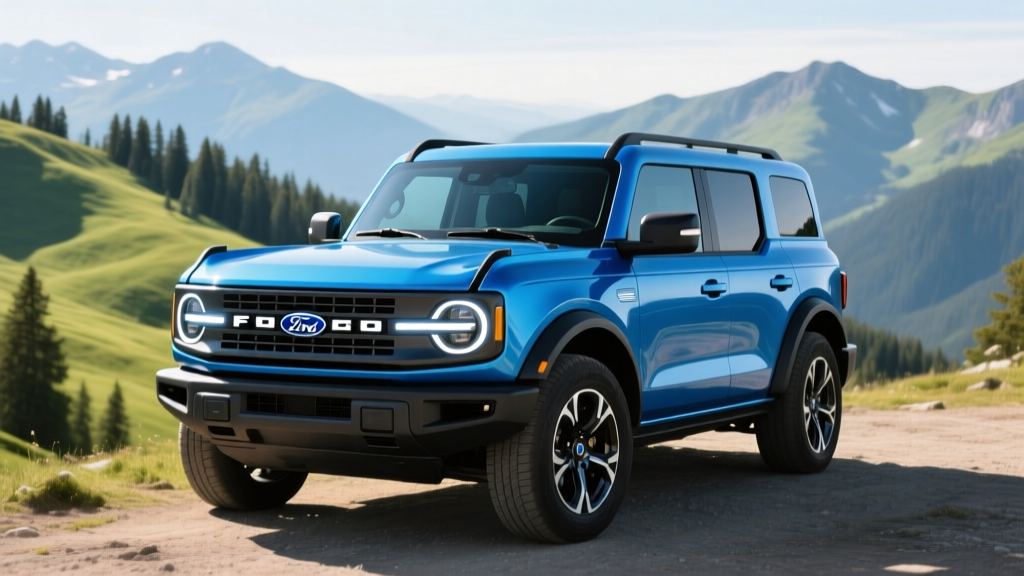
As of early 2026, Ford has not officially released a production "Electric Blue Bronco" EV. What exists is the Ford Bronco Sport (mild-hybrid ICE) and growing speculation — fueled by Ford trademark filings, concept renders, and industry reporting — that an all-electric Bronco is in development, potentially arriving for the 2027–2028 model year. The "Electric Blue" nameplate is historically associated with the 2015 Ford Bronco concept render that circulated widely online, not a purchasable vehicle. If you're researching an electric Bronco today, you're looking at an announced/expected model with preliminary estimates, not a vehicle currently on dealer lots. This guide breaks down what we know, what's realistic to expect, and how an electric Bronco would stack up against gas and hybrid alternatives in cost, range, and capability.
What We Know About Ford's Electric Bronco Plans
Ford has been signaling an electrified Bronco for several years. In 2023, Ford filed trademark applications related to electric Bronco branding, and CEO Jim Farley has publicly stated that iconic nameplates like the Bronco and Mustang will eventually receive EV variants. However, Ford restructured its EV roadmap significantly in 2024–2025, delaying several electric SUV programs in favor of hybrid and extended-range EV (EREV) platforms to manage costs and respond to softer-than-expected EV demand growth.
Here's where things stand as of 2026:
- No official Bronco EV is on sale. The current sixth-generation Bronco (2-door and 4-door) remains body-on-frame, powered by turbocharged gas engines (2.3L EcoBoost and 2.7L EcoBoost V6), with the Bronco Raptor using a 3.0L V6.
- Ford's next-gen EV platform (a flexible architecture developed for midsize and larger vehicles) is expected to underpin future electric SUVs, potentially including a Bronco EV, but no specs have been confirmed.
- "Electric Blue" is not an official trim or model name. It traces back to fan renders and concept imagery. Ford's current Bronco color palette includes shades like "Eruption Green Metallic" and "Azure Gray Metallic Tri-Coat," but no "Electric Blue" production option.
If and when Ford announces a production Bronco EV, expect preliminary specs to land roughly 12–18 months before sales begin. Until then, any range, battery, or pricing figures you see online are speculative.
Estimated Specs: What a Bronco EV Could Look Like
While official numbers don't exist, we can build a reasonable estimate based on Ford's current EV lineup (the Mustang Mach-E and F-150 Lightning), the Bronco's size and weight class, and industry battery trends for 2026–2028. The following table represents educated projections, not confirmed specs:
| Spec | Estimated Range |
|---|---|
| Battery Capacity (usable) | 90–110 kWh (NMC chemistry likely) |
| EPA Range | 270–320 miles (depending on trim/aero) |
| Peak DC Fast Charge Rate | 180–230 kW |
| 10–80% DC Charge Time | ~25–35 minutes (estimated) |
| Level 2 AC Charge Rate | 10.5–19.2 kW |
| 0–60 mph | 4.5–6.5 seconds (dual-motor AWD) |
| Horsepower | 350–480 hp (dual-motor) |
| Towing Capacity | 3,500–5,000 lbs (estimated) |
| Starting MSRP | $55,000–$65,000 (estimated) |
| Battery Warranty | 8 years / 100,000 miles (Ford standard EV warranty) |
Real-world range caveat: A boxy, body-on-frame SUV like the Bronco has poor aerodynamics compared to a crossover. On the highway at 70+ mph, expect real-world range to drop 15–25% below the EPA sticker. In cold weather (below 32°F), lithium-ion battery chemistry loses efficiency — plan for another 20–30% range reduction. A Bronco EV with a 300-mile EPA rating might realistically deliver 210–240 miles on a cold winter highway run.
EV vs. Gas Bronco: Cost and Capability Comparison
To understand what an electric Bronco would mean for your wallet and your weekends, here's how a projected Bronco EV stacks up against the current gas-powered 2026 Ford Bronco (4-door Big Bend trim, 2.3L EcoBoost):
| Metric | Gas Bronco (2.3L EcoBoost) | Bronco EV (Estimated) |
|---|---|---|
| MSRP (base) | $41,795 | $55,000–$65,000 |
| Fuel/Energy Cost per Mile | ~$0.18–$0.22 (at $3.50/gal, 20 MPG combined) | ~$0.04–$0.06 (home charging at $0.14/kWh) |
| EPA Range / Tank | ~340 miles (16.9-gal tank, 20 MPG) | ~270–320 miles (EPA est.) |
| "Refuel" Time | ~5 minutes | ~25–35 min (10–80% DC fast charge) |
| Annual Fuel/Energy Cost (12,000 mi) | ~$2,160–$2,640 | ~$480–$720 (home charging) |
| Maintenance (annual avg.) | ~$400–$600 (oil, filters, brakes) | ~$100–$200 (cabin filter, tire rotation, fluid top-offs) |
| Federal Tax Credit (§30D) | Not eligible | Potentially up to $7,500 (subject to sourcing, income, and MSRP caps) |
| Off-Road Capability | Proven — solid rear axle, available lockers, sway-bar disconnect | Unknown — EV torque is an advantage; weight and underbody battery protection are open questions |
Where the Gas Bronco Still Wins
For serious off-roading and remote overlanding, the gas Bronco has clear advantages today. Refueling takes five minutes at any gas station, and the trail-rated ecosystem (aftermarket bumpers, winches, rock rails) is mature. An EV's underbody battery pack introduces vulnerability on technical rock-crawling terrain, and charging infrastructure in remote trail areas (Moab, Rubicon Trail, remote BLM land) remains sparse.
Where the EV Could Win
Instant torque from electric motors is ideal for low-speed rock crawling and hill climbs. A dual-motor setup provides precise front/rear torque distribution without mechanical lockers. Daily driving costs plummet with home charging, and the silent operation is a quality-of-life upgrade on forest service roads. Regenerative braking reduces brake wear significantly on mountain descents.
Real Costs of Owning an Electric Bronco (Projected)
Let's model a 5-year ownership scenario for a hypothetical Bronco EV at $60,000 MSRP, compared to the gas Bronco at ~$42,000. This assumes 12,000 miles per year, home Level 2 charging, and current energy/fuel prices.
| Cost Category | Gas Bronco ($42K) | Bronco EV ($60K est.) |
|---|---|---|
| Purchase Price | $42,000 | $60,000 |
| Federal Tax Credit (§30D) | $0 | –$7,500 (if eligible) |
| Net Purchase | $42,000 | $52,500 |
| Fuel/Energy (5 years) | $11,400 | $3,000 |
| Maintenance (5 years) | $2,500 | $750 |
| Insurance (5-year avg.) | $7,500 | $9,000 (EVs typically cost 15–25% more to insure) |
| Home Charger Install (Level 2) | $0 | $800–$2,000 |
| Estimated Depreciation (5 yr) | ~$18,000 | ~$22,000 (EV depreciation historically steeper, though improving) |
| Total 5-Year Cost | ~$81,400 | ~$85,250–$88,050 |
Key takeaway: Even with dramatically lower fuel and maintenance costs, the higher upfront price and steeper depreciation of an EV mean the 5-year total cost of ownership is roughly comparable — or slightly higher — for the electric variant. The math flips in the EV's favor at the 7–10 year mark, assuming the battery holds up (Ford's 8-year/100,000-mile EV battery warranty provides a baseline safety net). Per fueleconomy.gov, EVs consistently show lower per-mile energy costs, but purchase price remains the dominant variable.
Federal Tax Credit: What You'd Actually Qualify For
If a Bronco EV launches, it would need to meet IRS §30D requirements to qualify for the federal clean vehicle credit. As of 2026, the rules include:
- MSRP cap: SUVs must have an MSRP at or below $80,000 to qualify.
- Buyer income cap: Adjusted gross income must not exceed $150,000 (single), $225,000 (head of household), or $300,000 (married filing jointly).
- Battery sourcing: A percentage of critical minerals and battery components must be sourced from the U.S. or free-trade-agreement countries. These thresholds increase annually, making compliance progressively harder for automakers.
- Point-of-sale transfer: Eligible buyers can transfer the credit to the dealer at purchase, reducing the out-of-pocket price immediately rather than waiting for a tax refund.
- Assembly: Final assembly must occur in North America.
Practical note: Even if the Bronco EV is assembled in the U.S., battery sourcing compliance is the moving target. Several EVs that qualified in 2024 lost eligibility in 2025 as sourcing thresholds tightened. Always verify current eligibility on fueleconomy.gov's tax credit page at the time of purchase, and consult a tax professional for your specific situation.
Common Misconceptions About a Bronco EV
| Myth | Fact |
|---|---|
| "The Electric Blue Bronco is available to order now." | It is not. No production Bronco EV exists as of 2026. "Electric Blue" traces to fan renders, not an official Ford product. |
| "An electric Bronco can't go off-road." | Electric motors deliver instant torque ideal for crawling. The real limitations are underbody battery vulnerability, vehicle weight, and remote charging access — not the powertrain itself. |
| "EV batteries need replacing every 5 years." | Modern NMC and LFP batteries are engineered for 1,000–2,000+ charge cycles. Ford warranties its EV batteries for 8 years/100,000 miles with a 70% capacity retention threshold. Most EV batteries outlast the vehicle's useful life. |
| "I'll save $10,000 in the first year with an EV." | Annual fuel savings are real (~$1,500–$2,000/year at 12K miles), but higher insurance premiums, upfront cost, and depreciation offset savings in early ownership years. |
| "Charging an EV takes hours no matter what." | Level 2 home charging takes 8–10 hours (overnight). DC fast charging at 180+ kW can add 150–200 miles in 20–25 minutes. The charge curve tapers significantly above 80% SoC — that's by design to protect the battery. |
First-Time EV Buyer Checklist: Are You Ready?
If you're considering waiting for a Bronco EV — or pivoting to an available EV SUV like the Ford Mustang Mach-E, Rivian R1S, or Hyundai Ioniq 5 — run through this practical checklist before committing:
Decision Framework: Should You Go Electric?
- Choose an EV if: You have access to home charging (garage or driveway with a 240V outlet), your daily commute is under 80 miles round-trip, you want to minimize per-mile fuel costs, and you're comfortable planning longer road trips around DC fast-charger locations.
- Choose a gas or hybrid Bronco if: You regularly tow heavy loads (over 3,500 lbs), you overland in remote areas with no charging infrastructure, you live in an apartment without charging access, or you need a proven off-road platform with a mature aftermarket today.
- Choose a PHEV (plug-in hybrid) if: You want 25–40 miles of electric-only commuting but need gas-engine range for weekend trips — though note that Ford does not currently offer a Bronco PHEV in the U.S. market.
Home Charging Reality Check
Most EV owners do 80–90% of their charging at home. A Level 2 home charger (240V, 32–48 amps) adds roughly 25–40 miles of range per hour of charging — enough to fully replenish a 100 kWh battery overnight. Installation costs range from $800 to $2,000 for a straightforward setup, but can climb to $3,000–$5,000 if your electrical panel needs an upgrade from 100A to 200A service. Get a quote from a licensed electrician before purchasing any EV.
What to Do While You Wait
If a Bronco EV is your dream vehicle, you'll likely be waiting until at least 2027–2028 for a production model. In the meantime:
- Monitor Ford's official EV announcements at ford.com/electric for confirmed specs, pricing, and timelines.
- Prepare your home for EV charging — installing a 240V NACS (North American Charging Standard) outlet now positions you for any future Ford EV, as Ford has adopted the NACS connector for its North American vehicles starting with 2025 models.
- Test-drive current EV SUVs like the Ford Mustang Mach-E, Rivian R1S, or Jeep Wrangler 4xe (PHEV) to understand EV driving dynamics, regen braking, and charging logistics firsthand.
- Track §30D tax credit eligibility — sourcing requirements change annually, and a vehicle that qualifies in 2027 may not in 2028, or vice versa.
Frequently Asked Questions
Is there an electric Ford Bronco I can buy in 2026?
No. Ford has not released a production Bronco EV. The current Bronco is available only with gasoline engines. An electric variant is widely expected but has not been officially announced with specs, pricing, or a sale date.
What is the "Electric Blue Bronco" I've seen online?
The "Electric Blue Bronco" refers to a popular fan-created concept render from around 2015 that went viral on social media and automotive forums. It is not an official Ford product, trim level, or color option. Ford has not used the "Electric Blue" name for any production Bronco.
How much would a Bronco EV cost?
Based on Ford's current EV pricing (Mustang Mach-E starts around $42,000; F-150 Lightning starts around $55,000) and the Bronco's premium positioning, a Bronco EV would likely start between $55,000 and $65,000, with higher trims (Badlands, Raptor-equivalent) potentially reaching $75,000–$85,000. The $80,000 MSRP cap for SUVs under the §30D tax credit means top trims could lose federal credit eligibility.
Would a Bronco EV be good for off-roading?
Electric motors offer instant torque and precise control, which are genuine advantages for rock crawling and technical terrain. However, the battery pack's underbody placement introduces risk on extreme terrain, and the vehicle's weight (likely 5,500–6,000+ lbs) affects handling on soft surfaces like sand and mud. Remote trail areas also lack charging infrastructure, limiting range for extended overlanding. It would be capable but different from a gas Bronco in key ways.
Should I buy a gas Bronco now or wait for the EV?
If you need a Bronco today and your use case involves towing, remote off-roading, or you lack home charging, buy the gas Bronco. If your driving is mostly daily commuting and weekend trips under 250 miles, and you have home charging, waiting for an EV variant could yield long-term fuel savings — but expect a 2–3 year wait minimum, with no guarantee on specs or pricing.
What EV SUVs can I buy right now as an alternative?
Current alternatives in the rugged/capable EV SUV space include the Rivian R1S (EPA range up to 410 miles with Max Pack, starting ~$79,900), the Ford Mustang Mach-E (EPA range up to 320 miles, starting ~$42,000), and the Jeep Wrangler 4xe (PHEV, 21 miles electric-only, starting ~$52,000). Each trades off differently on capability, range, and price.