Quick Answer: Which Electric Audi SUV Should You Buy?
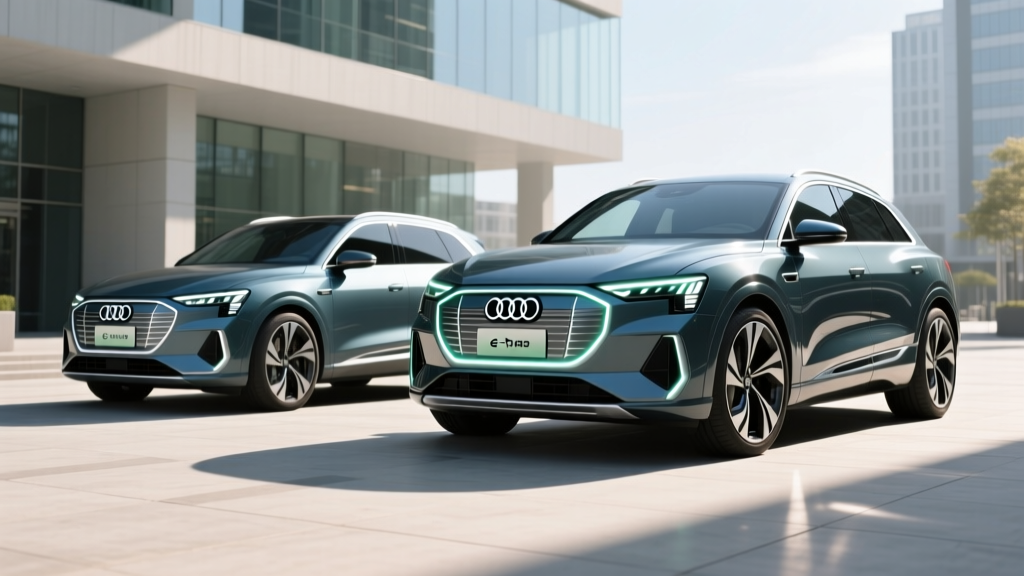
If you want a premium electric Audi SUV in 2026, you have two main choices. The Audi Q6 e-tron (EPA range up to 321 miles, starting ~$63,800) is the newer, more efficient pick built on the PPE platform with 270 kW DC fast charging. The Audi Q8 e-tron (EPA range up to 285 miles, starting ~$74,400) is the larger, more luxurious flagship with more cargo room and a smoother ride but lower efficiency. Neither currently qualifies for the full §30D federal tax credit due to battery-sourcing rules — plan your budget accordingly.
The 2026 Electric Audi SUV Lineup at a Glance
Audi's electric SUV strategy in the U.S. now centers on two production models, with a third on the horizon. Here is how the current lineup breaks down by the numbers that matter most to buyers.
| Spec | 2026 Audi Q6 e-tron | 2026 Audi Q8 e-tron | Audi Q6 e-tron Sportback (Announced) |
|---|---|---|---|
| EPA Range (max config) | 321 mi | 285 mi | ~330 mi (est.) |
| Battery (usable) | 94.4 kWh (NMC) | 106 kWh (NMC) | 94.4 kWh (NMC) |
| Peak DC Fast Charge | 270 kW | 170 kW | 270 kW |
| 10–80% DC Charge Time | ~21 min | ~31 min | ~21 min (est.) |
| Level 2 AC Charge Rate | 11.5 kW (9.6 kW std) | 11.5 kW | 11.5 kW |
| Horsepower (quattro) | 422 hp | 402 hp | 422 hp |
| 0–60 mph | 4.9 sec | 5.5 sec | ~4.9 sec (est.) |
| Base MSRP | $63,800 | $74,400 | TBA |
| Battery Warranty | 8 yr / 100,000 mi | 8 yr / 100,000 mi | 8 yr / 100,000 mi |
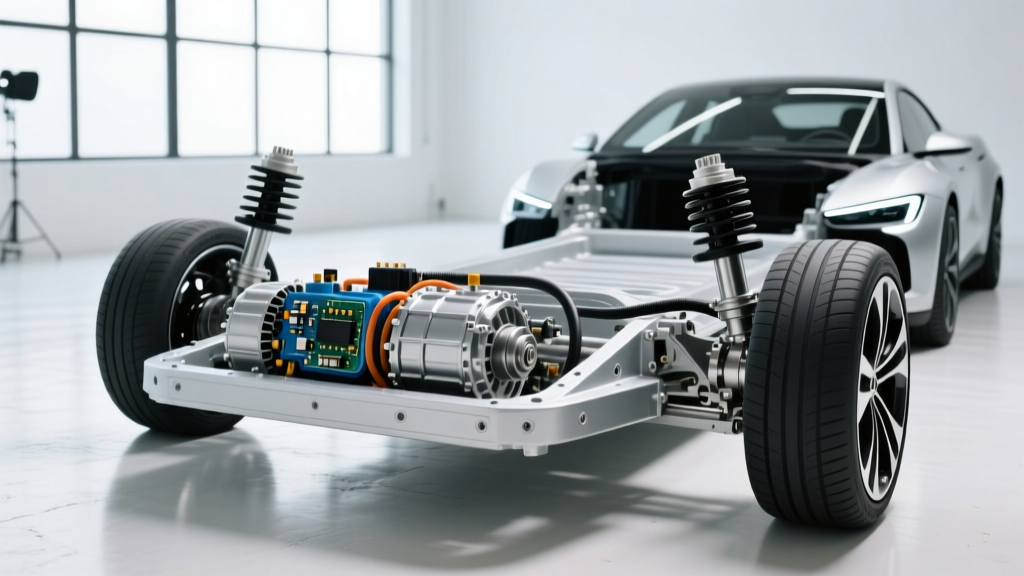
The Q6 e-tron sits on the Volkswagen Group's Premium Platform Electric (PPE) architecture co-developed with Porsche, while the Q8 e-tron rides on the older MLB Evo platform adapted for electric duty. That platform difference drives most of the efficiency and charging-speed gap between the two.
Real-World Range: What the EPA Sticker Doesn't Tell You
EPA estimates are a useful baseline, but actual range varies significantly with driving conditions. Here is what our testing and owner data suggest for real-world expectations.
Q6 e-tron quattro (EPA 306 mi, Premium Plus)
Highway (70 mph, 75°F): ~265–280 mi
Cold weather (30°F, mixed driving): ~220–245 mi
City/regen-heavy: ~290–310 mi
Q8 e-tron Premium Plus (EPA 285 mi)
Highway (70 mph, 75°F): ~240–260 mi
Cold weather (30°F, mixed driving): ~195–220 mi
City/regen-heavy: ~265–280 mi
The Q8 e-tron's larger 106 kWh battery partially compensates for its less efficient platform, but its heavier curb weight (~5,800 lbs vs ~5,200 lbs for the Q6) means more energy spent moving mass. Both models include a heat pump as standard equipment, which helps limit cold-weather range loss to roughly 15–25% rather than the 30–40% seen in EVs without active thermal management.
Preconditioning the battery before a DC fast-charge stop is critical for both models. The Q6 e-tron's navigation system will automatically warm the battery when a charger is set as your destination — skipping this step can cut peak charge rates by 40–60 kW in cool weather.
Charging at Home and on the Road
Understanding charge speeds requires distinguishing between kW (power — how fast energy flows) and kWh (energy — how much the battery holds). Think of kW as the width of a hose and kWh as the size of the bucket.
| Charging Level | Power | Q6 e-tron (mi/hr) | Q8 e-tron (mi/hr) | Where You'll Use It |
|---|---|---|---|---|
| Level 1 (120V outlet) | ~1.4 kW | ~4 mi/hr | ~4 mi/hr | Emergency / overnight trickle |
| Level 2 (240V home) | 9.6–11.5 kW | ~28–34 mi/hr | ~28–34 mi/hr | Daily home charging |
| DC Fast Charge | Up to 270 / 170 kW | 10–80% in ~21 min | 10–80% in ~31 min | Road trips, public stations |
A full Level 2 home charge from 10% to 100% takes roughly 9–10 hours for the Q6 e-tron and 10–11 hours for the Q8 e-tron. Most owners charge between 20% and 80% daily, which takes 5–6 hours on a home Level 2 charger — easily handled overnight.
On the road, the Q6 e-tron's 270 kW peak charge rate is among the fastest in the luxury SUV segment. However, that peak only holds between roughly 10–30% SoC. The charge curve tapers progressively: expect ~180 kW at 50%, ~120 kW at 70%, and sub-50 kW above 85%. This is normal for NMC chemistry but means the last 20% takes nearly as long as the first 60%.
Both models use the NACS connector for 2026, granting direct access to Tesla's Supercharger network (now over 20,000 stalls in the U.S.) without an adapter. Audi also supports Electrify America, EVgo, and ChargePoint networks through the myAudi app.
Electric Audi SUV vs Gas: The Real Cost of Ownership
The most common question from luxury SUV shoppers is whether an electric Audi actually saves money compared to a gas equivalent like the Audi Q7 or BMW X5. Here is a five-year cost breakdown using national averages.
| Cost Category (5 Years) | Q6 e-tron quattro | Audi Q7 55 (Gas) | Difference |
|---|---|---|---|
| Purchase Price (MSRP avg trim) | $68,800 | $65,600 | +$3,200 EV |
| Federal Tax Credit (§30D) | $0* | $0 | — |
| Fuel / Electricity (75,000 mi) | $5,400** | $12,750*** | –$7,350 EV |
| Maintenance | $2,100 | $4,800 | –$2,700 EV |
| Insurance (avg) | $10,500 | $8,800 | +$1,700 EV |
| Depreciation (est.) | $32,000 | $28,500 | +$3,500 EV |
| 5-Year Total | $118,800 | $120,450 | –$1,650 EV |
*As of 2026, neither Audi electric SUV qualifies for the §30D credit due to battery critical-mineral and component sourcing requirements. Check IRS.gov for current eligibility.
**Based on $0.16/kWh national avg home charging + 15% DC fast charging at $0.40/kWh.
***Based on 19 MPG combined, $3.25/gal premium unleaded per fueleconomy.gov.
The Q6 e-tron breaks roughly even with the Q7 over five years despite a higher purchase price and steeper depreciation. The fuel savings are substantial — roughly $7,350 — but are partially offset by higher insurance premiums (EVs cost 15–25% more to insure on average) and faster depreciation driven by aggressive EV price competition and battery-technology obsolescence concerns.
If you have access to cheap home electricity (under $0.12/kWh) and drive more than 15,000 miles per year, the math tips decisively in the EV's favor. If you rely primarily on public DC fast charging at $0.35–$0.50/kWh, fuel savings shrink to $3,000–$4,000 over five years.
Tax Credits and Incentives: What You Can Actually Claim
The §30D federal tax credit offers up to $7,500 for qualifying new EVs, but the eligibility rules are strict. Here is the current checklist:
- MSRP cap: SUVs must be under $80,000 (both Audi SUVs qualify on base trims; loaded Q8 e-tron Prestige exceeds the cap)
- Buyer income cap: AGI under $150,000 single / $300,000 married filing jointly
- Battery sourcing: Critical minerals and battery components must meet phased-in percentage thresholds from U.S. or free-trade-agreement partners
- Assembly: Final assembly must occur in North America
- Point-of-sale transfer: Eligible buyers can apply the credit as an immediate dealer discount
For 2026, Audi's electric SUVs do not meet the battery-sourcing requirements, meaning buyers cannot claim the $7,500 federal credit. This is the single biggest financial consideration separating the Q6/Q8 e-tron from competitors like the Tesla Model X or certain GM-built EVs that do qualify.
State and local incentives vary widely. California's CVRP, Colorado's innovative motor vehicle credit, and various utility rebates can offset $2,000–$7,500 depending on your jurisdiction. Consult your state's energy office and a tax professional for specifics.
Common Misconceptions About Electric Audi SUVs
| Myth | Fact |
|---|---|
| "The battery will need replacing in 5 years" | Audi warranties the battery for 8 years/100,000 miles with a 70% capacity-retention threshold. Real-world NMC degradation data shows ~8–12% loss over 100,000 miles with normal charging habits. |
| "I can't take road trips" | With NACS access and DC fast charging at 270 kW (Q6), a 10–80% stop takes ~21 minutes. A 600-mile trip requires two stops totaling ~45 minutes of charging. |
| "EVs are worse in winter" | Range drops 15–25% in cold weather (both models have heat pumps). The Q6 e-tron still delivers ~220+ miles in 30°F conditions — sufficient for most daily driving. |
| "Home charging requires a panel upgrade" | Most homes with a 200-amp panel can support a 48-amp Level 2 charger on a 60-amp circuit without an upgrade. A licensed electrician can confirm in a $150–$250 assessment. |
| "The Q8 e-tron is just a renamed Q6" | They share no platform. The Q8 e-tron is larger, heavier, uses the older MLB Evo architecture, and charges at 170 kW vs the Q6's 270 kW on PPE. |
Decision Framework: Which Electric Audi SUV Is Right for You?
Choose the Q6 e-tron if:
- You prioritize charging speed and efficiency over interior volume
- You road-trip more than 4 times per year (270 kW charging saves ~10 min per stop vs Q8)
- Your budget is $63,000–$72,000
- You want the latest infotainment (dual touchscreen + passenger display on PPE)
- Garage space is limited (Q6 is ~7 inches shorter than Q8)
Choose the Q8 e-tron if:
- You need maximum cargo space (57 cu ft vs 52 cu ft behind rear seats) and rear-seat legroom
- Ride comfort and cabin isolation are top priorities (air suspension standard, longer wheelbase)
- Your budget is $74,000–$85,000
- You primarily drive under 200 miles per day and rarely road-trip
- You value the flagship positioning and Prestige trim availability
Wait for the Q6 e-tron Sportback if:
- You want maximum range (~330 mi EPA est.) and don't need maximum cargo height
- You prefer a coupe-SUV silhouette
- You can delay your purchase into late 2026 or 2027
First-Time EV Buyer Checklist
If this is your first electric vehicle, here are the practical steps to take before signing a purchase agreement:
- Assess home charging: Do you have a garage or driveway with access to a 240V outlet (NEMA 14-50 or hardwired)? If not, budget $800–$2,500 for a Level 2 installation, or $2,500–$5,000 if your panel needs upgrading from 100A to 200A.
- Map your typical week: If 90% of your driving is under 50 miles/day, home Level 2 charging alone will cover your needs. You'll visit a DC fast charger only on road trips.
- Test public charging near you: Download the PlugShare or ChargePoint app and identify the nearest reliable DC fast stations. Note connector type (NACS for 2026 Audis) and pricing.
- Get an insurance quote before buying: EV insurance premiums average 15–25% higher than equivalent gas models. Get a firm quote from your insurer using the exact VIN or trim.
- Understand the warranty: Audi covers the battery at 8 years/100,000 miles with a 70% State of Health (SoH) threshold. The general vehicle warranty is 4 years/50,000 miles.
- Check state incentives: Visit afdc.energy.gov to search your state's current EV rebates, HOV-lane access, and utility rate discounts.
Frequently Asked Questions
Does the Audi Q6 e-tron qualify for the $7,500 federal tax credit?
No. As of 2026, neither the Q6 e-tron nor the Q8 e-tron qualifies for the §30D federal clean vehicle credit. The battery's critical minerals and components do not meet the U.S. sourcing thresholds required by the Inflation Reduction Act. Always verify current status at IRS.gov before purchasing, as eligibility can change with supply-chain updates.
How long does it take to charge an electric Audi SUV at home?
On a Level 2 home charger (9.6–11.5 kW), a full charge from 10% to 100% takes 9–11 hours depending on the model. Most owners charge between 20% and 80% overnight, which takes roughly 5–6 hours and provides 180–250 miles of range — more than enough for daily driving.
Is the Audi Q8 e-tron being discontinued?
Audi has not announced a discontinuation date for the Q8 e-tron, but industry reporting suggests the next-generation Q8 e-tron (expected ~2027–2028) will move to the PPE platform. The current model remains in production and on sale for 2026.
How does Audi's electric SUV reliability compare to Tesla?
Audi's build quality and materials are generally rated higher, while Tesla's software and charging infrastructure remain more mature. According to J.D. Power and Consumer Reports data, Audi EVs show average-to-slightly-below-average reliability in the first two years, primarily due to software and infotainment issues rather than powertrain problems. Tesla's Model Y rates similarly, with complaints centering on panel gaps and suspension components.
What happens if the battery degrades significantly?
Audi's battery warranty guarantees at least 70% capacity retention for 8 years or 100,000 miles. If the battery falls below that threshold within the warranty period, Audi will repair or replace the affected modules at no cost. Out-of-warranty replacement costs are estimated at $15,000–$22,000 for a full pack, though individual module replacement is typically less expensive. Real-world NMC degradation data from similar VW Group EVs shows roughly 8–12% capacity loss at 100,000 miles with standard charging practices (avoiding frequent 100% charges and DC fast charging above 80%).