Quick Verdict: What Owning a Rivian Actually Looks Like
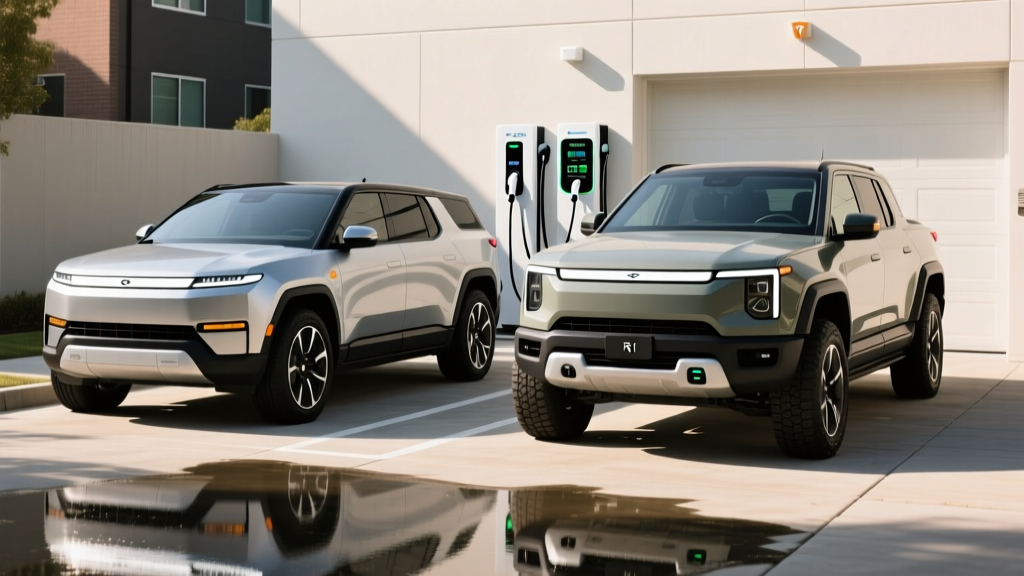
The ownership of Rivian vehicles has matured considerably since the R1T pickup and R1S SUV launched. For the 2026 model year, both platforms ride on Rivian's updated Enduro dual-motor architecture with a 106 kWh usable battery pack (NMC chemistry), delivering a blend of off-road capability, genuine utility, and daily-driver practicality that few competitors match. But prospective buyers need to look past the adventure marketing and understand the real numbers: what range you'll actually see on a highway road trip, how fast these vehicles charge when the battery is cold, and what the total cost picture looks like after federal incentives.
This review focuses on the dual-motor Standard configuration — the volume seller — while noting where the Tri-Motor and Max Pack options change the equation. If you're weighing a Rivian against the Ford F-150 Lightning, Tesla Cybertruck, or GMC Hummer EV, the data below will help you decide.
Range and Efficiency: EPA Sticker vs. Real-World Miles
Rivian offers multiple battery and motor configurations, each with a different EPA range rating. Here's what the numbers look like for the 2026 lineup:
| Configuration | Battery (usable kWh) | Chemistry | EPA Range (mi) | Efficiency |
|---|---|---|---|---|
| R1T Dual-Motor Standard | 106 kWh | NMC | 330 | 73 MPGe / 46 kWh/100mi |
| R1S Dual-Motor Standard | 106 kWh | NMC | 328 | 74 MPGe / 45 kWh/100mi |
| R1T Tri-Motor Max | 141 kWh | NMC | 420 | 65 MPGe / 52 kWh/100mi |
| R1S Tri-Motor Max | 141 kWh | NMC | 410 | 66 MPGe / 51 kWh/100mi |
Rivian's NMC (nickel manganese cobalt) chemistry offers higher energy density than LFP alternatives, which is how they pack 106 usable kWh into a relatively compact enclosure. The trade-off: NMC batteries benefit from keeping state of charge between 20–80% for daily use, unlike LFP packs that tolerate regular 100% charges. Rivian's battery management software includes configurable charge limits and preconditioning to help manage long-term health.
Charging Speed: DC Fast, Level 2, and the Curve You Need to Know
Charging speed is where Rivian ownership either clicks or frustrates, depending on your routine. Here are the hard numbers:
| Charging Level | Power / Rate | Time / Miles Added | Notes |
|---|---|---|---|
| DC Fast Charge (peak) | 220 kW max | 10–80% in ~30 min | Peak rate sustained to ~55% SoC, then tapers |
| DC Fast Charge (average 10-80%) | ~150 kW avg | ~160 miles added in 20 min | Preconditioning critical for peak speed |
| Level 2 (home, 48A / 11.5 kW) | 11.5 kW | ~25 miles/hr of charging | Full charge in ~10.5 hours (0–100%) |
| Level 2 (home, 32A / 7.7 kW) | 7.7 kW | ~17 miles/hr of charging | Full charge in ~15 hours |
| Level 1 (120V household) | 1.4 kW | ~3 miles/hr of charging | Emergency/trickle only |
The charge curve matters more than the peak number. The R1T and R1S hit 220 kW only when the battery is preconditioned (warm) and between roughly 10–55% state of charge. After 55%, the rate steps down to around 150 kW, and above 80% it drops sharply to under 50 kW. This is standard NMC behavior, but it means a 10–90% session takes roughly 45 minutes, not 30. Plan your road-trip stops accordingly — charging to 80% and driving more frequently is faster than waiting for a full battery.
Rivian uses the NACS (North American Charging Standard) connector on 2026 models, granting direct access to Tesla Supercharger V3 and V4 stalls without an adapter. This is a significant practical advantage over CCS-only vehicles as the Supercharger network remains the most reliable DC fast-charging infrastructure in the US, per fueleconomy.gov and independent reliability surveys.
Performance, Drivetrain, and Capability
Every 2026 R1T and R1S comes with all-wheel drive. The Enduro dual-motor setup produces 533 horsepower and 610 lb-ft of torque in Standard output, with a 0–60 mph time of 4.5 seconds for the R1T (4.6 for the R1S). The Tri-Motor variant jumps to 850 hp and a 3.0-second 0–60, rivaling sports cars while towing 11,000 pounds.
| Spec | R1T Dual-Motor | R1S Dual-Motor | R1T Tri-Motor |
|---|---|---|---|
| Horsepower | 533 hp | 533 hp | 850 hp |
| 0–60 mph | 4.5 sec | 4.6 sec | 3.0 sec |
| Drivetrain | AWD (dual-motor) | AWD (dual-motor) | AWD (tri-motor) |
| Towing Capacity | 11,000 lbs | 7,700 lbs | 11,000 lbs |
| Ground Clearance | 14.9 in (max) | 14.9 in (max) | 14.9 in (max) |
| Water Fording | 36 in | 36 in | 36 in |
The quad-motor configuration was discontinued after 2024, so the Tri-Motor is now the performance flagship. For most buyers, the dual-motor's 533 hp is more than sufficient — it's the towing capacity and air suspension ride quality that define daily ownership of Rivian vehicles.
Pricing, Trims, and Federal Tax Credit Eligibility
Rivian pricing has shifted multiple times, but here's where the 2026 lineup stands at base MSRP before destination:
| Model / Trim | Base MSRP | As-Tested Typical | §30D Credit Eligible? |
|---|---|---|---|
| R1T Dual-Motor Standard | $69,900 | $76,000–$82,000 | No (MSRP cap $80,000 for trucks) |
| R1S Dual-Motor Standard | $74,900 | $80,000–$88,000 | Varies by config (SUV cap $80,000) |
| R1T Tri-Motor Max | $99,900 | $105,000+ | No (exceeds MSRP cap) |
| R1S Tri-Motor Max | $99,900 | $105,000+ | No (exceeds MSRP cap) |
Most Rivian buyers will not qualify for the full $7,500 federal credit once options are added. This is a critical factor in total-cost comparisons against the Ford F-150 Lightning (which has lower-priced trims that qualify) or the Tesla Model X.
Interior, Cargo, and Daily Livability
The R1S seats up to seven with its optional third row, though third-row legroom (30.4 inches) is best suited for children. Behind the third row, cargo space is 10.5 cu ft; fold the third row and you get 46.7 cu ft; fold both rear rows for 104.7 cu ft.
The R1T's 4.5-foot bed is shorter than a full-size pickup's, but the Gear Tunnel — a lockable, pass-through compartment behind the cab — adds 11.7 cu ft of enclosed storage unique to Rivian. The R1T also features a powered tonneau cover and a front trunk (frunk) with 11.0 cu ft of space, useful for groceries or charging cables.
The 15.6-inch center touchscreen runs Rivian's proprietary infotainment software. It's responsive and well-organized, but lacks Apple CarPlay and Android Auto — a dealbreaker for some buyers. Instead, Rivian provides its own navigation, media, and phone integration. Over-the-air updates regularly add features, but the closed ecosystem is a deliberate choice that mirrors Tesla's approach.
Driver Assistance, Tech, and Safety
Rivian's Driver+ system is a Level 2 driver-assistance feature per SAE classification. It provides adaptive cruise control, lane centering, and automatic lane changes on mapped highways — but the driver must remain fully engaged, hands on or near the wheel, and eyes on the road at all times. This is not autonomous or "self-driving" capability.
The Driver+ system works well on interstate highways, with smooth lane-keeping and confident merging. It doesn't match GM's Super Cruise or Ford's BlueCruise for hands-off operation on approved roads, however. Rivian's camera-and-radar sensor suite provides comprehensive ADAS features including automatic emergency braking, blind-spot monitoring, and rear cross-traffic alert. The R1S and R1T have earned IIHS Top Safety Pick+ ratings in prior model years; check IIHS.org for updated 2026 crash-test results.
A standout feature is the built-in air compressor (available with the Adventure Package), useful for airing up tires after off-road use or inflating gear. The camp kitchen accessory and integrated Bluetooth speaker add to the adventure-oriented utility, though they're expensive add-ons.
Warranty, Reliability, and Long-Term Ownership Costs
Rivian provides the following warranty coverage:
- Battery: 8 years / 175,000 miles (whichever comes first), with a capacity retention threshold of 70% of original capacity
- Powertrain: 8 years / 175,000 miles
- Bumper-to-Bumper: 5 years / 60,000 miles
- Corrosion: 5 years / unlimited miles
The 175,000-mile battery warranty is competitive with industry standards (Tesla offers 8yr/120,000–150,000mi depending on model). The 70% retention threshold is standard for the industry. Real-world degradation data on Rivian's NMC packs is still maturing, but early high-mileage owners report roughly 5–8% loss over the first 50,000 miles, consistent with NMC chemistry norms.
Insurance costs are a notable pain point in the ownership of Rivian vehicles. Average annual premiums run $2,800–$3,600 depending on state, driving record, and coverage level — significantly above the EV average. Get quotes before committing to a purchase.
Home charging costs depend on your local electricity rate. At the US average of $0.16/kWh, fully charging the 106 kWh Standard pack costs roughly $17, yielding about 4.5 cents per mile. Compare that to a gas truck at 18 MPG and $3.50/gallon: roughly 19.4 cents per mile. The per-mile savings are substantial, but the higher purchase price and insurance offset some of the advantage over a 5-year ownership horizon.
Pros, Cons, and Who Should Buy a Rivian
- Class-leading off-road capability (14.9" ground clearance, 36" water fording)
- NACS connector = direct Supercharger access
- Gear Tunnel and frunk provide unique utility (R1T)
- 533 hp dual-motor is quick without Tri-Motor price premium
- 11,000-lb towing capacity (R1T) is best-in-class for EV trucks
- Over-the-air updates add features post-purchase
- Most configurations exceed $80K MSRP cap, losing §30D credit
- No Apple CarPlay or Android Auto
- Insurance premiums run 25–40% above comparable EVs
- Real-world highway range 15–20% below EPA in cold weather
- Service center network still limited outside major metros
- Third row in R1S is tight for adults
- Adventure-oriented families who need genuine off-road capability and 7-passenger seating (R1S) or a truck bed (R1T) without sacrificing daily comfort
- Home-charging owners with Level 2 access who can absorb the higher purchase price and benefit from low per-mile electricity costs
- Towing users who need 11,000-lb capacity and don't mind the range penalty while towing (expect 150–180 miles real-world while towing heavy)
- Budget-conscious buyers — the Ford F-150 Lightning Pro starts under $55,000 and qualifies for the full tax credit
- CarPlay/Android Auto loyalists who can't live without phone projection
- Rural owners far from Rivian service centers or DC fast-charging corridors
Frequently Asked Questions
What is the real-world range of a Rivian R1T or R1S?
The EPA rates the R1T Dual-Motor Standard at 330 miles and the R1S at 328 miles. In real-world highway driving at 75 mph, expect 270–290 miles. In sub-freezing temperatures, that drops to 220–250 miles. The Tri-Motor Max extends the EPA figure to 420 miles (R1T) but efficiency drops to 52 kWh/100mi.
How fast does a Rivian charge at home and on the road?
On a DC fast charger, the R1T and R1S peak at 220 kW and charge from 10–80% in approximately 30 minutes with proper battery preconditioning. At home on a 48-amp Level 2 charger (11.5 kW), you'll add about 25 miles of range per hour, or a full charge overnight in roughly 10.5 hours.
Does the Rivian R1T or R1S qualify for the federal EV tax credit?
Eligibility is limited. The base R1T Dual-Motor at $69,900 is under the $80,000 MSRP cap for trucks, but most buyers add options that push the price above the cap. Income limits ($300K joint / $150K single) and battery sourcing requirements also apply. Verify current eligibility at IRS.gov before purchase.
Is a Rivian worth it compared to the Ford F-150 Lightning or Tesla Cybertruck?
If you prioritize off-road capability, premium interior quality, and NACS Supercharger access, the Rivian is compelling. If budget and tax-credit eligibility are paramount, the F-150 Lightning offers more value. The Cybertruck undercuts on price in some trims but has a polarizing design and limited service infrastructure. Each serves different use cases — there's no universal winner.
What are the biggest ongoing costs of Rivian ownership?
Insurance is the standout ongoing cost at $2,800–$3,600/year. Electricity costs are low (~4.5 cents/mile at home). Tire replacement runs higher than average due to the vehicle's weight and torque — expect $1,200–$1,800 for a set of four every 30,000–40,000 miles. Rivian offers prepaid service plans, and the vehicle requires no oil changes or traditional powertrain maintenance.