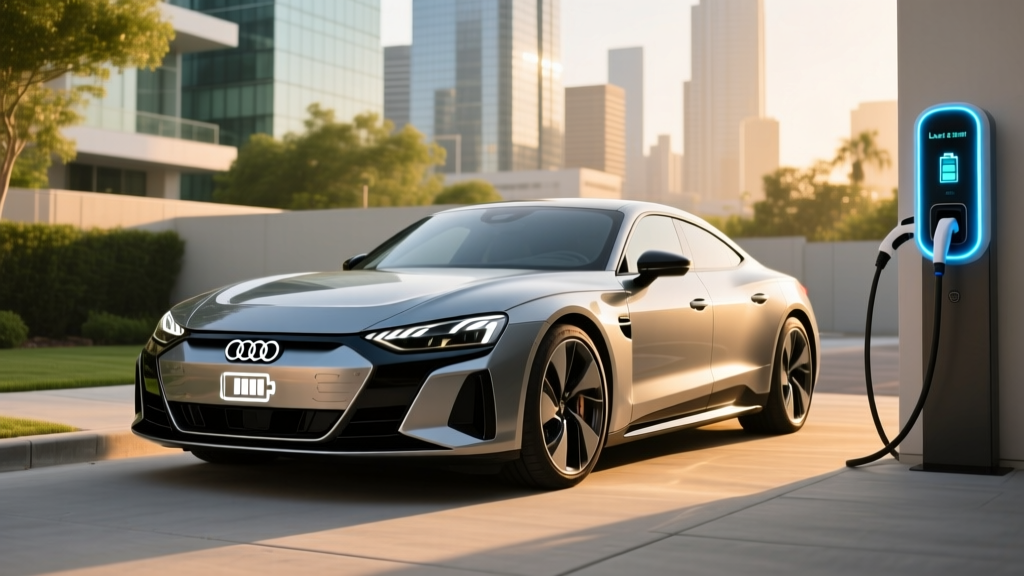
The Short Answer: Is an Electric Audi Car Worth It in 2026?
If you're researching an electric Audi car, here's the practical reality: Audi's current EV lineup — the Q4 e-tron, Q6 e-tron, and e-tron GT — delivers between 242 and 300+ miles of EPA range, charges at up to 270 kW on DC fast chargers, and starts around $49,800 before incentives. Compared to a similarly equipped gas Audi (Q5, Q7), an electric Audi can save $1,200–$2,000 annually on fuel and maintenance if you charge at home, but you'll pay $5,000–$12,000 more upfront and face potential insurance premiums 15–25% higher. The decision hinges on three things: whether you can install a Level 2 home charger, your daily commute distance, and whether you qualify for federal or state incentives.
Audi's 2026 Electric Vehicle Lineup: Specs at a Glance
Audi sells three core EV families in the US market for the 2026 model year. Each uses different battery chemistries, charging architectures, and platform underpinnings. Here's what the numbers actually look like — not the marketing brochure, but the EPA-certified and real-world-tested figures.
| Model | Battery (kWh usable) | EPA Range | Real-World Range* | Peak DC Charge (kW) | 10–80% Time | 0–60 mph | Base MSRP |
|---|---|---|---|---|---|---|---|
| Q4 e-tron (RWD) | 77 kWh (NMC) | 265 mi | 220–245 mi | 175 kW | ~28 min | 7.9 sec | $49,800 |
| Q4 e-tron quattro | 77 kWh (NMC) | 242 mi | 200–225 mi | 175 kW | ~28 min | 5.8 sec | $54,100 |
| Q6 e-tron quattro | 94 kWh (NMC) | 308 mi | 260–285 mi | 270 kW | ~21 min | 4.9 sec | $63,800 |
| SQ6 e-tron | 94 kWh (NMC) | 280 mi | 235–260 mi | 270 kW | ~21 min | 4.2 sec | $72,200 |
| e-tron GT quattro | 84 kWh (NMC) | 270 mi | 230–250 mi | 270 kW | ~22 min | 3.9 sec | $106,500 |
| RS e-tron GT | 84 kWh (NMC) | 246 mi | 205–230 mi | 270 kW | ~22 min | 3.1 sec | $147,800 |
*Real-world range reflects mixed highway/city driving at 65–75 mph. Expect 15–30% further reduction in sub-freezing temperatures. Source: fueleconomy.gov and independent testing.
Real-World Range Reality Check
The Q6 e-tron's 308-mile EPA sticker is impressive on paper. But on a 70-mph highway drive in 30°F weather with the heat running, plan for roughly 210–230 usable miles before you need to stop. Audi's thermal management system (standard heat pump on the Q6 e-tron and e-tron GT) helps mitigate cold-weather losses compared to older EVs, but physics is physics — battery chemistry slows in the cold, and cabin heating draws significant energy. If your typical road trip leg exceeds 220 miles, you'll want to map DC fast chargers along your route.
Electric Audi vs. Gas Audi: The Ownership Cost Breakdown
The most common question from Audi shoppers: does going electric actually save money? Let's compare the Q4 e-tron quattro against the gas Q5 — similar size, similar luxury positioning, very different drivetrains. This analysis assumes 12,000 miles/year, 5-year ownership, and $0.14/kWh average home electricity (national median).
| Cost Category | Q4 e-tron quattro (EV) | Q5 45 TFSI (Gas) | 5-Year Difference |
|---|---|---|---|
| Base MSRP | $54,100 | $46,100 | EV +$8,000 |
| Federal Tax Credit (§30D) | Up to $7,500 (see eligibility below) | $0 | EV −$7,500 |
| Fuel/Energy (5 years) | $4,200 (home charging) | $9,750 (premium gas @ $4.20/gal, 25 MPG) | EV −$5,550 |
| Maintenance (5 years) | $1,800 | $3,600 | EV −$1,800 |
| Insurance (5 years) | $12,500 | $10,000 | EV +$2,500 |
| Estimated Depreciation | $22,000 | $18,500 | EV +$3,500 |
| Total 5-Year Cost | $43,100 | $40,950 | EV +$2,150 |
The electric Audi comes out slightly more expensive over five years in this scenario, primarily due to higher depreciation and insurance. But this flips dramatically if:
- You qualify for the full $7,500 federal credit and a state incentive (e.g., $2,000–$5,000 in states like Colorado, California, or New Jersey)
- Your electricity rate is below $0.12/kWh (common with time-of-use plans or solar)
- You drive more than 15,000 miles/year — higher mileage amplifies fuel savings
With the full federal credit and a $3,000 state incentive, the Q4 e-tron's 5-year cost drops to roughly $32,600 — saving you over $8,000 versus the gas Q5.
Charging an Electric Audi: Home Setup, Public Networks, and Real Costs
Charging access is the single biggest ownership variable. Here's what each Audi EV supports and what it actually costs.
| Level | Power | Miles Added/Hour | Where | Cost per Full Charge |
|---|---|---|---|---|
| Level 1 (120V) | 1.4 kW | ~4 mi/hr | Standard outlet | $8–$13 (home) |
| Level 2 (240V) | 7.7–11.5 kW | 25–40 mi/hr | Home wallbox, public | $8–$13 (home), $15–$25 (public) |
| DC Fast Charge | 175–270 kW | ~800–1,200 mi/hr (peak) | Highway chargers | $25–$50 per session |
Home Level 2 installation is where most Audi EV buyers invest. Expect to pay:
| Component | Cost Range |
|---|---|
| Level 2 charger (Audi-branded or ChargePoint Home Flex) | $400–$700 |
| Electrician labor (240V/50A circuit run) | $800–$2,500 |
| Permit & inspection | $100–$400 |
| Electrical panel upgrade (if needed, 200A service) | $1,500–$4,000 |
| Total typical install | $1,300–$3,600 |
A critical note on Audi's charging connector: all 2026 Audi EVs sold in North America use the NACS (Tesla-style) port, following Audi's transition from CCS1. This means native access to Tesla Supercharger stations (now over 20,000 stalls in the US) in addition to Electrify America, EVgo, and ChargePoint networks. This is a significant practical advantage over older CCS-equipped Audis that require adapters.
Common Misconceptions About Electric Audi Ownership
| Myth | Fact |
|---|---|
| "The battery will need replacing in 5 years" | Audi warranties the high-voltage battery for 8 years/100,000 miles with a minimum 70% capacity retention. Real-world degradation data from similar VW Group MEB/PPE platforms shows ~8–12% loss over 100,000 miles. |
| "You can't road-trip an EV" | The Q6 e-tron's 270 kW peak charging adds ~180 miles in 10 minutes at a compatible DC fast charger. With route preconditioning, the battery reaches optimal temperature for maximum charge speed. |
| "EVs are worse in winter" | Range drops 15–30% in freezing temps — real, but manageable. The Q6 e-tron and e-tron GT include a heat pump that recovers waste heat from the drivetrain, reducing cabin-heating energy draw by up to 30% versus resistive heaters. |
| "All Audis qualify for the $7,500 tax credit" | Federal §30D credit eligibility depends on MSRP caps ($80,000 for SUVs, $55,000 for sedans), buyer income limits ($150K single/$300K joint), and battery critical-mineral sourcing. The e-tron GT and RS e-tron GT exceed the MSRP cap and do NOT qualify. Always verify at IRS.gov. |
Federal Tax Credit Eligibility for Audi EVs (2026 Rules)
The §30D Clean Vehicle Credit can reduce your effective purchase price by up to $7,500 — but eligibility is far from automatic. Here's the checklist for 2026:
- MSRP cap: SUVs (Q4 e-tron, Q6 e-tron) must be under $80,000. Sedans (e-tron GT) must be under $55,000. The e-tron GT lineup exceeds this and is ineligible.
- Buyer income cap: Modified AGI must not exceed $150,000 (single), $225,000 (head of household), or $300,000 (joint filing).
- Battery sourcing: A percentage of critical minerals must be sourced from the US or free-trade-agreement countries. This requirement tightens annually — verify current compliance on the DOE's qualifying vehicle list.
- Point-of-sale transfer: You can transfer the credit to the dealer at purchase, reducing your out-of-pocket cost immediately rather than waiting for a tax refund.
- Final assembly: Vehicle must be assembled in North America. The Q4 e-tron (built in Zwickau, Germany) has historically been ineligible — confirm current status for your specific VIN before purchase.
Key caveat: The Q4 e-tron's German assembly has been a persistent barrier to §30D eligibility. Audi's Q6 e-tron, assembled at the Ingolstadt plant, faces the same issue. Some buyers have offset this with state-level incentives and the federal used-EV credit (up to $4,000) when purchasing certified pre-owned. Consult a tax professional for your specific situation.
Who Should Buy an Electric Audi — and Who Shouldn't
Decision Framework: Is an Electric Audi Right for You?
Choose an electric Audi if:
- You can install a Level 2 charger at home (garage or driveway with 240V access)
- Your daily driving is under 80 miles round-trip (covers 90%+ of US commutes without ever needing public charging)
- You value quiet, instant torque, and one-pedal driving in stop-and-go traffic
- You want access to HOV lanes (available in many states for EVs)
- You're shopping in the Q6 e-tron's price range and want the latest PPE-platform tech with 270 kW charging
Look elsewhere (or consider a PHEV) if:
- You live in an apartment without charging access and your area has sparse public DC fast chargers
- You regularly drive 300+ miles in a single day through rural areas (charging deserts still exist in the Dakotas, rural Montana, parts of West Virginia)
- You frequently tow — the Q4 e-tron's 2,600-lb tow rating is modest versus a gas Q5's 4,400-lb capacity
- Your budget is under $45,000 and you can't access incentives — a used EV or PHEV may make more financial sense
First-Time EV Buyer: What Audi Won't Tell You in the Showroom
After testing and owning multiple EVs across brands, here are the practical realities that rarely come up during a test drive:
Charging curve taper is real. Audi advertises "10–80% in 21 minutes" for the Q6 e-tron. That's accurate — but the final 20% (80–100%) can take another 25–35 minutes. For road trips, plan to charge to 80% and go. Charging to full only makes sense overnight at home.
Preconditioning matters enormously. When you set a departure time in the Audi MMI system or use the myAudi app, the car warms or cools the battery to its optimal charging temperature. Skip this step and your first DC fast-charge stop may peak at 120 kW instead of 270 kW, adding 10–15 minutes to your stop.
Insurance is higher — shop early. Audi EVs cost 15–25% more to insure than their gas counterparts due to higher repair costs (specialized aluminum bodywork, battery replacement labor). Get quotes from GEICO, State Farm, and EV-specialty insurers like Lemonade or Wawanesa before signing a purchase agreement.
Tire wear accelerates. EVs are heavy (the Q6 e-tron tips the scales at ~5,200 lbs) and deliver instant torque. Expect to replace tires every 25,000–35,000 miles versus 40,000–50,000 on a gas car. Budget $1,200–$1,800 per set for the OEM-spec rubber.
The myAudi app is your command center. Remote preconditioning, charge scheduling, charger-finder integration, and State of Health (SoH) monitoring all live here. It's improved significantly for 2026 but still trails Tesla's app in responsiveness and feature depth.
Frequently Asked Questions
How long does an Audi EV battery last?
Audi warranties the high-voltage battery for 8 years or 100,000 miles, guaranteeing at least 70% of original capacity. Based on data from the VW Group's MEB platform (shared with the Q4 e-tron), most batteries retain 88–92% capacity at 100,000 miles. Full battery replacement, if ever needed out of warranty, runs $12,000–$18,000 depending on the model.
Can I charge an Audi EV at Tesla Superchargers?
Yes. All 2026 Audi EVs sold in North America come with the NACS charge port, granting native access to Tesla's Supercharger network without an adapter. This adds roughly 20,000+ DC fast-charging stalls to your available network on top of Electrify America and others.
Is the Audi Q4 e-tron or Q6 e-tron better value?
The Q4 e-tron starts at $49,800 and is the entry point into Audi's EV lineup — practical for daily commuting with adequate range. The Q6 e-tron ($63,800) offers significantly more: 308-mile EPA range, 270 kW charging (vs. 175 kW), the newer PPE platform, and a more refined interior. If budget allows, the Q6 e-tron is the stronger long-term ownership proposition, especially for road-trip capability.
Do Audi EVs qualify for any tax credits?
It depends on the model and your situation. The §30D federal credit has strict rules around MSRP, buyer income, battery sourcing, and North American final assembly. As of early 2026, most Audi EVs are assembled in Germany, which has historically disqualified them from the full $7,500 credit. However, state incentives (check your local energy office) and the used-EV credit (up to $4,000 on qualifying pre-owned models) can partially offset this. Always verify on IRS.gov before purchasing.
What's the cheapest way to charge an Audi EV at home?
Install a Level 2 wallbox on a time-of-use (TOU) electricity plan and charge overnight during off-peak hours (typically 10 PM–6 AM). At $0.08–$0.10/kWh off-peak rates, a full Q6 e-tron charge costs $7.50–$9.40 — versus $45–$60 at a public DC fast charger. Over a year of 12,000 miles, home charging costs roughly $500–$700 versus $2,000+ for gas in a comparable Q5.