Quick Answer: Is an Electric Aston Martin Worth It?
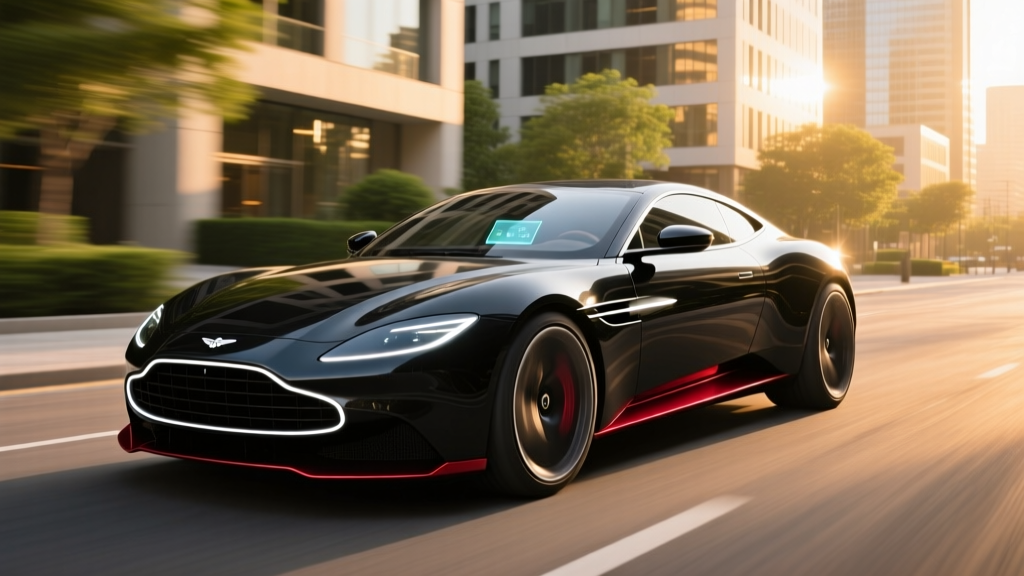
As of early 2026, Aston Martin has not yet delivered a production battery-electric vehicle to customers. The brand's first EV, announced for 2025-2026 launch windows, remains in the "confirmed but not yet available" category. If you're researching an electric Aston Martin today, you're likely looking ahead to what's coming — or considering a luxury EV alternative from Porsche, Mercedes, or BMW that delivers similar performance and prestige right now.
Bottom line: Wait for official specs and pricing before committing. In the meantime, luxury EV buyers have proven alternatives with 300+ mile ranges, 200+ kW fast charging, and established dealer networks.
The Current State of Electric Aston Martin (2026)
Aston Martin has been vocal about its electrification roadmap, partnering with Lucid Group to develop electric powertrains. The company confirmed plans for its first fully electric model, but as of this writing, no production vehicle is available for purchase or delivery.
What we know from manufacturer announcements:
- Partnership with Lucid Motors for EV technology
- Target launch window: 2025-2026 (preliminary, subject to delays common in low-volume luxury manufacturing)
- Expected positioning: Ultra-luxury GT/sports car segment, competing with Porsche Taycan Turbo GT, Mercedes-AMG EQS, and Lotus Eletre
- Pricing expectation: $200,000+ base MSRP based on brand positioning
Reality check: Low-volume luxury manufacturers frequently delay EV launches due to battery sourcing challenges, homologation requirements, and supply chain constraints. Until Aston Martin publishes official EPA range figures, battery specifications, and MSRP, treat all specs as preliminary estimates.
What Luxury EV Buyers Actually Want (And What's Available Now)
If you're researching an electric Aston Martin, you're likely in the market for a high-performance luxury EV with these characteristics:
- Range: 300+ miles EPA (real-world: 250-280 miles highway, less in cold weather)
- Performance: 0-60 mph under 3.5 seconds, 600+ horsepower
- Fast charging: 200+ kW peak DC rate, 10-80% in under 20 minutes
- Prestige: Brand cachet, bespoke interior, exclusivity
- Price: $150,000-$250,000+ range
Here's what's actually available in 2026:
| Model | EPA Range | Battery (kWh) | Peak DC Charge (kW) | 10-80% Time | 0-60 mph | Base MSRP |
|---|---|---|---|---|---|---|
| Porsche Taycan Turbo GT | 305 mi | 105 kWh (NMC) | 320 kW | ~18 min | 2.1 sec | $185,000 |
| Mercedes-AMG EQS 53 | 305 mi | 108 kWh (NMC) | 200 kW | ~31 min | 3.4 sec | $152,000 |
| Lotus Eletre R | 304 mi | 112 kWh (NMC) | 350 kW | ~20 min | 2.9 sec | $135,000 |
| BMW i7 M70 | 295 mi | 102 kWh (NMC) | 195 kW | ~34 min | 3.5 sec | $168,000 |
| Lucid Air Sapphire | 427 mi | 118 kWh (NMC) | 300 kW | ~15 min | 1.89 sec | $249,000 |
Key insight: All of these vehicles use NMC (nickel-manganese-cobalt) battery chemistry, which prioritizes energy density and performance over the cycle life and thermal stability of LFP (lithium iron phosphate). Expect 8-12% capacity degradation over 8 years/100,000 miles — covered by federal battery warranty requirements (8 years/100,000 miles minimum, 70% capacity retention).
Real Ownership Costs: Electric vs Gas Luxury Performance Cars
Luxury EVs cost more upfront but can save significantly on fuel and maintenance. Here's a realistic 5-year comparison:
| Cost Category | Luxury EV (e.g., Taycan Turbo GT) | Gas Equivalent (e.g., Porsche 911 Turbo S) |
|---|---|---|
| Purchase Price (MSRP) | $185,000 | $230,000 |
| Federal Tax Credit (§30D) | $0 (MSRP cap: $55k sedans / $80k SUVs) | $0 |
| Fuel/Energy (5 years, 75k miles) | $7,500 (home charging @ $0.15/kWh) | $22,500 (premium gas @ $5.00/gal, 18 MPG) |
| Maintenance (5 years) | $3,000 (tires, cabin filter, fluid checks) | $12,000 (oil changes, brakes, spark plugs, belts) |
| Insurance (5 years avg) | $25,000 | $28,000 |
| Depreciation (est. 5 years) | $95,000 (51%) | $115,000 (50%) |
| Total 5-Year Cost | $315,500 | $407,500 |
Tax credit reality: The federal §30D EV tax credit has MSRP caps ($55,000 for sedans, $80,000 for SUVs/trucks) and buyer income limits ($150k single / $300k married filing jointly). At $185,000+, luxury EVs like the Taycan Turbo GT do not qualify. Check current IRS rules for updates.
Charging cost breakdown:
- Home Level 2 charging: ~$0.15/kWh average (varies by utility) = $3.75 per 100 miles
- Public DC fast charging: ~$0.40-0.60/kWh = $10-15 per 100 miles
- Gas equivalent: $5.00/gal premium @ 18 MPG = $27.78 per 100 miles
Real-World Considerations Before You Buy
Luxury EVs solve some problems and create others. Here's what first-time buyers need to know:
Common Misconceptions vs Reality
| Myth | Fact |
|---|---|
| "300-mile range means I can drive 300 miles" | Real-world highway driving at 70+ mph reduces range 15-20%. Cold weather (below 40°F) adds another 20-30% loss. Expect 200-250 miles in winter highway conditions. |
| "Fast charging is as quick as filling up with gas" | Even at 320 kW peak, a 10-80% charge takes 18 minutes. But charging slows dramatically above 80% to protect the battery. Plan 25-30 minutes for a full road-trip stop. |
| "I don't need home charging if there are public stations" | Public DC fast charging costs 3-4x more than home Level 2. Without home charging, your "fuel" costs approach gas-car levels. Most luxury EV owners install a 40-amp Level 2 charger ($1,200-2,500 installed). |
| "EV batteries need replacement every few years" | Modern NMC batteries retain 85-92% capacity after 100,000 miles. Federal warranty requires 70% retention at 8 years/100,000 miles. Replacement costs $20,000-35,000 if needed out of warranty. |
| "EVs are zero-emission" | Tailpipe emissions are zero, but upstream electricity generation varies by grid mix. In coal-heavy regions, lifecycle emissions approach efficient hybrids. In renewable-heavy grids, EVs are 60-70% cleaner. |
Home Charging Access: The Make-or-Break Factor
Before purchasing any luxury EV, confirm you can install a Level 2 home charger:
- Garage/driveway access: You need a dedicated parking spot near your electrical panel
- Electrical panel capacity: A 40-amp Level 2 charger requires a 50-amp circuit. Older homes may need a $2,000-4,000 panel upgrade
- HOA/rental restrictions: Condos and apartments often lack EV charging infrastructure. Negotiate installation before purchasing
- Installation cost: $1,200-2,500 for a quality 40-amp charger (ChargePoint Home Flex, Tesla Wall Connector, Emporia Vue) including electrician labor and permits
If you cannot install home charging, reconsider an EV purchase. Public charging networks (Electrify America, EVgo, ChargePoint) are improving but remain unreliable in many regions, and exclusive reliance on DC fast charging accelerates battery degradation.
Decision Framework: Should You Wait for Aston Martin or Buy Now?
Choose Your Path
Wait for an electric Aston Martin if:
- Brand exclusivity is your top priority and you already own a capable daily driver
- You're willing to accept 12-24 months of uncertainty with no guaranteed delivery date
- You expect to pay $200,000-300,000+ and don't need federal tax incentives
- You value bespoke craftsmanship over cutting-edge EV technology
Buy an available luxury EV now if:
- You need a vehicle within 6 months
- You want proven reliability data, established service networks, and real-world range validation
- You value fast-charging infrastructure (Porsche's 800V architecture, Tesla Supercharger access via adapter)
- You prefer to test drive before committing to a $200k+ purchase
Consider a high-performance hybrid instead if:
- You lack home charging access or live in a charging-desert region
- You frequently drive 400+ mile trips and don't want to plan around charging stops
- You want exotic-car performance (Ferrari 296 GTB, McLaren Artura) with proven V6/V8 reliability
- Cold-weather range loss (20-30% in sub-40°F temps) would significantly impact your use case
What to Watch For When Aston Martin Releases Official Specs
When (and if) Aston Martin publishes detailed specifications, focus on these critical metrics:
- Usable battery capacity (kWh): Expect 100-120 kWh for 300+ mile range. Note that "gross" capacity includes a protective buffer; "usable" is what you can actually access.
- Peak vs sustained charge rate: A "350 kW peak" claim means nothing if the car only sustains that rate for 2 minutes before tapering. Look for 10-80% charging time instead.
- Thermal management system: Liquid cooling with active preconditioning is essential for fast charging and battery longevity. Air-cooled systems (rare in 2026) degrade faster.
- Charging connector: NACS (Tesla standard) is becoming dominant in North America. CCS1 is still common but transitioning. CHAdeMO is effectively dead.
- ADAS capabilities: Expect SAE Level 2 driver assistance (adaptive cruise, lane centering) — not autonomous driving. The driver must remain engaged.
- Warranty terms: Federal minimum is 8 years/100,000 miles for battery and powertrain, 70% capacity retention. Luxury brands often exceed this (Porsche: 8 years/100,000 miles, 70% retention).
Frequently Asked Questions
When will the first electric Aston Martin be available?
Aston Martin has announced plans for an EV launch in the 2025-2026 timeframe, but no production vehicle is currently available for purchase or delivery. Low-volume luxury manufacturers frequently experience delays. Until official specs and pricing are published, treat all information as preliminary.
Will an electric Aston Martin qualify for the $7,500 federal tax credit?
Almost certainly not. The §30D credit has MSRP caps ($55,000 for sedans, $80,000 for SUVs/trucks) and buyer income limits. An Aston Martin EV will likely cost $200,000+ and exceed these thresholds. Additionally, battery sourcing requirements (critical minerals and component manufacturing) may further limit eligibility. Consult a tax professional for your specific situation.
How does real-world EV range compare to EPA estimates?
EPA range assumes mixed driving at moderate speeds and temperatures. Real-world highway driving at 70-80 mph reduces range 15-20%. Cold weather (below 40°F) adds another 20-30% loss due to battery chemistry and cabin heating. A 300-mile EPA rating typically translates to 250-270 miles in ideal highway conditions, 200-230 miles in winter.
What's the difference between kW and kWh?
kW (kilowatts) measures power — the rate of energy transfer, like horsepower. kWh (kilowatt-hours) measures energy capacity — how much electricity the battery holds, like gallons in a gas tank. A 100 kWh battery charged at 200 kW (peak rate) would theoretically fill in 30 minutes, but charging slows above 80% to protect the battery, so actual 10-80% time is longer.
Do I need to install a home charger before buying a luxury EV?
Yes, if possible. Home Level 2 charging costs ~$0.15/kWh vs $0.40-0.60/kWh for public DC fast charging. Without home charging, your energy costs approach gas-car levels, and you'll spend significant time at public stations. Installation costs $1,200-2,500 for a quality 40-amp charger, potentially more if your electrical panel needs an upgrade.
How long do EV batteries last, and what does replacement cost?
Modern NMC batteries retain 85-92% capacity after 100,000 miles. Federal warranty requires 70% retention at 8 years/100,000 miles. Out-of-warranty replacement costs $20,000-35,000 for a 100+ kWh pack. Most owners never need replacement — batteries typically outlast the vehicle's economic life.
Is an electric Aston Martin a good investment?
Luxury EVs depreciate 50-60% over 5 years, similar to gas equivalents. They're not investments — they're depreciating assets. Buy because you want the driving experience, brand prestige, and instant torque, not because you expect resale value appreciation.
The Bottom Line
An electric Aston Martin represents an intriguing future possibility for ultra-luxury EV buyers, but as of early 2026, it remains unproven and unavailable. If you're ready to purchase a high-performance luxury EV today, proven alternatives from Porsche, Mercedes, BMW, Lotus, and Lucid offer 300+ mile ranges, sub-3-second 0-60 times, and established dealer networks.
Before committing to any luxury EV, ensure you have home charging access, understand real-world range limitations, and accept that federal tax credits won't apply at these price points. The technology is mature, the charging infrastructure is improving, and the driving experience is unmatched — but only if your use case aligns with EV realities.
Sources: EPA Fuel Economy, IRS Clean Vehicle Credits, manufacturer specifications