Quick Verdict: Acura's Electric Flagship Delivers Where It Counts
The electric Acura ZDX returns for 2026 as a midsize luxury SUV built on General Motors' Ultium platform — the same architecture underpinning the Cadillac Lyriq and Chevrolet Blazer EV. With an EPA-estimated range of up to 313 miles, a premium interior, and access to the Tesla Supercharger network via NACS, the ZDX occupies a compelling position in the $55,000–$75,000 luxury EV SUV segment. But does it outshine rivals like the BMW iX, Genesis Electrified GV70, and its platform-mate, the Lyriq? Let's break down the numbers that matter.
| Spec | A-Spec (RWD) | A-Spec (AWD) | Type S |
|---|---|---|---|
| EPA Range | 313 mi | 304 mi | 278 mi |
| Battery (usable) | 102 kWh, NMC lithium-ion (Ultium) | ||
| Horsepower | 358 hp | 358 hp (dual-motor) | 500 hp (dual-motor) |
| 0–60 mph | ~6.5 sec | ~5.7 sec | ~4.5 sec |
| DC Fast Charge (peak) | 190 kW | ||
| 10–80% DC Charge | ~37 min | ||
| Level 2 Charge Rate | 11.5 kW (~31 mi/hr) | ||
| MPGe (combined) | 94 MPGe | 91 MPGe | 84 MPGe |
| Base MSRP | $59,550 | $62,550 | $72,450 |
Range and Efficiency: EPA Sticker vs. Real-World Expectations
The rear-wheel-drive A-Spec ZDX posts an EPA-estimated 313 miles of range — competitive with the BMW iX xDrive50 (324 mi) and well ahead of the Genesis Electrified GV70 (236 mi). The dual-motor AWD version drops to 304 miles, while the performance-oriented Type S sacrifices range for power, landing at 278 miles.
EPA 313 mi (RWD) / 304 mi (AWD) / 278 mi (Type S). Expect ~250–280 miles from the AWD model on sustained highway driving at 70–75 mph. In cold weather (below 32°F), plan for a 20–30% reduction, yielding roughly 210–240 miles of usable range before you'll want to charge. The 102 kWh NMC battery provides a generous buffer, but the ZDX's 5,000+ lb curb weight works against efficiency at higher speeds.
Efficiency for the RWD model is rated at 94 MPGe combined, translating to roughly 36 kWh per 100 miles. That's slightly less efficient than the Lyriq (97 MPGe) due to the ZDX's taller, more aerodynamically aggressive styling. For daily commuting under 50 miles round-trip, you'll rarely need to charge more than twice per week on home Level 2.
Charging Speed: DC Fast Charging and Home Setup
The ZDX peaks at 190 kW on DC fast charging — adequate for road trips but trailing the Hyundai Ioniq 5 (240 kW) and Porsche Macan EV (270 kW). The 10–80% charge takes approximately 37 minutes, which means typical highway rest-stop sessions will run 25–30 minutes if you arrive at 10–15% SoC and charge to 80%.
| Charging Level | Power | Speed (approx.) | Use Case |
|---|---|---|---|
| Level 1 (120V) | ~1.4 kW | ~4 mi/hr | Overnight emergency / trickle |
| Level 2 (240V, 48A) | 11.5 kW | ~31 mi/hr | Home daily charging (full in ~9 hr) |
| DC Fast Charge | 190 kW peak | 10–80% in ~37 min | Road trips, Electrify America / Supercharger |
One major advantage for 2026: Acura has adopted the NACS (North American Charging Standard) connector, giving ZDX owners native access to the Tesla Supercharger network — over 25,000 stalls nationwide — without an adapter. This is a meaningful reliability upgrade over CCS-only vehicles still dependent on Electrify America or EVgo availability.
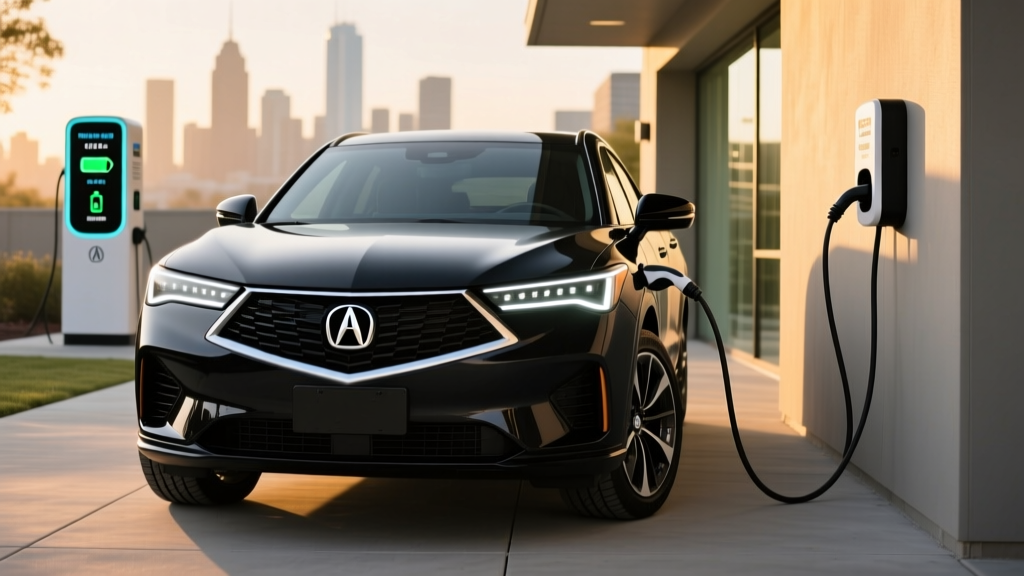
For home charging, the onboard 11.5 kW charger means a full 0–100% charge in roughly 9 hours on a properly installed 48-amp Level 2 circuit (hardwired, 60-amp breaker). If your home has a 200-amp electrical panel with spare capacity, expect a Level 2 installation to cost $800–$2,000 including the charger and electrician labor. Homes needing a panel upgrade (to 200A or 400A) can see costs rise to $3,000–$5,000.
Performance and Driving Dynamics
The ZDX lineup offers three distinct powertrain flavors:
- A-Spec RWD: 358 hp, single rear motor, 0–60 in ~6.5 seconds. Smooth and adequate for daily driving.
- A-Spec AWD: 358 hp, dual-motor all-wheel drive, 0–60 in ~5.7 seconds. The volume seller — confident merging and light snow traction.
- Type S: 500 hp, performance-tuned dual-motor AWD, 0–60 in ~4.5 seconds. Genuinely quick, with adaptive dampers and larger Brembo brakes.
All trims ride on GM's Ultium platform with a low-slung battery pack that keeps the center of gravity planted. The Type S adds air suspension, a limited-slip rear differential, and a sport-tuned chassis that makes it the most engaging EV SUV Acura has ever built. That said, steering feel remains somewhat numb across all trims — a common EV trait due to the heavy weight and electric power steering calibration.
Interior, Cargo, and Technology
Acura outfits the ZDX with an 11.3-inch touchscreen running Google Built-in (Maps, Assistant, Play Store) and an 11-inch digital instrument cluster. The infotainment system is responsive, with wireless Apple CarPlay and Android Auto, a 19-speaker Bang & Olufsen audio system (standard on Type S, optional on A-Spec), and over-the-air update capability.
Cargo space is generous for the segment:
- Behind second row: 28.4 cu ft
- Seats folded: 56.9 cu ft
- Front trunk (frunk): Not available (the Ultium platform packaging does not include a frunk)
Rear-seat legroom measures 38.7 inches, sufficient for adults on long trips. The flat floor (thanks to the battery skateboard) improves footroom compared to ICE crossovers. However, the absence of a frunk is a missed opportunity for stowing charging cables or groceries.
On the driver-assistance front, the ZDX includes AcuraWatch as standard — adaptive cruise control, lane-keeping assist, blind-spot monitoring, and automatic emergency braking. A hands-on highway assist system is available but remains SAE Level 2, meaning the driver must keep eyes on the road and hands near the wheel at all times. This is not a self-driving system.
Pricing, Trims, and Federal Tax Credit Eligibility
| Trim | Base MSRP | As-Tested (typical) | §30D Credit Eligibility |
|---|---|---|---|
| A-Spec RWD | $59,550 | $63,000–$65,000 | Partial — up to $3,750* |
| A-Spec AWD | $62,550 | $66,000–$68,000 | Partial — up to $3,750* |
| Type S | $72,450 | $76,000–$79,000 | Unlikely — exceeds MSRP cap** |
*Eligibility depends on battery critical-mineral and component sourcing per IRS rules. **The §30D SUV MSRP cap is $80,000, but income limits and sourcing requirements apply. Verify current-year rules at IRS.gov.
The federal EV tax credit under IRS §30D is complex and subject to change. Key requirements for the 2026 tax year include:
- MSRP cap: SUVs must have a base MSRP at or below $80,000 (the A-Spec trims qualify; the Type S at $72,450 clears this but options can push it over).
- Buyer income cap: Modified adjusted gross income must not exceed $300,000 (joint), $225,000 (head of household), or $150,000 (single).
- Battery sourcing: The credit is split into two halves — $3,750 for critical minerals and $3,750 for battery components. Vehicles using battery materials from "foreign entities of concern" (FEOC) may lose one or both halves. The ZDX's Ultium battery sourcing has been a moving target; check the latest fueleconomy.gov listing for current eligibility.
- Point-of-sale transfer: Buyers can transfer the credit to the dealer at purchase, reducing the out-of-pocket price immediately rather than waiting for a tax refund.
Ownership Costs and Warranty
Acura backs the ZDX with a competitive warranty package:
- Limited vehicle warranty: 4 years / 50,000 miles
- Powertrain & battery warranty: 6 years / 70,000 miles (covers battery capacity below 70% of original)
- Corrosion warranty: 5 years / unlimited miles
- Roadside assistance: 6 years / 70,000 miles
The battery warranty is slightly shorter than Hyundai/Kia's 10-year/100,000-mile coverage and Tesla's 8-year/120,000-mile standard. For a luxury vehicle at this price point, buyers should factor in higher insurance premiums (typically 15–25% above a comparable gas Acura MDX) and potential out-of-warranty battery replacement costs estimated at $15,000–$22,000 if needed beyond coverage.
Charging at home on a national average of $0.16/kWh, a full 102 kWh charge costs roughly $16.32, yielding a per-mile energy cost of about $0.052. Compare that to premium unleaded at $4.00/gallon in a 22 MPG gas SUV: roughly $0.182/mile. Over 15,000 miles annually, the ZDX saves approximately $1,900/year in fuel costs alone.
Pros
- 313-mile EPA range (RWD) eliminates daily range anxiety
- Native NACS / Tesla Supercharger access for road trips
- Spacious interior with 28.4 cu ft cargo and flat rear floor
- Type S variant delivers genuine 500-hp performance
- Google Built-in infotainment with OTA updates
- Quiet, refined ride quality befitting the Acura badge
Cons
- No frunk — a missed utility opportunity
- 190 kW peak DC charging trails segment leaders
- Battery warranty shorter than Hyundai/Kia/Tesla benchmarks
- Federal tax credit eligibility uncertain due to sourcing rules
- Steering feel is numb even on Type S
- Type S range drops to 278 miles — short for the price
Who Should Buy the Electric Acura ZDX?
The ZDX is best suited for luxury-minded families and commuters who want a premium badge, comfortable ride, and Supercharger access without stepping into Tesla or BMW territory. The A-Spec AWD at ~$63,000 is the value sweet spot — 304 miles of range, dual-motor confidence, and potential partial tax-credit eligibility.
The Type S appeals to driving enthusiasts who want 500 hp and adaptive suspension but should accept the 278-mile range trade-off. Road-trippers who regularly exceed 250 miles between stops should consider the RWD model or look at the BMW iX xDrive50 for its superior 324-mile range.
If you lack home charging access and rely entirely on public infrastructure, the ZDX's NACS connector and Supercharger compatibility make it more viable than CCS-only competitors — but the 190 kW peak means longer wait times than a Hyundai Ioniq 5 or Kia EV6 at the same stall.
Frequently Asked Questions
What is the real-world range of the electric Acura ZDX?
The EPA rates the RWD ZDX at 313 miles, but real-world highway driving at 70+ mph typically yields 250–280 miles. In freezing temperatures, expect 20–30% less — roughly 210–240 miles from the AWD model. Preconditioning the battery before fast charging helps recover some efficiency.
How fast does the Acura ZDX charge at home and on the road?
On a 48-amp Level 2 home charger (11.5 kW), the ZDX gains about 31 miles of range per hour, fully charging in ~9 hours. On DC fast charging, it peaks at 190 kW, reaching 10–80% in approximately 37 minutes. Charging slows significantly above 80% to protect the NMC battery — plan to charge to 80% on road trips unless you need the full buffer.
Does the Acura ZDX qualify for the $7,500 federal EV tax credit?
Partial eligibility is likely for A-Spec trims under the MSRP cap ($80,000 for SUVs), but the full $7,500 depends on battery critical-mineral and component sourcing requirements under IRS §30D. Buyer income caps ($150K single / $300K joint) also apply. Always verify current-year eligibility on IRS.gov and the EPA fueleconomy.gov tax credit database before purchasing.
Is the Acura ZDX worth buying over the Cadillac Lyriq or BMW iX?
The ZDX shares its Ultium platform with the Lyriq but offers a more premium interior, Acura's brand cachet, and Supercharger access. The Lyriq is slightly more efficient (97 MPGe vs. 94) and starts lower. The BMW iX offers more range (324 mi) and faster charging but at a higher price and without NACS. If Supercharger access and Acura's dealer network matter to you, the ZDX is the stronger pick.
What battery chemistry does the ZDX use, and how long will it last?
The ZDX uses an NMC (nickel-manganese-cobalt) lithium-ion battery on GM's Ultium platform. NMC offers high energy density but is more sensitive to sustained high SoC and extreme heat than LFP chemistry. Best practices: charge to 80% daily, use 100% only for long trips, and precondition in cold weather. Acura warrants the battery for 6 years/70,000 miles against capacity loss below 70%.
Does the ZDX have a front trunk (frunk)?
No. The Ultium platform packaging in the ZDX does not include a frunk. All cargo space is in the rear (28.4 cu ft behind the second row, 56.9 cu ft with seats folded).