The Short Answer: There Is No Fully Electric Acura MDX Yet
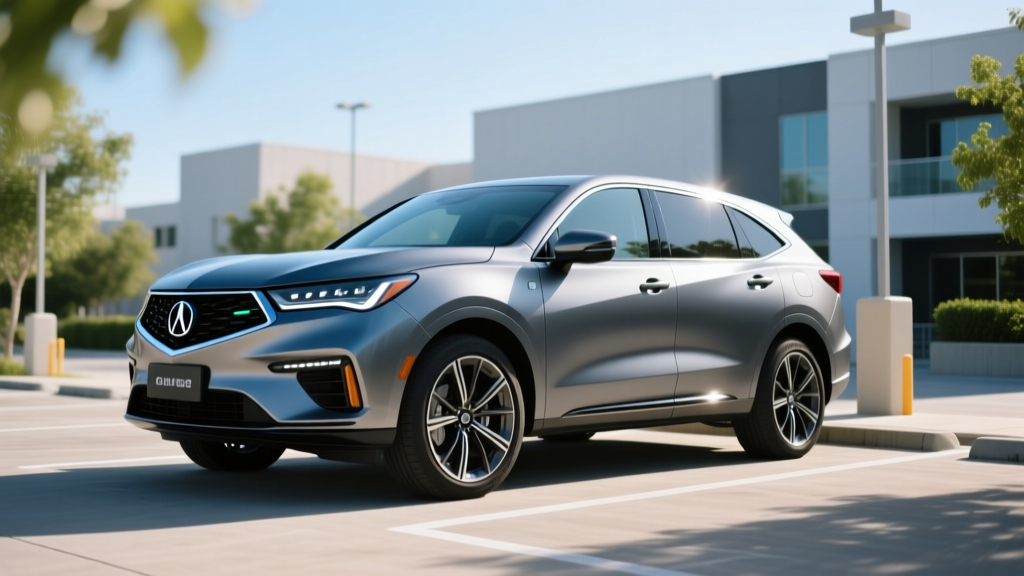
As of the 2026 model year, Acura does not sell a fully electric MDX. The MDX lineup remains powered exclusively by a 3.5L V6 (290 hp) and a turbocharged 3.0L V6 hybrid in the MDX Type S variant. Acura has not announced a battery-electric MDX, though parent company Honda targets a full EV lineup by 2040 and has begun rolling out the Honda Prologue — a midsize electric SUV built on GM's Ultium platform that serves as the closest electrified alternative in the Acura/Honda family.
If you're searching for an electric Acura MDX, you likely want a luxury three-row electric SUV. This guide covers what Acura actually offers today, what the closest EV alternatives deliver in range, charging, and cost, and whether waiting for an electric MDX makes financial sense.
What Acura Actually Offers in 2026: MDX Powertrain Breakdown
The 2026 Acura MDX continues with two powertrain options, neither of which is a plug-in hybrid or battery-electric vehicle:
| Spec | 2026 MDX (V6) | 2026 MDX Type S (Turbo V6) |
|---|---|---|
| Powertrain | 3.5L V6 + 10-speed auto | 3.0L Turbo V6 + 10-speed auto |
| Horsepower | 290 hp | 355 hp |
| EPA MPG (combined) | 22 MPG (FWD) / 21 MPG (SH-AWD) | 19 MPG (SH-AWD) |
| 0–60 mph | ~6.4 sec | ~5.5 sec |
| Seating | 7 passengers | 7 passengers |
| Starting MSRP | ~$51,500 | ~$68,000 |
| EPA Fuel Cost (annual) | ~$2,650 | ~$3,100 |
| Federal Tax Credit (§30D) | Not eligible (ICE) | Not eligible (ICE) |
Neither MDX variant qualifies for the IRS §30D federal clean vehicle credit, which applies only to plug-in electric vehicles meeting battery-sourcing, MSRP, and buyer-income requirements. If your goal is to reduce fuel costs or access EV incentives, the current MDX won't deliver either.
The Closest Electrified Alternative: Honda Prologue
Acura's parent company Honda launched the Honda Prologue for the 2024 model year, and it continues into 2026 with meaningful updates. Built on General Motors' Ultium battery platform, the Prologue is effectively what an electric MDX would look like if Acura badge-engineered it — a midsize, two-row electric SUV with competitive range and DC fast-charging capability.
| Spec | 2026 Honda Prologue (Elite AWD) | 2026 Acura MDX (SH-AWD) |
|---|---|---|
| Powertrain | Dual-motor BEV (Ultium) | 3.5L V6 gas |
| Horsepower | 288 hp | 290 hp |
| EPA Range | ~296 miles | ~435 miles (19.5-gal tank) |
| Usable Battery | 85 kWh (NMC) | N/A |
| Peak DC Fast Charge | 150 kW | N/A |
| 10–80% Charge Time | ~32 minutes | ~5 minutes (gas fill-up) |
| Level 2 Home Charge Rate | 11.5 kW (~37 mi/hr) | N/A |
| 0–60 mph | ~5.9 sec | ~6.4 sec |
| Starting MSRP | ~$51,500 | ~$51,500 |
| Federal Tax Credit (§30D) | Up to $7,500 (eligibility varies) | $0 |
| Annual "Fuel" Cost | ~$650 (electricity) | ~$2,650 (gasoline) |
| EPA Efficiency | ~87 MPGe combined | 21 MPG combined |
Per fueleconomy.gov, the Prologue's 87 MPGe combined translates to roughly 34 kWh per 100 miles. At the US average electricity rate of $0.17/kWh, that's approximately $5.78 per 100 miles — compared to $12.62 per 100 miles for the MDX SH-AWD at $3.50/gallon gas.
Real-World Range vs. EPA Sticker
The Prologue's EPA rating of ~296 miles assumes mixed driving at moderate temperatures. In real-world highway testing at 75 mph, expect 240–260 miles before needing to charge. In cold weather (below 30°F), battery chemistry and cabin heating can reduce range by 15–25%, dropping effective range to roughly 220–250 miles. Plan road trips around 200-mile charging intervals for a comfortable buffer.
Five-Year Cost of Ownership: Electric SUV vs. Gas MDX
The purchase price is only the beginning. Here's a realistic five-year ownership comparison, assuming 15,000 miles/year, home Level 2 charging for the EV, and current national-average fuel and electricity rates:
| Cost Category | 2026 Honda Prologue Elite AWD | 2026 Acura MDX SH-AWD |
|---|---|---|
| MSRP (before incentives) | $51,500 | $51,500 |
| Federal Tax Credit (§30D) | –$7,500 (if eligible)* | $0 |
| Effective Purchase Price | $44,000 | $51,500 |
| Fuel/Energy (5 yrs / 75k mi) | $3,250 | $13,250 |
| Maintenance (5 yrs) | $1,800 | $3,500 |
| Insurance (5 yrs avg) | $9,500 | $8,200 |
| Home Charger Install (L2) | $1,200 | $0 |
| Est. Depreciation (5 yrs) | $22,000 | $19,500 |
| 5-Year Total Cost | ~$81,750 | ~$95,950 |
*§30D credit eligibility depends on buyer income caps ($150k single / $300k joint), vehicle MSRP caps ($80k for SUVs), battery critical-mineral and component sourcing requirements, and point-of-sale transfer rules. Always verify current eligibility on IRS.gov before purchase.
The Prologue saves roughly $14,200 over five years in this scenario, driven primarily by the federal tax credit and dramatically lower energy costs. However, EV insurance premiums run 10–20% higher on average, and EV depreciation remains less predictable than established gas models. If you lack home charging access and rely on public DC fast chargers ($0.35–$0.55/kWh typical), your energy cost advantage shrinks significantly.
Luxury Three-Row Electric SUVs: What the Market Actually Offers
If three rows and a premium badge are non-negotiable, here's how the segment's actual electric options stack up against the MDX's size and price class:
| Spec | Kia EV9 (GT-Line AWD) | Rivian R1S (Dual-Motor) | Tesla Model X (LR) | Volvo EX90 (Twin Motor) |
|---|---|---|---|---|
| EPA Range | ~270 mi | ~352 mi | ~335 mi | ~300 mi |
| Battery (usable) | 99.8 kWh (NMC) | 109.4 kWh (NMC) | 100 kWh (NMC) | 107 kWh (NMC) |
| Peak DC Charge | 210 kW | 200 kW | 250 kW | 200 kW |
| 10–80% Time | ~24 min | ~30 min | ~25 min | ~30 min |
| Horsepower | 379 hp | 533 hp | 670 hp | 496 hp |
| 0–60 mph | 5.0 sec | 4.5 sec | 3.8 sec | 4.7 sec |
| Seating | 6 or 7 | 7 | 5, 6, or 7 | 7 |
| Starting MSRP | ~$60,000 | ~$79,900 | ~$81,630 | ~$79,995 |
| §30D Credit Eligible? | Limited (sourcing) | Yes (up to $7,500) | Yes (up to $7,500) | Limited (sourcing) |
| Battery Warranty | 10 yr / 100k mi | 8 yr / 120k mi | 8 yr / 150k mi | 8 yr / 100k mi |
The Kia EV9 is the closest match to an electric MDX in price, three-row practicality, and mainstream positioning — starting near $60,000 and offering 270 miles of range. The Rivian R1S and Tesla Model X deliver more range and performance but at $80,000+, placing them in a different price tier entirely.
Real-World Ownership Considerations Before You Buy
Home Charging Access
Level 2 home charging is the backbone of practical EV ownership. A 240V / 48-amp home charger (like the ChargePoint Home Flex or Emporia VUE) delivers roughly 11.5 kW, adding about 37 miles of range per hour to the Prologue. A full overnight charge covers most daily driving. Installation typically costs $800–$2,000 if your electrical panel has capacity, or $2,500–$5,000+ if a panel upgrade to 200 amps is needed. If you live in an apartment or lack dedicated parking, public charging costs and inconvenience will erode the EV cost advantage substantially.
Climate and Range Loss
NMC battery chemistry — used in the Prologue and all competitors listed above — loses efficiency in cold weather. Expect 15–25% range reduction below freezing, mitigated partially by preconditioning (warming the battery while plugged in before driving). If you live in northern climates with sustained sub-30°F winters, plan for 200–230 miles of effective range from a 296-mile EPA-rated vehicle.
Driving Patterns
If your daily commute is under 60 miles round-trip and you can charge at home, any of these EVs will cover your needs with range to spare. If you regularly drive 300+ miles between cities or tow frequently (the MDX tows up to 5,000 lbs; the EV9 tows up to 5,000 lbs but range drops sharply under load), a gas MDX or a plug-in hybrid may still make more sense until charging infrastructure matures along your routes.
Myths vs. Facts: Electric SUV Ownership
| Myth | Fact |
|---|---|
| "EV batteries need replacing every 5 years" | Modern NMC and LFP batteries are warranted for 8–10 years / 100,000–150,000 miles at 70%+ capacity retention. Real-world degradation data shows most EVs retain 85–92% capacity after 100,000 miles. |
| "You can't road-trip in an EV" | DC fast-charging networks (Electrify America, EVgo, Tesla Superchargers with NACS adapters) cover most US interstates. A 300-mile trip requires one 25–30-minute charge stop — manageable with planning. |
| "EVs cost more to insure and always will" | EV insurance premiums are currently 10–20% higher on average, but the gap is narrowing as repair data matures and more shops gain EV certification. Shop multiple carriers — some now offer EV-specific discounts. |
| "The $7,500 tax credit applies to every EV" | §30D eligibility requires meeting buyer income caps, MSRP caps, and strict battery-sourcing rules. Many vehicles lose partial or full credit eligibility as sourcing requirements tighten. Always check the current fueleconomy.gov tax credit database before purchasing. |
| "Electric SUVs can't tow" | The Kia EV9 and Rivian R1S are rated for 5,000 and 7,700 lbs respectively. However, towing at capacity can reduce range by 30–50%. Plan accordingly. |
Decision Framework: Should You Wait for an Electric Acura MDX?
Choose the Current Gas MDX If:
- You need three rows, AWD, and 5,000-lb towing today without compromise
- You lack reliable home or workplace Level 2 charging access
- Your annual mileage is under 10,000 miles (fuel savings won't offset EV premiums)
- You prefer the Acura brand and dealership experience specifically
Choose the Honda Prologue (or Kia EV9) Now If:
- You have home Level 2 charging and a daily commute under 80 miles
- You qualify for the §30D tax credit (check income and sourcing rules)
- You want to lock in ~$10,000 in five-year fuel savings
- Two rows (Prologue) or a different brand (EV9) is acceptable
Wait for an Electric Acura MDX If:
- The Acura badge, three rows, and premium dealer relationship are non-negotiable
- You can comfortably continue with your current vehicle for 2–4 more years
- You want solid-state or next-gen battery chemistry that may offer 350+ mile range and faster charging
Frequently Asked Questions
Will Acura ever make an electric MDX?
Acura has not announced an electric MDX as of early 2026. Honda's luxury division has signaled electrification plans, and the Prologue's Ultium-platform partnership with GM provides a technical foundation for a future electric Acura SUV. However, no timeline, nameplate, or specs have been confirmed. Industry analysts speculate a three-row electric Acura could arrive by 2028–2029, but this is unconfirmed.
Is the Honda Prologue basically an electric Acura MDX?
Not exactly. The Prologue is a two-row midsize SUV, while the MDX seats seven. The Prologue shares its Ultium platform with the Chevrolet Blazer EV and is positioned below Acura in price and materials quality. Think of it as a Honda Passport equivalent in electric form, not an MDX replacement. The interior is competent but lacks the leather, sound insulation, and tech refinement of the MDX cabin.
How much does it cost to charge an electric SUV at home?
At the US average electricity rate of $0.17/kWh, fully charging an 85 kWh battery (Prologue) costs approximately $14.45 from empty to full. For 15,000 miles of annual driving at 34 kWh/100mi, you'd use roughly 5,100 kWh per year, costing about $867 annually — compared to $2,650 in gasoline for the MDX SH-AWD.
Do I need to upgrade my electrical panel for a home charger?
It depends on your home's existing electrical service. A Level 2 charger drawing 48 amps requires a 60-amp dedicated circuit. Homes with 100-amp panels often need an upgrade to 200 amps, costing $2,000–$4,000. Homes with existing 200-amp panels usually have sufficient capacity. A licensed electrician can perform a load calculation to determine your exact requirements — do not skip this step.
What happens if the EV battery degrades?
Federal law mandates that EV batteries carry a warranty of at least 8 years / 100,000 miles (longer in California Air Resources Board states: 10 years / 150,000 miles). The warranty typically guarantees the battery will retain at least 70% of its original capacity. If it falls below that threshold within the warranty period, the manufacturer replaces or repairs it at no cost. Out-of-warranty battery replacement for an 85–100 kWh pack currently ranges from $12,000 to $20,000, though prices continue to decline as battery manufacturing scales.
How does the §30D tax credit point-of-sale transfer work?
Starting in 2024, eligible buyers can transfer the §30D credit to the dealer at the point of sale, reducing the purchase price by up to $7,500 on the spot rather than waiting to claim it on your tax return. The dealer must be registered with the IRS Energy Credits Online system. You still need to meet all income, MSRP, and sourcing requirements, and you'll report the transfer on your tax return. If your tax liability is less than the credit amount, you keep the full benefit — the point-of-sale transfer functions as an immediate rebate regardless of tax liability.