Electric 2.0: What It Means for 2026 EV Buyers
Electric 2.0 describes the current generation of EVs that have moved past early-adopter compromises: 250+ miles of EPA range, sub-20-minute 10–80% DC fast charging, NACS connector standardization, and MSRPs starting near $30,000 before incentives. For a typical driver covering 12,000 miles per year with access to home Level 2 charging, a 2026-era Electric 2.0 vehicle costs roughly $0.04–$0.06 per mile to fuel versus $0.12–$0.16 per mile for a 28 MPG gas car at $3.40/gallon — saving $900–$1,400 annually on energy alone. Add lower maintenance (no oil changes, fewer brake replacements thanks to regenerative braking), and the 5-year total cost of ownership gap narrows significantly despite higher upfront prices and insurance premiums.
The EV market has matured fast. If you evaluated electric vehicles three or four years ago and walked away because of 150-mile ranges, 45-minute charge times, or $55,000 price tags, the landscape you're looking at now is fundamentally different. Battery packs have grown larger and cheaper per kilowatt-hour. Charging infrastructure has consolidated around reliable networks. And the federal §30D clean vehicle tax credit — while more restrictive than ever on sourcing and income — can still knock up to $7,500 off the effective price of qualifying models when transferred at the point of sale.
This guide breaks down what owning an Electric 2.0 vehicle actually costs and requires in 2026, with the exact numbers you need to decide.
Electric 2.0 vs. Gas and Hybrid: The Real Numbers
Before committing, you need to see how a modern EV stacks up against the alternatives you're cross-shopping. Here's a data-driven comparison using a mainstream midsize crossover as the baseline — think a 2026 Tesla Model Y, Hyundai Ioniq 5, or Chevrolet Equinox EV versus a Toyota RAV4 Hybrid or RAV4 gas model.
| Category | Electric 2.0 EV | Hybrid (HEV) | Gas Vehicle (28 MPG) |
|---|---|---|---|
| Fuel/Energy Cost | $480–$720 (home L2) | $970 (41 MPG) | $1,455 (28 MPG) |
| Maintenance | $300–$500 | $600–$800 | $800–$1,100 |
| Insurance (avg) | $1,800–$2,400 | $1,500–$1,900 | $1,400–$1,800 |
| Total Annual Op. Cost | $2,580–$3,620 | $3,070–$3,670 | $3,655–$4,355 |
| EPA Efficiency | 110–130 MPGe | 38–41 MPG | 26–30 MPG |
| CO₂ Emissions (tailpipe) | 0 g/mi | ~220 g/mi | ~315 g/mi |
Key takeaway: The EV wins on fuel and maintenance but loses on insurance and purchase price. Your break-even point depends heavily on whether you charge at home (cheapest), rely on public DC fast chargers (more expensive, often $0.35–$0.50/kWh), or split the difference.
Compared to a hybrid like the RAV4 Hybrid (41 MPG combined per fueleconomy.gov), the EV's energy cost advantage is roughly $250–$500/year at residential electricity rates. That gap widens if you have solar panels or time-of-use rates that let you charge overnight at $0.08–$0.10/kWh.
The Real Cost of Electric 2.0 Ownership: A 5-Year Breakdown
Sticker price is only the beginning. Here's what five years of ownership actually looks like for a typical Electric 2.0 crossover priced around $42,000 before incentives, compared to a $34,000 gas equivalent.
| Cost Factor | Electric 2.0 EV ($42K MSRP) | Gas Vehicle ($34K MSRP) |
|---|---|---|
| Purchase Price (after incentives) | $34,500 (est. after §30D credit) | $34,000 |
| Fuel/Energy (5 yrs, 12K mi/yr) | $2,400–$3,600 | $7,275 |
| Maintenance (5 yrs) | $1,500–$2,500 | $4,000–$5,500 |
| Insurance (5 yrs) | $9,000–$12,000 | $7,000–$9,000 |
| Home Charger Install (one-time) | $800–$2,000 | $0 |
| Tires (5 yrs — EVs wear tires faster) | $1,200–$1,800 | $800–$1,200 |
| Estimated Depreciation | $14,000–$18,000 | $10,000–$14,000 |
| Total 5-Year Cost | $63,400–$74,400 | $63,075–$70,975 |
The totals are close — often within a few thousand dollars over five years. The EV's savings on fuel and maintenance largely offset its higher insurance, tire wear (EVs are heavier and deliver instant torque, accelerating tread wear by 20–30%), and potentially steeper depreciation.
Where you come out ahead with an EV: If you qualify for the full $7,500 §30D federal tax credit and can charge at home on off-peak electricity rates, your 5-year cost can dip below the gas car's. If you don't qualify for the credit (income above $150K single / $300K joint, or the vehicle doesn't meet battery sourcing requirements) and rely on public charging, the gas car is likely cheaper over five years.
Charging at Home vs. Public: What First-Time Buyers Must Know
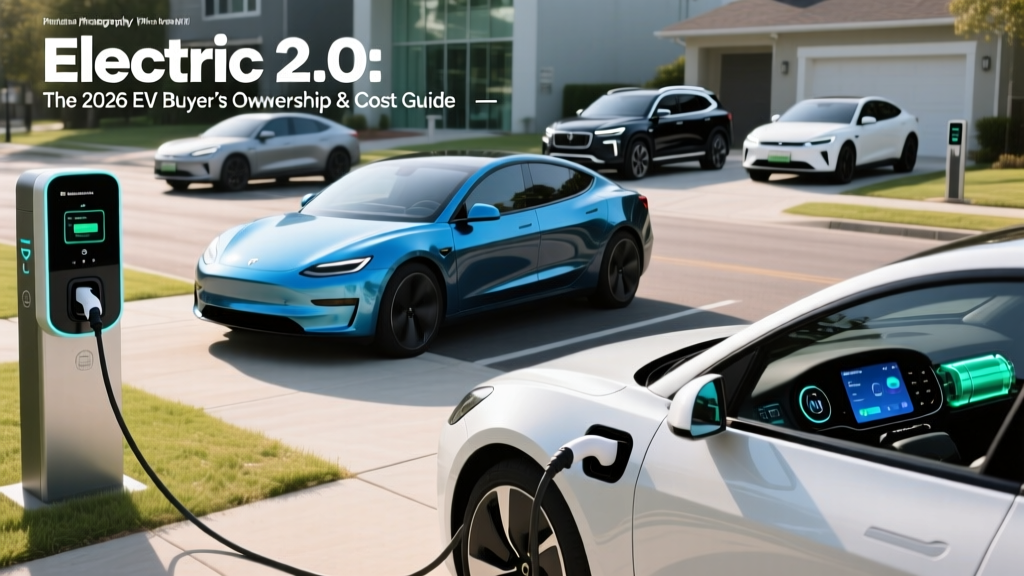
Home charging is the single biggest factor in EV satisfaction. If you can install a Level 2 charger, an Electric 2.0 vehicle becomes as convenient as plugging in your phone every night. If you can't, ownership requires more planning.
| Level | Power (kW) | Miles Added/Hour | Typical Cost | Best For |
|---|---|---|---|---|
| Level 1 (120V outlet) | 1.2–1.9 kW | 3–5 mi/hr | $0.12–$0.18/kWh | PHEVs, low-mileage days |
| Level 2 (240V home) | 7.2–11.5 kW | 25–44 mi/hr | $0.10–$0.18/kWh | Daily charging, full overnight refill |
| DC Fast Charge | 50–350 kW | 150–800+ mi/hr (peak) | $0.30–$0.55/kWh | Road trips, quick top-ups |
Home Level 2 installation costs typically range from $800 to $2,000 for a straightforward setup (existing 200-amp panel, short wire run to garage). If your home needs a panel upgrade to 200 amps, add $1,500–$3,500. Always get a quote from a licensed electrician — older homes with 100-amp service may need the upgrade before adding a 40-amp or 48-amp EV circuit.
A critical concept first-time buyers miss: kW (kilowatts) measures power — how fast energy flows — while kWh (kilowatt-hours) measures energy — how much the battery holds. A 77 kWh battery charged at 11.5 kW takes roughly 6.7 hours from 0–100%. That same battery at a 250 kW DC fast charger can go from 10–80% in about 18 minutes, but the charge rate tapers significantly above 80% to protect the battery.
If you live in an apartment or lack dedicated parking: Look for buildings with shared Level 2 chargers, workplace charging programs, or reliable public Level 2 stations near your routine. Public DC fast charging exclusively is viable but adds $500–$1,000/year in extra energy costs versus home charging and requires time discipline.
Electric 2.0 Specs That Matter: What to Look For in 2026 Models
Not every EV on a dealer lot qualifies as "Electric 2.0." Here are the minimum benchmarks that separate the current generation from the compromises of 2020–2023 models:
- EPA range: 250+ miles (real-world highway expectation: 200–230 miles in moderate temps, 170–200 miles below freezing)
- Battery capacity: 65–100 kWh usable (LFP chemistry for lower-cost trims, NMC for maximum range)
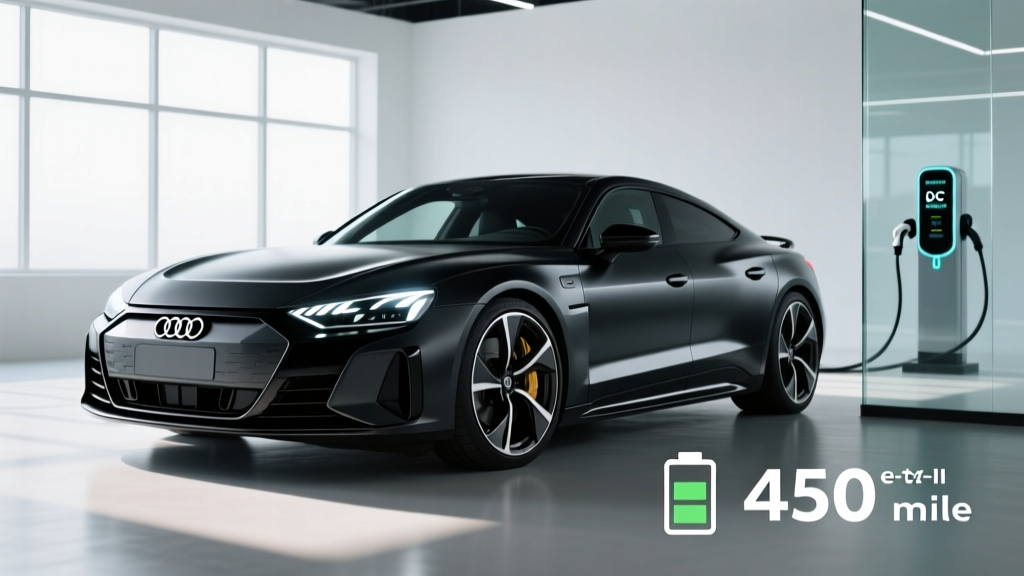
- DC fast charging: Peak rate of 150+ kW; 10–80% in 25 minutes or less
- Connector: NACS (Tesla standard, now adopted by Ford, GM, Hyundai, Rivian, and most others) or CCS with NACS adapter availability
- Heat pump: Standard or available — reduces cold-weather range loss by 10–15% versus resistive heating
- Battery warranty: 8 years / 100,000 miles minimum with a capacity retention guarantee of 70% or better
- OTA updates: Over-the-air software updates for continued feature and efficiency improvements
Models meeting these criteria in the 2026 model year include the Tesla Model Y (EPA 320 mi, 250 kW peak charging), Hyundai Ioniq 5 (EPA 305 mi, 240 kW peak, 10–80% in ~18 min), Chevrolet Equinox EV (EPA 319 mi, 150 kW peak), and Ford Mustang Mach-E (EPA 320 mi extended range). MSRPs range from roughly $33,000 (Equinox EV LT) to $52,000 (Model Y Long Range AWD) before incentives.
Common Electric 2.0 Misconceptions — Myth vs. Fact
| Myth | Fact |
|---|---|
| "EV batteries need replacing every 5 years" | Modern LFP and NMC packs are warranted for 8 years/100,000 miles at 70%+ capacity. Real-world degradation data from fleets shows most packs retain 85–90% at 100K miles. Full replacement costs $8,000–$18,000 but is rarely needed within the warranty period. |
| "There aren't enough chargers for road trips" | As of 2026, the U.S. has over 200,000 public charging ports including 50,000+ DC fast chargers. Tesla's Supercharger network (now open to NACS-equipped EVs from other brands) covers major highways with 150–250 kW stalls. Gaps remain in rural areas — plan accordingly. |
| "EVs are worse in winter" | Cold weather reduces range by 15–30% depending on temperature and whether you use cabin heating. A heat pump and battery preconditioning mitigate this significantly. EVs start reliably in cold (no engine cramping), and regen braking works on icy roads. Range loss is real but manageable with planning. |
| "Everyone gets the $7,500 tax credit" | The §30D credit has strict rules: buyer AGI under $150K (single) or $300K (joint), vehicle MSRP under $55K (cars) or $80K (SUVs/trucks), and the battery must meet critical mineral and component sourcing thresholds that change annually. Many popular EVs qualify for only $3,750 or $0 depending on the model year. Always verify on fueleconomy.gov before purchasing. |
| "Charging takes too long" | Home Level 2 charging happens while you sleep — 7–9 hours refills any pack fully. On road trips, a 10–80% DC fast charge takes 18–25 minutes on a 150+ kW charger. That's a bathroom break and a coffee. |
Decision Framework: Is Electric 2.0 Right for You?
Choose an Electric 2.0 EV if:
- You have access to home or workplace Level 2 charging (this is the single most important factor)
- Your daily driving is under 80 miles round-trip (covers 90%+ of U.S. commutes)
- You qualify for at least $3,750 in federal or state incentives
- You want the lowest per-mile energy cost and minimal scheduled maintenance
- You take fewer than four road trips over 300 miles per year (or are willing to plan charging stops)
Choose a hybrid (HEV/PHEV) instead if:
- You live in an apartment without charging access and public infrastructure is sparse in your area
- You regularly drive 200+ miles in rural areas or extreme cold (below 10°F)
- You tow heavy loads frequently (towing cuts EV range by 30–50%)
- Your budget is under $28,000 and you need a new vehicle today
Wait or choose gas if:
- You drive fewer than 5,000 miles per year (fuel savings won't offset higher purchase price)
- Your home electrical panel needs a costly upgrade ($3,000+) and you can't access workplace charging
Frequently Asked Questions
What is Electric 2.0 and how is it different from earlier EVs?
Electric 2.0 refers to the current generation of EVs (roughly 2024–2026 model years) that deliver 250+ miles of range, fast DC charging under 25 minutes (10–80%), standardized connectors (NACS), and MSRPs that compete with gas vehicles after incentives. Earlier EVs often had sub-150-mile range, slow charging, and limited model availability.
How much does it cost to charge an EV at home per month?
For a driver covering 1,000 miles per month in a vehicle averaging 3.0 miles/kWh, you'll use about 333 kWh. At the U.S. average residential rate of $0.16/kWh, that's roughly $53/month. With time-of-use rates and overnight charging, it can drop to $30–$40/month.
Will my EV battery degrade significantly?
All lithium-ion batteries degrade, but modern thermal management systems and chemistries (especially LFP) have slowed this considerably. Expect roughly 1–2% capacity loss per year under normal use. At 100,000 miles, most packs retain 85–92% of original capacity. The 8-year/100,000-mile federal warranty mandates at least 70% retention.
Do I need a special electrical panel for home charging?
Not necessarily. A Level 2 charger typically requires a dedicated 40-amp or 50-amp circuit on a 240V line (similar to a dryer or oven outlet). If your home has a 200-amp panel with available capacity, installation is straightforward ($800–$2,000). Homes with 100-amp panels or heavy existing loads may need an upgrade ($1,500–$3,500). A licensed electrician should assess your panel before purchase.
Can I take a road trip in an EV without major hassle?
Yes, with planning. Use apps like A Better Routeplanner or your vehicle's built-in navigation to identify DC fast chargers along your route. Expect to stop for 20–25 minutes every 180–220 miles of actual driving. The Tesla Supercharger network (now accessible to NACS-equipped vehicles from Ford, GM, Rivian, and others) remains the most reliable option, with Electrify America and EVgo filling gaps in many metro areas.