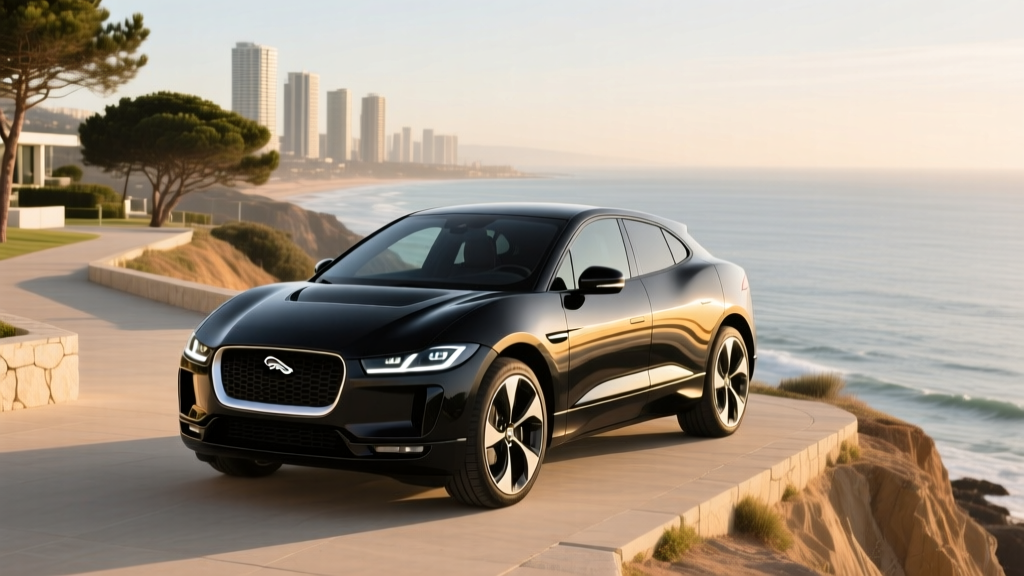
If you're researching the electric Jaguar SUV in 2026, you're almost certainly looking at the Jaguar I-PACE—the brand's sole all-electric offering and one of the earliest luxury electric crossovers to reach the US market. The 2026 I-PACE carries a 90 kWh battery pack, an EPA-estimated 246 miles of range, and a starting MSRP around $73,100 (before incentives). It targets buyers who want European design and driving dynamics in an EV, but it faces stiff competition from the Tesla Model X, BMW iX, and Genesis Electrified GV70 on range, charging speed, and interior technology.
Quick Answer: Is the Electric Jaguar SUV Worth It in 2026?
Yes, if you prioritize driving feel, distinctive styling, and a premium cabin over maximum range or the fastest DC charging. No, if you need 300+ miles of EPA range, rely exclusively on public fast charging, or want the latest ADAS feature set. The I-PACE is a compelling luxury EV but demands realistic expectations about its 246-mile EPA range (closer to 200–215 miles in real-world highway driving) and 100 kW peak DC charge rate.
Range, Battery, and Real-World Efficiency
The 2026 Jaguar I-PACE uses a 90 kWh lithium-ion battery pack (NMC chemistry) powering dual electric motors for standard all-wheel drive. Jaguar rates the system at 394 horsepower and 512 lb-ft of torque, delivering a 0–60 mph time of approximately 4.5 seconds.
| Specification | 2026 Jaguar I-PACE |
|---|---|
| EPA Range | 246 miles |
| Battery Capacity (Usable) | ~84 kWh (90 kWh gross), NMC |
| Efficiency (EPA Combined) | 76 MPGe (~44 kWh/100mi) |
| Drivetrain | Dual-motor AWD, 394 hp / 512 lb-ft |
| 0–60 mph | 4.5 seconds |
| Peak DC Fast Charge | 100 kW (CCS1) |
| 10–80% DC Charge Time | ~45 minutes |
| Level 2 AC Charge Rate | 11 kW (approx. 7.5 hrs 0–100%) |
| Base MSRP (R-Dynamic S) | $73,100 |
| Battery/Powertrain Warranty | 8 years / 100,000 miles |
Real-World Range Reality Check
The EPA rates the I-PACE at 246 miles, but real-world results vary significantly:
- Mild weather, mixed driving: 220–235 miles achievable
- Highway-heavy at 75+ mph: expect 195–215 miles (aerodynamic drag hits EVs hard)
- Cold weather (below 32°F): 160–185 miles without preconditioning; the I-PACE lacks a heat pump in earlier model years, so cabin heating draws heavily from the pack
If your daily commute is under 50 miles round-trip with home Level 2 charging, 246 EPA miles is more than adequate. Road trippers should plan charging stops every 180–200 miles to stay comfortable.
Charging Speed and Infrastructure
The I-PACE's 100 kW peak DC fast-charging rate is its most significant competitive weakness in 2026. Rivals like the Hyundai Ioniq 5 (peak 240 kW), BMW iX (peak 150 kW), and Tesla Model X (peak 250 kW on V3 Superchargers) replenish far faster on long trips.
| Charging Level | Power | Miles Added per Hour | Typical Use Case |
|---|---|---|---|
| Level 1 (120V household) | ~1.4 kW | ~3–4 mi/hr | Emergency / overnight trickle |
| Level 2 (240V home/public) | Up to 11 kW | ~25–30 mi/hr | Daily home charging |
| DC Fast Charge (CCS1) | Up to 100 kW | ~150+ mi/hr (peak) | Road trips; 10–80% in ~45 min |
Charging curve reality: The I-PACE hits its 100 kW peak only between roughly 10–30% state of charge. Above 50%, the rate tapers to 60–70 kW, and above 80% it drops below 25 kW. This is why the 10–80% session takes approximately 45 minutes—competitive vehicles with higher peak rates and flatter charge curves accomplish the same session in 18–25 minutes.
The I-PACE uses the CCS1 connector for DC fast charging. Jaguar has not adopted the NACS (Tesla) connector for this model. You can access Electrify America, EVgo, and ChargePoint DC networks natively. Tesla Supercharger access requires an approved CCS adapter—confirm compatibility with Jaguar before purchasing one.
Cost Breakdown: Purchase, Charging, and Ownership
Let's break down what the electric Jaguar SUV actually costs to buy and run over five years, compared to a similarly priced gas luxury SUV (we'll use the Jaguar F-PACE P250 as a baseline).
| Cost Category | 2026 I-PACE (EV) | 2026 F-PACE P250 (Gas) |
|---|---|---|
| Base MSRP | $73,100 | $57,000 |
| Federal Tax Credit (§30D) | Up to $7,500 (see eligibility below) | $0 |
| Effective Starting Price | ~$65,600 | $57,000 |
| Annual Fuel/Energy (12,000 mi/yr) | ~$660 (home charging at $0.14/kWh) | ~$2,160 (premium gas at $4.00/gal, 24 MPG combined) |
| 5-Year Fuel/Energy Total | ~$3,300 | ~$10,800 |
| 5-Year Maintenance Estimate | ~$1,800 | ~$4,500 |
| Annual Insurance (avg.) | ~$2,800/yr | ~$2,200/yr |
| 5-Year Total Cost (est.) | ~$84,700 | ~$83,300 |
Key takeaway: The I-PACE saves roughly $7,500 in energy and $2,700 in maintenance over five years, but those savings are largely offset by a higher purchase price (even after the tax credit), higher insurance premiums, and steeper depreciation. Luxury EVs from Jaguar have historically depreciated faster than their gas counterparts. According to fueleconomy.gov, the I-PACE's combined efficiency of 76 MPGe translates to meaningful per-mile savings—but only if you charge primarily at home.
Charging Cost Deep Dive
- Home Level 2 (national avg. $0.14/kWh): A full 84 kWh usable charge costs ~$11.76, yielding ~$0.05/mile
- Public DC fast charging (avg. $0.35–$0.48/kWh): That same charge costs $29–$40, or ~$0.14–$0.19/mile
- Gas F-PACE equivalent: ~$0.17/mile at $4.00/gallon premium
If you rely heavily on public DC fast charging, the I-PACE's per-mile cost approaches or exceeds that of a gas SUV. Home charging access is essential for realizing EV savings.
Federal Tax Credit Eligibility (§30D)
The I-PACE may qualify for the federal EV tax credit of up to $7,500 under IRS §30D rules, but eligibility depends on multiple factors that change frequently. Per IRS guidelines, the following must all be satisfied:
- MSRP cap: SUVs must have an MSRP at or below $80,000 (the I-PACE base qualifies; higher trims may not)
- Buyer income limits: AGI must not exceed $300,000 (joint), $225,000 (head of household), or $150,000 (single)
- Battery sourcing: Critical minerals and battery components must meet phased-in percentages from US or FTA partners—Jaguar's supply chain sourcing determines partial or full credit eligibility
- Point-of-sale transfer: As of 2024+, buyers can transfer the credit to the dealer for an upfront price reduction, subject to dealer participation
- Assembly: The I-PACE is assembled in Graz, Austria—not in North America, which may affect eligibility under current domestic-content rules
Important: Because the I-PACE is built outside the US and its battery supply chain involves non-FTA sourcing, it may qualify for only $3,750 (half credit) or potentially $0 depending on the current year's critical-mineral thresholds. Always verify eligibility on fueleconomy.gov and consult a tax professional before relying on the credit in your purchase decision.
How the I-PACE Compares: EV vs Gas vs Hybrid Luxury SUVs
| Metric | Jaguar I-PACE (EV) | Jaguar F-PACE P250 (Gas) | BMW X5 xDrive50e (PHEV) |
|---|---|---|---|
| Powertrain | Dual-motor BEV | 2.0L Turbo I4 | 3.0L I6 Turbo + electric motor |
| Electric-Only Range | 246 mi (full EV) | 0 mi | ~38 mi (PHEV) |
| Total Range / Fuel Economy | 246 mi / 76 MPGe | ~370 mi / 24 MPG | ~440 mi / 56 MPGe (charge-sustaining ~25 MPG) |
| 0–60 mph | 4.5 sec | 6.9 sec | 4.6 sec |
| Base MSRP | $73,100 | $57,000 | $72,500 |
| Fuel/Energy Cost per Mile | $0.05 (home) / $0.17 (DCFC) | $0.17 | $0.06–$0.15 (varies) |
| Maintenance (5-yr est.) | ~$1,800 | ~$4,500 | ~$3,800 |
EV vs Gas: The I-PACE delivers dramatically better acceleration, near-silent operation, and far lower running costs when charged at home. The trade-offs are a shorter total range, longer refueling times on road trips, and a higher entry price.
EV vs PHEV: The BMW X5 PHEV is the pragmatic middle ground—38 miles of electric-only range covers most daily commutes, with a gas engine eliminating range anxiety. But the PHEV still requires oil changes, has a more complex drivetrain, and delivers a less seamless electric driving experience.
Common Misconceptions About the Electric Jaguar SUV
| Myth | Fact |
|---|---|
| "The battery will need replacing in a few years at huge cost." | The I-PACE battery carries an 8-year/100,000-mile warranty guaranteeing at least 70% capacity retention. NMC degradation data shows typical loss of 10–15% over 8 years. Full replacement, if ever needed, runs $15,000–$22,000 but is rarely required. |
| "I'll save a fortune compared to gas." | Only if you charge at home. Public DC fast charging at $0.40/kWh costs roughly the same per mile as premium gasoline. Luxury EV insurance also runs 20–30% higher. |
| "The I-PACE charges as fast as a Tesla." | At 100 kW peak, the I-PACE charges roughly 2–2.5× slower than a Tesla Model X on a V3 Supercharger (250 kW peak). Expect 45 minutes for 10–80%, not 20. |
| "All-wheel drive means it's fine in deep snow." | AWD provides traction, but the I-PACE's 4,200-lb curb weight and low ground clearance (~5.5 inches) limit it in deep snow. Winter tires are strongly recommended for cold-climate owners. |
| "I qualify for the full $7,500 tax credit." | Foreign assembly (Austria) and non-FTA battery sourcing may reduce or eliminate the credit. Always verify current eligibility before purchasing. |
First-Time EV Buyer Checklist
If the I-PACE would be your first electric vehicle, work through these considerations before signing:
- Home charging access: Can you install a 240V Level 2 charger (NEMA 14-50 outlet or hardwired EVSE)? Expect $500–$2,000 for installation depending on your electrical panel. A 200-amp panel is usually sufficient; older homes may need a $1,500–$3,000 panel upgrade.
- Daily driving pattern: If your round-trip commute is under 80 miles, the I-PACE's range is more than adequate with nightly home charging. Over 150 miles daily? Consider a longer-range EV or plan midday charging.
- Climate: In regions with sustained sub-freezing winters, budget for 25–35% range loss. Preconditioning the battery while plugged in mitigates this, but the I-PACE's lack of a heat pump (in most model years) means cabin heating is resistive and energy-intensive.
- Road trip frequency: If you drive 300+ miles more than a few times per year, the 100 kW charge rate means longer stops. Map out CCS-compatible DC fast chargers along your common routes using PlugShare or A Better Routeplanner.
- Insurance quotes: Get quotes before purchasing. Luxury EVs typically carry premiums 20–30% above equivalent gas models due to higher repair costs and parts pricing.
- Resale expectations: Jaguar EVs have experienced steeper depreciation than Tesla or Porsche. Plan to own the I-PACE for 5+ years to amortize the upfront cost.
Decision Framework: Should You Buy the Electric Jaguar SUV?
Choose the I-PACE if:
- You value European design, ride quality, and steering feel over maximum range
- You have reliable home Level 2 charging
- Your daily driving is under 80 miles round-trip
- You want a luxury EV that stands apart from the Tesla ubiquity
- You can accept a 10–80% charge time of ~45 minutes on road trips
Look elsewhere if:
- You need 300+ miles of EPA range (consider BMW iX xDrive50, Tesla Model X)
- You rely on public fast charging and need quick stops (Hyundai Ioniq 5, Kia EV6 charge 2× faster)
- You want the full $7,500 tax credit with certainty (US-assembled models like the Tesla Model Y or Ford Mustang Mach-E have clearer eligibility)
- You prioritize cutting-edge infotainment and ADAS (the I-PACE's Pivi Pro system is competent but trails Tesla, BMW, and Mercedes in responsiveness and feature depth)
Frequently Asked Questions
What is the real-world range of the electric Jaguar I-PACE?
The EPA rates it at 246 miles. In mixed real-world driving at moderate temperatures, expect 220–235 miles. Highway driving at 75+ mph drops this to 195–215 miles. In cold weather (below freezing), 160–185 miles is realistic without careful preconditioning.
How long does it take to charge the Jaguar I-PACE at home?
On a Level 2 (240V) charger at 11 kW, a full 0–100% charge takes approximately 7.5 hours. Most owners plug in nightly and wake to a full battery. On a standard 120V outlet (Level 1), expect roughly 3–4 miles of range per hour of charging—only practical for emergencies or very low-mileage days.
Does the Jaguar I-PACE qualify for the $7,500 federal tax credit?
Possibly, but not guaranteed. The I-PACE is assembled in Austria, and its battery sourcing may not meet all §30D critical-mineral and component requirements. It may qualify for $3,750 (half credit) or nothing at all depending on current-year thresholds. Verify at fueleconomy.gov and consult a tax professional.
How does the I-PACE compare to the Tesla Model X?
The Model X offers significantly more range (335+ miles EPA), faster DC charging (250 kW peak), access to the Supercharger network, and a more advanced (though controversial) driver-assist system. The I-PACE counters with superior interior material quality, a more traditional luxury aesthetic, and a quieter, more composed ride. They serve different buyer priorities.
What does I-PACE maintenance cost compared to a gas Jaguar?
EVs eliminate oil changes, spark plugs, transmission fluid, and exhaust maintenance. Expect to spend roughly $1,800 over five years on cabin air filters, brake fluid, wiper fluid, and tire rotation—compared to ~$4,500 for a gas F-PACE. However, EV tires wear faster due to instant torque and higher vehicle weight; budget for a tire replacement at 25,000–35,000 miles (~$1,200–$1,600 for a set).
Is the Jaguar I-PACE reliable?
Jaguar's brand reliability ratings from JD Power and Consumer Reports have historically ranked below average. The I-PACE specifically has had fewer powertrain complaints than early Jaguar gas models, but owners report issues with infotainment glitches, 12V battery drain, and occasional build-quality inconsistencies. The 8-year/100,000-mile battery warranty provides long-term powertrain peace of mind.