Quick Answer: Should Your Fleet Go Electric on Class 8?
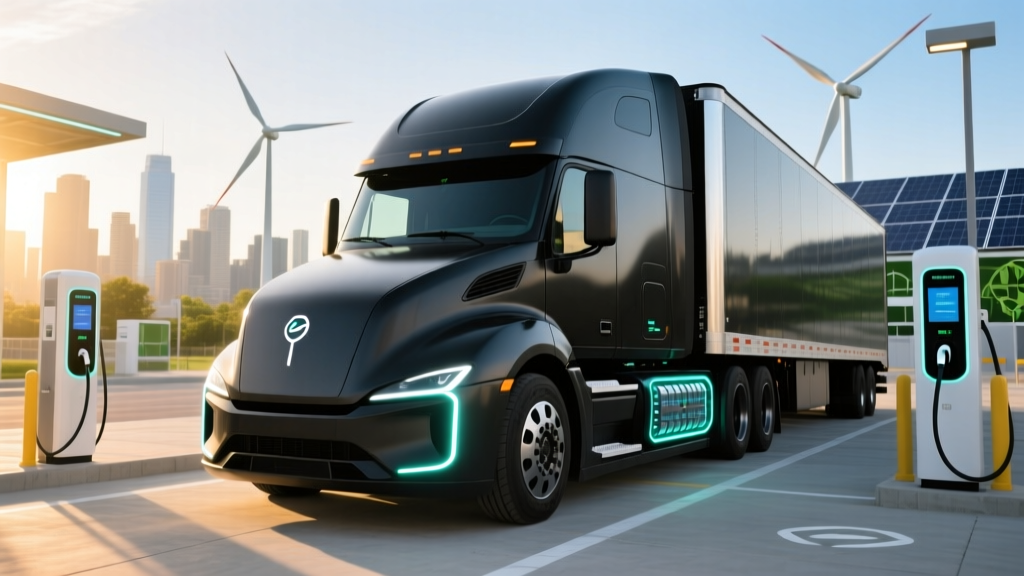
An electric 18 wheeler truck makes financial sense in 2026 for regional and drayage routes under 250 miles per day with reliable depot charging access. Expect 150–330 miles of real-world range depending on the model, payload, and climate — well below the EPA-style sticker numbers manufacturers quote. Upfront costs remain 2.5–3× a comparable diesel rig ($250,000–$430,000 before incentives), but total cost of ownership (TCO) can flip positive within 3–5 years on high-utilization routes thanks to diesel displacement (~$0.15–$0.25/mile electricity vs. ~$0.55–$0.75/mile diesel) and near-zero powertrain maintenance. Long-haul and cold-climate operations should wait or pilot cautiously.
Class 8 Electric Trucks Available in 2026: Spec Comparison
The heavy-duty electric market has consolidated around a handful of production models. Below are the key specs for the major players currently taking orders or delivering to fleets. Note that battery capacity is measured in kWh (total energy stored), while charging rates are measured in kW (power delivery speed) — a distinction that matters enormously for depot planning.
| Model | Battery (kWh usable) | EPA-est. Range (mi) | Real-World Range (mi)* | Peak DC Charge (kW) | 10–80% Time | HP / Torque | Base Price (est.) |
|---|---|---|---|---|---|---|---|
| Tesla Semi (Dual Motor) | ~900 kWh (announced) | 500 (mfg claim) | 330–400 | ~1,000 (Megacharger) | ~30 min | ~1,000+ hp | $250,000–$290,000 |
| Freightliner eCascadia | 291–438 kWh (NMC) | 230 (typical config) | 150–190 | 250 kW | ~90 min (438 kWh) | 470 hp / 1,640 lb-ft | $300,000–$380,000 |
| Volvo VNR Electric (6-battery) | 565 kWh (NMC) | 275 | 185–230 | 250 kW | ~70 min | 455 hp / 4,051 lb-ft | $350,000–$400,000 |
| Peterbilt 579EV | 396 kWh (NMC) | 150 | 100–130 | 150 kW | ~3–4 hrs (full) | 670 hp equiv. | $320,000–$370,000 |
| Kenworth T680E | 396 kWh (NMC) | 150 | 100–130 | 150 kW | ~3–4 hrs (full) | 670 hp equiv. | $310,000–$360,000 |
*Real-world range assumes 65,000–80,000 lb GCW, mixed highway/urban driving, moderate climate. Cold weather (below 32°F) reduces range 20–35%. Highway-only at 65+ mph reduces range 15–25% vs. urban stop-and-go where regenerative braking recovers energy.
The Real Cost: Electric 18 Wheeler Truck vs. Diesel
The purchase price gap is the headline shock, but fleet buyers need to evaluate total cost of ownership across a 5–7 year holding period. Below is a realistic 5-year TCO comparison for a single Class 8 truck running 50,000 miles/year on a regional route.
| Cost Category | Diesel Class 8 (New) | Electric Class 8 (eCascadia/VNR) |
|---|---|---|
| Purchase Price | $150,000–$180,000 | $300,000–$400,000 |
| Federal/State Incentives | None | –$40,000 to –$135,000 (HVIP, IRA commercial credit, CARB) |
| Net Acquisition Cost | $150,000–$180,000 | $165,000–$360,000 |
| Fuel/Energy (5 yr, 250k mi) | $175,000–$225,000 (diesel @ $4.00–$5.00/gal, 6.5 mpg) | $50,000–$75,000 (electricity @ $0.10–$0.18/kWh, 1.8–2.2 kWh/mi) |
| Maintenance (5 yr) | $35,000–$50,000 | $10,000–$18,000 (no oil, DEF, DPF, fewer brake jobs) |
| Depot Charging Infrastructure (allocated per truck) | $0 | $30,000–$80,000 (Level 2 depot charger + install share) |
| Insurance (5 yr) | $30,000–$45,000 | $35,000–$55,000 (higher replacement cost) |
| 5-Year TCO | $390,000–$500,000 | $290,000–$588,000 |
Key takeaway: TCO parity or advantage depends heavily on (a) securing incentives, (b) running high annual mileage to maximize fuel savings, and (c) controlling depot charging costs. Fleets without access to state incentive programs like California's HVIP or the IRA's commercial clean vehicle credit (§45W, up to $40,000 for Class 8) face a much longer payback period.
Charging Infrastructure: The Hidden Bottleneck
Unlike passenger EVs that can rely on public networks like Tesla Supercharger or Electrify America, an electric 18 wheeler truck almost exclusively depends on depot-based charging. Public DC fast charging for Class 8 vehicles is extremely limited as of 2026 — a handful of pilot corridors exist along I-5 in California and I-10, but they are not a viable operational backbone.
Depot Charging Requirements
Each electric semi needs a dedicated or shared high-power Level 2 or DC fast charger at the fleet yard:
- Level 2 depot (40–80 kW): Adds ~25–50 miles of range per hour. A full overnight charge (8–10 hours) replenishes 200–400 miles. Best for trucks that return to base nightly.
- DC fast depot (150–350 kW): Adds 100–200+ miles per hour. Enables opportunity charging during driver breaks. Required for multi-shift operations.
- Utility service upgrade: A 10-truck fleet charging at 150 kW simultaneously needs ~1.5 MW of electrical service — often requiring a new dedicated transformer and medium-voltage drop from the utility. Lead times of 12–24 months for utility upgrades are common and represent the single biggest planning risk.
Common Misconceptions About Electric Semis
| Myth | Fact |
|---|---|
| "Electric trucks can't pull full loads." | Modern Class 8 EVs handle 80,000 lb GCW. Torque is instant and often exceeds diesel at low RPM. The tradeoff is range reduction (~30–40%) at max payload vs. lighter loads. |
| "Batteries won't last." | Most manufacturers warranty batteries at 70–80% capacity retention for 5–7 years or 300,000–500,000 miles. NMC chemistry degrades predictably; real fleet data from early eCascadia deployments shows ~5–8% degradation at 200,000 miles. |
| "Charging takes too long for freight." | For overnight depot charging (8–10 hours), it's irrelevant — the truck charges while the driver sleeps. The constraint is mid-day opportunity charging, which requires DC fast infrastructure and route planning. |
| "Electric trucks are zero-emission." | Tailpipe emissions are zero, but upstream emissions depend on your grid mix. A depot in coal-heavy regions still cuts CO₂ ~40–50% vs. diesel; renewable-heavy grids achieve 75–90%+ cuts. |
| "They work in any climate." | Cold weather (below 20°F) reduces usable range 25–35% due to battery chemistry limitations and cab/climate heating demands. Battery preconditioning helps but does not eliminate the penalty. Fleets in Minnesota or Maine need to spec 20–30% more battery than Southern California counterparts. |
Incentives and Tax Credits for Commercial EV Fleets
The federal and state incentive landscape for commercial electric trucks is substantial but complex. Unlike the passenger-vehicle §30D credit, commercial fleets access different programs:
- IRA §45W Commercial Clean Vehicle Credit: Up to $40,000 for Class 8 vehicles (the lesser of 15% of basis or the incremental cost over a comparable diesel). This is claimed by the business, not transferred at point-of-sale. Consult a tax professional for eligibility — the IRS §45W guidance includes specific depreciation and basis rules.
- California HVIP: Vouchers of $60,000–$135,000+ per Class 8 truck, stackable with federal credits. Availability varies by funding cycle and drayage vs. general freight classification.
- Charging infrastructure credits: The IRA §30C Alternative Fuel Vehicle Refueling Property Credit covers up to 30% of charging equipment and installation costs (capped at $100,000 per item of property for commercial). Census-tract eligibility rules apply.
- Utility make-ready programs: Many utilities (PG&E, SCE, ConEdison) cover 50–100% of the wiring and conduit costs to prepare your depot for chargers — but not the chargers themselves.
Incentive programs change frequently. Verify current availability with your state air district and tax advisor before building a business case.
Who Should Buy an Electric 18 Wheeler Truck in 2026?
Decision Framework: Is Your Fleet Ready?
Choose electric Class 8 if:
- Your routes are regional/drayage under 200–250 miles round-trip
- Trucks return to a single depot nightly (or have mid-day layover for opportunity charging)
- You operate in a state with strong incentive programs (CA, NY, NJ, WA, OR, CO)
- Your utility can deliver the required power (start the conversation NOW — 18-month lead times are normal)
- You run 40,000+ miles/year per truck (high utilization maximizes fuel payback)
- You have ESG mandates or shipper/customer requirements for zero-emission freight
Stay with diesel (or pilot cautiously) if:
- Your routes exceed 300 miles without reliable mid-route charging
- You operate in extreme cold climates without range-buffer planning
- Your fleet is small (under 5 trucks) and cannot absorb infrastructure overhead
- Your depot is leased with no control over electrical upgrades
- You haul heavy/oversized loads where payload penalties from battery weight (3,000–6,000 lb) erode revenue
- You need long-haul flexibility and cannot commit to fixed routes
Real-World Ownership: What Fleet Managers Actually Report
Early-adopter fleets running electric 18 wheeler trucks in production (not pilot) service consistently report the following patterns as of 2026:
Efficiency and Range Reality
Published range figures assume optimal conditions. Fleet telemetry data from operators like PepsiCo (Tesla Semi), Schneider (Freightliner eCascadia), and various drayage operators shows:
- Loaded efficiency: 1.8–2.5 kWh per mile at highway speeds with a 65,000–75,000 lb load. Compare this to a diesel getting 6–7 mpg — the electric truck uses the energy equivalent of ~0.05 gallons of diesel per mile.
- Regen advantage: Urban and port drayage routes recover 15–25% of energy through regenerative braking, making stop-and-go routes more efficient than steady highway running — the opposite of diesel.
- Charge curve taper: DC fast charging does not sustain peak kW. A truck rated for 250 kW peak may average 150–180 kW over a 10–80% session. Plan charging windows using average rate, not peak rate.
Maintenance and Downtime
This is where electric semis shine. Fleets report 40–60% fewer maintenance events compared to diesel counterparts. No engine oil, no diesel particulate filter (DPF) regenerations, no DEF fluid, no transmission fluid changes, and dramatically reduced brake wear (regenerative braking handles most deceleration). The primary maintenance items are tire rotation, cabin air filters, coolant system checks, and suspension components. Battery thermal management systems require periodic coolant service but are generally low-maintenance.
Driver Reception
A frequently overlooked factor: drivers overwhelmingly prefer electric trucks. Instant torque, smooth acceleration, dramatically lower noise and vibration, and no diesel exhaust smell at the dock translate to reduced fatigue and higher driver retention — a significant value in an industry with chronic driver shortages.
Frequently Asked Questions
How long do electric semi-truck batteries last before replacement?
Current NMC battery packs in Class 8 trucks are warrantied for 5–7 years or 300,000–500,000 miles at 70–80% capacity retention. Real-world data from early deployments suggests packs retain ~85–92% capacity at 200,000 miles under normal use. Full battery replacement costs $80,000–$150,000 depending on pack size, but most fleets plan to trade or retire trucks before this becomes necessary. Battery module-level replacement (swapping degraded modules rather than the full pack) is emerging as a cost-effective option.
Can an electric 18 wheeler truck tow 80,000 pounds?
Yes. The Tesla Semi, Freightliner eCascadia, and Volvo VNR Electric are all rated for 80,000 lb GCW (gross combination weight) or, in the Tesla Semi's case, up to 82,000 lb. The tradeoff is range: a fully loaded truck at 80,000 lb will see 30–40% less range than a lightly loaded one. This is analogous to diesel fuel economy dropping under heavy loads, but more pronounced due to the fixed energy capacity of the battery.
What happens if the grid goes down at the depot?
Unlike diesel, where you can store fuel on-site in tanks, electric trucks depend on continuous grid access. Some fleets are installing on-site solar + battery storage (500 kWh–2 MWh systems) as backup, but this adds $200,000–$500,000+ to infrastructure costs. For critical operations, a small backup diesel generator or a hybrid fleet strategy (keeping some diesel units as reserve) is the pragmatic approach in 2026.
Is hydrogen fuel cell a better alternative for heavy trucks?
Hydrogen fuel cell trucks (like the Toyota Kenworth T680 FCEV or Nikola Tre FCEV) offer faster refueling (~15–20 minutes) and longer range (400–500 miles), making them theoretically better for long-haul. However, hydrogen fuel costs $15–$30/kg (equivalent to $5–$10/gallon diesel or worse), fueling stations are extremely scarce, and well-to-wheel efficiency is ~25–35% compared to ~70–80% for battery electric. For regional routes, battery electric wins on cost and efficiency. Hydrogen may become competitive for long-haul if production costs drop significantly, but that timeline extends beyond 2028.
What's the resale value of an electric semi?
Resale data is limited given the newness of the segment. Early indicators suggest steeper depreciation than diesel in years 1–3 due to rapid technology evolution and buyer uncertainty about battery health. However, as the used market matures and battery health reporting standardizes, residual values are expected to stabilize. Fleets should model conservative 20–30% residual value at year 5 in their TCO calculations, compared to 30–45% for diesel.
Sources: Freightliner eCascadia specifications, Volvo VNR Electric, U.S. Department of Energy Alternative Fuels Data Center, IRS Commercial Clean Vehicle Credit guidance.