Quick Answer: Are Electric Dump Trucks Ready for Fleet Duty?
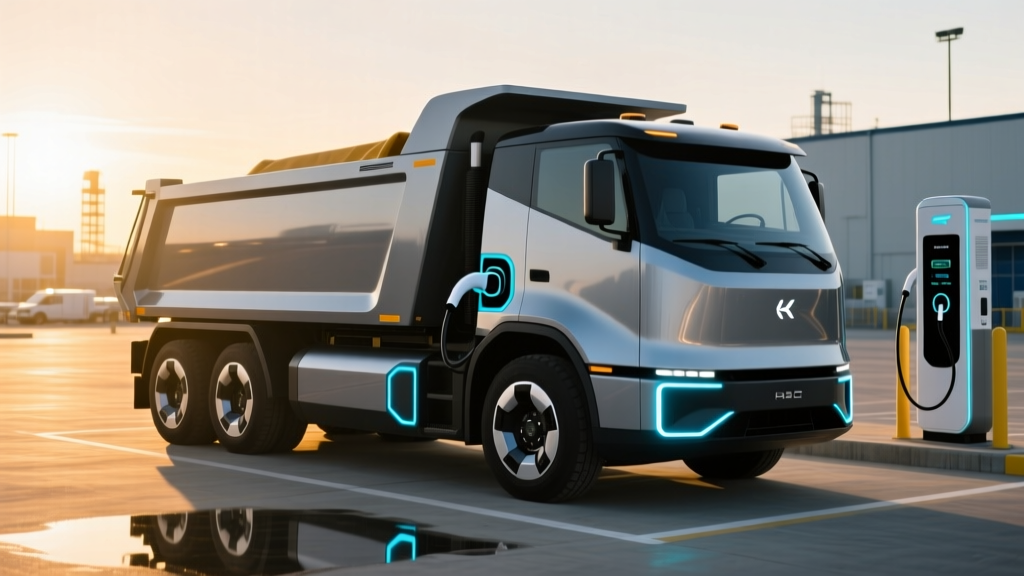
Yes, but with caveats. Class 8 electric dump trucks like the Volvo VHD Electric and Mack LR Electric are in production for 2026, offering 150–200 kWh battery packs, 75–150 miles of real-world range, and DC fast charging up to 250 kW. Expect base prices of $280,000–$420,000 before federal and state incentives. They're best suited for short-haul, return-to-base operations (construction sites, municipal fleets, quarries) where daily routes stay under 120 miles and depot charging is feasible. Long-haul and remote-site work still favors diesel.
The Electric Dump Truck Landscape in 2026
Heavy-duty electrification has moved past the pilot phase. Manufacturers including Volvo Trucks, Mack, Peterbilt, and Kenworth now offer or accept orders for battery-electric vocational trucks configured for dump body upfits. Unlike consumer EVs, these are built-to-order platforms where the chassis-cab is electrified and the dump body (steel or aluminum, 10–20 cubic yards) is added by an upfitter like Rugby, Stellar, or Heritage.
The market is driven by two forces: regulatory pressure (California's Advanced Clean Trucks rule, EPA Phase 3 GHG standards) and total-cost-of-ownership parity in high-utilization, short-range duty cycles where diesel fuel and maintenance costs dominate.
Specs That Matter: Battery, Range, and Payload
Heavy-duty electric trucks measure capability differently than consumer EVs. Here's what fleet buyers need to scrutinize:
| Spec | Volvo VHD Electric | Mack LR Electric | Peterbilt 520EV (Dump Config) |
|---|---|---|---|
| Battery Capacity | 264 kWh (NMC) | 164 kWh (NMC) | 210 kWh (NMC) |
| Motor Output | 455 HP / 4,051 lb-ft | 448 HP / 4,270 lb-ft | 402 HP / 3,600 lb-ft |
| EPA-Est. Range (vocational) | ~150 mi | ~100 mi | ~130 mi |
| Real-World Range (loaded) | 100–130 mi | 70–90 mi | 90–115 mi |
| Max DC Fast Charge | 250 kW | 150 kW | 175 kW |
| 10–80% Charge Time | ~70 min | ~65 min | ~75 min |
| GVWR | 80,000 lbs | 66,000 lbs | 80,000 lbs |
| Payload Capacity (dump) | ~35,000 lbs | ~28,000 lbs | ~33,000 lbs |
| Base Chassis MSRP | ~$380,000 | ~$290,000 | ~$350,000 |
Real-World Range vs. Sticker Numbers
Electric dump trucks operate under severe loads. A fully loaded 15-yard steel dump body hauling aggregate can reduce range by 30–40% compared to a bobtail (empty) truck. Cold weather (below 32°F) compounds this with another 15–25% loss from battery resistance and cabin heating. If your route demands 110 loaded miles in January in Chicago, a 150-mile EPA sticker is not sufficient — you need a 200+ kWh pack or mid-day opportunity charging.
Electric vs. Diesel Dump Truck: Cost Comparison
The upfront price gap is substantial, but operating costs tell a different story over a 7–10 year ownership cycle. Here's a data-driven comparison based on a Class 8 single-axle dump truck running 25,000 miles/year:
| Cost Factor | Diesel Dump Truck | Electric Dump Truck |
|---|---|---|
| Purchase Price (chassis + body) | $175,000–$220,000 | $340,000–$450,000 |
| Federal Tax Credit (IRC §45W) | $0 | Up to $40,000 (GVWR > 14,000 lbs) |
| State Incentives (CA HVIP example) | $0 | $50,000–$120,000 |
| Fuel/Energy Cost per Mile | $0.68 (diesel at $4.20/gal, 6.2 MPG) | $0.22 (electricity at $0.14/kWh, 1.6 kWh/mi) |
| Annual Fuel/Energy (25k mi) | $17,000 | $5,500 |
| Maintenance per Mile | $0.18 | $0.07 (no engine oil, DEF, fewer brake jobs) |
| Annual Maintenance (25k mi) | $4,500 | $1,750 |
| 7-Year Total Fuel + Maintenance | $150,500 | $50,750 |
| Estimated Insurance (annual) | $8,500 | $10,200 |
The breakeven point typically arrives around year 5–6 for high-utilization fleets, sooner with aggressive state incentives. California's Hybrid and Zero-Emission Truck and Bus Voucher Incentive Project (HVIP) can cover $90,000–$120,000 per vehicle, dramatically accelerating payback. Source: California HVIP.
Charging Infrastructure: The Fleet Depot Reality
Unlike consumer EVs that rely on public networks, electric dump trucks require depot charging. Here's what that entails:
| Charging Level | Power (kW) | Miles Added/Hour | Use Case |
|---|---|---|---|
| Level 2 (AC, J1772/CCS) | 19.2 kW | ~12 mi/hr | Overnight top-off |
| DC Fast (CCS1) | 50–150 kW | ~30–90 mi/hr | Depot primary charger |
| DC Fast (CCS1 high-power) | 175–250 kW | ~100–150 mi/hr | Opportunity charging, rapid turnaround |
Depot Charging Installation Costs
Installing a single 150 kW DC fast charger at a fleet depot typically costs $75,000–$150,000 per stall, including:
- Charger hardware: $40,000–$80,000
- Electrical service upgrade (480V 3-phase, transformer): $15,000–$40,000
- Trenching, conduit, and civil work: $10,000–$25,000
- Permitting and utility interconnection fees: $5,000–$15,000
For a 5-truck fleet, budget $250,000–$500,000 for charging infrastructure before utility make-ready incentives. Many utilities (PG&E, SCE, ConEdison) offer commercial EV infrastructure programs covering 50–100% of make-ready costs.
The Charge Curve Reality
Peak charge rates are not sustained. A 250 kW-capable Volvo VHD Electric will peak near 250 kW only between 10–40% state of charge, then taper to ~150 kW by 60%, and drop below 75 kW past 80%. Fleet managers should plan routes around 10–80% charge cycles rather than full charges, which add time and stress the battery.
Tax Credits and Incentives for Commercial Buyers
Federal and state incentive structures for heavy-duty electric trucks differ significantly from consumer EV credits:
IRC §45W Commercial Clean Vehicle Credit
- Credit Amount: Up to $40,000 for vehicles with GVWR > 14,000 lbs (30% of cost basis or the incremental cost over a comparable ICE vehicle, whichever is less)
- No MSRP cap — applies regardless of vehicle price
- No buyer income cap — available to businesses and tax-exempt organizations
- Transferability: Can be transferred to the dealer for a point-of-sale discount (effective 2024+)
- Domestic content: No battery sourcing requirements (unlike §30D consumer credit)
- Source: IRS §45W guidance
Additional incentives include state voucher programs (California HVIP, New York Truck Voucher Incentive Program), utility rebates, and accelerated depreciation (bonus depreciation under IRC §168). Consult a tax professional for your specific situation.
Battery Longevity, Warranty, and Replacement
Class 8 electric truck batteries are engineered for vocational duty cycles but still degrade. Key facts:
| Factor | NMC (typical in Class 8) | LFP (emerging option) |
|---|---|---|
| Energy Density | Higher (more range per lb) | Lower (heavier pack) |
| Cycle Life | 1,500–2,500 cycles | 3,000–5,000 cycles |
| Cold Performance | Better | Reduced below 32°F |
| Warranty (typical) | 8 yr / 300,000 mi (70% capacity) | 8–10 yr / 400,000 mi (70% capacity) |
| Replacement Cost (est.) | $80,000–$130,000 | $60,000–$100,000 |
Most manufacturers warrant the battery pack for 8 years with a 70% state-of-health (SoH) threshold. If capacity drops below 70% within the warranty period, the manufacturer replaces or refurbishes the pack at no cost. For a dump truck running 25,000 miles/year, 300,000 miles represents 12 years of service — meaning most original packs should outlast the first owner's lifecycle.
Decision Framework: Is an Electric Dump Truck Right for Your Fleet?
Choose an Electric Dump Truck If:
- Daily routes are under 120 miles with return-to-base operations
- You operate in a state with strong voucher incentives (CA, NY, NJ, MA, WA)
- Depot charging is feasible (owned or long-leased yard with utility access)
- You run in a low-emission zone or have municipal/corporate zero-emission mandates
- Annual mileage exceeds 20,000 miles (higher utilization = faster payback)
- Noise restrictions matter (residential construction, early-morning municipal work)
Stick with Diesel (or Wait) If:
- Routes exceed 150 miles/day or involve remote sites without charging
- You operate in extreme cold climates without heated depot storage
- Fleet turnover is rapid (you sell trucks at 3–4 years before breakeven)
- Utility service at your depot cannot support 480V 3-phase power without a $200,000+ upgrade
- You tow or haul near-maximum GCW (80,000 lbs) on sustained grades
Common Misconceptions About Electric Dump Trucks
| Myth | Fact |
|---|---|
| "Electric trucks can't handle heavy payloads." | GVWR ratings match diesel equivalents (80,000 lbs for Class 8). Battery weight reduces payload by 2,000–5,000 lbs, which matters for weight-critical loads like gravel but not for volumetric loads like mulch. |
| "The grid can't support fleet charging." | Most depot charging occurs overnight during off-peak hours. With smart charge management software (e.g., ChargePoint, Tritium), a 10-truck fleet can stagger charging to stay within a 500 kW service connection. |
| "Battery replacement will bankrupt the fleet." | At $80,000–$130,000, replacement is significant but comparable to a diesel engine overhaul ($25,000–$40,000) plus 8 years of fuel savings already banked. Most packs outlast first ownership. |
| "Electric PTO (power take-off) for the dump body won't work." | Electric PTO systems from providers like Vecto Electric and Dana deliver equivalent hydraulic pressure for 10–20 yard dump bodies, with faster cycle times and no idling. |
FAQ: Electric Dump Truck Ownership
How long does it take to charge an electric dump truck overnight?
From 10% to 100% on a 150 kW DC fast charger, expect 2.5–3.5 hours for a 200 kWh pack. Most fleets schedule overnight charging windows of 8–10 hours, which is more than sufficient. Level 2 (19.2 kW) charging takes 10–14 hours and is used for supplemental top-off only.
Can I use an electric dump truck in winter?
Yes, but plan for 15–25% range loss below freezing. Battery thermal management systems (liquid heating/cooling) mitigate this, and pre-conditioning the battery while plugged in recovers most lost efficiency. Heated seats and steering wheels use far less energy than diesel cab heaters.
What about the dump body upfit — does it need to be electric-specific?
The dump body itself (hoist, subframe, tailgate) is the same as a diesel truck. The difference is the PTO: instead of a mechanical PTO driven by the transmission, electric trucks use an electric PTO motor that powers the hydraulic pump. Most major dump body manufacturers now offer ePTO-compatible configurations.
Do electric dump trucks qualify for the $7,500 consumer EV tax credit?
No. The §30D consumer credit applies only to light-duty vehicles under 14,000 lbs GVWR. Heavy-duty electric dump trucks qualify for the §45W Commercial Clean Vehicle Credit (up to $40,000) instead. This is a business credit available to fleet operators, contractors, and municipalities.
What's the resale value of an electric dump truck?
Currently uncertain — the secondary market for used heavy-duty EVs is nascent. Early data suggests 40–55% residual value at 5 years (vs. 45–60% for diesel), largely dependent on battery SoH reports. Fleets that maintain detailed charge/discharge logs and warranty documentation command higher resale prices.
Sources: Volvo Trucks VHD Electric, Mack LR Electric, IRS §45W, California HVIP.