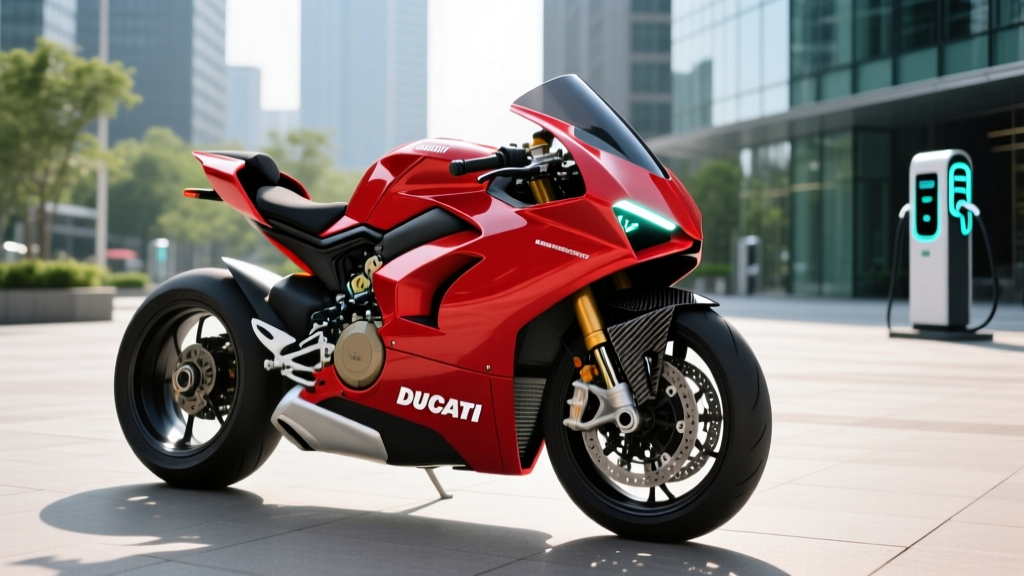
Ducati does not sell a street-legal electric motorbike in 2026. The brand's only electric two-wheeler is the Ducati V21L, a prototype race bike built exclusively for the FIM Enel MotoE World Championship. Ducati has not announced a production electric street motorcycle, and no consumer model is available for purchase, preorder, or test ride. If you're searching for a Ducati electric motorbike today, you are either looking at the MotoE race machine (not for sale) or you'll need to consider alternatives from brands like Zero Motorcycles, Energica, or LiveWire.
Quick Answer
Is there a Ducati electric motorbike you can buy? No. Ducati's V21L is a race-only prototype for MotoE. Ducati CEO Claudio Domenicali has confirmed the company will eventually produce electric motorcycles, but no production timeline, pricing, or consumer specs have been released as of early 2026. Buyers wanting an electric sportbike should look at the Energica Ego+ RS or LiveWire ONE.
What Is the Ducati V21L MotoE Race Bike?
The Ducati V21L was introduced for the 2023 MotoE season and continues as the spec race bike for the FIM Enel MotoE World Championship through at least 2026. Every rider in the series uses an identical V21L — it is not a Ducati product you can configure, customize, or register for road use.
| Specification | Value |
|---|---|
| Peak Power | 110 kW (~148 hp) |
| Peak Torque | 140 Nm (~103 lb-ft) |
| Battery Capacity | 18 kWh (total), liquid-cooled |
| Battery Chemistry | NMC (nickel manganese cobalt) pouch cells |
| Weight (dry) | 225 kg (~496 lbs) |
| Top Speed | 275 km/h (~171 mph) |
| DC Fast Charge | Up to 24 kW (80% in ~45 min) |
| Usable Race Range | ~35–40 km (~22–25 miles) at race pace |
| Retail Availability | None — race-only, not for sale |
These numbers are impressive for a race prototype, but they don't translate to a street motorcycle. The 18 kWh battery is roughly one-third the capacity of a highway-capable electric car and is tuned for short, high-output sprint races — typically 8 laps, or about 35 kilometers — not commuting or touring. Ducati has not published any roadmap for adapting the V21L platform into a production consumer model.
Why Ducati Hasn't Released a Consumer Electric Motorcycle
Ducati operates under the Volkswagen Group (via Audi/Lamborghini), and the parent company's electrification strategy has focused on four-wheeled vehicles — Porsche Taycan, Audi e-tron GT, Lamborghini Revuelto hybrid. Ducati's CEO has acknowledged that an electric motorcycle is inevitable, but several engineering and market realities have delayed it:
- Energy density constraints. Motorcycles have far less physical space for battery packs than cars. Packing enough kWh for 150+ miles of real-world range into a sportbike chassis that weighs under 500 lbs remains a significant engineering challenge with current NMC and LFP cell chemistries.
- Weight distribution. Ducati's brand identity centers on lightweight, agile handling. Current battery energy density (~250 Wh/kg at the cell level) means a 15 kWh usable pack adds roughly 60 kg (132 lbs) of battery mass alone — before cooling, housing, and power electronics.
- Thermal management. High-output electric motorcycle motors and battery packs generate substantial heat. Cars can use large radiators and underfloor cooling loops; motorcycles have limited surface area and airflow for thermal dissipation, especially at sustained highway speeds.
- Market size. The electric motorcycle market remains small. According to industry data, electric motorcycles represent less than 2% of new motorcycle sales in the US. Ducati, as a premium low-volume manufacturer, may be waiting for battery technology and market demand to mature before committing to a production model.
Electric Motorcycle Alternatives You Can Actually Buy
If you want a high-performance electric motorcycle in 2026, several production models are available now. Here's how the leading options compare on the specs that matter:
| Model | Peak HP | Battery (kWh) | City Range | Combined Range | 0–60 mph | MSRP |
|---|---|---|---|---|---|---|
| Energica Ego+ RS | 171 hp | 21.5 kWh (usable) | 261 mi | 143 mi | 2.6 sec | $28,190 |
| LiveWire ONE | 105 hp | 15.5 kWh (usable) | 146 mi | 95 mi | 3.0 sec | $21,999 |
| Zero SR/S | 110 hp | 15.8 kWh (nominal) | 161 mi | 109 mi | 3.3 sec | $23,995 |
| Zero SR/F | 110 hp | 15.8 kWh (nominal) | 161 mi | 109 mi | 3.3 sec | $21,995 |
Range figures from manufacturer estimates using standard test cycles. Real-world highway range is typically 30–40% lower than city range due to the absence of regenerative braking at sustained speeds and higher aerodynamic drag. Source: Energica, LiveWire, Zero Motorcycles.
Which Electric Motorcycle Should You Choose?
Choose the Energica Ego+ RS if: You want the closest thing to a Ducati-caliber sportbike — Italian-built, 171 hp, DC fast charging (up to 24 kW, 0–80% in ~40 minutes), and the longest real-world range in the segment.
Choose the LiveWire ONE if: You want a Harley-Davidson-backed dealer network, a more upright riding position, and the best available connectivity and app ecosystem, at a lower price point.
Choose the Zero SR/S or SR/F if: You want the most established electric motorcycle brand in the US, the widest dealer and service network, and optional Power Tank accessories to extend range.
Electric Motorcycle vs. Gas Sportbike: Real Costs
The upfront price gap between electric and gas motorcycles is significant, but operating costs tell a different story. Here's a five-year ownership comparison using the Energica Ego+ RS against a comparable gas sportbike (e.g., Ducati Panigale V2, MSRP ~$18,000):
| Cost Category | Energica Ego+ RS (Electric) | Ducati Panigale V2 (Gas) |
|---|---|---|
| Purchase Price | $28,190 | $18,000 |
| Fuel/Energy (15,000 mi total) | $450 (at $0.14/kWh avg) | $1,680 (at $4.00/gal, 40 mpg avg) |
| Maintenance (oil, filters, valves) | $300 (tires, brakes, fluid) | $2,400 (desmodromic valve service, oil, filters) |
| Insurance (5-year avg) | $4,500 | $4,000 |
| Estimated 5-Year Total | $33,440 | $26,080 |
Assumptions: 3,000 miles/year, residential electricity at $0.14/kWh, gas at $4.00/gallon. Insurance varies heavily by rider profile, location, and coverage. Electric motorcycle insurance tends to run 10–15% higher due to limited actuarial data and higher replacement parts costs. Maintenance figures exclude tires, which wear similarly on both platforms.
The electric motorcycle saves roughly $2,330 in fuel and maintenance over five years, but that doesn't close the $10,190 purchase-price gap. The break-even point for an electric motorcycle at these mileage levels extends well beyond a typical ownership period. Electric motorcycles make financial sense primarily for riders who value the riding experience — instant torque, zero vibration, silent operation — over pure cost-per-mile economics.
What First-Time Electric Motorcycle Buyers Must Know
Charging at Home Is Essential
Unlike electric cars, most electric motorcycles do not support DC fast charging as standard (the Energica Ego+ RS is a notable exception). You'll rely primarily on Level 1 (standard 120V outlet) or Level 2 (240V) charging:
- Level 1 (120V, ~1.3 kW): Adds roughly 8–12 miles of range per hour. A full charge on a 15 kWh battery takes 11–13 hours. Adequate if you ride less than 50 miles daily and park near an outlet overnight.
- Level 2 (240V, ~3.3–7.2 kW): Adds 25–50 miles of range per hour. A full charge takes 2–4 hours. Requires a dedicated 240V circuit — installation typically costs $500–$1,500 depending on your electrical panel capacity and run length. A licensed electrician should assess your panel before installation.
- DC Fast Charging (where available): Up to 24 kW on the Energica. Adds 0–80% in approximately 40 minutes. Infrastructure for motorcycle-compatible DC fast chargers remains extremely limited — most public stations are designed for cars and may not accommodate motorcycle parking geometry.
Cold Weather Cuts Range Significantly
Lithium-ion battery chemistry is temperature-sensitive. In cold weather (below 40°F / 4°C), expect 20–35% range reduction due to increased internal resistance and energy diverted to battery heating. A motorcycle with a 100-mile combined range in summer may deliver only 65–80 miles in winter. If you ride year-round in a cold climate, this is a critical planning factor — not a minor footnote.
No Federal Tax Credit for Electric Motorcycles (Currently)
The IRS §30D Clean Vehicle Credit applies to four-wheeled vehicles only. Electric motorcycles, including all models from Zero, LiveWire, and Energica, do not qualify for the federal $7,500 tax credit. Some states offer separate incentives for electric motorcycles — check your state energy office or the Alternative Fuels Data Center for current programs. Tax rules change frequently; consult a tax professional for eligibility guidance.
Common Misconceptions About Electric Motorcycles
| Myth | Fact |
|---|---|
| "Ducati sells an electric street bike." | Ducati's V21L is race-only. No production electric Ducati is available or officially announced for consumer sale as of 2026. |
| "Electric motorcycles are maintenance-free." | They eliminate oil changes, valve adjustments, and spark plugs, but tires, brake pads, brake fluid, fork seals, and belt/chain drive still require regular service. |
| "Range is the same as the sticker number." | Manufacturer range claims use idealized city-cycle tests. Highway riding at 70+ mph with no regenerative braking can reduce real-world range by 30–40%. |
| "You can charge at any public EV station." | Most public DC fast chargers use CCS or NACS connectors designed for cars. Electric motorcycles typically use standard J1772 (Level 2) or proprietary connectors. Parking a motorcycle at a car-sized charging stall can be logistically awkward or prohibited. |
| "Electric motorcycles are slow." | The Energica Ego+ RS hits 60 mph in 2.6 seconds — faster than most gas superbikes. Instant electric torque delivers brutal acceleration with no clutch, no gearshift, and no powerband lag. |
The Bottom Line for Ducati Fans Considering Electric
If you're a Ducati enthusiast hoping for an electric Panigale, the honest answer is: it's not coming soon. Ducati's engineering resources are committed to the MotoE race program and to developing synthetic-fuel and hybrid strategies for its road bikes. A production Ducati electric motorcycle would likely require a breakthrough in battery energy density — or a strategic decision by the Volkswagen Group to mandate electrification across all its motorcycle brands.
In the meantime, riders who want electric performance have viable options. The Energica Ego+ RS offers Italian engineering, superbike acceleration, and the longest range in the segment. The LiveWire ONE provides a strong dealer network and daily-ridable ergonomics. Zero Motorcycles remains the most accessible brand for US buyers seeking service support.
For riders unwilling to compromise on the Ducati brand specifically, the most practical path is to continue riding a gas Ducati today and revisit the electric market when Ducati — or its parent company — announces a production timeline with published specs, pricing, and a real-world range above 150 miles combined.
Frequently Asked Questions
When will Ducati release an electric motorcycle for consumers?
Ducati has not announced a production date, timeline, or pricing for a consumer electric motorcycle. The company's CEO has stated it is "inevitable," but no official roadmap has been published as of 2026. Any dates circulating on forums or social media are speculative.
Can I buy the Ducati V21L MotoE bike?
No. The V21L is a race-spec machine owned and maintained by Ducati Corse for the FIM Enel MotoE World Championship. It is not homologated for road use, not available for private purchase, and not street-legal in any jurisdiction.
What is the best electric motorcycle for highway riding?
The Energica Ego+ RS offers the longest combined range (~143 miles manufacturer-claimed) and DC fast charging capability, making it the most viable option for highway use. Expect real-world highway range of approximately 90–100 miles at 70 mph. Plan charging stops accordingly for rides beyond that distance.
Do electric motorcycles qualify for any tax credits?
Not at the federal level. The IRS §30D Clean Vehicle Credit requires four wheels. Some states and local utilities offer rebates or incentives for electric motorcycles — check the Alternative Fuels Data Center and your state energy office for current programs. Always verify with a tax professional before making purchase decisions based on incentive eligibility.
How long do electric motorcycle batteries last?
Most manufacturers warranty their battery packs for 3–5 years with a capacity retention threshold of 70–80%. With proper care (avoiding sustained 100% state of charge, minimizing DC fast charging, and storing in moderate temperatures), NMC battery packs in electric motorcycles typically retain usable capacity for 80,000–100,000 miles. Replacement costs range from $5,000 to $8,000 depending on the model.