Quick Verdict: The Dually Cybertruck Explained
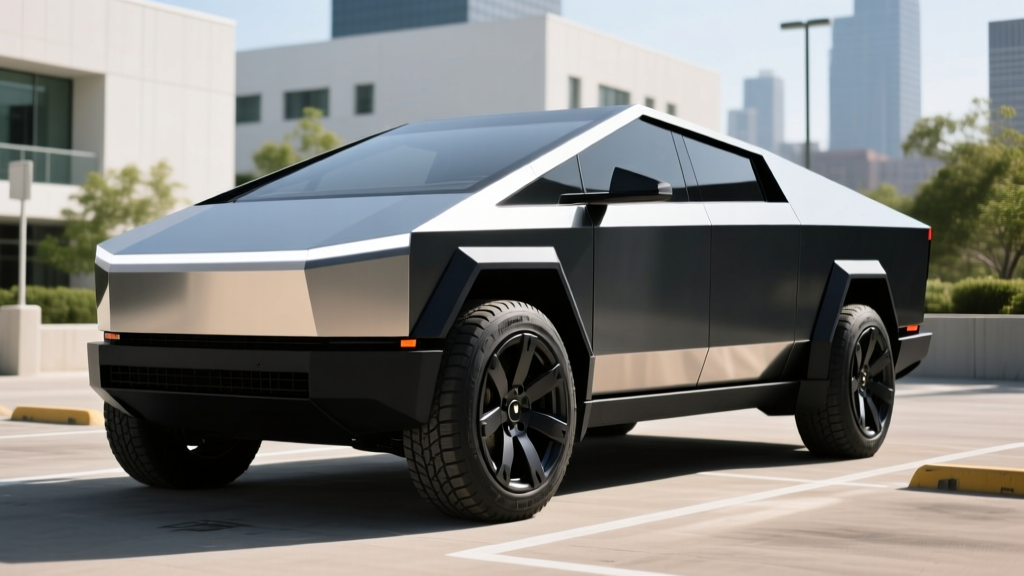
The "dually Cybertruck" — a dual-rear-wheel variant of Tesla's stainless-steel electric pickup — has generated significant search interest since Tesla CEO Elon Musk teased the concept on social media. As of early 2026, Tesla has not officially announced a production dually Cybertruck for sale. What exists is the standard Cybertruck lineup (AWD and Cyberbeast trims), both featuring a single rear wheel per side.
That said, the dually concept addresses a genuine gap: heavy-duty towing and payload for commercial and ranch use. A dual-rear-wheel configuration would increase gross axle weight rating (GAWR), improve stability under heavy trailer loads, and potentially boost payload capacity well beyond the current Cybertruck's 2,500-pound limit. For buyers researching whether to wait or look at competitors like the Ford F-150 Lightning or Chevrolet Silverado EV, this guide breaks down what we know, what we can reasonably project, and what the current Cybertruck delivers today.
Current Cybertruck Specs (2025–2026 Model Year)
Before projecting what a dually variant might offer, here's what the production Cybertruck delivers right now. These numbers come from EPA data on fueleconomy.gov and Tesla's official specification pages.
| Spec | AWD Trim | Cyberbeast Trim |
|---|---|---|
| EPA Range | 340 miles | 320 miles |
| Battery Capacity | ~123 kWh usable (NMC) | ~123 kWh usable (NMC) |
| Drivetrain | Dual-Motor AWD | Tri-Motor AWD |
| Horsepower | 600 hp | 845 hp |
| 0–60 mph | 4.1 seconds | 2.6 seconds |
| Max DC Fast Charge | ~250 kW peak | ~250 kW peak |
| 10–80% DC Charge Time | ~30 minutes | ~30 minutes |
| Level 2 Home Charge Rate | 11.5 kW (~34 mi/hr) | 11.5 kW (~34 mi/hr) |
| Towing Capacity | 11,000 lbs | 11,000 lbs |
| Payload Capacity | 2,500 lbs | 2,500 lbs |
| Bed Length | 6 ft (72 in) | 6 ft (72 in) |
| Cargo Volume (bed) | ~67 cu ft | ~67 cu ft |
| Efficiency | ~54 MPGe / ~56 kWh/100mi | ~50 MPGe / ~60 kWh/100mi |
| Base MSRP | $79,990 | $99,990 |
Projected Dually Cybertruck Specifications
Based on Tesla's public comments, patent filings for a wider rear axle assembly, and the physics of dual-rear-wheel configurations, here's what a production dually Cybertruck would likely deliver. All figures below are estimates and subject to change when and if Tesla formally announces the vehicle.
| Spec | Projected Figure | Basis for Estimate |
|---|---|---|
| EPA Range | ~280–310 miles | Added weight + wider tire drag reduce efficiency vs. standard AWD |
| Battery Capacity | ~130–150 kWh (NMC) | Larger pack needed to offset weight penalty |
| Towing Capacity | 15,000–20,000 lbs | Dually axle rated for heavier loads; Musk has suggested "significant" increase |
| Payload Capacity | 3,500–5,000 lbs | DRW configurations typically add 1,000–2,500 lbs payload over SRW |
| Drivetrain | Tri-motor AWD (likely) | Extra torque needed for heavy towing |
| 0–60 mph | ~4.5–5.5 seconds | Heavier curb weight reduces acceleration |
| Max DC Fast Charge | ~250–350 kW peak | Larger pack can accept higher sustained rates |
| Base MSRP (est.) | $95,000–$120,000 | Premium over AWD trim; comparable to heavy-duty truck pricing |
Real-World Range: What to Actually Expect
Even the confirmed Cybertruck AWD's 340-mile EPA sticker deserves scrutiny. EPA range tests use a mix of city and highway driving at moderate speeds. Real-world highway driving at 75 mph, especially with the Cybertruck's angular aerodynamic profile, typically yields 10–15% less range than the sticker.
- EPA Combined: 340 miles
- Highway (70–75 mph, 65°F): ~280–300 miles
- Cold Weather (20°F, highway): ~220–260 miles (30–35% reduction typical for NMC packs without preconditioning)
- While Towing (5,000 lb trailer): ~170–200 miles (towing can cut range nearly in half)
For a dually variant, add roughly 10–15% more energy consumption due to increased rolling resistance from four rear tires and a heavier curb weight. If you regularly tow above 10,000 lbs, plan your routes around DC fast chargers every 150–180 miles to maintain a safety buffer.
The Cybertruck uses an NMC (nickel manganese cobalt) battery chemistry, which offers high energy density but is more sensitive to cold-weather range loss than LFP (lithium iron phosphate). Tesla's thermal management system and battery preconditioning — which warms the pack before you arrive at a Supercharger — mitigate some of this, but physics still wins in sub-freezing conditions.
Charging Speed: DC Fast and Home Level 2
Charging speed is where kW (power — the rate of energy flow) and kWh (energy — total battery capacity) matter most. The current Cybertruck accepts up to ~250 kW at a DC fast charger, but that peak rate only holds for a narrow portion of the charge curve before tapering.
| Charging Level | Power (kW) | Miles Added per Hour | Notes |
|---|---|---|---|
| Level 1 (120V outlet) | ~1.4 kW | ~3–4 mi/hr | Emergency/trickle only; 4+ days for full charge |
| Level 2 (240V, 48A) | 11.5 kW | ~34 mi/hr | Full charge in ~11 hours; ideal for overnight home charging |
| DC Fast (Tesla Supercharger V3) | ~250 kW peak | ~200+ mi in 15 min | 10–80% in ~30 min; tapers significantly above 80% |
| DC Fast (Supercharger V4) | ~350 kW capable | Varies | Cybertruck may not accept full V4 rate; depends on onboard architecture |
Charge curve reality: The "250 kW peak" number is misleading if taken at face value. The Cybertruck, like all EVs, charges fastest between roughly 10–50% State of Charge (SoC). Above 80%, the rate drops sharply — often below 50 kW — to protect the battery. That 10–80% time of ~30 minutes assumes you arrive at the charger with a preconditioned battery and a functional stall. In practice, plan for 35–45 minutes at a Supercharger stop on a road trip.
For home charging, a 48-amp Level 2 wall connector on a 60-amp circuit is the practical standard. Installation costs typically run $800–$2,000 depending on your electrical panel capacity and run length. If your home has a 200-amp panel with spare capacity, expect the lower end. A panel upgrade to 200A or 400A can add $2,000–$5,000.
Pricing, Trims, and Federal Tax Credit Eligibility
The current Cybertruck lineup sits well above the federal tax credit threshold, which has significant implications for buyers.
| Trim | Base MSRP | Federal §30D Credit Eligible? | Effective Price After Credit |
|---|---|---|---|
| AWD | $79,990 | No — exceeds $80,000 truck MSRP cap | $79,990 |
| Cyberbeast | $99,990 | No — exceeds $80,000 truck MSRP cap | $99,990 |
| Dually (projected) | $95,000–$120,000 est. | No — would exceed $80,000 truck MSRP cap | Full MSRP |
Under current IRS §30D rules, new clean vehicle credits are capped at $80,000 MSRP for trucks and vans. Even the base Cybertruck AWD at $79,990 is right at the edge — and once destination fees or any options push the sticker above $80,000, it loses eligibility. Additionally, buyers must meet income caps ($150,000 single / $300,000 joint AGI) and the vehicle must satisfy critical-mineral and battery-component sourcing requirements that shift annually.
A dually Cybertruck, almost certainly priced above $95,000, would not qualify for the federal credit. Some state-level incentives may still apply — check your state's energy office or the AFDC incentive database for local programs — but these vary widely by jurisdiction.
Tech, Interior, and Driver Assistance
The Cybertruck's tech suite mirrors Tesla's broader lineup, with a few truck-specific additions:
- Infotainment: 18.5-inch center touchscreen running Tesla's proprietary OS. No Apple CarPlay or Android Auto — Tesla's native navigation, media, and vehicle controls handle everything. Rear passengers get a 9.4-inch touchscreen for climate and media.
- Driver Assistance: Tesla Autopilot (adaptive cruise + lane centering) is standard. Full Self-Driving (Supervised) is a $8,000 option or $99/month subscription. Important: FSD is an SAE Level 2 system — it requires continuous driver supervision and is not autonomous driving. You must keep your hands on the wheel and eyes on the road at all times.
- Truck-Specific Tech: Powered tonneau cover (lockable, supports 300 lbs on top), 120V and 240V bed outlets (up to 11.5 kW output for powering tools or a worksite), air suspension with adaptive damping and ~12 inches of travel, steer-by-wire with variable ratio (no physical steering column linkage).
- Notable Drawbacks: The steer-by-wire system takes significant adaptation. Visibility is compromised by the angular A-pillars and lack of a rear window (camera-based rearview mirror is standard). The stainless steel exoskeleton shows fingerprints and can dent differently than traditional stamped steel. Panel gap quality has been inconsistent across early production units.
Who Is the Dually Cybertruck For?
The dually concept targets a specific buyer profile that the current single-rear-wheel Cybertruck doesn't fully serve:
- Heavy-duty towers: If you regularly pull horse trailers, boat trailers, or equipment trailers above 11,000 lbs, a dually rear axle provides the stability and GAWR you need. The projected 15,000–20,000 lb tow rating would compete directly with heavy-duty diesel trucks.
- Commercial and fleet buyers: Construction, ranching, and utility work demand payload capacity above 2,500 lbs. A dually Cybertruck could serve as an electric alternative to the Ford F-350 or Ram 3500 for certain duty cycles.
- Not ideal for: Daily commuters who don't tow (the standard AWD is more efficient and cheaper), urban drivers who need easy parking (the dually's wider rear fenders add ~8–10 inches of width), or budget-conscious buyers (no tax credit, six-figure pricing).
Cybertruck vs. Key Electric Truck Competitors
| Spec | Tesla Cybertruck AWD | Ford F-150 Lightning (Ext. Range) | Chevy Silverado EV 4WT | Rivian R1T (Dual-Motor Max) |
|---|---|---|---|---|
| EPA Range | 340 mi | 320 mi | 450 mi | 410 mi |
| Max Towing | 11,000 lbs | 10,000 lbs | 10,000 lbs | 11,000 lbs |
| Payload | 2,500 lbs | 2,235 lbs | 1,800 lbs | 1,760 lbs |
| Base MSRP | $79,990 | ~$69,995 | ~$74,900 | ~$87,600 |
| §30D Credit Eligible | Borderline | Yes (select trims) | Yes (select trims) | Yes (select trims) |
| Bed Length | 6 ft | 5.5 ft | 5 ft 11 in | 4.5 ft |
None of the current electric pickups offer a factory dually configuration. Ford has not announced a dually Lightning, and GM's Silverado EV uses a unibody architecture that would require significant reengineering for dual rear wheels. This means a Tesla dually Cybertruck, if produced, would be the first factory-electric dually pickup — a genuine niche with no direct EV rival.
For buyers who need dually capability today, the only option is a conventional heavy-duty diesel (Ford F-350 DRW, Ram 3500 DRW, Chevy Silverado 3500 HD DRW) or an aftermarket dually conversion on an existing electric truck — though the latter is rare and voids most factory warranties.
Battery Warranty and Longevity
Tesla covers the Cybertruck's battery and drive unit with an 8-year / 120,000-mile warranty (whichever comes first), with a minimum 70% capacity retention threshold over that period. This is competitive with the industry standard and aligns with Ford, GM, and Rivian's EV powertrain coverage.
The NMC chemistry in the Cybertruck typically degrades faster in the first 20,000–30,000 miles (roughly 5–7% loss), then settles into a slower, more linear decline. Based on Tesla Model S and Model 3 fleet data, most NMC packs retain 85–90% capacity at 100,000 miles under normal use. Frequent DC fast charging, habitual 100% SoC storage, and extreme heat exposure accelerate degradation — so charge to 80% daily and precondition when possible.
Full battery replacement costs remain high. Based on current Tesla service estimates, a Cybertruck pack replacement out of warranty would likely cost $18,000–$25,000 including labor. This is a long-term ownership cost worth factoring into your total cost of ownership calculation, particularly if you plan to keep the vehicle past the 8-year warranty period.
Frequently Asked Questions
What is the real-world range of the Cybertruck?
The EPA rates the Cybertruck AWD at 340 miles combined. In real-world highway driving at 70–75 mph, expect 280–300 miles. In cold weather (below freezing), that drops to 220–260 miles. Towing cuts range dramatically — plan for 170–200 miles with a 5,000-lb trailer.
How fast does the Cybertruck charge?
At a Tesla Supercharger V3, the Cybertruck peaks at ~250 kW and charges from 10–80% in approximately 30 minutes with a preconditioned battery. At home on a 48-amp Level 2 charger (11.5 kW), you'll add about 34 miles of range per hour, requiring roughly 11 hours for a full charge from empty.
Does the Cybertruck qualify for the federal EV tax credit?
Under current IRS §30D rules, the Cybertruck AWD at $79,990 is at the very edge of the $80,000 MSRP cap for trucks. Adding options or destination fees likely pushes it over the threshold, disqualifying it. The Cyberbeast at $99,990 does not qualify. Buyers must also meet income limits ($150K single / $300K joint) and the vehicle must satisfy battery-sourcing requirements. Always verify current eligibility on irs.gov before purchasing.
Is the dually Cybertruck available to buy now?
No. As of early 2026, Tesla has not announced a production timeline, pricing, or official specifications for a dually Cybertruck variant. Elon Musk has teased the concept on social media, and Tesla has filed related patents, but it remains unannounced for production. Buyers needing dually capability today must look to conventional heavy-duty trucks or wait for a formal Tesla announcement.
Is the Cybertruck worth buying vs. the F-150 Lightning or Silverado EV?
It depends on your priorities. The Cybertruck leads in payload capacity (2,500 lbs), 0–60 performance, and tech-forward features like the powered tonneau and vehicle-to-load power output. The F-150 Lightning offers a lower entry price and federal tax credit eligibility on select trims. The Silverado EV 4WT wins on range (450 miles EPA) but has lower payload. If you need a dually, none of these offer one — making the Cybertruck dually concept uniquely appealing if Tesla eventually produces it.
What are the biggest pros and cons of the Cybertruck?
- Class-leading payload (2,500 lbs) among electric pickups
- 11,000-lb towing capacity with integrated trailer brake controller
- 120V/240V bed outlets (up to 11.5 kW) for worksite power
- Stainless steel exoskeleton — no paint to scratch or chip
- Tri-motor Cyberbeast delivers supercar-level acceleration (2.6s 0–60)
- Air suspension with significant ground clearance adjustment
- No federal tax credit eligibility (exceeds $80K MSRP cap)
- Steer-by-wire requires significant driver adaptation
- Poor rear visibility; reliance on camera-based rearview
- 6-foot bed is shorter than most full-size competitors
- No Apple CarPlay or Android Auto support
- Panel gap and build quality inconsistencies in early production
- High price of entry with no dually option currently available