The Short Answer on DSV's 2024 European Electric Truck Order
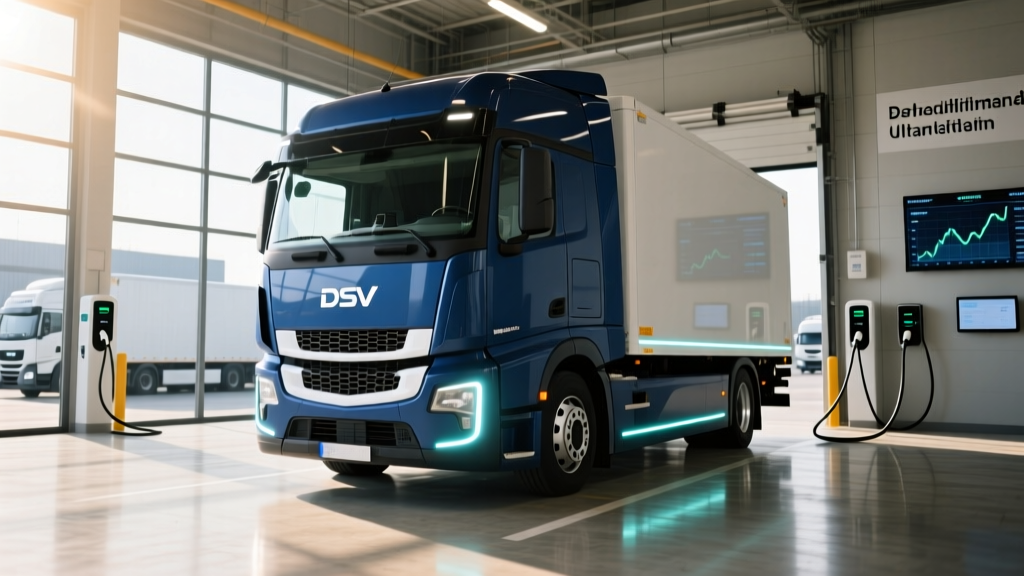
DSV's heavy-duty electric truck procurement across Europe in 2024 centered on a commitment to deploy approximately 500 battery-electric trucks (primarily Volvo FH Electric and Mercedes-Benz eActros models) by end of 2025, with initial deliveries beginning in mid-2024. The order was distributed across key European corridors — Germany, the Netherlands, Denmark, and Sweden — targeting regional distribution routes under 300 km. This makes it one of the largest single-operator electric heavy-duty fleet commitments in Europe to date, though it represents roughly 2-3% of DSV's total European truck fleet of ~20,000 vehicles.
Why DSV's Order Matters for the EV Freight Landscape
When the world's third-largest freight forwarder places a multi-hundred-unit electric truck order, it signals more than corporate sustainability reporting. It validates the operational readiness of 40-tonne battery-electric tractor units for real logistics work — not just last-mile delivery vans. DSV's 2024 procurement followed pilot programs in Scandinavia and the Benelux region that logged over 2 million electric kilometers, providing the data needed to justify scaling up.
The order also reflects the tightening regulatory environment. The EU's CO₂ emission standards for heavy-duty vehicles mandate a 15% reduction by 2025, scaling to 45% by 2030 and 90% by 2040 relative to a 2019-2020 baseline. For fleet operators like DSV, early electrification isn't optional — it's compliance planning.
The Trucks: Specs, Range, and Charging Reality
DSV's order was split primarily between two platforms:
| Specification | Volvo FH Electric | Mercedes-Benz eActros 600 |
|---|---|---|
| Battery Capacity | 540 kWh (usable ~500 kWh, NMC) | 621 kWh (usable ~580 kWh, LFP) |
| EPA/WLTP Range | ~300 km (WLTP); expect 220-260 km real-world loaded | ~500 km (WLTP); expect 380-440 km real-world loaded |
| Peak DC Charge Rate | 250 kW | 400 kW (MCS-capable) |
| 10-80% Charge Time | ~95 minutes at 250 kW | ~45 minutes at 400 kW (MCS station) |
| Motor Output | 490 kW (666 hp) | 600 kW (816 hp) |
| GCW (Gross Combination Weight) | 44 tonnes | 44 tonnes |
| Approx. Unit Price | €350,000-€400,000 | €400,000-€450,000 |
A critical reality check: the WLTP range figures assume moderate loads, flat terrain, and 20°C ambient temperature. In real European winter conditions (-5°C to 5°C), expect a 25-35% range reduction due to battery internal resistance increases and cabin/cargo heating demands. A fully loaded Volvo FH Electric running Stockholm to Gothenburg in January will need strategic mid-route charging — the 300 km WLTP sticker range becomes roughly 200 km of usable distance.
Charging infrastructure remains the binding constraint. While the eActros 600 supports the Megawatt Charging System (MCS) at up to 400 kW, most European depot and public heavy-duty chargers in 2024-2025 topped out at 150-250 kW CCS2. DSV addressed this by installing dedicated depot chargers at 12 key distribution centers, a capital investment estimated at €150,000-€250,000 per site (including grid connection upgrades, switchgear, and 2-4 dual-port dispensers).
Electric vs. Diesel: The Real Cost Equation for Heavy Trucks
| Cost Factor (Per Truck, Annual) | Diesel (Volvo FH 500) | Electric (Volvo FH Electric) |
|---|---|---|
| Vehicle Acquisition | €140,000 (amortized over 7 yr) | €375,000 (amortized over 7 yr) |
| Fuel/Energy (120,000 km/yr) | €42,000 (33L/100km @ €1.27/L) | €18,000 (130 kWh/100km @ €0.14/kWh depot rate) |
| Maintenance | €8,500 | €3,200 (no oil, filters, exhaust aftertreatment) |
| AdBlue / DEF | €1,800 | €0 |
| Insurance | €4,200 | €5,500 (higher replacement cost) |
| EU Road Tolls (DE Toll Collect discount) | €12,000 | €0 (zero-emission exemption through 2025) |
| Annual Operating Cost | €68,500 | €26,700 |
| 5-Year Total (incl. acquisition) | €482,500 | €508,500 |
The numbers reveal a familiar EV pattern: higher upfront cost offset by dramatically lower operating expenses. The breakeven point for DSV's electric trucks falls around year 4-5 of operation, assuming current European diesel prices and electricity rates. However, this calculation excludes the EU's increasingly aggressive CO₂ penalty structure, which will widen the gap in favor of electric by 2027-2028.
For context on the US market, the IRS §30D and 45W commercial clean vehicle credits offer up to $40,000 for qualifying heavy-duty electric trucks — though European operators like DSV rely on EU member-state subsidies (Germany's KsNI program offers up to 80% of the price differential between electric and diesel) and toll exemptions rather than direct purchase credits.
Operational Realities: What DSV Learned in Year One
DSV's initial deployment data, shared at the 2025 IRU World Transport Congress, surfaced several practical lessons that any fleet operator — or individual considering a heavy-duty EV — should internalize:
Route planning is non-negotiable. Unlike diesel trucks that can refuel in 10 minutes anywhere, electric heavy-duty trucks require pre-planned charging stops aligned with driver mandatory rest periods (45 minutes every 4.5 hours under EU Regulation 561/2006). DSV found that aligning charging with mandated breaks eliminated most productivity loss — but only on routes with reliable high-power charging infrastructure.
Depot charging is the backbone. Approximately 78% of DSV's electric truck charging occurred at depot locations overnight, using 22 kW AC or 50-150 kW DC chargers. Public fast-charging was reserved for mid-route top-ups. This mirrors the home-charging reality for passenger EVs: if you can charge where you park overnight, the economics and convenience improve dramatically.
Battery degradation at scale. After 18 months and an average of 150,000 km per truck, DSV reported battery capacity retention of 92-95% across the fleet — consistent with NMC chemistry degradation curves under managed charging protocols (avoiding sustained 100% SoC, limiting DC fast-charge frequency to 2-3 times per week). Both Volvo and Mercedes-Benz warrant their heavy-duty batteries at 70% capacity retention over 8 years or 800,000 km.
Common Misconceptions About Electric Freight Trucks
| Myth | Fact |
|---|---|
| "Electric trucks can't handle real freight loads" | Both the FH Electric and eActros 600 are rated for 44-tonne GCW — the European legal maximum. Payload penalty is ~2-3 tonnes due to battery weight, partially offset by the EU's +2-tonne weight allowance for zero-emission vehicles. |
| "Charging takes too long for logistics" | At 250+ kW, a 10-80% charge takes 45-95 minutes — aligning with mandatory driver rest periods. MCS at 400+ kW reduces this to under 30 minutes. |
| "Batteries won't last in commercial use" | Current NMC and LFP heavy-duty packs are engineered for 1 million+ km with managed thermal systems. DSV's 92-95% retention at 150,000 km tracks well with warranty thresholds. |
| "Electric trucks are only for short urban routes" | The eActros 600's real-world 400+ km range covers most European regional distribution corridors. Long-haul (>600 km) remains challenging but is the target for 2027-2028 solid-state and hydrogen fuel-cell platforms. |
| "The grid can't support fleet charging" | Depot charging at 150 kW overnight for 10 trucks requires ~1.5 MW — equivalent to a small industrial facility. Grid upgrades are needed but are a known, budgetable cost, not a showstopper. |
Decision Framework: Is an Electric Heavy Truck Right for Your Fleet?
Choose electric heavy-duty trucks if:
- Your primary routes are under 300 km round-trip (or under 500 km with the eActros 600)
- You have depot parking with grid capacity for overnight charging (minimum 22 kW AC per truck, ideally 50+ kW DC)
- You operate in jurisdictions with toll exemptions, purchase subsidies, or low-emission zone mandates
- Your trucks average 100,000+ km annually — higher utilization accelerates the fuel-cost breakeven
- You're planning a 5-7 year vehicle hold period to capture total cost of ownership advantages
Stick with diesel (or evaluate hydrogen fuel-cell) if:
- Your routes regularly exceed 500 km without reliable mid-route high-power charging
- You operate in regions with no depot charging access and unreliable public HDV charging networks
- You need maximum payload capacity with no battery weight penalty (specialized heavy-haul, oversized loads)
- Your annual mileage is under 60,000 km — the higher acquisition cost won't be offset by fuel savings within a reasonable hold period
- You operate in extreme cold climates (-20°C or below) where range loss exceeds 40% and charging times lengthen significantly
Frequently Asked Questions
How many electric trucks did DSV actually order in 2024?
DSV committed to approximately 500 battery-electric heavy-duty trucks across European operations, with deliveries beginning mid-2024 and full deployment targeted by end of 2025. The order includes primarily Volvo FH Electric and Mercedes-Benz eActros models, supplemented by smaller numbers of Scania BEV units for specific Nordic routes.
What does a DSV-scale electric truck order cost?
At an average unit price of €375,000-€425,000, the vehicle acquisition alone represents roughly €188-€213 million. Adding depot charging infrastructure (estimated €150,000-€250,000 per site across 12+ locations) brings the total capital commitment to approximately €200-€240 million — partially offset by EU and member-state subsidies covering 40-80% of the price differential versus diesel equivalents.
Can electric trucks handle European winters?
Yes, but with significant range penalties. Expect 25-35% range reduction at 0°C and up to 40% reduction at -15°C. Both the Volvo FH Electric and eActros 600 use active liquid thermal management systems with battery preconditioning, which mitigates but does not eliminate cold-weather losses. DSV's Nordic operations adjusted route planning and charging schedules seasonally.
How does this compare to US electric truck adoption?
Europe leads the US in heavy-duty electric truck deployment, driven by stricter CO₂ mandates, urban low-emission zones, and toll exemptions. In the US, fleet operators like PepsiCo, Amazon, and UPS have placed large orders with Tesla (Semi), Freightliner (eCascadia), and Volvo (VNR Electric), but total deployed units remain lower. The US benefits from the IRA's commercial clean vehicle credit (§45W) offering up to $40,000 per heavy-duty unit, though battery sourcing and MSRP caps apply.
What's the resale value outlook for electric heavy trucks?
Residual value data is still limited given the early adoption phase. Industry projections from firms like CRIF and Eurotax estimate 5-year residual values at 30-40% of original price for electric heavy trucks, versus 35-45% for diesel equivalents. The gap is expected to narrow as battery health certification standards mature and secondary-use markets (stationary storage) develop.