Verdict: The Tesla You Can Actually Slide
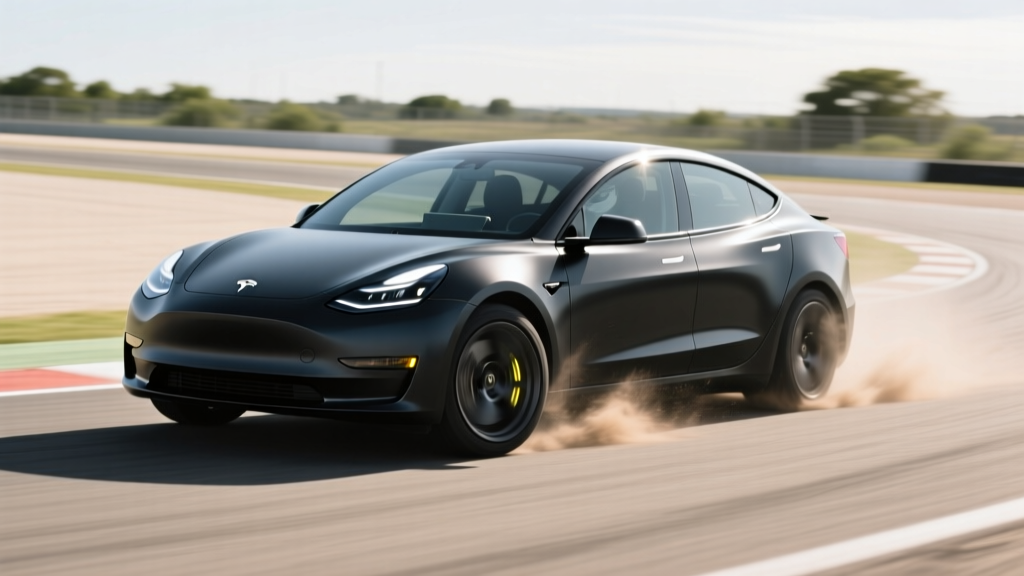
Search "drifting Tesla" on any video platform and you will find hundreds of owners sliding Model 3s around cones, skid pads, and closed tracks. The reason is not hype — it is physics. A dual-motor, torque-vectoring electric sedan with a sub-4,000-pound curb weight and instantaneous electric torque delivery is a natural drift platform. But until the refreshed Model 3 Performance (internally code-named "Highland") arrived with a dedicated Track Mode, drifting a Tesla meant fighting stability control systems designed to prevent exactly that behavior.
The 2026 Model 3 Performance changes the equation. With a front/rear torque-split slider in Track Mode, revised adaptive dampers, and a 510-horsepower dual-motor powertrain, this is the first Tesla that actively encourages oversteer rather than suppressing it. It is also a legitimate daily driver with a 346-mile EPA range estimate, access to the Supercharger network, and enough rear-seat space for a family of four. Here is the full breakdown.
| Spec | 2026 Model 3 Performance |
|---|---|
| EPA Range | 346 miles |
| Battery (usable) | 79 kWh (NMC) |
| Drivetrain | Dual-motor AWD |
| Horsepower | 510 hp |
| 0–60 mph | 2.9 seconds |
| Top Speed | 163 mph |
| Max DC Fast Charge | 250 kW |
| 10–80% DC Time | ~25 minutes |
| Level 2 Home Charge | 11.5 kW (~44 mi/hr) |
| EPA Efficiency | 121 MPGe / 28 kWh/100mi |
| Cargo (trunk + frunk) | 23 cu ft (rear) + 3.1 cu ft (frunk) |
| Rear Legroom | 35.2 inches |
| Curb Weight | 4,065 lbs |
| Battery Warranty | 8 years / 120,000 miles |
| Base MSRP | $52,990 |
Range, Efficiency, and Real-World Expectations
The EPA rates the 2026 Model 3 Performance at 346 miles on a full charge. That number comes from the 79 kWh usable battery pack (NMC chemistry) and an EPA combined efficiency of 121 MPGe, or roughly 28 kWh per 100 miles. For a 510-horsepower performance sedan, that efficiency figure is remarkable — it matches or beats many non-performance compact EVs.
EPA Sticker: 346 miles
Real-World Highway (70–80 mph): Expect 280–310 miles. Aerodynamic drag dominates at highway speeds, and the Performance trim's wider 235/40R19 rear tires add rolling resistance.
Real-World City / Mixed: 320–340 miles. Regenerative braking recovers energy in stop-and-go traffic, getting you close to the EPA number.
Cold Weather (below 32°F): 240–280 miles. NMC chemistry loses roughly 20–30% range in freezing temperatures without preconditioning. The Model 3's heat pump helps, but battery warming still consumes energy.
Track / Drift Sessions: Expect to burn 40–60% of battery in a 20-minute session. Aggressive driving with sustained high power output and frequent acceleration drastically reduces range. Plan charging accordingly if you are heading to a track day.
For daily commuting and road trips, the 346-mile rating is genuine. On a fueleconomy.gov comparison, the Model 3 Performance beats the BMW i4 M50 (270–307 miles depending on trim) and the Hyundai Ioniq 6 AWD (316 miles) in combined range. The caveat: those figures assume you are not spending your electrons on a skid pad.
Charging: 250 kW Peak, but Watch the Curve
The Model 3 Performance supports up to 250 kW on DC fast chargers via the native NACS connector — no adapter needed at Tesla Superchargers. Tesla claims a 10–80% charge in roughly 25 minutes under ideal conditions (warm battery, V3 Supercharger or equivalent 250 kW station).
| Charging Level | Power | Speed | Notes |
|---|---|---|---|
| Level 1 (120V) | 1.4 kW | ~5 mi/hr | Emergency only; 60+ hrs for full charge |
| Level 2 (240V, 48A) | 11.5 kW | ~44 mi/hr | Full charge in ~7.5 hrs; ideal home setup |
| DC Fast (V3 Supercharger) | 250 kW peak | ~175 mi in 15 min | 10–80% in ~25 min; tapers above 60% |
| DC Fast (V4 / CCS adapter) | Up to 250 kW | Similar to V3 | Non-Tesla networks via NACS or CCS adapter |
A critical note on the charging curve: the Model 3 does not sustain 250 kW for the entire session. Peak power holds from roughly 10–35% State of Charge (SoC), then steps down to around 150 kW through 60%, and further tapers to under 50 kW above 80%. This is normal for NMC chemistry, which requires careful current management at higher SoC to prevent lithium plating and degradation. If you precondition the battery by navigating to a Supercharger in the car's navigation system, the vehicle warms the pack to the optimal temperature before arrival, shaving several minutes off charge time.
For home charging, a Level 2 Wall Connector on a 60-amp circuit (delivering 48 amps / 11.5 kW) adds roughly 44 miles of range per hour. A full overnight charge from 20% to 100% takes about 7 hours. Installation costs typically range from $800 to $2,000 depending on panel capacity and run length — confirm with a licensed electrician whether your panel can support a 60-amp dedicated circuit.
Track Mode and Drifting: What Makes It Work
This is the section that earns the "drifting Tesla" search intent. The Model 3 Performance's Track Mode (accessible via the 15.4-inch touchscreen) is not a simple traction-control-off toggle. It is a comprehensive dynamics controller that lets you adjust:
- Torque Balance: A front-to-rear power distribution slider from 0:100 (full rear bias) to 100:0 (full front). For drifting, set it to 0:100 or 20:80 to send maximum torque to the rear wheels.
- Stability Assist: Adjustable from "Off" to "Sport." In "Off," the car will let you initiate and hold a slide with throttle steering. In "Sport," it allows moderate slip angles before intervening.
- Regen Braking: Adjustable intensity. Lower regen in Track Mode lets the car coast more naturally through corners, which is essential for weight transfer during drift initiation.
- Thermal Management: Track Mode preconditions the battery and powertrain for sustained high-output use, delaying thermal derate during aggressive driving.
The result is a car that is genuinely drift-capable, not just in a straight-line burnout sense but in sustained, controllable slides. The 510 hp dual-motor setup (permanent magnet rear, induction front) delivers torque to the rear wheels with zero lag, and the 4,065-pound curb weight — low for an EV — combined with the revised adaptive dampers gives the chassis a responsive, tossable feel. The Michelin Pilot Sport 4S tires (standard on Performance) provide enough grip to make the car predictable at the limit, which is exactly what you want when learning to drift.
Important context: drifting is hard on tires, brakes, and drivetrain components. Tesla's warranty covers the battery and drive units for 8 years / 120,000 miles, but tire wear from track use is a consumable expense. Budget $200–$350 per rear tire (Pilot Sport 4S) and expect 3,000–5,000 miles of rear tire life if you drift regularly. The regenerative braking system reduces wear on the physical brake pads during street driving, but track sessions still generate significant heat in the rotors.
Interior, Tech, and Daily-Driving Practicality
The refreshed Model 3 interior is a significant step up from pre-2024 versions. Ventilated front seats, ambient lighting, acoustic glass (front and rear), and a rear 8-inch touchscreen for passengers are now standard on the Performance trim. The 15.4-inch front touchscreen runs Tesla's latest software with snappy response and includes navigation, media, and vehicle controls.
Autopilot and FSD (Supervised): The Model 3 includes Basic Autopilot (lane centering, traffic-aware cruise) standard. Full Self-Driving (Supervised) remains a $8,000 add-on or $99/month subscription. To be explicit: FSD is an SAE Level 2 driver-assistance system. It does not make the car self-driving. You must keep your hands on the wheel and eyes on the road at all times. The "Supervised" label Tesla added in 2024 reflects this reality.
Cargo and Space: The trunk offers 23 cubic feet of space (including the under-floor storage area), and the front trunk (frunk) adds 3.1 cubic feet — enough for a charging cable bag or a small cooler. Rear legroom is 35.2 inches, which fits adults comfortably for short trips but is tighter than a Model Y or Model S for long highway drives. The rear seat folds 60/40 for longer cargo.
Drawbacks: The minimalist interior means no physical buttons for climate, mirrors, or glovebox — everything runs through the touchscreen, which takes adjustment. There is no heads-up display. The rear visibility is compromised by the sloping roofline and thick C-pillars. And the adaptive dampers, while improved, are firm in Sport mode — noticeable on rough pavement during daily commutes.
Pricing, Tax Credit, and Value
| Trim / Configuration | MSRP | Est. After §30D Credit |
|---|---|---|
| Model 3 Performance (base) | $52,990 | $45,490* |
| + FSD (Supervised) purchase | $60,990 | $53,490* |
| + Ultra Red paint ($2,500) | $55,490 | $47,990* |
*Assumes full $7,500 §30D federal tax credit eligibility. See eligibility rules below.
The 2026 Model 3 Performance starts at $52,990 (including destination), which is below the IRS §30D MSRP cap of $55,000 for sedans. However, eligibility for the full $7,500 federal tax credit depends on three factors that change frequently:
- Buyer Income Caps: Modified adjusted gross income must not exceed $150,000 (single), $225,000 (head of household), or $300,000 (joint).
- MSRP Cap: Vehicle MSRP must be at or below $55,000 for sedans (the Model 3 Performance qualifies at $52,990 base, but adding FSD and premium paint can push it over — confirm your exact build).
- Battery Sourcing: Critical minerals and battery components must meet escalating domestic-content thresholds. Tesla's battery sourcing has shifted over time; verify current-year eligibility on the IRS qualified vehicles list before purchasing.
- Point-of-Sale Transfer: As of 2024, you can transfer the credit to the dealer at purchase, reducing your out-of-pocket cost immediately rather than waiting for tax filing.
Consult a tax professional to confirm your personal eligibility. State incentives may stack on top — check your state's energy office or AFDC incentive database for local programs.
Pros
- Genuine drift capability with adjustable Track Mode torque vectoring
- 346-mile EPA range — best in performance-sedan class
- 250 kW DC fast charging with extensive Supercharger network
- 2.9-second 0–60 mph with daily-driver comfort
- 121 MPGe efficiency rivals non-performance EVs
- 8-year / 120,000-mile battery warranty
- OTA updates continuously add features
Cons
- Touchscreen-only controls require adjustment period
- Rear seat tighter than Model Y or competitors
- FSD ($8,000) remains Level 2 — not self-driving
- Track use accelerates tire wear significantly
- No heads-up display
- Firm ride in Sport mode on rough roads
- Tax credit eligibility depends on sourcing rules that change yearly
Competitor Comparison
| Spec | Tesla Model 3 Perf. | BMW i4 M50 | Hyundai Ioniq 6 AWD | Polestar 2 LR Dual Motor |
|---|---|---|---|---|
| EPA Range | 346 mi | 270 mi | 316 mi | 276 mi |
| 0–60 mph | 2.9 sec | 3.7 sec | 5.1 sec | 4.1 sec |
| Horsepower | 510 hp | 536 hp | 320 hp | 476 hp |
| Max DC Charge | 250 kW | 205 kW | 350 kW | 205 kW |
| Base MSRP | $52,990 | $67,795 | $46,850 | $53,300 |
| Drift/Track Mode | Yes (adjustable) | No | No | Performance Pack (limited) |
The Model 3 Performance occupies a unique position: it is the only EV in this price range that combines a dedicated, adjustable drift/track mode with over 300 miles of range and sub-$55,000 pricing. The BMW i4 M50 is more powerful but costs $15,000 more and offers 76 fewer miles of range. The Ioniq 6 charges faster (350 kW peak) but lacks the performance hardware. The Polestar 2 is a compelling alternative with a Performance Pack that stiffens the chassis, but it does not offer the same torque-vectoring drift control.
Who Should Buy the Model 3 Performance?
Choose the Model 3 Performance if:
- You want a daily-driver EV that can genuinely drift and handle track days
- You value the Supercharger network for road trips
- You want sub-3-second 0–60 performance under $55,000
- You prioritize range (346 mi) over cargo space
- You are comfortable with touchscreen-only vehicle controls
Look elsewhere if:
- You need maximum rear-seat and cargo space (consider Model Y or Ioniq 5)
- You prefer physical buttons and traditional luxury interiors (BMW i4, Polestar 2)
- You want the fastest possible DC charging (Ioniq 6 at 350 kW)
- You need a dedicated track car and will not daily-drive it (consider a used Porsche Cayman or dedicated drift build)
Frequently Asked Questions
Can you actually drift a Tesla without voiding the warranty?
Track Mode is a factory-included feature on the Model 3 Performance, and using it on a closed course does not automatically void the warranty. However, Tesla can access vehicle telemetry data. If a drivetrain failure can be attributed to abuse beyond the vehicle's design limits (for example, sustained high-RPM motor operation while stationary), a warranty claim could be denied. Normal track and drift use within the car's thermal limits is generally covered. The 8-year / 120,000-mile battery and drive unit warranty applies regardless of driving style, provided the vehicle is maintained per the owner's manual.
How much range do you lose during a drift session?
A typical 20-minute drift session on a closed course will consume 30–50% of the battery, depending on aggressiveness. That translates to roughly 100–170 miles of range lost. The energy consumption during sustained slides is significantly higher than even aggressive highway driving because the motors are operating at high power output with low efficiency (much of the energy goes into tire slip and heat rather than forward motion).
Does the Model 3 Performance qualify for the $7,500 federal tax credit?
The base MSRP of $52,990 is below the $55,000 sedan cap under IRS §30D. However, you must also meet the income thresholds ($150K single / $300K joint), and the vehicle's battery must satisfy current-year critical mineral and component sourcing requirements. These sourcing rules change annually. Check the IRS qualified clean vehicles list and consult a tax professional before relying on the credit for your purchase budget.
Is the Model 3 Performance better for drifting than a Model S Plaid?
For pure drift fun on a tight course, the Model 3 Performance is arguably better. It is roughly 500 pounds lighter, has a shorter wheelbase (more agile), and its Track Mode offers the same torque-vectoring controls at a fraction of the price. The Model S Plaid has more power (1,020 hp) and a tri-motor setup with more sophisticated torque vectoring, but its 4,766-pound weight and longer wheelbase make it less tossable at low-to-medium speeds. The Plaid is a superior drag-racing and grand-touring car; the Model 3 Performance is the better drift and autocross tool.
What tires come on the Model 3 Performance, and how long do they last with drifting?
The 2026 Model 3 Performance ships with Michelin Pilot Sport 4S tires (235/35R20 front, 235/40R19 rear — staggered setup). Under normal street driving, expect 15,000–25,000 miles from the rear tires. With regular drift sessions, rear tire life drops to 3,000–5,000 miles. Replacement Pilot Sport 4S tires cost approximately $250–$350 each. Some owners switch to more affordable all-season or dedicated track tires for drift practice and keep the Michelins for street use.