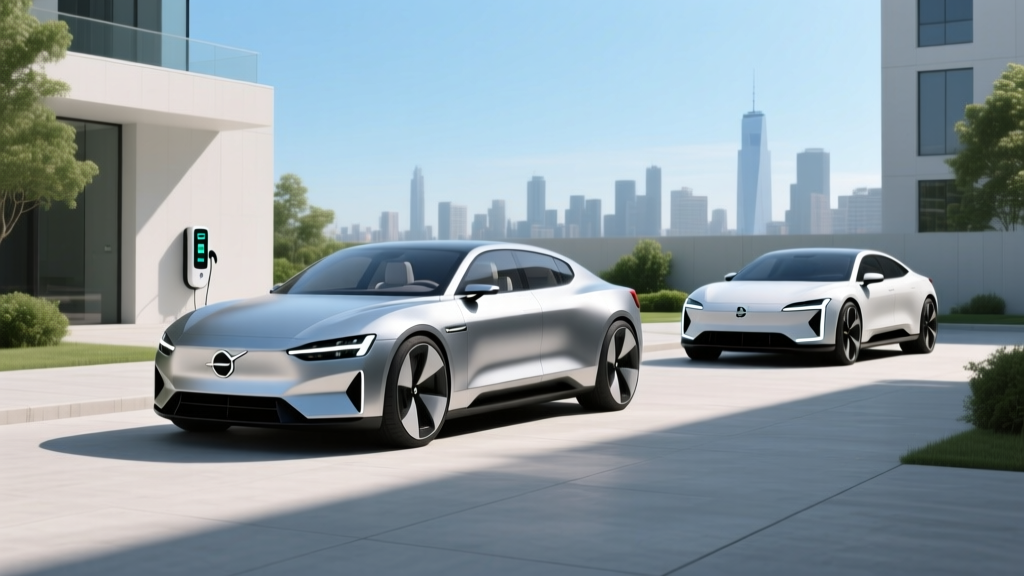
If you've shopped for a premium electric vehicle recently, you've likely encountered Polestar and wondered about its relationship to Volvo. The short answer to "does Volvo own Polestar" is nuanced: Polestar is jointly owned by Volvo Cars and Zhejiang Geely Holding Group, the Chinese conglomerate that also owns Volvo Cars itself. But understanding what that means for the vehicles—and whether a Polestar is essentially a rebadged Volvo—requires a deeper look at the brand's identity, platform sharing, and 2026 EV lineup.
The Corporate Relationship: Who Actually Owns Polestar?
Polestar began as Volvo's performance-tuning partner in the 1990s before evolving into a standalone electrified performance brand. When Geely acquired Volvo Cars from Ford in 2010, Polestar came along with it. In 2017, Polestar was spun off as a separate company—jointly held by Volvo Cars and Geely—with its own design studio in Gothenburg, Sweden, and manufacturing primarily in China.
As of 2026, Geely remains the majority stakeholder in Polestar, holding approximately 49.5% of shares, while Volvo Cars retains roughly 48.5%. Polestar trades publicly on Nasdaq under the ticker PSNY following a 2022 SPAC merger, though both parent companies maintain significant control. The brand operates independently with its own CEO, design language, and engineering priorities, but it leverages Volvo-Geely's Shared Sustainable Experience (SEA) and Scalable Product Architecture (SPA) platforms to reduce development costs.
2026 Polestar Lineup: Specs at a Glance
Polestar's 2026 portfolio has expanded well beyond the original Polestar 2 sedan. Here's the current U.S. lineup with key specifications:
| Model | Body Style | EPA Range | Battery (kWh) | 0-60 mph | HP | Base MSRP |
|---|---|---|---|---|---|---|
| Polestar 2 (LRSM) | Liftback sedan | 320 mi | 82 kWh (NMC) | 5.8s | 299 | $49,900 |
| Polestar 2 (LRDM) | Liftback sedan | 300 mi | 82 kWh (NMC) | 4.3s | 421 | $53,400 |
| Polestar 3 (LRDM) | Mid-size SUV | 315 mi | 111 kWh (NMC) | 4.7s | 489 | $67,500 |
| Polestar 4 (LRDM) | Coupe-SUV | 321 mi | 102 kWh (NMC) | 3.8s | 544 | $59,900 |
All 2026 Polestar models use nickel-manganese-cobalt (NMC) lithium-ion battery chemistry supplied primarily by LG Energy Solution and CATL. Polestar has not adopted lithium iron phosphate (LFP) chemistry in any U.S. model to date, prioritizing the higher energy density that NMC provides for its performance-oriented positioning.
Range Reality: EPA Stickers vs. Real-World Driving
The Polestar 4's 321-mile EPA rating is the lineup's highest, but its aerodynamic coupe-SUV shape and dual-motor drivetrain mean real-world highway efficiency sits around 3.0-3.2 kWh/mile, yielding approximately 275-290 miles on a full charge in mixed driving. The massive 111 kWh battery in the Polestar 3 provides a buffer against range anxiety, but its SUV weight (over 5,600 lbs) keeps real-world efficiency around 3.3-3.5 kWh/mile.
For context, the EPA's fueleconomy.gov lists the Polestar 2 LRSM at 107 MPGe combined (31 kWh/100mi), which is competitive with the Tesla Model 3 Long Range (132 MPGe) but trails the Hyundai Ioniq 6's exceptional 140 MPGe. Polestar prioritizes driving dynamics and build quality over maximum efficiency—a tradeoff that defines the brand versus its Korean and American competitors.
Charging Speed: DC Fast Charge and Home Level 2
| Model | Max DC kW | 10-80% Time | Level 2 (kW) | Level 2 mi/hr | Connector |
|---|---|---|---|---|---|
| Polestar 2 | 200 kW | ~27 min | 11 kW | ~37 mi/hr | CCS1 (NACS adapter avail.) |
| Polestar 3 | 200 kW | ~30 min | 11 kW | ~34 mi/hr | CCS1 (NACS adapter avail.) |
| Polestar 4 | 200 kW | ~29 min | 11 kW | ~35 mi/hr | CCS1 (NACS adapter avail.) |
All 2026 Polestar models peak at 200 kW on DC fast chargers. In practice, the charge curve is front-loaded: the Polestar 2 sustains roughly 175-195 kW from 10-40% SoC, then tapers progressively. By 60% SoC, speeds drop to approximately 120 kW, and above 80% the rate falls below 60 kW to protect battery longevity. This means the published 10-80% time of ~27 minutes is realistic at a functioning 200+ kW station, but charging from 80-100% can add another 25-30 minutes—plan accordingly on road trips.
Polestar still ships U.S. vehicles with the CCS1 (Combined Charging System) connector natively. However, the brand provides a NACS adapter that grants access to Tesla's Supercharger network—a critical advantage given that Superchargers represent the most reliable DC fast-charging infrastructure in North America. Home charging at 11 kW (48A on a 60A circuit) fully replenishes a Polestar 2's 82 kWh battery in approximately 8 hours, making overnight charging practical for most owners with a properly installed Level 2 home station.
Pricing, Trims, and Federal Tax Credit Eligibility
| Model/Trim | MSRP | §30D Credit | Effective Price | Eligibility Notes |
|---|---|---|---|---|
| Polestar 2 LRSM | $49,900 | $7,500 (if eligible) | ~$42,400 | Under $55K sedan cap ✓ |
| Polestar 2 LRDM | $53,400 | $7,500 (if eligible) | ~$45,900 | Under $55K sedan cap ✓ |
| Polestar 3 LRDM | $67,500 | $0 | $67,500 | Over $80K SUV cap ✗ |
| Polestar 4 LRDM | $59,900 | $7,500 (if eligible) | ~$52,400 | Under $80K SUV cap ✓ |
Federal tax credit eligibility under IRS §30D is where Polestar ownership gets complicated. The Polestar 2 and Polestar 4 can qualify for the full $7,500 credit—but only if the buyer meets all requirements:
- Income caps: Modified adjusted gross income (MAGI) must not exceed $300,000 (joint), $225,000 (head of household), or $150,000 (single filer)
- MSRP caps: Sedans (Polestar 2) must be under $55,000; SUVs/trucks (Polestar 4) under $80,000
- Battery sourcing: Critical minerals and battery components must meet escalating domestic-content thresholds that tighten annually through 2030
- Point-of-sale transfer: As of 2024, buyers can transfer the credit to the dealer at purchase, receiving it as an immediate price reduction rather than waiting for a tax refund
The Polestar 3 exceeds the $80,000 SUV MSRP cap in most configurations and is therefore ineligible for the federal credit. Buyers should verify current battery-sourcing compliance on the fueleconomy.gov tax credit lookup tool, as component sourcing rules change periodically and can disqualify otherwise eligible vehicles mid-year.
What It's Like to Own: Tech, Space, and Daily Driving
Polestar runs a Google Automotive OS-based infotainment system with native Google Maps, Google Assistant, and Play Store apps. The 11.2-inch portrait touchscreen in the Polestar 2 is responsive but smaller than competitors' offerings (Tesla Model 3's 15.4-inch, Hyundai Ioniq 5's 12.3-inch). Wireless Apple CarPlay is standard. Over-the-air updates are regular and have added features like improved route planning and battery preconditioning for DC charging.
Polestar's Pilot Pack adds adaptive cruise control with stop-and-go, lane-centering assist, and blind-spot monitoring. This is a SAE Level 2 driver-assistance system—the driver must remain attentive with hands on the wheel at all times. It does not offer hands-free driving like GM's Super Cruise or Ford's BlueCruise on mapped highways. The system is competent but unremarkable compared to Tesla's Autopilot or Hyundai's Highway Driving Assist 2.
Cargo space in the Polestar 2 measures 14.4 cubic feet behind the rear seats (with 38.7 inches of rear legroom)—adequate for a liftback but less than a Model 3's 23 cu ft trunk or the Ioniq 6's 12.3 cu ft (though the Ioniq 6 is a traditional sedan). The Polestar 4 offers 27.4 cu ft behind the rear row with a more usable SUV form factor. The Polestar 3 provides 30.2 cu ft, competitive with the BMW iX and Audi Q8 e-tron.
Warranty and Long-Term Battery Confidence
All 2026 Polestar models include:
- Battery warranty: 8 years / 100,000 miles (whichever comes first), covering capacity retention below 70% of original
- Powertrain warranty: 8 years / 100,000 miles
- Limited vehicle warranty: 4 years / 50,000 miles
- Corrosion warranty: 12 years, unlimited miles
- Roadside assistance: 4 years / unlimited miles
The 70% capacity retention threshold is industry-standard, matching Tesla, Hyundai/Kia, and Ford. Real-world degradation data for Polestar's NMC packs suggests approximately 8-12% capacity loss over the first 100,000 miles based on fleet data from European models, which is within normal parameters for liquid-cooled NMC chemistry. The 8-year/100,000-mile battery warranty provides adequate coverage, though some competitors like Hyundai offer 10-year/100,000-mile powertrain coverage.
Pros, Cons, and the Verdict
✓ Pros
- Distinctive Scandinavian design—stands out from Tesla ubiquity
- Engaging driving dynamics with well-tuned suspension
- Google Automotive OS is intuitive and well-integrated
- NACS adapter included for Supercharger network access
- High-quality interior materials and build
- Polestar 2 eligible for $7,500 federal credit (if sourcing/income qualify)
✗ Cons
- Efficiency lags behind Tesla Model 3 and Hyundai Ioniq 6
- DC fast charging capped at 200 kW—slower than Hyundai/Kia's 800V architecture (350 kW capable)
- Driver-assist tech is basic Level 2; no hands-free highway driving option
- Smaller touchscreen than competitors
- Polestar 3 ineligible for federal credit due to MSRP cap
- Limited service center network compared to Tesla or legacy luxury brands
Who Should Buy a Polestar?
Choose Polestar if: You want a premium EV that isn't a Tesla, value Scandinavian design and build quality, enjoy engaged driving, and primarily commute or take moderate road trips where 270-300 real-world miles of range is sufficient. The Polestar 2 at ~$42,400 after the federal credit is a compelling alternative to the Model 3 Long Range for buyers who want something less common.
Look elsewhere if: Maximum efficiency and range are your top priorities (consider the Hyundai Ioniq 6 or Tesla Model 3), you need hands-free highway driving (GM Super Cruise vehicles), you regularly tow (Polestar's 2,000-lb tow rating is minimal), or you live in an area without a nearby Polestar service center.
Frequently Asked Questions
Does Volvo own Polestar outright?
No. Polestar is jointly owned by Volvo Cars (~48.5%) and Geely Holding Group (~49.5%), with a small public float on Nasdaq. Volvo Cars itself is majority-owned by Geely. The three entities share platforms and some powertrain technology but operate as separate brands with distinct design and engineering philosophies.
Is a Polestar just a fancy Volvo?
While Polestar shares underlying architecture with Volvo (the Polestar 2 uses the same CMA platform as the XC40 Recharge), the driving experience, interior design, software interface, and brand positioning are distinctly different. Polestar tunes for sportier handling, uses unique interior materials (like the available vegan microfiber and reconstructed wood), and targets a younger, more design-conscious buyer than Volvo's safety-and-family focus.
What is the real-world range of the Polestar 2?
The Polestar 2 Long Range Single Motor is EPA-rated at 320 miles. In real-world mixed driving at moderate temperatures, expect 280-295 miles. At sustained highway speeds of 70-75 mph, range drops to approximately 270-285 miles. In freezing weather, plan for 220-245 miles due to battery chemistry limitations and heating demands.
Does the Polestar 2 qualify for the $7,500 federal tax credit?
The Polestar 2 can qualify for the full $7,500 credit under IRS §30D, provided the buyer's income is under the cap ($150K single / $300K joint), the vehicle MSRP is under $55,000 (the sedan cap), and the battery meets current critical-mineral and component sourcing requirements. Verify eligibility on fueleconomy.gov before purchasing, as sourcing rules change periodically.
How does Polestar's charging speed compare to competitors?
Polestar's 200 kW peak DC fast-charging rate is adequate but not class-leading. The Hyundai Ioniq 5 and Kia EV6 use an 800V architecture capable of 350 kW peak charging, achieving 10-80% in approximately 18 minutes versus Polestar's ~27 minutes. Tesla's Model 3 Long Range peaks around 250 kW with a ~25-minute 10-80% time. For most owners who charge at home overnight, the difference matters primarily on road trips.
Where are Polestar vehicles built?
The Polestar 2 is manufactured in Luqiao, China, at a Geely facility that also builds the Volvo XC40. The Polestar 3 is produced in Chengdu, China, with a secondary production line in Ridgeville, South Carolina (starting late 2025 for North American-market vehicles). The Polestar 4 is built in Hangzhou Bay, China. Chinese manufacturing has not been a significant quality concern based on early owner surveys, though it does subject the vehicles to potential tariff exposure.