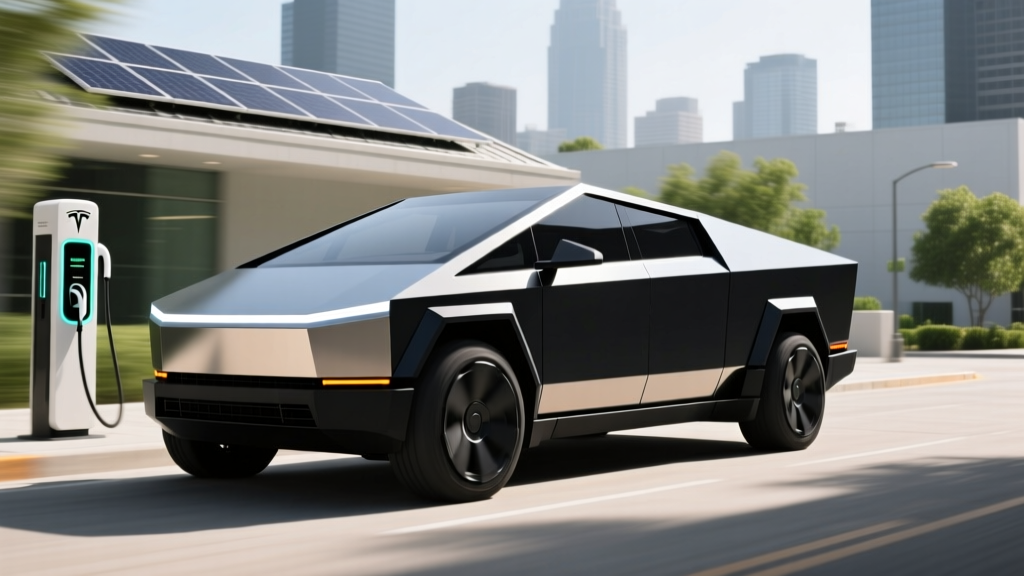
Does Tesla Lease Cars? The Short Answer
Yes — Tesla offers leases directly through its website on select models, primarily the Model 3 and Model Y. However, Tesla's leasing program works differently from a traditional dealership lease. There's no haggling over money factors, no dealer markups on monthly payments, and in most states, no lease-end buyout option. If you've been searching "does Tesla lease cars" and wondering whether it makes financial sense versus buying outright or financing, this guide walks through the exact numbers, tax credit implications, and real-world ownership math for 2026.
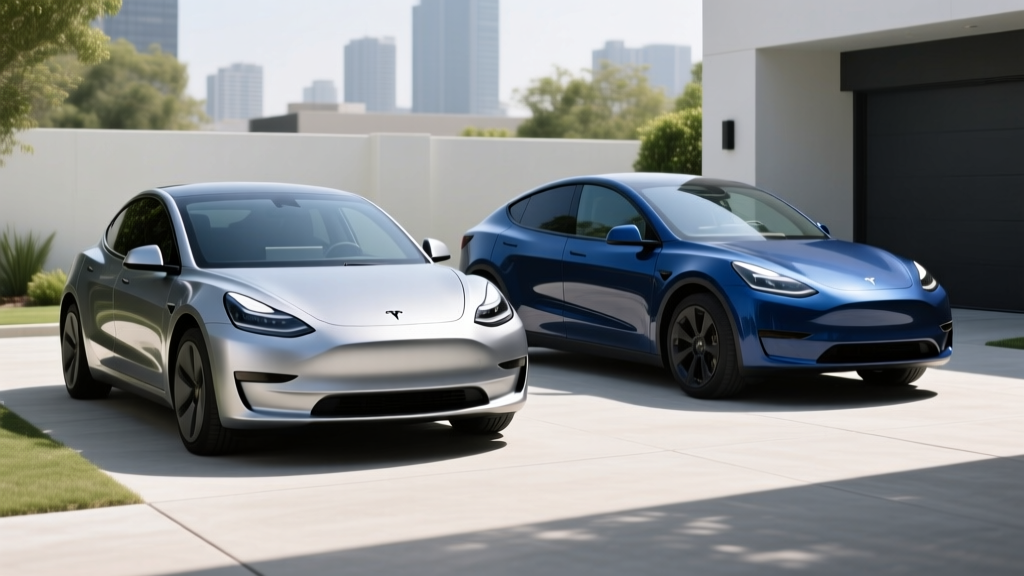
Before we get into the lease mechanics, let's establish what you'd actually be driving. The 2026 Tesla Model 3 and Model Y remain the most popular EVs in America for good reason — strong range, access to the Supercharger network, and competitive efficiency. Here's a detailed look at both vehicles and whether a Tesla lease is the right move for your situation.
2026 Tesla Model 3: Specs, Range, and Charging
| Spec | RWD (Base) | Long Range AWD | Performance |
|---|---|---|---|
| EPA Range | 272 mi | 341 mi | 315 mi |
| Battery Capacity | ~60 kWh (LFP) | ~75 kWh (NMC) | ~75 kWh (NMC) |
| Peak DC Fast Charge | 170 kW | 250 kW | 250 kW |
| 10–80% DC Charge Time | ~25 min | ~18 min | ~18 min |
| Level 2 Home Charging | 11.5 kW (~44 mi/hr) | 11.5 kW (~44 mi/hr) | 11.5 kW (~44 mi/hr) |
| 0–60 mph | 5.8 sec | 4.2 sec | 2.9 sec |
| Horsepower | 271 hp | 346 hp | 510 hp |
| Drivetrain | RWD | Dual-Motor AWD | Dual-Motor AWD |
| MPGe (Combined) | 132 MPGe | 125 MPGe | 115 MPGe |
| Efficiency | 25 kWh/100 mi | 26 kWh/100 mi | 29 kWh/100 mi |
| Cargo Volume | 23 cu ft (rear trunk + frunk combined) | ||
| Rear Legroom | 35.2 in | ||
| Base MSRP | $38,990 | $45,990 | $52,990 |
| Battery Warranty | 8 yr / 100,000 mi | 8 yr / 120,000 mi | |
2026 Tesla Model Y: Specs, Range, and Charging
| Spec | Long Range AWD | Performance |
|---|---|---|
| EPA Range | 320 mi | 295 mi |
| Battery Capacity | ~75 kWh (NMC) | ~75 kWh (NMC) |
| Peak DC Fast Charge | 250 kW | 250 kW |
| 10–80% DC Charge Time | ~20 min | ~20 min |
| Level 2 Home Charging | 11.5 kW (~37 mi/hr) | 11.5 kW (~37 mi/hr) |
| 0–60 mph | 4.8 sec | 3.5 sec |
| Horsepower | 384 hp | 510 hp |
| Drivetrain | Dual-Motor AWD | Dual-Motor AWD |
| MPGe (Combined) | 117 MPGe | 109 MPGe |
| Cargo Volume (rear seats up) | 30.2 cu ft | |
| Cargo Volume (rear seats folded) | 72.1 cu ft | |
| Rear Legroom | 37.4 in | |
| Base MSRP | $44,990 | $51,490 |
| Battery Warranty | 8 yr / 120,000 mi | |
How Tesla Leasing Actually Works
Tesla offers closed-end leases directly through its online ordering system. Here's what makes a Tesla lease structurally different from a conventional automaker lease:
- No negotiation: The money factor (interest rate equivalent), residual value, and monthly payment are set by Tesla. You cannot negotiate them.
- Limited models: Leasing is typically available on Model 3 and Model Y trims. Model S and Model X leasing is occasionally offered but not consistently.
- No purchase option at lease-end (most states): Tesla's lease agreements are closed-end, meaning you return the car. Tesla does not generally offer a buyout clause, unlike most traditional leases. You walk away or start a new lease.
- Mileage options: Typically 10,000, 12,000, or 15,000 miles per year. Excess mileage fees apply — usually around $0.20–$0.25 per mile.
- Lease terms: Commonly 24 or 36 months.
- No third-party leasing: You cannot lease a Tesla through a third-party leasing company. It's direct-only through Tesla.
Tesla Lease vs Buy: The Financial Breakdown
The core question isn't just "does Tesla lease cars" — it's whether leasing saves you money. The answer hinges on one critical factor: the federal EV tax credit.
| Factor | Buy (Finance) | Lease (36 months) |
|---|---|---|
| MSRP | $45,990 | $45,990 |
| Federal §30D Tax Credit | Up to $7,500 (if eligible) | Passes through as lease capitalization reduction (if Tesla qualifies) |
| Effective Price After Credit | ~$38,490 | Lower monthly via cap reduction |
| Estimated Monthly (6.5% APR, $4,500 down) | ~$620/mo (60 mo) | ~$499–$579/mo (varies by residual) |
| Equity at End | You own the vehicle | None — return the car |
| Total 3-Year Cost (excl. fuel/insurance) | ~$26,820 (payments) − vehicle equity | ~$21,744 (36 payments + drive-off) |
| Mileage Limit | Unlimited | 10k–15k/yr, excess fees apply |
The §30D federal tax credit is worth up to $7,500 for qualifying new EVs, but eligibility depends on multiple factors per IRS guidelines:
- Buyer income caps: Modified AGI ≤ $150,000 (single), $225,000 (head of household), $300,000 (joint)
- MSRP caps: ≤ $55,000 for sedans (Model 3), ≤ $80,000 for SUVs/trucks (Model Y)
- Battery sourcing: Critical minerals and battery components must meet phased-in domestic/FtA-sourcing thresholds — Tesla's US-built battery packs generally qualify, but verify at point of sale
- Point-of-sale transfer: As of 2024+, the credit can be transferred to the dealer (or Tesla) at purchase, reducing the purchase price directly — this also applies in lease scenarios as a cap cost reduction
Key insight: When you lease, the tax credit technically goes to the lessor (Tesla). Tesla typically passes this through as a capitalization cost reduction, which lowers your monthly payment. However, this isn't guaranteed by law — it's a business decision by Tesla. When you buy and qualify, the credit is yours.
Charging Speed: What Tesla Lease Owners Need to Know
| Charging Level | Power | Model 3 LR (mi/hr added) | Model Y LR (mi/hr added) |
|---|---|---|---|
| Level 1 (120V outlet) | ~1.4 kW | ~5 mi/hr | ~4 mi/hr |
| Level 2 (240V home, 48A) | 11.5 kW | ~44 mi/hr | ~37 mi/hr |
| DC Fast (Supercharger V3) | 250 kW peak | ~18 min 10–80% | ~20 min 10–80% |
| DC Fast (Supercharger V4) | Up to 350 kW (future capable) | Current vehicles limited by onboard architecture | Current vehicles limited by onboard architecture |
Tesla's Supercharger network remains the gold standard for public charging reliability. As of 2026, there are over 6,500 Supercharger stations in North America. The 250 kW peak rate on V3 stalls is excellent, but the charge curve tapers significantly above 80% — this is why Tesla (and all EV makers) quote 10–80% times rather than 0–100%. Above 80%, charging slows dramatically to protect battery health. A 10–80% session in 18–20 minutes is realistic; a full 0–100% session can take 40+ minutes.
For home charging, a Tesla Wall Connector on a 60-amp circuit delivers the full 11.5 kW (48 amps continuous). Expect to add 200–300 miles overnight — more than enough for any daily commute. Installation costs range from $500–$2,000 depending on whether your electrical panel needs an upgrade. Per fueleconomy.gov, the Model 3 Long Range's 26 kWh/100mi efficiency means home charging at $0.14/kWh costs roughly $3.64 per 100 miles — about one-third the cost of a 30 MPG gas car at $3.50/gallon.
Technology, Driver Assistance, and Drawbacks
Every 2026 Tesla comes with the brand's minimalist interior centered around a 15.4-inch touchscreen (Model 3) or 15-inch touchscreen (Model Y). Key tech features include:
- Autopilot (standard): Adaptive cruise control + lane centering. This is a SAE Level 2 driver-assist system — you must keep your hands on the wheel and remain fully engaged.
- Full Self-Driving Supervised (optional, ~$8,000 or $99/mo): Adds automatic lane changes, traffic light/stop sign recognition, and navigate-on-Autopilot. Still SAE Level 2 — not autonomous. The driver is responsible at all times.
- Over-the-air updates: Tesla continuously pushes software updates that can add features, improve efficiency, or adjust performance.
- Tesla app: Remote climate control, charging monitoring, location tracking, and Sentry Mode camera access.
- NACS connector: Tesla's native charging standard, now adopted industry-wide as the North American Charging Standard.
Notable drawbacks:
- No physical instrument cluster — all information lives on the center screen, including speed
- Turn signal stalks removed on refreshed Model 3 (buttons on steering wheel instead) — polarizing for many drivers
- Build quality has improved but still inconsistent panel gaps compared to legacy luxury brands
- No Apple CarPlay or Android Auto — Tesla's proprietary infotainment only
- Insurance premiums tend to be 20–40% higher than comparable non-Tesla EVs due to repair costs
- Service center wait times can stretch weeks in some metro areas
Who Should Lease a Tesla — and Who Shouldn't
Pros of Leasing a Tesla
- Lower monthly payment vs financing
- Tax credit often passed through as cap reduction
- No battery degradation worry — return at lease-end
- Drive the latest tech every 2–3 years via OTA updates and new leases
- No resale-value risk if EV depreciation accelerates
Cons of Leasing a Tesla
- No equity built — you own nothing at lease-end
- No buyout option in most states
- Mileage limits penalize high-mileage drivers
- Cannot claim §30D credit directly (passes through Tesla)
- Tesla's residual values are set conservatively, which can inflate payments
- Excess wear charges possible at return
- You drive 10,000–15,000 miles/year or less
- You want the lowest monthly payment and don't need equity
- You upgrade vehicles every 3 years anyway
- You want to avoid long-term battery degradation risk
- You drive more than 15,000 miles/year
- You plan to keep the vehicle 5+ years
- You qualify for the full $7,500 §30D credit and want it directly
- You want the option to sell or trade on your timeline
- You want unlimited mileage without penalty
Tesla Lease vs Key Competitors
If you're cross-shopping, here's how the Tesla lease proposition compares:
- Hyundai Ioniq 5: Often leaseable through dealers with more flexible terms and a lease-end buyout option. Slightly less range (303 mi EPA Long Range) but charges on NACS (2025+) and has Apple CarPlay.
- Ford Mustang Mach-E: Ford Credit frequently offers aggressive lease deals. The Mach-E Select starts lower in price but trails in range and charging speed.
- Chevrolet Equinox EV: Lower MSRP entry point (~$33,000 base) with 319 miles EPA range, but slower DC charging and less refined software.
- BMW i4: Luxury alternative with a traditional dealer lease experience, buyout option, and superior interior materials — but starts ~$10,000 higher and has less range.
Tesla's advantage remains the Supercharger network, software experience, and efficiency. Its disadvantage in leasing is the rigid, closed-end structure with no buyout and no negotiation.
Frequently Asked Questions
Does Tesla lease cars directly?
Yes. Tesla offers leases directly through its website on Model 3 and Model Y trims. You configure your vehicle online, select "Lease" as the payment method, and choose your term (typically 24 or 36 months) and annual mileage (10,000, 12,000, or 15,000). There is no dealer or third-party intermediary.
Can I buy my Tesla at the end of the lease?
In most states, no. Tesla's leases are closed-end, meaning you return the vehicle at lease termination. Tesla has historically not offered a purchase option at lease-end, unlike most traditional automaker leases. Policies can vary by state, so confirm with Tesla directly before signing.
Does a Tesla lease qualify for the $7,500 federal tax credit?
The §30D tax credit technically belongs to the vehicle's legal owner — which in a lease is Tesla (the lessor). Tesla typically applies the credit as a capitalization cost reduction, effectively lowering your monthly payment. However, this pass-through is at Tesla's discretion, not a legal requirement. Verify the credit application before finalizing your lease. Check current rules at IRS.gov.
What is the real-world range of a leased Tesla Model 3?
The 2026 Model 3 Long Range AWD has an EPA-estimated 341 miles. Real-world highway driving at 75 mph yields approximately 280–300 miles. In cold weather (below 30°F), expect 230–270 miles. The RWD model starts at 272 miles EPA but delivers roughly 200–230 miles in winter highway conditions.
How much does it cost to charge a Tesla at home per month?
At the US average electricity rate of ~$0.16/kWh and 1,000 miles/month of driving, a Model 3 Long Range (26 kWh/100 mi) costs approximately $41.60/month to charge at home. A Model Y Long Range (28 kWh/100 mi) costs roughly $44.80/month. Compare this to a 28 MPG gas car at $3.50/gallon, which would cost ~$125/month for the same mileage.
Is leasing a Tesla worth it vs buying?
Leasing makes sense if you drive under 15,000 miles/year, prefer lower monthly payments, and don't mind having no equity at lease-end. Buying is better for high-mileage drivers, those who keep cars 5+ years, and buyers who want to claim the $7,500 tax credit directly. Tesla's no-buyout lease structure is a significant drawback if you think you might want to keep the car.
What happens if Tesla reduces prices during my lease?
Your lease payment is locked in based on the capitalization cost at signing. If Tesla cuts prices, your lease doesn't adjust downward — you're contractually committed. However, you also don't owe more if values drop. This is the standard closed-end lease trade-off: price risk is on the lessor (Tesla), but so is any upside.