The Wedge That Redefined the Pickup: Cybertruck Design Inspiration Explained
The Tesla Cybertruck did not arrive as an evolution of the American pickup. It arrived as a provocation. When the stainless-steel angular prototype rolled onto a stage in late 2019, the public reaction split instantly between fascination and ridicule. Years later, with deliveries well underway and the 2026 model lineup settled into three distinct trims, the truck's silhouette has become one of the most recognizable shapes on the road. But what actually drove the Cybertruck design inspiration — and more importantly, does the finished product deliver as a daily-driver electric truck?
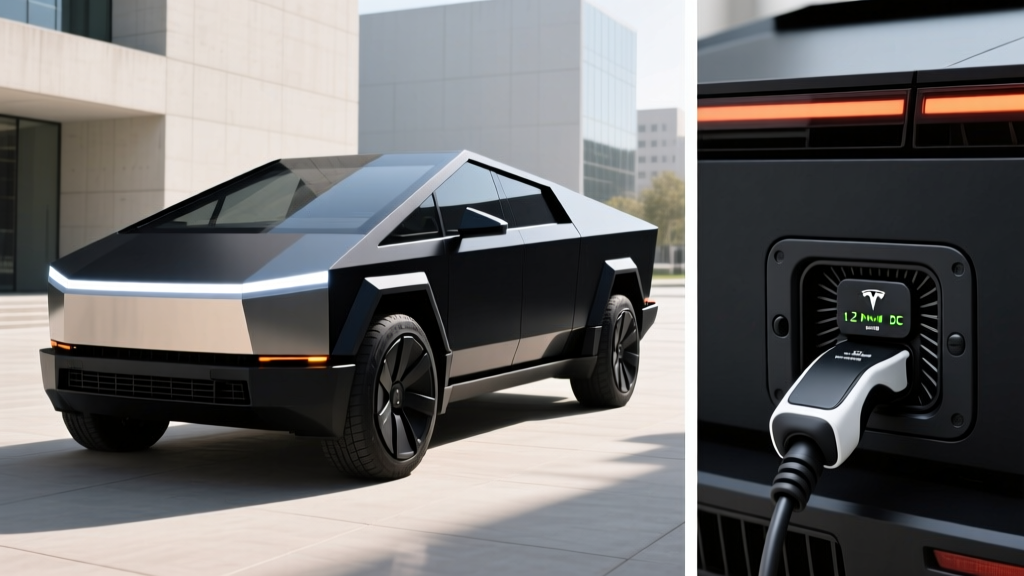
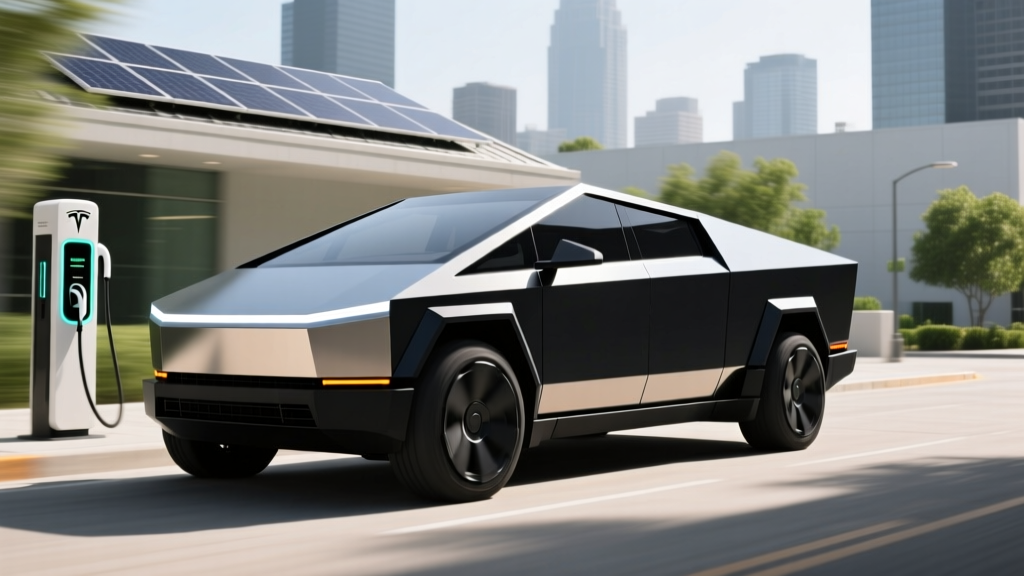
Chief designer Franz von Holzhausen has cited multiple reference points for the Cybertruck's brutalist geometry: the Lotus Esprit submarine car from The Spy Who Loved Me, the low-polygon aesthetic of early 3D video games, and the utilitarian forms of military armored vehicles. Elon Musk has repeatedly referenced the 1974 Lotus Esprit and the 1982 Blade Runner spinner vehicles as foundational mood-board elements. The result is a body built from ultra-hard 30X cold-rolled stainless steel — a material choice that eliminated the need for a traditional paint shop and forced every panel to be bent along flat planes rather than stamped into curves. That manufacturing constraint is, in many ways, the true origin of the angular look: the design follows the material.
But aesthetics are only the opening act. Buyers spending $80,000 to $100,000+ on an electric pickup need to know what the truck does once it leaves the showroom. Below, we break down the 2026 Cybertruck's range, charging behavior, performance, utility, and ownership economics with the specificity this segment demands.
Spec Table: 2026 Tesla Cybertruck at a Glance
| Specification | AWD | Cyberbeast |
|---|---|---|
| EPA Range | 340 miles | 320 miles |
| Battery (usable) | ~123 kWh (NMC) | ~123 kWh (NMC) |
| Peak DC Fast Charge | 250 kW | 250 kW |
| 10–80% DCFC Time | ~28 min | ~28 min |
| Level 2 Home Charge | 11.5 kW (~34 mi/hr) | 11.5 kW (~34 mi/hr) |
| 0–60 mph | 3.9 sec | 2.6 sec |
| Horsepower | 600 hp | 845 hp |
| Drivetrain | Dual-Motor AWD | Tri-Motor AWD |
| MPGe (combined) | 70 MPGe | 65 MPGe |
| Efficiency | 48 kWh/100 mi | 52 kWh/100 mi |
| Tow Rating | 11,000 lbs | 11,000 lbs |
| Payload | 2,500 lbs | 2,500 lbs |
| Bed Length | 6 ft | 6 ft |
| Cargo Volume (bed + frunk) | ~67 cu ft bed + ~7 cu ft frunk | ~67 cu ft bed + ~7 cu ft frunk |
| Base MSRP | $79,990 | $99,990 |
| Battery Warranty | 8 yr / 120,000 mi | 8 yr / 120,000 mi |
Source: fueleconomy.gov and Tesla's official specification pages. Rear-wheel-drive (Long Range) variant listed as forthcoming; specs above reflect currently shipping AWD and Cyberbeast trims.
Real-World Range: What the EPA Sticker Doesn't Tell You
EPA Estimate: 340 mi (AWD) / 320 mi (Cyberbeast)
Real-World Highway (70 mph, 75°F): ~275–295 mi
Real-World Cold Weather (30°F, mixed driving): ~220–250 mi
Towing (5,000-lb trailer, flat terrain): ~160–180 mi
The Cybertruck's 340-mile EPA figure for the AWD trim is competitive with the Rivian R1T Max Pack (352 mi) and the Ford F-150 Lightning Extended Range (320 mi). But the truck's defining characteristic — its massive frontal area and angular stainless-steel skin — creates aerodynamic drag that punishes highway efficiency. At sustained 70–75 mph speeds, expect to consume energy at roughly 52–56 kWh/100 mi, translating to a practical range closer to 275–295 miles before you hit a comfortable 10% buffer.
Cold weather compounds the problem. The NMC battery pack loses some chemical efficiency in freezing temperatures, and cabin heating draws heavily from the pack (the Cybertruck uses a resistive PTC heater rather than a heat pump, which costs roughly 15–25% more energy in sub-40°F conditions compared to heat-pump-equipped rivals like the Rivian R1T). Plan on 220–250 miles of usable range in winter mixed driving.
If you intend to tow, range drops dramatically. A 5,000-pound enclosed trailer on flat interstate terrain will cut range to roughly 160–180 miles. This is physics, not a Tesla-specific flaw — the Rivian R1T and F-150 Lightning exhibit similar towing range compression — but it matters for anyone planning long-haul trailer work. Tesla's navigation system does factor in trailer load and terrain when routing through Superchargers, which helps with trip planning.
Charging Speed: 250 kW Peak, but Watch the Curve
The Cybertruck charges via the North American Charging Standard (NACS) connector natively — no adapter required for Tesla Superchargers. It also ships with a Magic Dock adapter for legacy CCS stations, though the NACS ecosystem has largely absorbed the public fast-charging network by 2026.
| Charging Method | Power / Rate | Time / Miles Added |
|---|---|---|
| Level 1 (120V standard outlet) | ~1.4 kW | ~4 mi/hr |
| Level 2 (240V / 48A Wall Connector) | 11.5 kW | ~34 mi/hr (full in ~11 hr) |
| DC Fast Charge (V3/V4 Supercharger) | Peak 250 kW | 10–80% in ~28 min |
| DC Fast Charge (sustained avg 10–80%) | ~150 kW avg | ~210 mi added in 28 min |
The 250 kW peak figure is real but brief. The Cybertruck's ~123 kWh NMC pack accepts maximum charge rate only between roughly 10–25% state of charge. Above 40% SoC, the rate tapers to ~175 kW, and above 70% it drops below 100 kW. The charge curve is managed aggressively to protect battery longevity, which is appropriate for a pack this expensive to replace.
For home charging, Tesla's Gen 3 Wall Connector at 48 amps (11.5 kW) adds roughly 34 miles of range per hour — enough to fully replenish the pack overnight in about 11 hours. Most owners charging from 20–80% daily will see a full top-up in 6–7 hours, which is practical for any household with a 240V circuit. Installation costs for a dedicated 60-amp circuit typically run $800–$2,000 depending on panel proximity and local permitting, assuming no panel upgrade is required. Homes with older 100-amp service panels may need a $2,000–$4,000 panel upgrade to accommodate the circuit.
Performance and Drivetrain: Cyberbeast vs. AWD
The dual-motor AWD Cybertruck produces 600 horsepower and reaches 60 mph in 3.9 seconds — quicker than any combustion pickup in its class and competitive with performance sedans. The tri-motor Cyberbeast pushes 845 hp and a 2.6-second 0–60 time, placing it in supercar territory despite weighing over 6,600 pounds.
Acceleration theatrics aside, the more meaningful performance metric for truck buyers is towing and payload. The Cybertruck is rated for 11,000 pounds of towing and 2,500 pounds of payload. Its air suspension self-levels under load and provides up to 17 inches of ground clearance in Off-Road mode, which is genuinely useful for trail access. The steer-by-wire system (Tesla calls it "yoke-compatible" but ships with a round wheel by default in 2026) delivers a variable ratio that shortens lock-to-lock turns at low speed and stabilizes at highway speed. It takes some acclimation but works well once your muscle memory adjusts.
Regenerative braking is aggressive enough to enable one-pedal driving in most conditions, and the truck's mass means regen captures substantial energy on descents. Brake wear is minimal — owners report original brake pads well past 40,000 miles thanks to regen handling the majority of deceleration duty.
Interior, Cargo, and Technology
The Cybertruck's cabin seats five with a 60/40 split rear bench. Rear legroom measures approximately 38 inches — adequate for adults but tighter than the Ford F-150 Lightning's rear seat. The minimalist dashboard centers on an 18.5-inch touchscreen that handles all infotainment, climate, and vehicle settings. A rear 9.4-inch touchscreen serves second-row passengers. There are no physical stalks for turn signals (they're on the steering wheel) and no traditional gear selector (drive/reverse are chosen via the touchscreen or overhead capacitive buttons).
Cargo highlights:
- 6-foot composite bed with powered tonneau cover (rated to support 300 lbs on top)
- Front trunk (frunk) with ~7 cu ft of lockable storage
- Powered frunk lid doubles as a seating surface at tailgates
- Bidirectional charging: V2L (vehicle-to-load) via bed outlets powers tools and appliances up to 9.6 kW; V2H (vehicle-to-home) capability requires Tesla Powerwall integration
- Exoskeleton body: no B-pillar intrusion, full stainless exterior resists dents but shows fingerprints aggressively
Driver Assistance: The Cybertruck ships with Tesla's basic Autopilot (adaptive cruise + lane centering). Full Self-Driving (Supervised) is available as a $8,000 add-on or $99/month subscription. FSD Supervised remains a SAE Level 2 system — the driver must remain fully attentive and is legally responsible for the vehicle at all times. It is not autonomous driving.
Tesla Autopilot and FSD (Supervised) are Level 2 driver-assistance systems. You must keep your hands on the wheel and eyes on the road. The system does not make the Cybertruck self-driving. Only Level 4 robotaxi services (Waymo, Zoox) operate without a human driver in defined service areas.
Pricing, Tax Credits, and Ownership Costs
| Cost Factor | AWD | Cyberbeast |
|---|---|---|
| Base MSRP | $79,990 | $99,990 |
| Federal §30D Tax Credit | $0 (exceeds MSRP cap) | $0 (exceeds MSRP cap) |
| Estimated Out-the-Door | ~$84,000 (w/ delivery, fees) | ~$105,000 (w/ delivery, fees) |
| 5-Yr Electricity (15k mi/yr) | ~$4,800 | ~$5,200 |
| 5-Yr Maintenance Est. | ~$1,200 | ~$1,200 |
Here is the critical tax-credit reality: the Cybertruck does not qualify for the $7,500 federal EV tax credit under IRS §30D. The reason is straightforward — the §30D credit caps eligible trucks at an MSRP of $80,000, and the Cybertruck AWD starts at $79,990 before mandatory destination and order fees push it above the threshold. The Cyberbeast at $99,990 exceeds the cap by a wide margin. Additionally, buyers must meet income caps ($300,000 joint / $150,000 single) and the vehicle must satisfy critical-mineral and battery-component sourcing requirements outlined by the IRS. Even if the AWD trim's MSRP technically squeaked under the cap, battery-sourcing rules have disqualified most Tesla vehicles from the full credit as of 2025–2026. Always verify current eligibility at irs.gov before relying on credit assumptions.
On the operating-cost side, the Cybertruck is significantly cheaper to fuel than a comparable gas truck. At a national average of $0.16/kWh for home charging and 15,000 miles driven annually, the AWD model costs roughly $960/year in electricity. A gas-powered Ford F-150 4WD averaging 19 MPG at $3.50/gallon costs approximately $2,763/year in fuel — a savings of ~$1,800/year for the Cybertruck. Maintenance is minimal: no oil changes, no transmission fluid, minimal brake wear. Tire replacement is the major recurring cost (the 35-inch all-terrain tires run $350–$450 each).
Insurance is the offset. The Cybertruck's repair costs (stainless body panels, specialized structural components) push premiums higher than average. Expect annual insurance of $2,800–$4,200 depending on your state, driving record, and coverage level. Get quotes before purchasing.
Pros and Cons
- Class-leading acceleration (2.6s Cyberbeast)
- Stainless exoskeleton eliminates paint, resists dents
- 11,000-lb tow rating with air suspension self-leveling
- 340-mi EPA range (AWD) beats most electric pickups
- NACS native — full Supercharger network access
- V2L bidirectional power for job-site or camping use
- Minimal maintenance costs over ownership
- No federal tax credit (MSRP cap + sourcing rules)
- Poor aerodynamics crush highway and cold-weather range
- No heat pump — resistive heater wastes energy in cold
- Tight rear seat for a full-size truck
- Steer-by-wire and screen-only controls require adaptation
- Insurance premiums significantly above average
- Stainless panels show fingerprints and smudges constantly
- Polarizing design limits resale-pool appeal
Who Should Buy the Cybertruck?
- You want a distinctive, conversation-starting electric truck and accept the attention (positive and negative) it draws
- You need genuine truck utility — 11,000-lb towing, 2,500-lb payload, V2L job-site power
- You have reliable home Level 2 charging and primarily drive within 250 miles of home
- Performance matters to you — the Cyberbeast's 2.6-second 0–60 is unmatched in the pickup segment
- You're already invested in the Tesla Supercharger ecosystem
Look elsewhere if:
- You need maximum highway range — the Rivian R1T Max Pack (352 mi) and Silverado EV (up to 400 mi) outperform here
- Rear-seat passenger comfort is a priority — the F-150 Lightning and R1T offer more room
- You want the $7,500 federal tax credit — the R1T and certain F-150 Lightning trims may qualify
- You prefer conventional controls (stalks, buttons, mirrors) over screen-based interfaces
- You live in a region with sparse Supercharger coverage and rely on third-party DC fast charging
Frequently Asked Questions
What inspired the Cybertruck's angular design?
The Cybertruck's design draws from the 1974 Lotus Esprit (specifically the submarine version from the James Bond film The Spy Who Loved Me), the low-polygon graphics of early video games, military armored vehicles, and the Blade Runner spinner craft. However, the most decisive design influence was material: the ultra-hard 30X cold-rolled stainless steel body cannot be stamped into curves using conventional presses, so every panel must follow flat planes and sharp bends. The angular aesthetic is as much a manufacturing consequence as an artistic choice.
Does the Cybertruck qualify for the federal EV tax credit?
No. The §30D Clean Vehicle Credit caps eligible trucks at $80,000 MSRP. The Cybertruck AWD starts at $79,990 but destination fees push the actual transaction price above the cap, and the Cyberbeast at $99,990 far exceeds it. Additionally, battery-sourcing and critical-mineral requirements have restricted most Tesla vehicles from qualifying as of 2025–2026. Verify current rules at irs.gov.
How fast does the Cybertruck charge at home and on the road?
At home on a Level 2 (240V, 48A) Tesla Wall Connector, the Cybertruck charges at 11.5 kW, adding roughly 34 miles of range per hour — a full charge takes about 11 hours. On DC fast chargers (Tesla Superchargers), it peaks at 250 kW and reaches 10–80% in approximately 28 minutes, though the sustained average rate across that session is closer to 150 kW due to charge-curve taper above 40% SoC.
What is the real-world range of the Cybertruck?
The EPA rates the AWD at 340 miles and the Cyberbeast at 320 miles. In real-world highway driving at 70–75 mph in moderate temperatures, expect 275–295 miles (AWD). Cold weather (below 40°F) drops that to 220–250 miles due to battery chemistry losses and resistive cabin heating. Towing a 5,000-lb trailer compresses range to roughly 160–180 miles.
Is the Cybertruck worth buying over the Rivian R1T or F-150 Lightning?
It depends on your priorities. The Cybertruck wins on acceleration, stainless-steel durability, and Supercharger network access. The Rivian R1T offers better rear-seat space, a heat pump for cold-weather efficiency, a quad-motor option, and potential tax-credit eligibility. The F-150 Lightning provides the most conventional pickup experience, the largest frunk, and broader dealer-service access. If design distinctiveness and Tesla ecosystem integration matter most, the Cybertruck is the answer. If practicality and tax incentives drive your decision, cross-shop the R1T and Lightning seriously.
How long will the Cybertruck battery last?
Tesla warranties the Cybertruck's NMC battery pack for 8 years or 120,000 miles (whichever comes first), guaranteeing a minimum of 70% capacity retention over that period. Based on Tesla's historical NMC pack degradation data across the Model S/X/3 fleet, most owners can expect roughly 85–90% capacity retention at 100,000 miles. Full pack replacement out of warranty is estimated at $18,000–$25,000 based on current Tesla service pricing for large packs — a significant long-term ownership cost to budget for.
For the latest EPA efficiency data, visit fueleconomy.gov. For current federal tax-credit rules, consult irs.gov. Safety ratings and crash-test data can be reviewed at nhtsa.gov.