If you've ever sat in a Tesla for the first time and instinctively looked for a USB port to plug in your phone for Apple CarPlay or Android Auto, you're not alone. It's one of the most-searched questions among EV shoppers transitioning from legacy automakers. The short answer: no, Tesla does not support Apple CarPlay or Android Auto — not in 2026, and not in any prior model year. Instead, Tesla runs its own proprietary infotainment operating system on a central touchscreen that handles navigation, media, vehicle controls, and over-the-air (OTA) updates.
But whether Tesla's native system is a dealbreaker — or a dealmaker — depends heavily on what you value in a daily driver. This review examines the 2026 Tesla Model 3 lineup across range, charging, performance, tech, pricing, and federal tax-credit eligibility to help you decide.
The Short Answer: No CarPlay, But Here's What You Get Instead
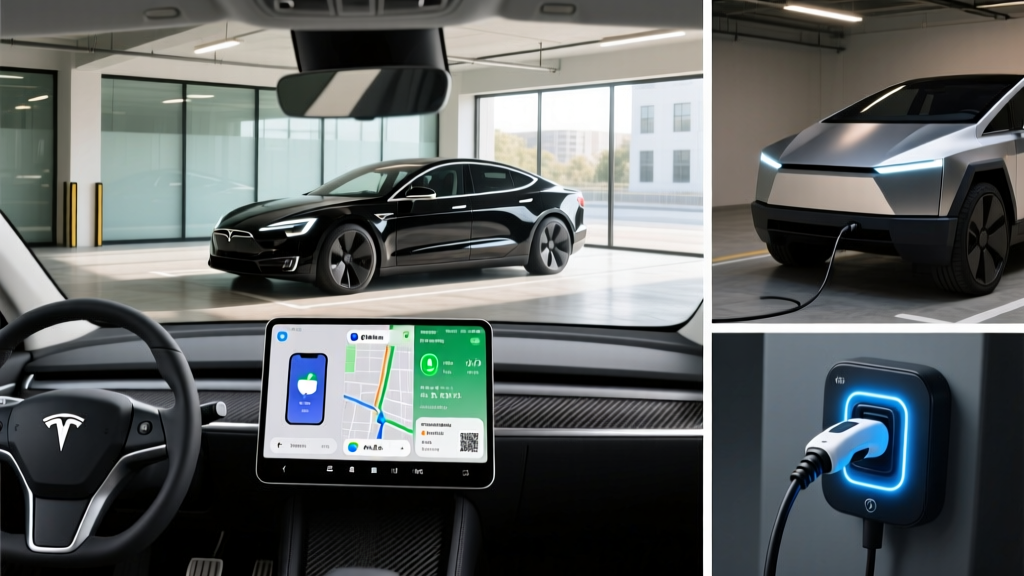
Tesla's infotainment system is a vertically integrated, Linux-based platform running on a 15.4-inch central touchscreen (in the current Model 3 refresh). There is no smartphone projection of any kind — no CarPlay, no Android Auto, no MirrorLink. Everything runs natively on the car's hardware.
What that native system includes:
- Native navigation with real-time Supercharger routing, elevation-aware range estimation, and battery preconditioning for DC fast charging
- Streaming services: Spotify, Apple Music, Tidal, YouTube, Netflix, and Disney+ (video while parked only)
- Bluetooth phone integration for calls, contacts, and audio
- Voice commands for navigation, media, climate, and basic vehicle controls
- Tesla app integration for remote climate, location, Sentry Mode clips, and OTA update management
- Gaming while parked, including Cyberpunk 2077 and Stardew Valley on higher-trim hardware
The trade-off is real: if you rely on CarPlay for Waze, specific podcast apps, or a familiar interface, Tesla's system requires adaptation. Most owners report adjusting within one to two weeks, but some never prefer it. There is no workaround — third-party CarPlay adapter boxes that claim to inject CarPlay into Tesla's display are unreliable, unsupported, and can interfere with vehicle software updates.
2026 Tesla Model 3 at a Glance: Specs That Matter
| Spec | Model 3 RWD | Model 3 Long Range AWD | Model 3 Performance |
|---|---|---|---|
| EPA Range | 272 mi | 363 mi | 315 mi |
| Battery (usable) | ~57.5 kWh (LFP) | ~75 kWh (NMC) | ~75 kWh (NMC) |
| Drivetrain | RWD, single motor | AWD, dual motor | AWD, dual motor |
| Horsepower | 271 hp | 346 hp | 510 hp |
| 0–60 mph | 5.8 sec | 4.2 sec | 2.9 sec |
| MPGe (combined) | 132 MPGe | 130 MPGe | 119 MPGe |
| kWh/100 mi | 25 kWh | 26 kWh | 28 kWh |
| Peak DC Fast Charge | 170 kW | 250 kW | 250 kW |
| 10–80% DCFC Time | ~25 min | ~18 min | ~18 min |
| Level 2 Home Charging | 11.5 kW (~44 mi/hr) | 11.5 kW (~44 mi/hr) | 11.5 kW (~44 mi/hr) |
| Cargo (rear + frunk) | 23 cu ft + 3.1 cu ft | 23 cu ft + 3.1 cu ft | 23 cu ft + 3.1 cu ft |
| Rear Legroom | 35.2 in | 35.2 in | 35.2 in |
| Base MSRP | $38,990 | $44,990 | $52,990 |
Source: fueleconomy.gov and Tesla's 2026 order configurator. Prices exclude destination fee ($1,390).
Real-World Range: What the EPA Number Doesn't Tell You
EPA Sticker: 272 mi (RWD) / 363 mi (Long Range) / 315 mi (Performance)
Real-World Expectation: On a 75 mph highway trip in moderate temperatures (60–80°F), expect roughly 235–250 mi from the RWD and 310–330 mi from the Long Range AWD. In cold weather (below 30°F), range drops 15–30% depending on cabin heating demands and whether you precondition. The Long Range AWD with its heat pump handles cold better than the RWD, which uses a resistive heater supplement.
Tesla's efficiency numbers are among the best in the segment. The Model 3 Long Range achieves roughly 26 kWh per 100 miles on the EPA cycle — that translates to about 3.8 miles per kWh, which is excellent for a dual-motor AWD sedan. For comparison, the Hyundai Ioniq 6 SE Long Range returns 27 kWh/100 mi, and the BMW i4 eDrive40 returns 31 kWh/100 mi.
The critical real-world factor is preconditioning. When you navigate to a Supercharger, the Model 3 actively warms or cools the battery pack to its optimal charging temperature before you arrive. This means your actual 10–80% charging time at a Supercharger is usually close to Tesla's published estimates — a meaningful advantage over some competitors that lack active thermal preconditioning for DC fast charging.
Charging Speeds: Supercharger Network and Home Charging
Charging speed remains one of Tesla's strongest competitive advantages — not just because of peak kW figures, but because of the Supercharger network's reliability and density. As of early 2026, Tesla operates over 6,500 Supercharger stations with roughly 60,000 individual stalls across North America.
| Charging Level | Power | Miles Added per Hour | Best For |
|---|---|---|---|
| Level 1 (120V household) | ~1.4 kW | ~4–5 mi/hr | Emergency top-ups, low-mileage days |
| Level 2 (240V home) | 11.5 kW (48A) | ~44 mi/hr | Daily home charging, full overnight refill |
| DC Fast (Supercharger V3/V4) | Up to 250 kW | ~200 mi in 15 min (peak) | Road trips, quick stops |
Important nuance on the charge curve: The 250 kW peak on Long Range and Performance trims is sustained roughly from 10% to 35% State of Charge (SoC), then tapers progressively. From 50% to 80%, you'll see roughly 100–140 kW. This is why Tesla quotes 10–80% in ~18 minutes — the full curve matters more than the peak number. The RWD's LFP battery charges at a lower 170 kW peak but has the advantage of being recommended for regular 100% charging, which partially offsets the smaller pack.
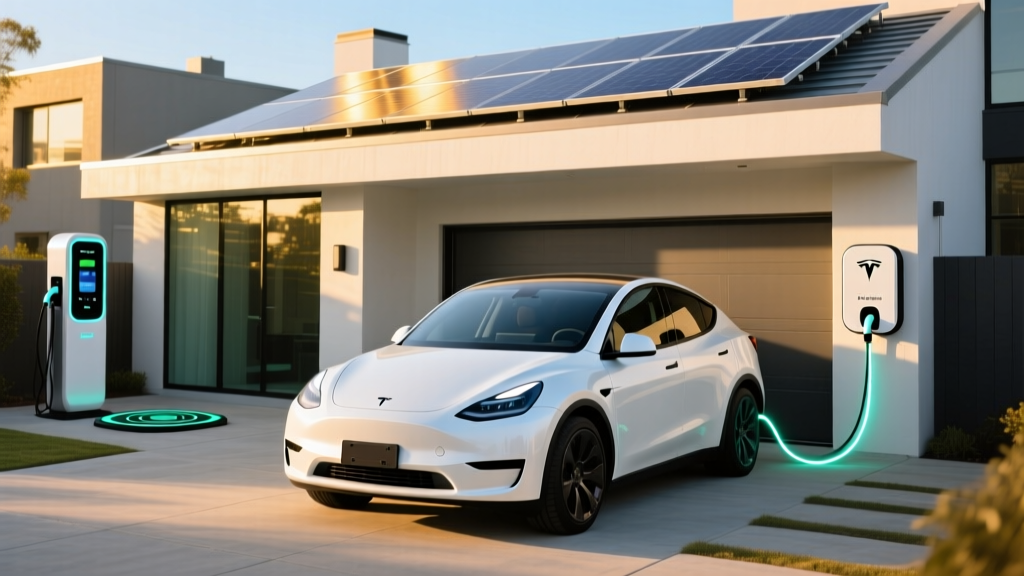
For home charging, a Tesla Wall Connector on a 60-amp circuit delivers up to 11.5 kW (48 amps continuous). A full charge from 10% to 100% on the Long Range takes roughly 6.5 hours — easily an overnight session. Installation costs for a Wall Connector typically run $800–$2,000 depending on whether your electrical panel needs upgrading. Note: Tesla now ships vehicles with a NACS (North American Charging Standard) port natively — no adapter needed at Superchargers. For legacy CCS stations, Tesla sells a CCS adapter (~$175).
Performance and Driving Dynamics
The 2026 Model 3 lineup spans a wide performance envelope:
- RWD (271 hp, 5.8s 0–60): Adequate for commuting and highway merging. The single-motor setup is the most efficient and lightest variant.
- Long Range AWD (346 hp, 4.2s 0–60): The sweet spot for most buyers — dual-motor AWD traction, strong passing power, and the longest range in the lineup.
- Performance (510 hp, 2.9s 0–60): Track-capable with adaptive dampers, a rear spoiler, and high-performance brakes. It sacrifices ~48 miles of range vs. the Long Range for the speed upgrade.
All trims feature a low center of gravity from the under-floor battery pack, resulting in minimal body roll and responsive steering. The refreshed Model 3 (introduced for the 2024 model year and carried forward) added acoustic glass, improved suspension tuning, and ventilated front seats — addressing the two most common complaints from the prior generation: road noise and ride harshness.
Pricing, Tax Credits, and Total Cost
| Trim | Base MSRP | Destination | Est. Federal Credit (§30D) | Effective Price* |
|---|---|---|---|---|
| Model 3 RWD | $38,990 | $1,390 | Up to $7,500 | ~$32,880 |
| Model 3 Long Range AWD | $44,990 | $1,390 | Up to $7,500 | ~$38,880 |
| Model 3 Performance | $52,990 | $1,390 | Up to $7,500 | ~$46,880 |
*Effective price assumes full §30D credit eligibility. Actual credit varies based on battery sourcing, buyer income, and IRS rules. See IRS §30D guidelines.
The federal EV tax credit under IRS §30D is not guaranteed for every buyer. Key eligibility rules for 2026:
- MSRP cap: Sedans must be priced at or below $55,000. All Model 3 trims currently qualify.
- Income cap: Modified AGI must not exceed $150,000 (single), $225,000 (head of household), or $300,000 (joint filing).
- Battery sourcing: The credit splits into two halves — $3,750 for critical-minerals sourcing and $3,750 for battery-component assembly. Tesla's Fremont-built Model 3 has historically qualified for the full $7,500, but sourcing requirements tighten annually. Verify current eligibility at fueleconomy.gov before purchase.
- Point-of-sale transfer: Since 2024, you can transfer the credit to the dealer at purchase, reducing your out-of-pocket cost immediately rather than waiting for a tax refund.
Tech, Safety, and Driver Assistance
Tesla's technology stack is a core reason buyers choose the brand — and for some, a reason to hesitate.
Infotainment: The 15.4-inch touchscreen handles nearly all vehicle functions, including climate controls (no physical knobs), glovebox release, and mirror adjustment. A secondary 8-inch rear touchscreen allows passengers to control climate and media. The system is fast, receives OTA updates regularly, and offers the most robust in-car entertainment library in the EV segment.
Autopilot and FSD (Supervised): All Model 3s include Basic Autopilot — adaptive cruise control and lane-centering on marked highways. Tesla's Full Self-Driving (Supervised) package is a $8,000 option (or $99/month subscription) that adds automated lane changes, traffic-light recognition, and city-street navigation. This is a Level 2 driver-assistance system per SAE definitions — you must remain attentive, hands on the wheel (or providing torque input), and eyes on the road at all times. It is not autonomous driving.
SAE Automation Level: Tesla Autopilot and FSD (Supervised) are Level 2 systems. The driver is responsible for all vehicle operation. Only Level 4 services like Waymo (operating in select metro areas) offer driverless capability. See NHTSA's automation guide for details.
Safety: The Model 3 holds a 5-star overall rating from NHTSA and earned the IIHS Top Safety Pick+ designation. Standard active safety features include automatic emergency braking, blind-spot monitoring, and lane-departure prevention.
Pros and Cons
Pros
- Class-leading Supercharger network reliability and density
- Excellent efficiency (25–28 kWh/100 mi depending on trim)
- Strong OTA update cadence — the car improves over time
- Top safety ratings (NHTSA 5-star, IIHS TSP+)
- Full $7,500 federal tax credit eligibility (verify sourcing rules)
- Heat pump standard on all trims for cold-weather efficiency
Cons
- No Apple CarPlay or Android Auto — a dealbreaker for some
- All vehicle controls on the touchscreen — no physical buttons for climate or volume
- Rear-seat space is tighter than midsize competitors (35.2 in legroom)
- FSD (Supervised) costs $8,000 and remains Level 2 only
- Insurance costs tend to run 15–25% higher than comparable gas sedans
- LFP battery (RWD) is heavier and less energy-dense — reduces range vs. NMC
Who the 2026 Tesla Model 3 Suits Best
Buy the Model 3 Long Range AWD if: You want a daily-commuter sedan that handles road trips confidently with 310+ real-world highway miles, Supercharger access, and AWD traction in rain or snow. It's the best all-around value in the lineup at ~$38,880 after the federal credit.
Buy the Model 3 RWD if: You're a budget-conscious commuter with reliable home charging, mostly drive under 200 miles per day, and want the lowest entry price (~$32,880 after credit). The LFP battery also tolerates daily 100% charging without the degradation concerns of NMC chemistry.
Buy the Model 3 Performance if: You want sports-sedan acceleration (2.9s 0–60) with EV running costs and don't mind sacrificing ~48 miles of range. It competes directly with the BMW i4 M50 and Porsche Taycan on fun factor, at a significantly lower price.
Look elsewhere if: Apple CarPlay or Android Auto is non-negotiable, you need more rear-seat room (consider the Hyundai Ioniq 6 or BMW i4), or you frequently drive in areas with limited Supercharger coverage and need CCS compatibility as your primary DC fast-charging standard.
Frequently Asked Questions
Does Tesla have CarPlay in any 2026 model?
No. As of 2026, no Tesla vehicle — Model 3, Model Y, Model S, Model X, or Cybertruck — supports Apple CarPlay or Android Auto. Tesla uses its own proprietary infotainment operating system exclusively.
Can I add CarPlay to my Tesla with an aftermarket adapter?
Third-party CarPlay adapter boxes exist but are not officially supported by Tesla. They typically work by intercepting the Tesla display signal and can cause software conflicts, visual glitches, or problems with OTA updates. Most EV technicians and Tesla service centers recommend against them.
What is the real-world range of the 2026 Tesla Model 3?
The EPA rates the Model 3 Long Range AWD at 363 miles, but real-world highway driving at 75 mph yields approximately 310–330 miles in moderate temperatures. In cold weather (below 30°F), expect 250–280 miles due to battery resistance and cabin heating demands. The RWD trim delivers roughly 235–250 real-world highway miles.
How fast does the Model 3 charge at home and on the road?
At home on a 240V Level 2 charger (Tesla Wall Connector at 11.5 kW), the Model 3 adds roughly 44 miles of range per hour — a full overnight charge from 10% to 100% takes about 6.5 hours for the Long Range. On a V3 or V4 Supercharger, the Long Range and Performance trims peak at 250 kW and charge from 10% to 80% in approximately 18 minutes. The RWD peaks at 170 kW with a 10–80% time of about 25 minutes.
Does the 2026 Tesla Model 3 qualify for the federal EV tax credit?
All three Model 3 trims currently qualify for up to $7,500 under IRS §30D, subject to buyer income limits ($150K single / $300K joint), the $55,000 sedan MSRP cap, and battery critical-mineral and component sourcing requirements. The credit can be transferred at point of sale to reduce your purchase price immediately. Always verify current eligibility at fueleconomy.gov and consult a tax professional, as sourcing rules tighten annually.
Is the Tesla Model 3 worth buying vs. competitors like the Ioniq 6 or BMW i4?
The Model 3 Long Range AWD wins on Supercharger network access, OTA update frequency, and efficiency. The Hyundai Ioniq 6 SE Long Range offers more rear-seat room, Apple CarPlay/Android Auto, and slightly faster 800V charging (~18 min 10–80% at 350 kW). The BMW i4 eDrive40 offers a more traditional luxury interior with physical controls and CarPlay, but at a higher starting price and with lower EPA range. If CarPlay is a must-have, the Ioniq 6 or i4 are stronger choices. If charging-network reliability and software are your priorities, the Model 3 remains hard to beat.
What is the battery warranty on the 2026 Model 3?
Tesla covers the Model 3 battery and drive unit for 8 years or 100,000 miles (RWD) and 8 years or 120,000 miles (Long Range and Performance), whichever comes first. The warranty guarantees the battery will retain at least 70% of its original capacity during the coverage period. Tesla's real-world degradation data, aggregated from fleet telemetry, shows most Model 3 packs retain approximately 90% capacity at 100,000 miles.