If you've ever searched "does Tesla do body work" after a fender bender or a parking-lot scrape, you're not alone. Tesla does not operate traditional in-house body shops the way legacy automakers run dealer service bays. Instead, Tesla relies on a curated network of Tesla-Approved Body Shops and a handful of company-owned collision centers to handle everything from quarter-panel replacements to structural battery-tray repairs. Understanding how that network works — and what it means for your wallet and your insurance — is just as important as understanding the car itself.
This guide answers the body-work question head-on, then pivots into a full 2026 Tesla Model Y profile so you can weigh the ownership picture end to end: range, charging, pricing, tax credits, and the real cost of keeping one on the road.
Does Tesla Do Body Work? The Short Answer
Tesla does not perform general body work at its Service Centers. Service Centers handle mechanical, electrical, and software issues — suspension, drive units, 12V batteries, OTA diagnostics. Collision and cosmetic repair is routed through two channels:
- Tesla Service Centers with collision bays — a small number of company-owned locations in major metro areas that do structural and high-voltage work.
- Tesla-Approved Body Shop Network — independent and chain shops (think Caliber Collision, Gerber) that Tesla audits, trains, and certifies to work on their vehicles. These shops must use Tesla OEM parts, follow Tesla repair procedures, and employ technicians who complete Tesla-specific training on aluminum structures, high-voltage safety, and ADAS recalibration.
You can locate approved shops via the Tesla app (Menu → Service → Body Repair) or through Tesla's official body repair support page. Insurance companies often try to steer you toward their own DRP (Direct Repair Program) shops. You have the right to insist on a Tesla-approved facility — and for anything touching the structural castings, battery enclosure, or Autopilot sensor suite, you should.
What Tesla Body Work Actually Costs
Teslas are aluminum-intensive and sensor-dense, two factors that push repair costs above comparable steel-body vehicles. A rear quarter panel on a Model Y, for example, isn't a bolt-on piece — it's part of the rear megacasting on 2023-and-newer Austin-built cars. Damage that would be a $1,200 patch on a RAV4 can become a $4,000–$8,000 structural job on a Model Y. Bumper covers with embedded parking sensors and cameras add another $800–$1,500 in parts plus ADAS recalibration time.
This is why insurance premiums on Teslas run 20–40% higher than equivalent gas crossovers. Before buying, pull a quote from your carrier — the premium delta can erase a meaningful chunk of the fuel-cost savings.
2026 Tesla Model Y: The Full Profile
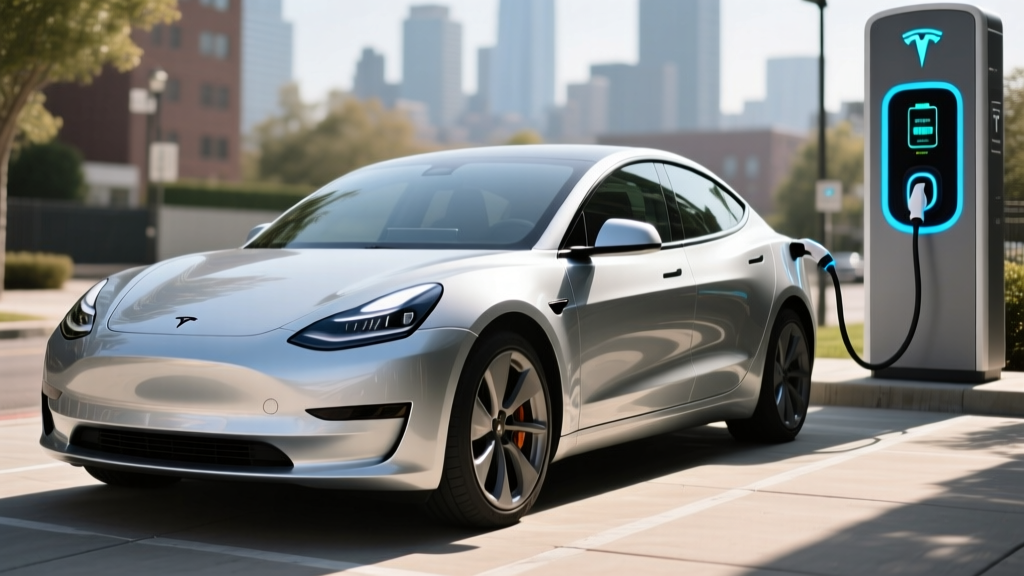
With the body-work question settled, let's look at the vehicle most people asking it actually own or are about to buy. The 2026 Tesla Model Y enters the year with the Juniper refresh fully deployed: revised front and rear lighting, ventilated front seats, ambient interior lighting, a rear touchscreen for passengers, and modest aero tweaks that bumped EPA range on the Long Range AWD trim.
| Spec | Long Range AWD | Performance |
|---|---|---|
| EPA Range | 320 miles | 295 miles |
| Battery (usable) | ~78 kWh, NMC | ~78 kWh, NMC |
| Drivetrain | Dual-motor AWD | Dual-motor AWD |
| Horsepower | 384 hp | 456 hp |
| 0–60 mph | 4.8 sec | 3.5 sec |
| Peak DC Fast Charge | 250 kW | 250 kW |
| 10–80% DCFC Time | ~27 min | ~27 min |
| Level 2 (11.5 kW AC) | ~44 mi/hr | ~44 mi/hr |
| EPA Efficiency | 117 MPGe (29 kWh/100mi) | 111 MPGe (30 kWh/100mi) |
| Cargo (rear seats up) | 30.2 cu ft | 30.2 cu ft |
| Cargo (rear seats folded) | 72.1 cu ft | 72.1 cu ft |
| Base MSRP | $49,990 | $53,990 |
Real-World Range: What the EPA Sticker Doesn't Tell You
Real-World Highway (70–75 mph, 70°F): ~265–280 miles
Cold Weather (30°F, highway): ~220–240 miles
Mixed Commute (city + suburban): ~290–310 miles
The EPA cycle is weighted toward low-speed urban driving, where regenerative braking recovers energy aggressively. Highway miles at 75 mph burn through range faster — expect roughly 12–15% below sticker in mild conditions, and 25–30% in freezing temps. The Model Y uses a heat pump as standard equipment, which cuts cold-weather cabin-heating draw significantly versus resistive heaters, but battery chemistry itself still loses efficiency below freezing.
For a 300-mile road trip in July, you'll likely arrive with 40–50 miles left. The same trip in January across Wyoming will require a fast-charge stop. Plan accordingly.
Charging Speed: Supercharger Network vs. Home Level 2
Tesla's Supercharger network remains the most reliable DC fast-charging ecosystem in North America. The 2026 Model Y peaks at 250 kW on V3 Superchargers, though like all EVs, it doesn't hold peak rate for the entire session.
| Charging Level | Power (kW) | Miles Added per Hour | Typical Use Case |
|---|---|---|---|
| Level 1 (120V / 12A) | ~1.4 kW | ~4–5 mi/hr | Emergency / trickle |
| Level 2 (240V / 48A) | 11.5 kW | ~44 mi/hr | Home overnight, full in ~7 hr |
| DC Fast (V3 Supercharger) | Peak 250 kW | ~150+ mi in 15 min | Road trips, 10–80% in ~27 min |
Charging curve reality: The Model Y holds near-peak 250 kW from roughly 10% to 35% state of charge, then tapers through the 150–100 kW range between 50–80%. Above 80%, the rate drops sharply to protect the NMC cells — plan to unplug at 80% on road trips unless you genuinely need the last 20%.
With the NACS connector now the North American standard, non-Tesla EVs are gaining Supercharger access, but Model Y owners still benefit from native plug-and-charge integration — no app fumbling, no payment handshake failures.
Pricing, Trims, and the 2026 Federal Tax Credit
Here's where the math gets specific. The 2026 Model Y Long Range AWD stickers at $49,990 before destination, placing it exactly under the IRS §30D MSRP cap of $55,000 for SUVs and trucks.
| Trim | MSRP | Federal Credit (§30D) | Effective Price* |
|---|---|---|---|
| Long Range AWD | $49,990 | Up to $7,500 | ~$42,490 |
| Performance | $53,990 | Up to $7,500 | ~$46,490 |
*Effective price assumes full credit eligibility. Your actual credit depends on meeting all §30D requirements.
- Buyer income cap: AGI ≤ $150,000 single / $225,000 head of household / $300,000 joint
- MSRP cap: ≤ $55,000 for SUVs (both trims qualify)
- Battery sourcing: Critical minerals and battery components must meet escalating domestic-content thresholds — Tesla's Austin-built Model Y has largely satisfied these through 2025, and the company continues to localize supply chains for 2026
- Point-of-sale transfer: You can apply the credit as a down-payment reduction at delivery rather than waiting to claim it on your tax return
Confirm your specific eligibility with a tax professional. Rules can shift, and the IRS maintains the authoritative list at fueleconomy.gov.
Warranty, Battery Longevity, and Ownership Costs
Tesla's warranty structure is straightforward:
- Basic Vehicle: 4 years / 50,000 miles
- Battery & Drive Unit: 8 years / 120,000 miles (Long Range & Performance)
- Capacity retention guarantee: Tesla warrants the battery will retain at least 70% of original capacity during the warranty period
The Model Y uses an NMC (nickel manganese cobalt) pack, which offers higher energy density than LFP but is more sensitive to sustained high-state-of-charge storage. Tesla recommends daily charging to 80–90% for NMC packs and 100% only before long trips. Real-world fleet data from sources like Recurrent Auto shows typical degradation of 8–12% over the first 100,000 miles — well within the warranty floor.
Insurance: Expect $180–$260/month depending on your state, age, and driving record. Tesla offers its own insurance product in many states that uses real-time driving data (Safety Score) to price premiums — safe drivers can see rates 15–25% below the market average, but aggressive drivers may pay more.
Tech, Driver Assistance, and Notable Drawbacks
The Juniper-refreshed Model Y carries Tesla's latest infotainment stack: 15.4-inch front touchscreen, 8-inch rear screen, ventilated seats, and power-folding second row. Autopilot (lane centering + adaptive cruise) is standard. Full Self-Driving (Supervised) is a $8,000 option or $99/month subscription — but it remains an SAE Level 2 system, meaning you must keep your hands on the wheel and eyes on the road at all times. It is not autonomous driving.
- They do not eliminate driver responsibility — you are legally liable for the vehicle's actions
- They do not reliably handle construction zones, unmapped roads, or severe weather
- They do not make the Model Y a Level 4 robotaxi — that designation applies only to driverless services like Waymo
- Supercharger network — still the gold standard for road-trip charging
- Class-leading efficiency (117 MPGe combined on Long Range)
- Spacious cargo area (72.1 cu ft with seats folded) and practical liftback design
- OTA updates continue to add features years after purchase
- Strong resale value relative to most EVs
- Higher insurance premiums due to aluminum body and sensor density
- Limited Tesla-owned body shop network — repair timelines can stretch 3–6 weeks
- Turn-signal stalk removed on Juniper refresh (steering-wheel buttons instead)
- No Apple CarPlay or Android Auto — Tesla's native UI is your only option
- FSD subscription cost adds up without delivering true autonomy
Who Should Buy the 2026 Model Y?
- You have reliable Level 2 home charging and want the lowest-effort EV ownership experience
- You road-trip 2+ times per year and value Supercharger plug-and-charge reliability
- You need crossover cargo space with a flat load floor (strollers, bikes, Costco runs)
- You qualify for the §30D credit and want an effective price near $42,500
- You want Apple CarPlay or a more conventional interior layout
- You live in an area with limited Tesla-approved body shops and can't tolerate long repair timelines
- You prefer 800V architecture for faster DC charging (Ioniq 5 peaks at 350 kW)
Frequently Asked Questions
Does Tesla do body work at its Service Centers?
Generally, no. Tesla Service Centers handle mechanical, electrical, and software issues. Body and collision work is routed through Tesla's Approved Body Shop Network or a small number of company-owned collision centers in major metros.
Can any body shop fix a Tesla?
Any shop can physically work on one, but only Tesla-Approved shops have access to OEM structural repair procedures, aluminum welding certification requirements, high-voltage safety protocols, and ADAS recalibration tools. Using an unapproved shop may void portions of your warranty and compromise crash safety.
What is the real-world range of the 2026 Model Y Long Range?
EPA-rated at 320 miles, expect roughly 265–280 miles at highway speeds in mild weather and 220–240 miles in freezing conditions. City and suburban driving with regen braking gets you closest to the sticker number.
How fast does the Model Y charge at home and on road trips?
On a 48-amp Level 2 home charger (11.5 kW), you'll add about 44 miles per hour — a full overnight charge in roughly 7 hours. On a V3 Supercharger, 10–80% takes about 27 minutes, with peak rates of 250 kW tapering above 50% SoC.
Does the 2026 Model Y qualify for the $7,500 federal tax credit?
Both the Long Range ($49,990) and Performance ($53,990) fall under the §30D MSRP cap of $55,000 for SUVs. Eligibility also depends on buyer income limits ($150K single / $300K joint) and battery-sourcing requirements. The credit can be transferred at point of sale as a down-payment reduction. Verify your specific case with a tax professional and the IRS §30D guidelines.
Is the Model Y worth it versus the Hyundai Ioniq 5 or Ford Mach-E?
The Model Y wins on Supercharger access, cargo volume, and software maturity. The Ioniq 5 wins on DC charge speed (800V architecture, 10–80% in ~18 min) and offers CarPlay. The Mach-E offers a more traditional driving feel and Ford dealer service for body work. All three are strong — your tiebreaker is charging access, interior preference, and local service infrastructure.