The Fire Question: What the Data Actually Shows
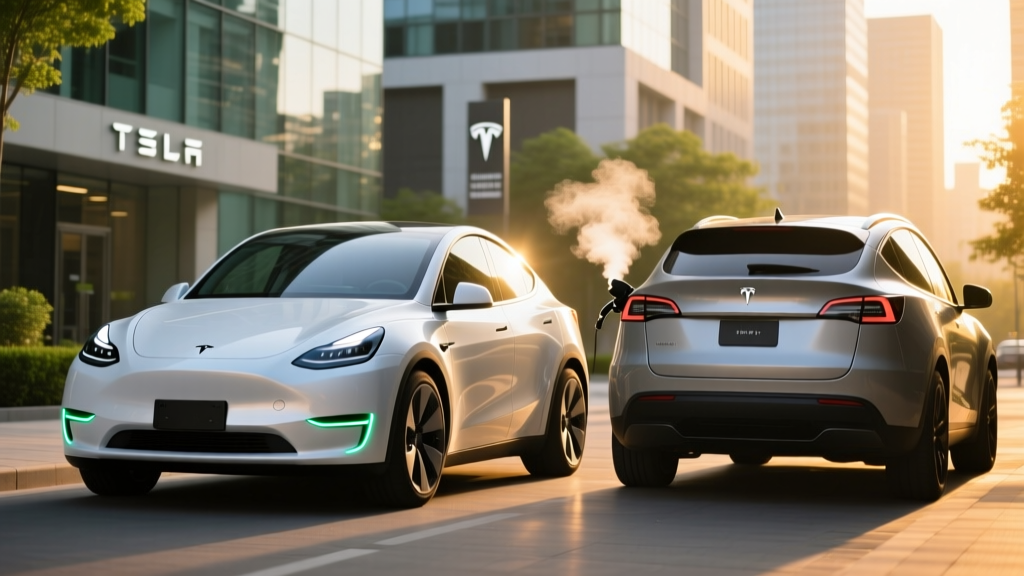
Search "does Tesla catch fire" and you'll find sensational headlines alongside viral videos of burning EVs. But raw footage doesn't tell the statistical story. Tesla's own 2024 safety report (the most recent full-year data available) states that Tesla vehicles experience approximately one fire for every 130 million miles driven. For comparison, the National Fire Protection Association (NFPA) and NHTSA data place the national average for gasoline vehicle fires at roughly one per 19 million miles. That makes internal-combustion vehicles nearly seven times more likely to catch fire per mile driven than a Tesla.
So why does the perception persist? EV battery fires burn hotter, last longer, and are harder to extinguish than gasoline fires. They also attract outsized media coverage because they're unusual. A gas car fire on the interstate barely makes local news; a Tesla fire becomes a national story. Understanding the real risk requires separating frequency from severity, and looking at what Tesla has done to mitigate both.
Tesla Fire Statistics vs. Gas Vehicles
Let's break down the numbers with concrete data. According to AutoInsuranceEZ analysis of NTSB, BTS, and government recall data, the fire rate per 100,000 vehicles sold tells a clear story:
| Vehicle Type | Fires per 100K Vehicles Sold | Relative Risk |
|---|---|---|
| Hybrid vehicles | 3,474 | Highest |
| Gasoline vehicles | 1,529 | Baseline |
| Electric vehicles (all brands) | 25 | Lowest |
EVs are dramatically less likely to catch fire than any other powertrain type. The hybrid figure is high because hybrids carry both a gasoline fuel system and a high-voltage battery — two potential ignition sources. Pure EVs like Tesla eliminate the gasoline entirely, removing the most common fire accelerant in vehicle accidents.
Why Battery Fires Are Different (and Harder to Fight)
When a lithium-ion battery pack is compromised — through a severe crash, manufacturing defect, or extreme thermal event — the result is thermal runaway. Individual battery cells reach temperatures exceeding 1,000°F, release flammable electrolyte gases, and can reignite hours or even days after initial extinguishment. Firefighters need significantly more water (sometimes 20,000+ gallons vs. 500-1,000 for a gas car fire) and must monitor the vehicle for re-ignition.
This severity is real, but context matters. Most Tesla battery fires have occurred after high-speed impacts or undercarriage damage that would total any vehicle. The battery pack's titanium shield and structural placement between the axles provide substantial protection in routine driving and moderate collisions.
LFP vs. NMC Chemistry: Does It Matter for Fire Risk?
Tesla uses two battery chemistries across its 2026 lineup, and the fire-relevant differences are meaningful:
| Factor | LFP (Lithium Iron Phosphate) | NMC (Nickel Manganese Cobalt) |
|---|---|---|
| Thermal runaway onset | ~518°F (270°C) — higher threshold | ~410°F (210°C) — lower threshold |
| Oxygen release during failure | Minimal — self-limiting reaction | Releases oxygen — feeds fire |
| Energy density | Lower (heavier pack for same range) | Higher (lighter, more range) |
| Used in | Model 3/Y RWD (Standard Range) | Model 3/Y Long Range, Performance, S, X |
| Cycle life | 3,000+ cycles | 1,500-2,000 cycles |
LFP chemistry is inherently more thermally stable and less prone to thermal runaway propagation. If fire safety is a top concern, the Model 3 and Model Y RWD trims with LFP packs offer a measurable chemistry advantage. The trade-off is slightly less range and a heavier battery.
2026 Tesla Model Y: Safety, Range & Full Specs
The Model Y remains Tesla's highest-volume vehicle and the model most buyers are researching. Here's what the 2026 Juniper-refresh Model Y delivers across key metrics:
| Specification | Model Y Long Range AWD | Model Y Performance |
|---|---|---|
| EPA Range | 320 miles | 280 miles |
| Battery (usable) | ~75 kWh (NMC) | ~75 kWh (NMC) |
| Drivetrain | Dual-Motor AWD | Dual-Motor AWD |
| Horsepower | 384 hp | 456 hp |
| 0-60 mph | 4.8 seconds | 3.5 seconds |
| DC Fast Charge (peak) | 250 kW | 250 kW |
| 10-80% DC Charge Time | ~25 minutes | ~25 minutes |
| Level 2 Home Charging | 11.5 kW (~44 mi/hr) | 11.5 kW (~44 mi/hr) |
| MPGe (combined) | 111 MPGe | 102 MPGe |
| Efficiency | 30 kWh/100mi | 33 kWh/100mi |
| Cargo (rear seats up) | 30.2 cu ft | 30.2 cu ft |
| Cargo (seats folded) | 72.1 cu ft | 72.1 cu ft |
| Rear Legroom | 39.0 inches | 39.0 inches |
| Base MSRP | $44,990 | $49,990 |
| Battery Warranty | 8 yr / 120,000 mi | 8 yr / 120,000 mi |
Charging Speed Reality: Peak vs. Sustained
The Model Y's 250 kW peak DC fast-charge rate is available only at the beginning of a charging session (roughly 10-30% SoC) with a preconditioned battery. The charge curve tapers significantly:
- 10-30% SoC: Peak ~250 kW
- 30-60% SoC: ~150-180 kW sustained
- 60-80% SoC: ~75-100 kW (taper)
- 80-100% SoC: ~25-40 kW (trickle — avoid at DC stations)
On a Tesla Supercharger V3/V4 stall, a 10-80% session takes roughly 25 minutes. On Electrify America or other CCS networks (with the included NACS-to-CCS adapter), expect similar times at 150+ kW stations. Always precondition your battery via the navigation system before arriving at a charger — skipping this step in cold weather can add 10-15 minutes to your session.
Tesla's Active and Passive Safety Engineering
Beyond fire statistics, Tesla vehicles consistently earn top crash ratings. The Model Y holds a 5-star overall rating from NHTSA and a Top Safety Pick+ from IIHS across all crashworthiness tests. Several engineering features directly address fire and crash risk:
- Structural battery pack: The pack is a stressed member of the chassis, lowering the center of gravity and reducing rollover risk (the leading cause of post-crash fires in SUVs).
- Titanium underbody shield: Protects the pack from road debris and undercarriage impacts.
- Cell-level thermal barriers: Fire-retardant materials between cell modules slow thermal runaway propagation, buying occupants time to exit.
- Automatic high-voltage disconnect: In a detected collision, the battery management system isolates the high-voltage pack within milliseconds.
- Over-the-air safety updates: Tesla can adjust battery management parameters, thermal thresholds, and charging limits remotely to address emerging risk patterns.
Pricing, Tax Credits & Ownership Cost
For 2026, the federal EV tax credit under IRS §30D remains complex and model-specific. Here's where the Model Y stands:
| Factor | Model Y Long Range AWD | Model Y Performance |
|---|---|---|
| Base MSRP | $44,990 | $49,990 |
| MSRP Cap (SUV: $80,000) | Passes | Passes |
| Buyer Income Cap (MFJ: $300K) | Varies by buyer | Varies by buyer |
| Battery Sourcing / Critical Minerals | Partial compliance — verify current year | Partial compliance — verify current year |
| Estimated Credit (2026) | $3,750 - $7,500* | $3,750 - $7,500* |
| Effective Price After Credit | ~$37,490 - $41,240 | ~$42,490 - $46,240 |
*The §30D credit is split into two halves: $3,750 for battery component manufacturing and $3,750 for critical mineral sourcing. Tesla's supply chain compliance shifts periodically. The credit can be transferred to the dealer at point of sale as an instant discount. Consult a tax professional and verify current eligibility at fueleconomy.gov before purchasing.
Pros, Cons & Competitor Comparison
Pros
- Lowest fire rate per mile of any powertrain class
- 250 kW DC charging with 17,000+ Supercharger stalls nationwide
- 5-star NHTSA, IIHS Top Safety Pick+ ratings
- Over-the-air updates continuously improve safety systems
- LFP option on RWD trims for enhanced thermal stability
- Class-leading efficiency (30 kWh/100mi) reduces charging cost
Cons
- NMC battery chemistry more susceptible to thermal runaway than LFP
- Battery fire severity higher than gas fires when incidents occur
- Tax credit eligibility uncertain — sourcing rules shift
- No physical controls — all functions through touchscreen
- Service center wait times can be weeks in some metro areas
- Insurance premiums 15-30% higher than comparable gas SUVs
Model Y vs. Key Competitors on Safety
The Hyundai Ioniq 5, Ford Mustang Mach-E, and Kia EV6 are the Model Y's primary rivals. All carry NMC batteries and have similar (or slightly better in some crash sub-tests) safety ratings. The Mach-E experienced a small number of battery recall-related fires in 2022-2023 (addressed via software and module replacement), while the Ioniq 5 and EV6 have clean fire records. The Model Y's structural pack and underbody shielding remain a benchmark, but competitors have closed the gap in crash protection. Tesla's key differentiator remains the Supercharger network and charging speed consistency, not a safety monopoly.
Frequently Asked Questions
Does Tesla catch fire more often than gas cars?
No. By every available metric — fires per 100,000 vehicles sold and fires per million miles driven — Tesla and EVs broadly catch fire far less frequently than gasoline vehicles. The AutoInsuranceEZ analysis shows EVs at 25 fires per 100K vehicles vs. 1,529 for gas vehicles. The perception gap exists because EV fires are unusual, harder to extinguish, and receive disproportionate media coverage.
What causes Tesla battery fires?
The most common causes are severe high-speed collisions that breach the battery pack, undercarriage impacts from road debris, and (rarely) manufacturing defects in individual cells. Spontaneous fires in parked, undamaged Teslas are exceedingly rare. Tesla's battery management system continuously monitors cell temperatures and voltages, and can preemptively alert owners to anomalies before a thermal event occurs.
Are LFP Tesla batteries safer than NMC?
Yes, measurably so. LFP (lithium iron phosphate) chemistry has a higher thermal runaway onset temperature (~518°F vs. ~410°F for NMC) and does not release oxygen during cell failure, which limits fire propagation. If fire risk is a primary concern, choose a Model 3 or Model Y RWD with the LFP pack. The trade-off is slightly less range and lower energy density.
What is the real-world range of the 2026 Model Y?
The EPA rates the Model Y Long Range AWD at 320 miles. In real-world highway driving at 75 mph, expect 260-280 miles. In freezing temperatures, plan for 220-255 miles. The Model Y Performance's 280-mile EPA rating translates to roughly 230-250 miles highway and 190-215 miles in cold weather.
Does the 2026 Tesla Model Y qualify for the federal EV tax credit?
Potentially. The Model Y's MSRP is well under the $80,000 SUV cap, and buyer income limits (up to $300,000 MFJ) apply. However, the battery sourcing and critical mineral requirements under §30D are subject to change. The credit may be $3,750 or $7,500 depending on current supply chain compliance. Verify at fueleconomy.gov and with your tax professional before purchase. The credit can be applied as a point-of-sale discount through participating dealers.
Is the Tesla Model Y worth buying in 2026?
For most buyers seeking a mid-size electric SUV with proven range, reliable fast charging, and top safety ratings, the Model Y remains a strong choice. Its weaknesses — touchscreen-only controls, variable service access, insurance costs — are real but not deal-breakers for the majority. If you prioritize dealership service, more physical controls, or want to avoid Tesla's ecosystem, the Hyundai Ioniq 5 and Kia EV6 are compelling alternatives with comparable safety records.
How fast does the Model Y charge at home and on the road?
At home on a Level 2 charger (48A / 11.5 kW), the Model Y adds approximately 44 miles of range per hour, fully charging overnight from 20% in about 7 hours. On DC fast charging, it peaks at 250 kW and reaches 10-80% in roughly 25 minutes at a Tesla Supercharger V3/V4 station. Charging slows significantly above 80% — avoid DC charging past 80% unless necessary, as the taper adds substantial time.