Quick Answer: Does Subaru Make an Electric Car?
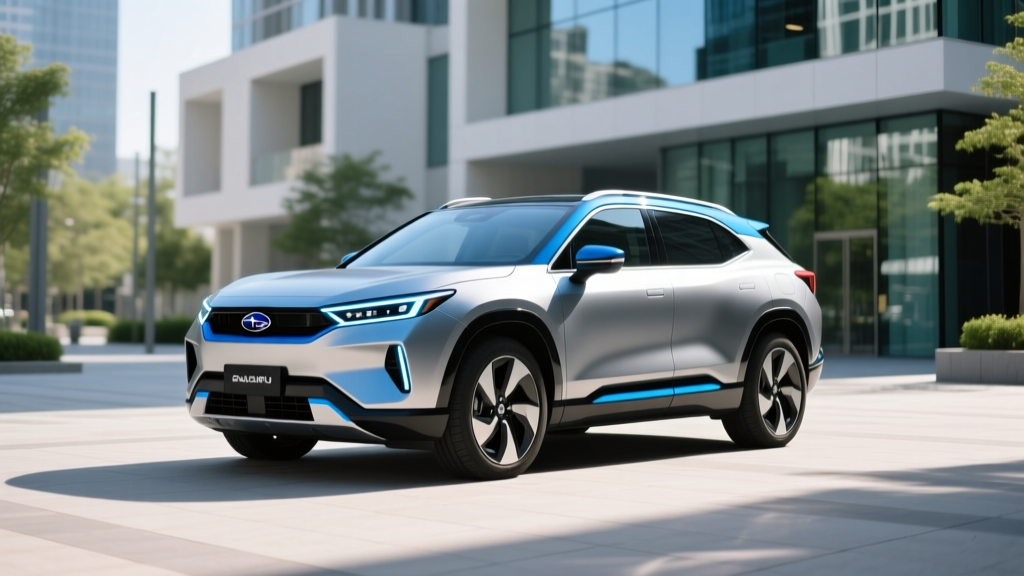
Yes. Subaru currently sells one fully electric vehicle: the Subaru Solterra, a compact electric SUV developed jointly with Toyota (which sells the near-identical bZ4X). For the 2026 model year, the Solterra offers up to 228 miles of EPA-estimated range, standard all-wheel drive, and DC fast charging up to approximately 100 kW. It starts at roughly $44,995 MSRP before incentives. Subaru has also announced a second, larger three-row EV expected for the 2027 model year, but it is not yet available for purchase.
The 2026 Subaru Solterra: Full EV Specs at a Glance
The Solterra is Subaru's entry into the battery-electric market, and it's built on the e-Subaru Global Platform co-developed with Toyota. If you're asking "does Subaru make an electric car?" — this is the answer. Here's what the numbers look like for the current model year.
| Specification | 2026 Subaru Solterra |
|---|---|
| EPA Range (best trim) | 228 miles |
| Real-World Range Expectation | ~190–210 mi (highway); ~160–180 mi (cold weather, below 30°F) |
| Battery Capacity | 72.8 kWh (usable ~65.6 kWh), NMC chemistry |
| Drivetrain | Dual-motor AWD (standard on all trims) |
| Horsepower | 215 HP / 248 lb-ft torque |
| 0–60 mph | ~6.5 seconds |
| Max DC Fast Charge Rate | ~100 kW (peak) |
| 10–80% DC Fast Charge | ~35 minutes |
| Level 2 Charging Rate | 6.6 kW (onboard charger) |
| Level 2 Full Charge Time | ~10 hours (0–100%) |
| Charging Port | CCS1 (NACS adapter available for Tesla Supercharger access) |
| MPGe (combined) | 104 MPGe |
| Efficiency | 32 kWh/100 mi |
| Starting MSRP | $44,995 (base) |
| Battery Warranty | 8 years / 100,000 miles (capacity retention threshold ~70%) |
| Vehicle Warranty | 3 years / 36,000 mi (basic); 5 years / 60,000 mi (powertrain) |
Sources: EPA Fuel Economy, Subaru of America specifications.
Real-World Range vs. the EPA Sticker
The EPA rates the Solterra at up to 228 miles, but that number assumes a mix of city and highway driving at moderate temperatures. In practice, EV range fluctuates based on speed, climate, and terrain — and the Solterra is no exception.
EPA Sticker: 228 miles
Highway driving (70+ mph, moderate temps): Expect ~190–210 miles
Cold weather (below 30°F, heater running): Expect ~160–180 miles
Why? EV batteries lose efficiency in cold temperatures because the chemical reactions slow down, and cabin heating draws significant energy (the Solterra uses a resistive heater on some trims rather than a heat pump, which increases energy draw in winter).
If your daily commute is under 40 miles round-trip and you charge at home, the Solterra's range is more than adequate — you'll charge every 3–4 days. For road trips exceeding 200 miles, you'll need to plan at least one DC fast-charging stop, and the ~35-minute 10–80% charge time is slower than competitors like the Hyundai Ioniq 5 (~18 minutes at 240 kW) or Tesla Model Y (~20 minutes at 250 kW).
Solterra vs. Gas Subaru: The Cost Breakdown
Subaru buyers are loyal to the brand for good reason — standard AWD, rugged capability, strong resale value. The question is whether going electric saves money compared to a gas-powered Subaru Forester or Outback. Let's run the numbers over 5 years and 75,000 miles.
| Cost Factor | 2026 Solterra (EV) | 2026 Subaru Forester (Gas AWD) |
|---|---|---|
| Base MSRP | $44,995 | $29,995 |
| Federal Tax Credit (§30D, if eligible) | Up to $7,500 (see eligibility below) | $0 |
| Effective Purchase Price | ~$37,495 | $29,995 |
| Fuel/Energy Cost (5 yr, 75k mi) | ~$3,750 (home charging at $0.13/kWh avg) | ~$9,375 (gas at $3.50/gal, 29 MPG combined) |
| Maintenance (5 yr) | ~$1,200 (tire rotations, cabin filter, wiper fluid) | ~$3,500 (oil changes, brakes, filters, fluids) |
| Insurance (5 yr avg) | ~$9,500 (EVs typically 10–15% higher premiums) | ~$8,200 |
| 5-Year Total Cost | ~$51,945 | ~$51,070 |
The takeaway: The Solterra's 5-year total cost is roughly comparable to a gas Forester if you qualify for the full federal tax credit. Without the credit, the Solterra costs approximately $7,500 more over 5 years. The EV pulls ahead significantly in years 6–10 as maintenance savings compound and you avoid rising gas prices.
Federal Tax Credit: Does the Solterra Qualify?
The Solterra's eligibility for the IRS §30D Clean Vehicle Credit depends on several factors that change based on battery sourcing rules. As of the current tax year:
- MSRP cap: SUVs must be under $80,000 — the Solterra qualifies (all trims well under cap)
- Buyer income cap: Modified AGI must not exceed $150,000 (single) / $300,000 (joint filing)
- Battery sourcing: Critical minerals and battery components must meet phased-in percentage thresholds from US or FTA-partner countries. This requirement has tightened annually and may reduce the available credit to $3,750 (half) or $0 depending on the specific model-year battery pack sourcing.
- Point-of-sale transfer: You can transfer the credit to the dealer at purchase to reduce your out-of-pocket cost immediately, rather than waiting to claim it on your tax return
- Assembly: Final assembly must be in North America — the Solterra is assembled in Japan, which may disqualify it from the §30D new-vehicle credit
⚠️ Critical note: The Solterra is manufactured at Toyota's Motomachi plant in Japan. Under current §30D rules, vehicles must undergo final assembly in North America to qualify for the new-vehicle credit. This likely means the Solterra does NOT qualify for the federal $7,500 credit. However, it may qualify for state-level incentives (check your state's EV rebate program) and the used EV credit (up to $4,000 / 30% of sale price) if purchased pre-owned from a dealer. Always verify current rules with a tax professional and check your VIN on the fueleconomy.gov credit lookup tool.
Solterra vs. Competitors: How Does It Stack Up?
If you're committed to Subaru, the Solterra is your only EV option. But if you're cross-shopping, here's how it compares to other compact electric SUVs with AWD:
| Vehicle | EPA Range | Max DC Charge | 10–80% Time | AWD? | Base MSRP |
|---|---|---|---|---|---|
| Subaru Solterra | 228 mi | ~100 kW | ~35 min | Standard | $44,995 |
| Hyundai Ioniq 5 AWD | 290 mi | 240 kW | ~18 min | Optional | $49,500 |
| Tesla Model Y LR AWD | 308 mi | 250 kW | ~20 min | Standard | $47,990 |
| Toyota bZ4X AWD | 228 mi | ~100 kW | ~35 min | Standard | $43,070 |
| Ford Mustang Mach-E AWD | 290 mi | 150 kW | ~28 min | Optional | $42,995 |
Where the Solterra wins: Standard AWD on every trim (Subaru's signature), strong off-road capability with 8.3 inches of ground clearance and X-MODE, and the brand's reputation for durability and dealer network in rural/mountain states.
Where it falls short: The ~100 kW peak DC charging speed is notably slower than the Ioniq 5 or Model Y. On a road trip, that means 35 minutes at a charger versus 18–20 minutes for the competition. Range is also at the lower end of the segment at 228 miles.
Common Misconceptions About Subaru EVs
| Myth | Fact |
|---|---|
| "Subaru doesn't make a real EV" | The Solterra is a dedicated battery-electric vehicle on a purpose-built EV platform — not a converted gas car. |
| "The battery will need replacing in 5 years" | Modern NMC batteries are designed for 200,000+ miles. Subaru warranties the battery for 8 years/100,000 miles with a 70% capacity retention guarantee. Real-world data from similar platforms shows ~10–15% degradation over 100,000 miles. |
| "It can't handle snow and off-road" | The Solterra has standard dual-motor AWD with X-MODE, 8.3" ground clearance, and Subaru's Symmetrical AWD logic adapted for electric motors. It outperforms most compact EV SUVs on unpaved and snowy roads. |
| "I can't charge it at Tesla Superchargers" | With a NACS adapter (available from Subaru dealers), the Solterra can access Tesla's Supercharger network, significantly expanding public charging options. |
| "EVs cost more to insure" | Partially true — EV insurance premiums average 10–15% higher due to higher repair costs after collisions. However, some insurers now offer EV-specific discounts. Shop multiple quotes. |
Who Should Buy the Solterra — And Who Shouldn't
Choose the Subaru Solterra if:
- You live in a region with harsh winters or mountain terrain and want proven AWD capability
- Your daily driving is under 80 miles round-trip and you have access to home Level 2 charging
- You're a current Subaru owner who values the dealer network and brand loyalty
- You prioritize off-road and trail capability over maximum range or charging speed
- You want a rugged EV that can handle roof racks, bike carriers, and outdoor gear
Look elsewhere if:
- You frequently take road trips over 300 miles — the 228-mi range and 35-min charging will add significant time
- You lack access to home or workplace charging (the Solterra's range makes public-charging-only ownership challenging)
- You want the lowest possible purchase price — the Ioniq 5 or Mach-E offer more range for similar or less money
- You want the fastest DC charging in the segment (Hyundai Ioniq 5 at 240 kW is nearly 2.5x faster)
- Federal tax credit eligibility is critical to your budget (the Japan assembly likely disqualifies the Solterra)
What Subaru Has Announced for the Future
Subaru has confirmed plans for a three-row electric SUV (expected model year 2027), which will be larger than the Solterra and targeted at families who currently buy the Ascent. Details remain preliminary — Subaru has not released battery capacity, range, or pricing. Until that vehicle reaches showrooms, the Solterra remains Subaru's only electric offering.
Subaru has also committed to selling a lineup that includes both BEVs and hybrids through the end of the decade, acknowledging that not all buyers are ready for full electrification — particularly in rural areas with limited charging infrastructure.
Frequently Asked Questions
Does Subaru make a hybrid car?
As of the 2026 model year, Subaru does not sell a traditional hybrid or plug-in hybrid in the US market. The Crosstrek Hybrid (PHEV) was discontinued after the 2023 model year. Subaru's electrification strategy currently centers on the Solterra BEV, with a hybrid option expected to return later this decade. If you want a Subaru with better fuel economy today, the most efficient option is the standard Crosstrek (up to 36 MPG highway) or the Impreza (up to 36 MPG highway).
Can I charge the Solterra at home on a regular outlet?
Yes, but slowly. Level 1 charging (120V standard outlet) delivers approximately 1.4 kW, adding about 4 miles of range per hour. A full charge would take roughly 45+ hours. For practical daily use, a Level 2 home charger (240V, 6.6 kW) is strongly recommended, adding about 25 miles per hour and fully charging the Solterra overnight in ~10 hours. Expect to pay $500–$2,000 for a Level 2 charger installation depending on your electrical panel capacity and the distance from panel to garage.
How does the Solterra perform in cold weather?
Like all EVs, the Solterra loses range in cold temperatures. Expect a 20–30% reduction in range when temperatures drop below 30°F, primarily due to battery chemistry limitations and cabin heating demands. That 228-mile EPA range could drop to 160–180 miles in deep winter. Preconditioning the battery (available via the Subaru app while plugged in) helps mitigate charging-speed loss in cold weather. If you live in Minnesota, Montana, or New England, plan your winter driving around the reduced range.
Is the Solterra the same car as the Toyota bZ4X?
They share the same e-Subaru Global Platform, battery pack, and powertrain, but they are not identical. The Solterra has Subaru-tuned suspension, standard X-MODE AWD with off-road programming, different exterior styling, and Subaru's EyeSight driver-assistance system (Level 2, not self-driving — you must remain engaged). The bZ4X starts about $2,000 lower and is assembled in Japan as well. Driving dynamics and interior materials differ slightly, so test-driving both is worthwhile.
What happens if the battery degrades significantly?
Subaru's battery warranty covers 8 years or 100,000 miles with a capacity retention threshold of approximately 70%. If your battery falls below that threshold within the warranty period, Subaru will repair or replace it at no cost. Based on data from similar NMC battery packs in the Toyota/Hyundai ecosystem, typical degradation is approximately 10–15% over 100,000 miles — meaning most owners will retain 85–90% of original capacity well beyond the warranty period. Out-of-warranty battery replacement costs are estimated at $8,000–$15,000 depending on the failure mode, though full pack replacements are rare.
Does the Solterra qualify for any incentives?
The federal §30D new-vehicle credit is unlikely due to Japan assembly, but check your specific VIN on fueleconomy.gov. State incentives vary widely — states like Colorado, California, and Massachusetts offer additional rebates that may apply. The federal used EV credit (up to $4,000 or 30% of sale price, whichever is lower) may apply if you purchase a pre-owned Solterra from a licensed dealer, subject to income caps ($75,000 single / $150,000 joint) and a sale price cap of $25,000. Consult a tax professional for your specific situation.