The Tesla Model Y has been the best-selling electric vehicle in the world for consecutive years, but for families needing more than five seatbelts, the optional third row has always been the dividing line between practical family hauler and compromised crossover. The 2026 Model Y refresh — internally dubbed "Juniper" — carries over the 7-seat option exclusively on the Long Range AWD trim, and we've spent time evaluating whether those two extra seats are genuinely usable or simply a marketing checkbox.
This review covers the 2026 Tesla Model Y Long Range AWD with the optional 7-seat package, examining real-world range, charging speeds, third-row practicality, and whether the federal tax credit still applies under current IRS §30D rules.
2026 Model Y 7-Seat: Quick Verdict
The 7-seat Model Y remains the most accessible way to get three rows of seating in an electric SUV under $55,000. The third row is best suited for children or short-trip adults, and cargo space shrinks meaningfully when all seats are occupied. However, the Long Range AWD powertrain delivers strong efficiency, fast DC charging, and access to Tesla's Supercharger network — advantages that competing 3-row EVs like the Kia EV9 and Hyundai Ioniq 9 cannot fully match at this price point.
| Spec | Value |
|---|---|
| EPA Range | 320 miles (7-seat config) |
| Battery Capacity | ~78 kWh usable (NMC chemistry) |
| Drivetrain | Dual Motor AWD |
| Horsepower | 384 hp combined |
| 0–60 mph | 4.8 seconds |
| Max DC Fast Charge | 250 kW peak |
| 10–80% DC Charge Time | ~25 minutes |
| Level 2 Home Charging | 11.5 kW (~44 mi/hr) |
| EPA Efficiency | 111 MPGe combined / 30 kWh/100mi |
| Base MSRP (7-seat) | $52,490 (incl. destination, before credit) |
| Battery Warranty | 8 years / 120,000 miles |
Range, Efficiency & Real-World Expectations
The 2026 Model Y Long Range AWD with the 7-seat option carries an EPA-estimated 320 miles of range. This is slightly lower than the 5-seat Long Range variant (rated at 327 miles) due to the added weight of the third-row seat hardware and the typical cargo/load patterns of family use.
Real-World Range: What to Actually Expect
EPA sticker: 320 miles
Highway driving (70–80 mph): Expect 265–285 miles. The Model Y's aerodynamic profile helps, but sustained high speeds consume energy faster than the EPA mixed-cycle test reflects.
Cold weather (below 32°F): Plan for 220–260 miles, depending on cabin heating demands. The 2026 Model Y includes a standard heat pump, which mitigates losses compared to older resistance-heated EVs, but NMC chemistry still loses 15–25% range in deep cold.
Mixed suburban/city: 290–315 miles is achievable, especially with frequent regenerative braking opportunities.
The Juniper-refreshed Model Y benefits from improved thermal management and a slightly revised battery pack. Tesla uses NMC (nickel manganese cobalt) chemistry in the Long Range AWD — chosen for its higher energy density over LFP, which is reserved for the Standard Range RWD model. NMC provides the range needed to make a 3-row EV viable, though it does require more careful charging habits for long-term longevity (Tesla recommends daily charging to 80% for NMC packs, reserving 100% for road trips).
Efficiency lands at 111 MPGe combined (30 kWh per 100 miles) per fueleconomy.gov. That translates to roughly $0.04–$0.06 per mile on average US residential electricity rates — a significant advantage over a comparably sized gas SUV achieving 22–25 MPG combined.
Charging Speed: DC Fast, Level 2 & Home Setup
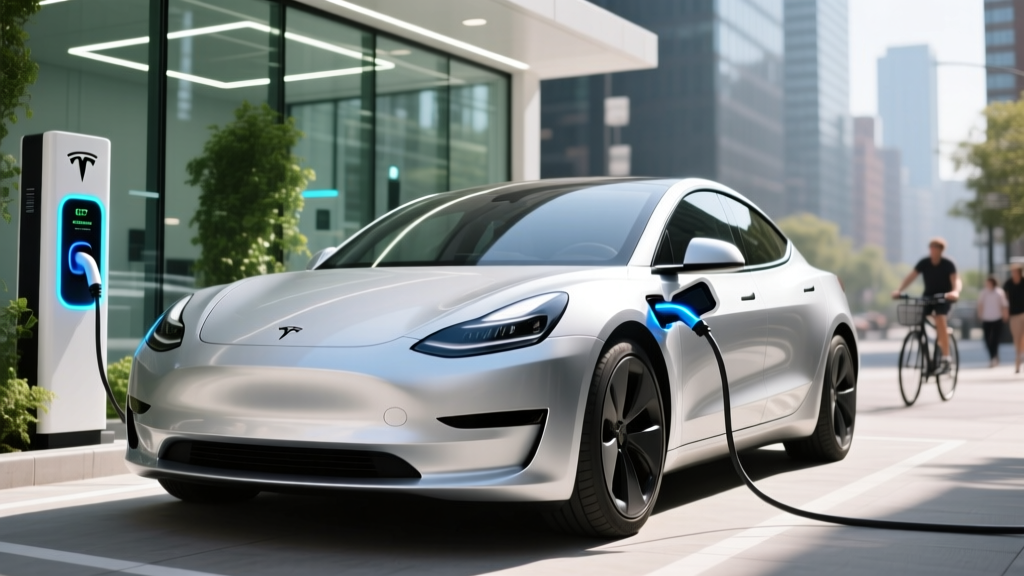
Charging is where the Model Y's maturity as a platform shows. Tesla's V3 and V4 Supercharger network remains the most reliable public DC fast-charging ecosystem in North America, and the 2026 Model Y takes full advantage.
| Charging Level | Power | Speed / Time |
|---|---|---|
| DC Fast Charge (Supercharger V3/V4) | 250 kW peak | 10–80% in ~25 min; ~175 mi added in 15 min |
| DC Fast Charge (CCS adapter on non-Tesla networks) | Up to 150–170 kW typical | 10–80% in ~35 min (varies by station) |
| Level 2 (Tesla Wall Connector, 48A) | 11.5 kW | ~44 miles of range per hour; full charge in ~8 hrs |
| Level 2 (standard 240V/32A outlet or mobile connector) | 7.7 kW | ~30 miles of range per hour |
| Level 1 (120V household) | ~1.4 kW | ~4–5 miles per hour (overnight top-up only) |
Charging curve reality check: The 250 kW peak is not sustained across the entire session. The Model Y holds peak rate between roughly 10–30% State of Charge, then tapers progressively. From 50–80%, expect rates closer to 80–120 kW. This is standard behavior for NMC packs with active thermal management, but it's why we quote 10–80% time rather than peak kW alone.
For home charging, Tesla's Wall Connector at 48 amps on a 60A circuit delivers 11.5 kW — enough to fully replenish the 78 kWh pack overnight. Installation costs vary widely: expect $500–$1,500 if your electrical panel has capacity, or $2,000–$4,000 if a panel upgrade to 200A service is needed. We recommend getting quotes from licensed electricians familiar with EV circuit requirements.
Performance & Driving Dynamics
The dual-motor AWD powertrain produces 384 horsepower combined and launches the 7-seat Model Y to 60 mph in 4.8 seconds. That's brisk for a family crossover carrying the weight penalty of a third row and is noticeably quicker than most gas-powered 3-row competitors in this price bracket.
The Juniper update brought revised suspension tuning — firmer damping and improved sound insulation — which addresses the most common complaints about pre-2025 Model Y ride quality. The steering remains quick and precise, and the low center of gravity (battery pack under the floor) keeps body roll well-controlled for a vehicle of this height.
Towing capacity is rated at 3,500 pounds with the factory tow package, adequate for a small trailer or pair of dirt bikes but not enough for most boat or camper applications. Note that towing reduces range by 40–55% depending on trailer weight and aerodynamics.
Third-Row Practicality: Space, Cargo & Daily Use
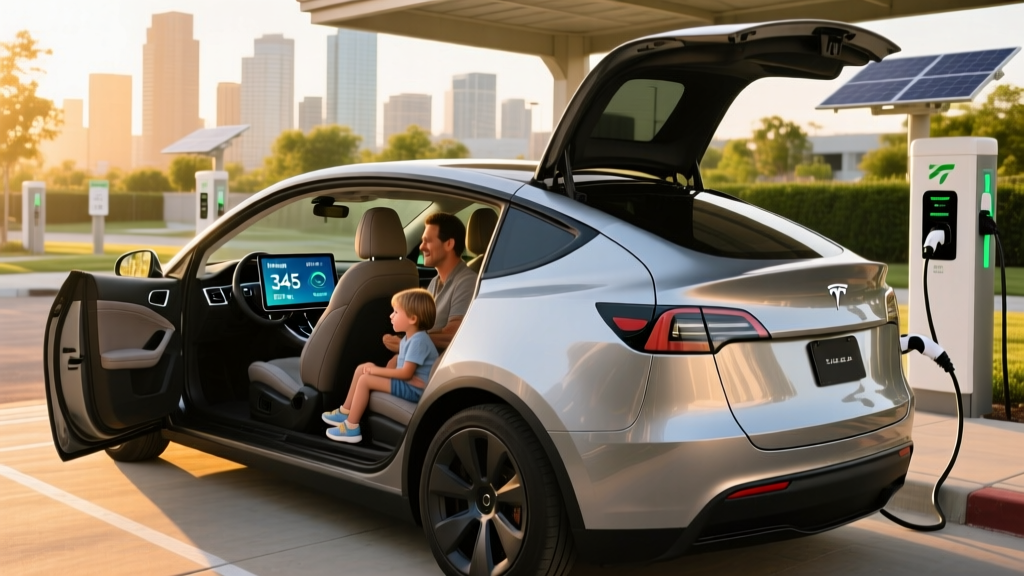
This is the crux of the 7-seat decision. Let's be direct: the Model Y's third row is a compact third row. It was not designed from the ground up as a 3-row vehicle (that distinction belongs to the larger Tesla Model X or the Kia EV9), and the packaging shows.
Third-row legroom: Approximately 26.5 inches — sufficient for children in boosters or smaller adults on trips under 30 minutes. Taller passengers will find knees pressed into the second-row seatbacks.
Cargo with all 7 seats up: Roughly 12 cubic feet behind the third row. This accommodates a few grocery bags or a compact stroller, but a full week's groceries for a family of six will require creative stacking or a roof box.
Cargo with third row folded (5-seat mode): 30 cubic feet — generous for the class and the configuration most 7-seat buyers will use 80% of the time.
Maximum cargo (both rear rows folded): 72 cubic feet, competitive with midsize gas crossovers.
The second row slides and reclines, which helps when the third row is unoccupied and you want to prioritize second-row comfort. ISOFIX/LATCH anchors are present on the second-row outboard seats; the third row does not have LATCH anchors, limiting car-seat flexibility.
Pricing, Tax Credits & Ownership Cost
The 2026 Model Y Long Range AWD starts at $49,990 in 5-seat configuration. The 7-seat option adds $2,500, bringing the base to $52,490 including destination. Our test configuration — with Midnight Cherry Red paint ($1,500), 20" Helix wheels ($2,000), and Enhanced Autopilot ($6,000) — totaled $61,990.
| Item | Amount |
|---|---|
| Base MSRP (LR AWD + 7-seat) | $52,490 |
| Federal §30D Tax Credit (if eligible) | Up to $7,500 |
| Effective Price After Max Credit | ~$44,990 |
| Estimated 5-Year Charging Cost (15k mi/yr) | $3,500–$5,200 |
| Estimated 5-Year Insurance | $9,000–$13,000 |
Federal tax credit eligibility (§30D): As of 2026, the Model Y qualifies for up to $7,500 under the IRS Clean Vehicle Credit, but eligibility depends on several factors per irs.gov:
- MSRP cap: SUVs must be under $80,000 — the Model Y clears this easily.
- Buyer income cap: AGI must not exceed $150,000 (single), $225,000 (head of household), or $300,000 (joint).
- Battery sourcing: Critical minerals and battery components must meet phased percentage thresholds from US or free-trade-agreement partners. Tesla's supply chain has largely complied through 2025–2026, but the exact credit amount ($3,750 vs $7,500) can vary by production batch. Confirm current eligibility on the IRS qualified vehicle list before purchasing.
- Point-of-sale transfer: As of 2024+, the credit can be transferred to the dealer at purchase, reducing your out-of-pocket cost immediately rather than waiting for tax filing.
The battery and drive unit warranty covers 8 years / 120,000 miles with a minimum 70% capacity retention threshold. This is competitive with Hyundai/Kia's 10-year/100,000-mile EV battery warranty, though Tesla's mileage limit is higher.
Tech, Driver Assistance & Notable Drawbacks
The Juniper interior overhaul brought a ventilated front seat upgrade, ambient lighting, rear-seat touchscreen, and a significantly quieter cabin. The 15.4-inch center display runs Tesla's latest software with wireless phone mirroring, integrated navigation with real-time Supercharger routing, and over-the-air updates.
Autopilot & FSD (Supervised): Standard Autopilot includes adaptive cruise control and lane centering. The optional Full Self-Driving (Supervised) package ($6,000 one-time or $99/month) adds automatic lane changes, traffic-light recognition, and city-street navigation. However, it is critical to understand that FSD is an SAE Level 2 driver-assistance system — the driver must remain fully engaged, hands on or near the wheel, and eyes on the road at all times. It is not autonomous driving.
SAE Automation Level: Level 2 (Partial Automation)
Tesla Autopilot and FSD (Supervised) are Level 2 systems. The vehicle can manage steering, acceleration, and braking in many conditions, but the human driver is responsible for monitoring the environment and must be prepared to intervene instantly. This is fundamentally different from Level 4 robotaxi services like Waymo, which operate without a human driver in geofenced areas.
Notable drawbacks:
- No physical buttons for climate or mirrors — all adjustments route through the touchscreen, which frustrates some drivers.
- Third-row access requires folding and sliding the second row, which is a multi-step process compared to minivans.
- Rear visibility with all seats up is limited; the camera-based mirror option helps but is not standard.
- Insurance costs run 15–25% higher than equivalent gas crossovers in most states, per industry data.
Pros
- Best-in-class Supercharger network access (17,000+ stalls in North America)
- 320-mile EPA range is competitive for a 3-row EV
- Strong 0–60 performance for a family hauler
- Low cost per mile when charging at home
- Over-the-air updates add features post-purchase
- Eligible for up to $7,500 federal credit (subject to rules)
Cons
- Third row is tight — children or short-trip adults only
- Cargo space with 7 seats up is limited (~12 cu ft)
- No LATCH anchors in third row for car seats
- All-screen interface is polarizing
- Insurance premiums above segment average
- FSD is expensive and still Level 2, not autonomous
How It Compares: Model Y 7-Seat vs. the Competition
The 7-seat Model Y occupies a narrow niche. Here's how it stacks up against the most relevant 3-row EV alternatives:
Kia EV9 (3-row, from ~$54,900): Larger vehicle with a genuinely usable third row (32" legroom) and more cargo space. EPA range of 270–304 miles depending on trim. Slower DC charging (peak ~210 kW). Eligible for the federal credit. Better choice if third-row comfort is your top priority.
Hyundai Ioniq 9 (3-row, from ~$53,000): Similar to EV9 on the same E-GMP platform. Slightly more upscale interior. Range and charging comparable to EV9. Also credit-eligible.
Tesla Model X (3-row standard, from ~$79,990): Genuinely spacious third row and falcon-wing doors, but starts nearly $30,000 higher. The Model X exists in a different price universe and does not qualify for the federal credit (above MSRP cap for most buyers due to options).
The verdict: If you need three rows occasionally — for school carpools, visiting grandparents, or weekend outings with friends' kids — the Model Y 7-seat offers the best combination of range, charging infrastructure, and price. If you need three rows daily with adult passengers, the EV9 or Ioniq 9 are more comfortable choices at a small range and charging-speed trade-off.
Who Should Buy the Model Y 7-Seat?
Choose the Model Y 7-seat if:
- You primarily need 5 seats but want the flexibility of 2 extra for carpools or occasional passengers.
- You value access to Tesla's Supercharger network for road trips.
- Your daily commute is under 80 miles round-trip and you can charge at home.
- You want strong performance and tech in a midsize footprint.
Look elsewhere if:
- You regularly carry 6–7 passengers and need genuine adult-sized third-row space.
- You need maximum cargo volume with all seats occupied (consider the EV9 or a plug-in hybrid minivan).
- You lack access to home charging and your area has limited public DC infrastructure.
Frequently Asked Questions
What is the real-world range of the Model Y 7-seat?
The EPA rates it at 320 miles. In real-world highway driving at 70–80 mph, expect 265–285 miles. In cold weather (below freezing), plan for 220–260 miles. City and suburban driving with regenerative braking can approach 300 miles.
How fast does the Model Y 7-seat charge?
On a Tesla V3/V4 Supercharger, it peaks at 250 kW and charges from 10–80% in approximately 25 minutes. On a home Level 2 Wall Connector (48A/11.5 kW), a full charge takes about 8 hours, adding roughly 44 miles per hour of charging.
Does the Model Y 7-seat qualify for the $7,500 federal tax credit?
It can, subject to IRS §30D rules. The buyer must meet income caps ($300,000 joint / $150,000 single), the vehicle MSRP must be under $80,000 (it is), and battery sourcing requirements must be met for the specific production batch. The credit can now be transferred at point of sale. Always verify current eligibility on the IRS qualified vehicles list before purchasing.
Is the Model Y 7-seat worth it vs. the Kia EV9?
It depends on your third-row usage. The Model Y offers superior range (320 vs ~280 miles), faster charging, and Supercharger access at a slightly lower price. The EV9 offers a far more usable third row and more cargo space. For occasional 7-passenger needs, the Model Y wins. For daily full-load use, the EV9 is the better vehicle.
What are the biggest pros and cons?
Pros: 320-mile range, 250 kW fast charging, Supercharger network, strong performance, eligible for tax credit, OTA updates. Cons: Tight third row, limited cargo with all seats up, screen-only controls, higher insurance costs, FSD is Level 2 (not autonomous).
How long will the Model Y battery last?
Tesla warranties the NMC battery for 8 years / 120,000 miles with a minimum 70% capacity retention. Real-world data from high-mileage Tesla owners suggests NMC packs retain 85–90% capacity at 100,000 miles when charged primarily to 80% and avoiding frequent 100% sessions. Full battery replacement outside of warranty currently costs approximately $12,000–$16,000 depending on service center.