Quick Answer: Does Jeep Make an Electric Vehicle?
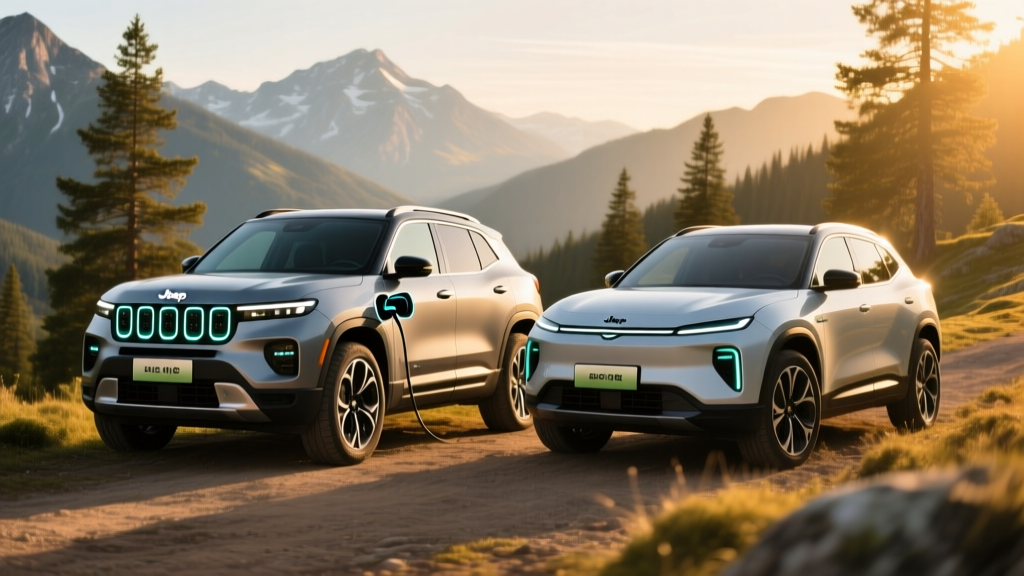
Yes. As of the 2026 model year, Jeep offers two fully electric vehicles (BEVs) in the U.S.: the Wagoneer S (a performance-oriented midsize SUV with an EPA-estimated 300+ miles of range) and the Jeep Recon (a boxy, off-road-focused midsize SUV). Both ride on Stellantis' STLA Large platform with standard dual-motor all-wheel drive. Jeep also sells several 4xe plug-in hybrids (Wrangler 4xe, Grand Cherokee 4xe) that offer 25–32 miles of electric-only driving before the gas engine engages. If you want zero tailpipe emissions, the Wagoneer S or Recon is your answer. If you want electric commuting with gas-powered road-trip flexibility, the 4xe PHEVs are worth a close look.
Jeep's Full Electrified Lineup for 2026
Jeep's path to electrification has been gradual, and the brand's lineup now spans fully electric SUVs, plug-in hybrids, and conventional gas models. Here's how the electrified options stack up:
| Model | Type | EPA Range (EV) | Battery | HP | 0–60 mph | Base MSRP |
|---|---|---|---|---|---|---|
| Wagoneer S | BEV | ~300 mi | ~100 kWh (NMC) | 600 hp (Launch Ed.) | ~3.4 sec | ~$65,000 |
| Recon | BEV | ~290 mi (est.) | ~100 kWh (NMC) | ~400–600 hp | ~4.5 sec (est.) | ~$55,000 (est.) |
| Wrangler 4xe | PHEV | 25 mi EV-only | 17.3 kWh (NMC) | 375 hp combined | ~6.0 sec | ~$52,000 |
| Grand Cherokee 4xe | PHEV | 26 mi EV-only | 17.3 kWh (NMC) | 375 hp combined | ~6.3 sec | ~$55,000 |
The Wagoneer S launched as a 2025 model and carries into 2026 with minor trim adjustments. The Recon began deliveries in late 2025 and is now available at dealerships in limited supply. The Wrangler 4xe and Grand Cherokee 4xe are established PHEVs with years of real-world ownership data behind them. For authoritative EPA figures, check the official fueleconomy.gov database as model-year certifications finalize.
Wagoneer S: Jeep's Performance EV Flagship
The Wagoneer S is the first ground-up BEV Jeep has sold in North America. It's a sleek, street-oriented SUV that trades the brand's traditional boxy design for aerodynamic efficiency and straight-line speed. The Launch Edition produces 600 horsepower and 617 lb-ft of torque from its dual-motor setup, making it one of the quickest SUVs in its class.
Range, Charging, and Efficiency
The Wagoneer S carries approximately 100 kWh of usable battery capacity using NMC (nickel-manganese-cobalt) chemistry. The EPA-estimated range lands around 300 miles, though real-world results vary:
EPA Estimate: ~300 miles
Real-World Highway (70–75 mph): ~240–265 miles
Cold Weather (below 30°F): ~210–240 miles
Combined Mixed Driving: ~260–285 miles
Expect a 15–25% reduction from the EPA sticker during sustained highway driving, and up to 30% in freezing temperatures without preconditioning. The heat pump helps, but physics always wins in deep cold.
On a DC fast charger, the Wagoneer S peaks at approximately 200 kW. In practice, you'll see a 10–80% charge in roughly 23–28 minutes, with the charge curve tapering significantly above 80% to protect battery health. On a Level 2 home charger (48 amps / 11.5 kW), a full charge takes about 9–10 hours.
Pricing and Tax Credits
The 2026 Wagoneer S starts around $65,000 for the base trim, with the Launch Edition climbing to roughly $72,000 before destination. Federal tax credit eligibility under IRS §30D depends on several factors:
- MSRP cap: SUVs must be under $80,000 — the Wagoneer S qualifies.
- Buyer income cap: AGI must not exceed $150,000 (single) / $300,000 (joint).
- Battery sourcing: Critical minerals and battery components must meet phased-in domestic/free-trade requirements. Stellantis has worked to qualify, but verify current-year eligibility on the IRS clean vehicle list before purchasing.
- Point-of-sale transfer: You can apply the credit at the dealer to reduce your out-of-pocket cost, if eligible.
Jeep Recon: The Off-Road EV
Where the Wagoneer S targets the street-performance crowd, the Recon is built for buyers who want genuine off-road capability without a gas engine. It features removable doors, a power-folding soft top option, Selec-Terrain traction management, and front/rear electronic locking differentials. It's the spiritual EV successor to the Wrangler, though it rides on a unibody platform rather than a body-on-frame chassis.
What We Know So Far
The Recon uses the same STLA Large platform and approximately 100 kWh battery as the Wagoneer S, but its boxier shape and heavier off-road hardware reduce efficiency. Expect an EPA range around 290 miles, with real-world highway driving yielding roughly 230–255 miles. DC fast charging mirrors the Wagoneer S at approximately 200 kW peak, with 10–80% in about 25–30 minutes.
Ground clearance, approach/departure angles, and water fording specs position the Recon as a credible trail vehicle, though the added weight of the battery pack (~5,500 lbs curb weight) means it will never feel as nimble as a short-wheelbase Wrangler on tight technical trails. The instant torque from dual electric motors, however, is excellent for low-speed rock crawling.
4xe Plug-In Hybrids: The Bridge Option
If you're not ready for a fully electric Jeep, the Wrangler 4xe and Grand Cherokee 4xe offer a practical middle ground. Both pair a 2.0L turbocharged four-cylinder engine with an electric motor and a 17.3 kWh battery pack, delivering 25–32 miles of electric-only range at low speeds.
| Metric | Wrangler 4xe (PHEV) | Wrangler Gas (3.6L V6) | Wagoneer S (BEV) |
|---|---|---|---|
| EPA Combined | 49 MPGe / 20 MPG gas-only | ~20 MPG | ~95 MPGe |
| Annual Fuel/Energy Cost* | ~$1,800 | ~$2,900 | ~$750 |
| EV-Only Commute Range | 25 miles | 0 | ~300 miles |
| Road-Trip Range (total) | ~370 miles | ~400 miles | ~300 miles (recharge needed) |
| Maintenance Cost (5-yr est.) | ~$3,500 | ~$4,200 | ~$1,800 |
*Based on 15,000 miles/year, $3.50/gal gas, $0.14/kWh electricity. Your costs vary by local rates and driving mix.
The 4xe models make sense if you have a short commute (under 25 miles round-trip) with home charging, but also take regular road trips into areas with sparse charging infrastructure. You get EV-like daily driving with gas-engine fallback. The trade-off is that you're maintaining two powertrains — the engine still needs oil changes, and the battery adds weight that hurts gas-only fuel economy once the electric range is depleted.
Real Costs of Owning a Jeep EV
The sticker price is only the beginning. Here's a realistic five-year ownership cost breakdown comparing the Wagoneer S to a gas-powered midsize SUV in the same price bracket:
| Cost Category (5 Years) | Wagoneer S (BEV) | Gas SUV Baseline (~$55K) |
|---|---|---|
| Purchase Price (after est. credit) | ~$57,500 | ~$55,000 |
| Energy/Fuel | ~$3,750 | ~$14,500 |
| Maintenance | ~$1,800 | ~$4,200 |
| Insurance | ~$9,500 | ~$7,800 |
| Depreciation (est.) | ~$22,000 | ~$18,000 |
| Total 5-Year Cost | ~$94,550 | ~$99,500 |
The EV saves roughly $5,000 over five years, primarily through fuel and maintenance. However, EV insurance premiums run 15–25% higher on average, and depreciation on luxury EVs remains steeper than established gas models. If you don't qualify for the federal credit, the cost advantage narrows significantly.
Home Charging: The Make-or-Break Factor
Owning a Jeep EV is dramatically more convenient and affordable with home Level 2 charging. Here's what installation typically costs:
| Component | Cost Range |
|---|---|
| Level 2 charger (48A, hardwired) | $500–$800 |
| Electrician labor (standard install) | $800–$2,000 |
| Electrical panel upgrade (if needed, 200A) | $1,500–$3,500 |
| Permit & inspection | $100–$400 |
| Total (no panel upgrade) | $1,400–$3,200 |
| Total (with panel upgrade) | $2,900–$6,700 |
If you live in an apartment or lack access to a dedicated parking spot with electrical access, public DC fast charging will cost roughly 2–3× more per mile than home charging and adds inconvenience to your routine. Be honest about your charging situation before committing to a BEV.
Common Misconceptions About Jeep EVs
| Myth | Fact |
|---|---|
| "Jeep doesn't make real EVs yet." | The Wagoneer S and Recon are production vehicles on sale now, built on Stellantis' dedicated STLA Large EV platform — not converted gas cars. |
| "An electric Jeep can't off-road." | The Recon includes locking differentials, Selec-Terrain modes, and high ground clearance. Instant electric torque is actually advantageous for rock crawling. The trade-off is weight and range consumption on technical trails. |
| "The $7,500 tax credit applies to everyone." | Eligibility depends on buyer income (AGI caps), MSRP limits, and battery component/critical mineral sourcing. Check the IRS clean vehicle credit page and confirm with your tax professional before assuming you qualify. |
| "EV batteries need replacing every few years." | Jeep's battery warranty covers 8 years/100,000 miles with a minimum 70% capacity retention. NMC batteries in modern thermal-managed packs typically degrade 10–15% over the first 100,000 miles, not a catastrophic failure. |
| "Charging takes hours on road trips." | At a 200 kW DC fast charger, the Wagoneer S adds roughly 150 miles of range in 15 minutes. Plan stops around rest breaks and you'll barely notice. |
Decision Framework: Which Jeep Electrified Vehicle Is Right for You?
Choose the Wagoneer S if:
- You have home Level 2 charging (or can install it)
- Your daily driving is under 200 miles round-trip
- You want performance (0–60 in ~3.4 sec) with zero tailpipe emissions
- You qualify for the federal tax credit (check income and sourcing rules)
- You primarily drive on pavement and want a premium, tech-forward SUV
Choose the Recon if:
- You want EV ownership but need genuine off-road capability
- You have home charging and your daily driving is under 180 miles
- You value removable doors and open-air driving with electric power
- You're willing to accept slightly less range for trail-ready hardware
Choose a 4xe PHEV (Wrangler or Grand Cherokee) if:
- Your commute is under 25 miles and you can charge at home overnight
- You regularly drive to areas with limited charging infrastructure
- You want EV-like daily driving with gas-engine road-trip security
- You're not ready to rely entirely on public charging networks
- You want proven off-road capability (Wrangler) with a modest electric assist
Stick with a gas Jeep for now if:
- You have no access to home or workplace charging
- You regularly tow heavy loads (trailers over 3,500 lbs) in remote areas
- Your budget is under $45,000 and you can't wait for more affordable EVs
- You live in an area with extreme cold and no garage (range loss compounds)
Frequently Asked Questions
Does Jeep make a fully electric Wrangler?
Not yet. The Wrangler is available as the 4xe plug-in hybrid (25 miles of electric-only range), but a fully electric Wrangler has not been announced for the U.S. market. The Recon is the closest EV equivalent, offering off-road capability in a slightly larger package.
What is the real-world range of the Jeep Wagoneer S?
The EPA estimates approximately 300 miles, but expect 240–265 miles on highway road trips at 70–75 mph, and as low as 210–240 miles in freezing weather. Preconditioning the battery before fast charging and using seat heaters instead of cabin heat can recover some of that loss.
Can I take a Jeep EV off-road?
Yes. The Recon is designed for trail use with locking differentials, Selec-Terrain modes, and robust underbody protection. However, off-roading is energy-intensive — expect range to drop 30–50% on technical trails. Plan your route with charging in mind for extended trail days.
How long does it take to charge a Jeep EV at home?
On a Level 2 home charger (11.5 kW / 48 amps), the Wagoneer S and Recon take approximately 9–10 hours for a full 0–100% charge. Most owners plug in overnight and wake up to a full battery every morning. On a standard 120V outlet (Level 1), expect roughly 3–4 miles of range per hour of charging — adequate only for very low daily mileage.
Do Jeep EVs qualify for the federal tax credit?
Eligibility under IRS §30D depends on the specific model year, your adjusted gross income, the vehicle's MSRP, and battery component/critical mineral sourcing. The Wagoneer S is under the $80,000 SUV MSRP cap, but you must verify current-year sourcing compliance on the IRS website and confirm your income eligibility. Consult a tax professional for your specific situation.
What's the battery warranty on Jeep EVs?
Jeep covers the high-voltage battery for 8 years or 100,000 miles (whichever comes first), guaranteeing at least 70% capacity retention. This is the industry-standard warranty mandated for emissions-related components, and it provides reasonable protection against premature degradation.