Quick Answer: There Is No Electric Challenger for 2025
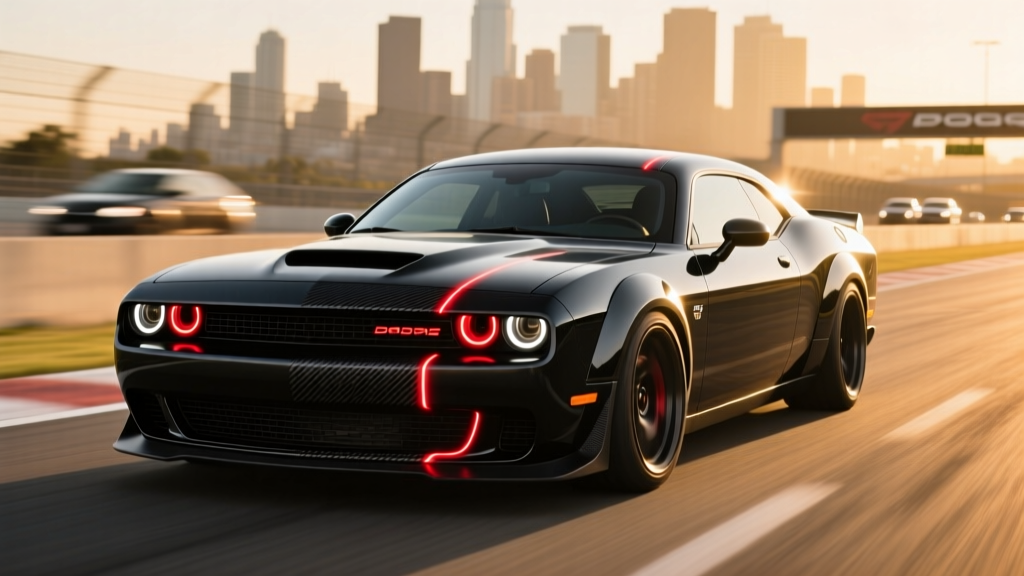
Dodge discontinued the Challenger after the 2023 model year. The brand's electric muscle car future now lives in the Dodge Charger Daytona — available as both a battery-electric vehicle (BEV) and, for 2025, with a twin-turbo inline-six "Hurricane" engine. The originally announced all-electric Charger Daytona EV has been pushed back, with Dodge parent company Stellantis delaying its rollout. If you were waiting for an electric Challenger, the Charger Daytona EV is the spiritual successor — but its timeline has shifted, and gas-powered Charger models have filled the gap for 2025.
What Happened to Dodge's Electric Muscle Car Plans?
When Dodge unveiled the Charger Daytona SRT Banshee concept in August 2022, it promised an all-electric muscle car wearing the Charger name — effectively the spiritual replacement for both the Charger sedan and the Challenger coupe. The concept generated enormous buzz: an 800-volt architecture, a target 0-60 mph time in the low-2-second range for the top trim, and a claimed range exceeding 300 miles.
But the plan evolved. In March 2024, Dodge announced that the next-generation Charger would launch first with the Hurricane 3.0L twin-turbo inline-six (producing up to 550 hp in Scat Pack form), with the battery-electric variant following later. By early 2025, Stellantis confirmed further delays to its EV timeline, citing shifting market demand and the need to balance investment across hybrid, ICE, and electric platforms.
As of early 2026, the Charger Daytona BEV has not entered production. Dodge has not confirmed a firm on-sale date, though industry reports suggest a possible late-2026 or 2027 arrival with revised specifications.
The Charger Daytona EV: Announced Specs vs. Reality
Here's what Dodge has shared about the electric Charger Daytona — keeping in mind these are preliminary, announced specifications that may change before production:
| Specification | R/T Trim (Announced) | Scat Pack (Announced) |
|---|---|---|
| Powertrain | Dual-motor AWD BEV | Dual-motor AWD BEV |
| Horsepower | ~496 hp | ~670 hp |
| 0-60 mph (target) | ~4.7 seconds | ~3.3 seconds |
| Architecture | 800V | 800V |
| Battery Capacity | Not confirmed | Not confirmed |
| EPA Range (target) | ~317 miles (preliminary) | ~260 miles (preliminary) |
| DC Fast Charge (peak) | Not confirmed | Not confirmed |
| Estimated Base MSRP | ~$50,000 | ~$60,000+ |
| Availability | TBD — delayed | TBD — delayed |
Critical context: These figures were announced in 2024 and have not been updated. The 800V architecture suggests strong DC fast-charging potential — likely 200+ kW peak if similar to the Hyundai/Kia E-GMP platform — but Dodge has not published charge-curve data, battery chemistry (NMC vs. LFP), or usable kWh capacity. Until production vehicles are EPA-certified, treat every number above as an estimate.
What's Actually Available Now: The 2025 Charger Daytona Gas Models
Dodge pivoted to offer the new Charger Daytona with the Hurricane twin-turbo I-6 first. The 2025 Charger Daytona R/T produces 420 hp, while the Scat Pack variant delivers 550 hp. These are rear-wheel-drive (with AWD optional) and are not electrified — no hybrid, no plug-in, no battery assist.
| Metric | 2025 Charger Daytona Scat Pack (Gas) | Charger Daytona Scat Pack EV (Announced) |
|---|---|---|
| Horsepower | 550 hp | ~670 hp |
| 0-60 mph | ~3.9 sec | ~3.3 sec (target) |
| EPA Fuel Economy / MPGe | ~19 mpg combined (est.) | Not rated |
| "Fuel" Cost per Mile | ~$0.18/mi (at $3.40/gal) | ~$0.04-0.06/mi (home L2) |
| Range | ~370 miles (18.5-gal tank) | ~260 miles (preliminary) |
| Refuel/Recharge Time | ~5 minutes | Not confirmed (est. 20-30 min 10-80%) |
| Federal Tax Credit (§30D) | $0 | Up to $7,500 (eligibility TBD) |
| MSRP (approx.) | ~$55,000 | ~$60,000+ |
The gas Charger Daytona is a legitimate muscle car available today. The EV version promises more power and lower running costs — but doesn't exist yet, and its range target (260 miles for the Scat Pack) is modest compared to competitors like the Tesla Model S (EPA 402 miles) or Lucid Air (EPA 516 miles).
Real Costs: EV Muscle Car vs. Gas Muscle Car Ownership
If the Charger Daytona EV eventually arrives, here's how ownership economics compare over five years and 75,000 miles of driving, using the Scat Pack variants as a baseline:
| Cost Category | Gas Scat Pack (5-yr) | EV Scat Pack (5-yr, estimated) |
|---|---|---|
| Purchase Price (MSRP) | $55,000 | $60,000 |
| Federal Tax Credit (§30D) | $0 | Up to $7,500* |
| Effective Purchase | $55,000 | $52,500 |
| Fuel/Energy (75k mi) | $13,500 (19 mpg, $3.40/gal) | $3,750 (3.0 mi/kWh, $0.15/kWh) |
| Maintenance (5 yr) | $3,200 (oil, brakes, belts) | $1,200 (tires, cabin filter, fluid) |
| Insurance (5 yr avg.) | $12,500 | $14,000 (EV premium) |
| Home Charger Install | $0 | $1,200-$2,500 (Level 2, 48A) |
| 5-Year Total | $84,200 | $75,150 |
*The §30D federal tax credit is subject to IRS eligibility rules including buyer income caps ($150K single / $300K joint), MSRP limits ($55K for sedans, $80K for SUVs/trucks), and battery critical-mineral and component sourcing requirements. Eligibility for the Charger Daytona EV is unconfirmed until the vehicle is certified. Always consult a tax professional.
The EV path saves roughly $9,000 over five years — but only if you qualify for the full tax credit and charge primarily at home. Public DC fast charging at $0.40-$0.50/kWh would push energy costs closer to $7,500, narrowing the gap significantly.
Real-World Ownership: What First-Time EV Buyers Must Consider
If you're drawn to the idea of an electric muscle car, these practical factors matter more than peak horsepower claims:
Home Charging Access Is Non-Negotiable for Savings
The cost advantage above assumes a Level 2 home charger (240V, 48 amps / 11.5 kW) running overnight at residential electricity rates. Without home charging — if you're relying on apartment living, street parking, or public chargers — your energy cost per mile roughly triples, and the convenience advantage disappears. A Level 2 charger adds roughly 30-40 miles of range per hour of charging; a full charge on a ~100 kWh battery takes 8-10 hours overnight.
Cold Weather Cuts Range 20-30%
Battery chemistry doesn't change with marketing. In sustained sub-freezing temperatures, expect 20-30% range loss due to increased internal resistance and cabin heating demands. The Charger Daytona EV's preliminary 260-mile Scat Pack range could drop to ~180-210 miles in a Midwest or Northeast winter. A heat pump (unconfirmed for the Daytona) would mitigate this somewhat but not eliminate it.
Performance EVs Eat Tires
Heavy EVs with instant torque wear through tires faster than comparable gas cars. Budget $1,200-$1,800 for a set of performance summer or all-season tires every 20,000-30,000 miles. This is the single largest maintenance cost EV owners consistently underestimate.
Insurance Premiums Run 10-15% Higher
EVs cost more to insure due to higher repair costs (specialized parts, battery-safe procedures, fewer qualified body shops). Get quotes before committing — the $1,500/year insurance premium delta in our table above is a conservative estimate for a performance EV.
Alternatives: Electric Muscle and Performance Cars You Can Buy Today
You don't need to wait for the Charger Daytona EV. Here's what the performance EV market looks like right now:
| Vehicle | EPA Range | 0-60 mph | HP | Base MSRP | §30D Credit |
|---|---|---|---|---|---|
| Tesla Model S Plaid | 359 mi | 1.99 sec | 1,020 | $89,990 | Not eligible (MSRP cap) |
| Tesla Model 3 Performance | 315 mi | 2.9 sec | 510 | $54,990 | Eligibility varies |
| BMW i4 M50 | 270 mi | 3.7 sec | 536 | $69,700 | Not eligible (sourcing) |
| Hyundai Ioniq 5 N | 221 mi | 3.25 sec | 641 | $66,100 | Not eligible (sourcing) |
| Ford Mustang Mach-E GT | 280 mi | 3.5 sec | 480 | $59,995 | Eligibility varies |
| Lucid Air Pure | 419 mi | 3.4 sec | 430 | $69,900 | Not eligible (MSRP cap) |
None of these wear a Dodge badge, and none replicate the two-door coupe presence of the old Challenger. But they're available, EPA-certified, and in most cases deliver the kind of acceleration that would embarrass a Hellcat at a stoplight.
Decision Framework: Should You Wait or Buy Now?
If-Then Guide for Prospective Electric Muscle Car Buyers
- Wait for the Charger Daytona EV if: You specifically want a Dodge-branded, two-door-style electric muscle car, you're not in a rush to buy, you have reliable home charging, and you're comfortable with a 2027+ timeline and potential spec changes.
- Buy the 2025 Charger Daytona Scat Pack (gas) if: You want the new Dodge muscle car platform today, you drive under 12,000 miles/year (fuel costs stay manageable), you don't have home charging access, or you prefer the sound and simplicity of a gas powertrain.
- Buy a Tesla Model 3 Performance or Mustang Mach-E GT if: You want an electric performance car now, you value proven charging infrastructure (Supercharger network or BlueOval access), you want real EPA range data, and you want to lock in current §30D credit eligibility before rules tighten further.
- Buy a used 2023 Challenger SRT if: You want the actual Challenger experience — supercharged V8, two-door coupe, rumble — and you're okay with rising fuel and insurance costs on a discontinued model.
Common Misconceptions About the Electric Challenger
| Myth | Fact |
|---|---|
| "The electric Challenger is available to order now." | The Challenger ended after 2023. The Charger Daytona EV is announced but not in production. No EV Dodge muscle car is currently purchasable. |
| "The EV will get 500+ miles of range." | Dodge's announced targets are ~260-317 miles depending on trim. That's competitive but not class-leading. |
| "It'll qualify for the full $7,500 tax credit." | Eligibility depends on final battery sourcing, MSRP at launch, and your income. The sedan MSRP cap under §30D is $55,000 — and the Scat Pack EV is projected above that. It may only qualify if classified as a different vehicle type or if pricing comes in lower. |
| "Electric muscle cars can't sound good." | Dodge developed a "Fratzonic" exhaust system that generates synthesized engine-like sound through tuned chambers and speakers. Subjective, but it addresses the silence complaint — and you can turn it off. |
| "Charging an EV takes too long for road trips." | On an 800V architecture, a 10-80% charge could take 18-25 minutes at a 350 kW station. That's a rest stop, not a delay — but only if the station actually delivers its rated power, which remains inconsistent on non-Tesla networks. |
Frequently Asked Questions
Will Dodge ever make an electric Challenger?
Dodge has not announced an electric Challenger specifically. The brand's EV muscle car strategy centers on the Charger Daytona nameplate. Given that the Challenger was discontinued after 2023 and the Charger platform is the designated EV muscle car, a standalone electric Challenger is unlikely unless Dodge reverses course.
When will the Charger Daytona EV actually go on sale?
As of early 2026, Dodge has not confirmed a production date. The original timeline targeted late 2024, then shifted to 2025, and has since been further delayed. Industry analysts expect a possible late-2026 announcement with 2027 model-year availability, but this remains speculative.
Is the gas 2025 Charger Daytona a hybrid?
No. The 2025 Charger Daytona R/T and Scat Pack use the Hurricane 3.0L twin-turbo inline-six with no electrification — no mild-hybrid system, no plug-in capability. It is a conventional gas vehicle.
What's the best electric performance car under $60,000?
The Tesla Model 3 Performance ($54,990, 315 mi EPA, 2.9-sec 0-60) offers the best combination of range, acceleration, and charging infrastructure access in this price bracket. The Ford Mustang Mach-E GT ($59,995, 280 mi EPA) is the closest spiritual competitor to the muscle car ethos, though it's a crossover rather than a sedan or coupe.
Can I still buy a 2023 Dodge Challenger?
New 2023 Challengers are extremely scarce at dealerships, and Dodge is not producing more. The used market has inventory, but prices for SRT and Hellcat variants remain elevated due to collector interest in the final model year. Check NHTSA for safety ratings on any model year you're considering.