Quick Verdict: Is the Dodge Daytona EV Worth It?
Bottom line: The Dodge Daytona EV is an electric muscle coupe that prioritizes performance heritage over efficiency. With up to 670 horsepower, a 0-60 time around 3.3 seconds, and an EPA-estimated range of up to 318 miles (R/T trim), it targets enthusiasts who want muscle-car presence without tailpipe emissions. However, its heavy curb weight, limited rear-seat practicality, and premium pricing (starting near $51,590 before incentives) make it a niche choice. If you want a practical daily EV commuter, look at the Hyundai Ioniq 5 or Tesla Model 3. If you want an electric muscle car with real presence and don't mind the trade-offs, the Daytona delivers.
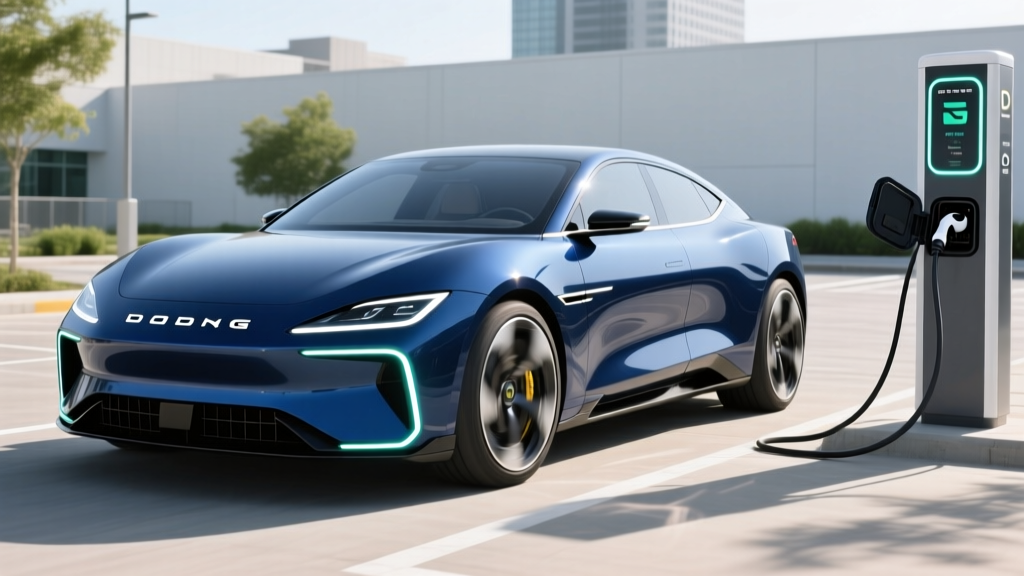
The 2025 Dodge Charger Daytona EV (the production name; "Daytona" refers to the EV variant of the Charger platform) represents Stellantis's attempt to electrify American muscle. Available in R/T and Scat Pack trims, it rides on the STLA Large platform with an 800-volt architecture enabling competitive DC fast-charging speeds. Here's everything a prospective buyer needs to know — real numbers, real costs, and real limitations.
Range, Battery, and Charging: The Numbers That Matter
| Specification | Daytona R/T | Daytona Scat Pack |
|---|---|---|
| Battery Capacity (usable) | ~93.9 kWh (NMC) | ~93.9 kWh (NMC) |
| EPA-Estimated Range | ~318 miles | ~260 miles |
| Real-World Highway Range (est.) | ~250-275 miles | ~200-220 miles |
| Cold-Weather Range (20°F, est.) | ~220-250 miles | ~175-195 miles |
| Peak DC Fast Charge Rate | Up to ~175 kW | Up to ~175 kW |
| 10-80% DC Fast Charge Time | ~27 minutes | ~27 minutes |
| Level 2 Home Charging (kW) | ~11 kW | ~11 kW |
| Level 2 Full Charge Time | ~9 hours | ~9 hours |
| Charging Port / Connector | CCS1 (NACS adapter available) | CCS1 (NACS adapter available) |
| Architecture | 800V | 800V |
Real-World Range Reality Check: The R/T's EPA-estimated 318 miles drops significantly under highway-speed driving (70+ mph) and in cold climates. Expect 250-275 miles on a road trip in moderate weather, and potentially as low as 220 miles in sub-freezing temperatures. The Scat Pack, with its more aggressive performance tuning and wider tires, sacrifices roughly 50-60 miles of range compared to the R/T. If your commute is under 40 miles round-trip and you can charge at home, either trim works fine. For frequent 300+ mile road trips, plan for at least one DC fast-charging stop.
The 800-volt architecture is a genuine advantage. While peak charging at 175 kW isn't class-leading (the Hyundai Ioniq 5 peaks at 240 kW on its 800V system), it's competitive for a large, heavy coupe. The charge curve tapers noticeably above 80% state of charge (SoC) — this is normal for NMC battery chemistry to protect long-term cell health. Always precondition the battery via the vehicle's navigation system before arriving at a DC fast charger; this warms the cells and enables peak charge rates.
Performance and Powertrain
| Metric | Daytona R/T | Daytona Scat Pack |
|---|---|---|
| Horsepower | 496 hp | 670 hp |
| Torque | 404 lb-ft | 627 lb-ft |
| 0-60 mph | ~4.7 seconds | ~3.3 seconds |
| Drivetrain | AWD (dual motor) | AWD (dual motor) |
| Curb Weight (est.) | ~5,800 lbs | ~5,900 lbs |
| Drive Modes | Auto, Sport, Track, Eco | Auto, Sport, Track, Eco, Drag |
| Frunk Capacity | ~1.7 cu ft | ~1.7 cu ft |
| Trunk Capacity | ~13.3 cu ft | ~13.3 cu ft |
The Scat Pack's 3.3-second 0-60 time puts it firmly in supercar territory, and the instant torque delivery of dual electric motors makes it feel even quicker in real-world roll-on acceleration. Dodge has included a "Fratzonic" exhaust sound system — a synthetic exhaust note pumped through exterior speakers. Opinions on this feature vary wildly; some buyers appreciate the drama, others find it gimmicky. Fortunately, it can be turned off.
The heavy curb weight (nearly 6,000 lbs) is a physics reality you can't escape. It affects tire wear, braking distances, and energy consumption. Expect to go through tires faster than a lighter EV, and budget accordingly.
Pricing, Tax Credits, and Total Cost of Ownership
| Cost Factor | Daytona R/T | Daytona Scat Pack |
|---|---|---|
| Base MSRP (2025) | ~$51,590 | ~$61,590 |
| Destination Charge | ~$1,895 | ~$1,895 |
| Federal §30D Tax Credit | Eligibility uncertain* | Eligibility uncertain* |
| Est. Annual Insurance | $2,400-$3,200 | $2,800-$3,800 |
| Annual Electricity (15k mi) | ~$550-$750 | ~$650-$900 |
| Annual Maintenance | ~$150-$300 | ~$150-$300 |
| Battery Warranty | 8 years / 100,000 miles | 8 years / 100,000 miles |
*Federal tax credit note: Under current IRS §30D rules, eligibility depends on MSRP caps ($55,000 for sedans/coupes), buyer income limits, and battery critical-mineral sourcing requirements. The Scat Pack's MSRP likely exceeds the cap. The R/T may qualify depending on trim options and sourcing compliance. Always verify at irs.gov and consult a tax professional before purchasing. Point-of-sale transfer is available if eligible, reducing your out-of-pocket at the dealer.
Daytona EV vs. Gas Muscle Car: 5-Year Cost Comparison
| Cost Category (5 Years) | Daytona R/T EV | Dodge Challenger R/T V8 (Gas) |
|---|---|---|
| Purchase Price (base) | $53,485 | $44,000 |
| Fuel / Electricity (75k mi) | $3,250 | $11,250 |
| Maintenance (5 years) | $1,100 | $4,500 |
| Insurance (5 years, avg) | $14,000 | $12,500 |
| Estimated Depreciation | $22,000 | $16,000 |
| 5-Year Total | ~$93,835 | ~$88,250 |
The EV saves significantly on fuel and maintenance — no oil changes, no transmission fluid, fewer moving parts. But the higher purchase price, steeper depreciation (EVs are still catching up to ICE resale value stability for muscle-car segments), and elevated insurance premiums eat into those savings. Over 5 years, the gas Challenger costs roughly $5,500 less. Extend to 8-10 years and the EV's lower running costs narrow the gap, but this isn't a pure economics play — it's an emotional purchase either way.
Home Charging and Ownership Practicalities
Before ordering a Daytona EV, confirm your home charging situation. This is the single most important ownership factor.
| Item | Estimated Cost |
|---|---|
| Level 2 Charger (40-48A hardwired) | $500 - $750 |
| Electrician Labor (240V/50A circuit) | $800 - $2,000 |
| Electrical Permit | $50 - $200 |
| Panel Upgrade (if needed, 100A → 200A) | $1,500 - $3,500 |
| Total Typical Install | $1,350 - $2,950 |
| Total with Panel Upgrade | $2,850 - $6,450 |
With an 11 kW onboard charger, the Daytona adds roughly 30-35 miles of range per hour of Level 2 charging. A full overnight charge (8-9 hours) easily replenishes the battery. If you lack home charging access — apartment dwellers, street parkers — public DC fast-charging will be your primary method. At current Electrify America and EVgo pricing (~$0.40-$0.55/kWh), a 10-80% session costs roughly $25-$35 and takes about 27 minutes. That's significantly more expensive than home charging and adds time to your routine. Verify public charger density in your area using PlugShare or the DOV EV charging locator.
Climate Considerations
If you live in a region with harsh winters (sustained temps below 30°F), expect 20-30% range loss due to battery thermal management demands and cabin heating. The Daytona's heat pump system helps, but physics wins. Preconditioning the cabin while still plugged in mitigates this. In hot climates (Arizona, Texas), battery thermal management also consumes energy, though the effect is less dramatic than cold weather — typically 5-10% range loss.
Common Misconceptions: Myth vs. Fact
| Myth | Fact |
|---|---|
| "The battery will need replacing in 5 years." | NMC batteries in modern EVs with active thermal management typically retain 85-90% capacity at 100,000 miles. Dodge covers the battery for 8 years/100,000 miles (minimum 70% capacity retention). Full replacement, if ever needed, runs $12,000-$18,000 out of warranty. |
| "It charges at 175 kW the whole time." | Peak 175 kW occurs only between roughly 10-35% SoC under ideal conditions. Above 80%, the rate tapers to ~50 kW or less. The 10-80% average is closer to 110-130 kW. This is standard for NMC chemistry. |
| "It's a true 4-seater." | The rear seats are tight for adults over 5'8". Legroom and headroom are coupe-constrained. It's a 2+2 in practice — fine for kids or occasional short-trip passengers. |
| "EVs have zero maintenance." | No oil changes or spark plugs, but tires wear faster due to weight and instant torque. Brake fluid, cabin air filters, wiper fluid, and coolant still need periodic service. Budget $150-$300/year. |
| "I'll get the full $7,500 tax credit." | §30D eligibility requires meeting MSRP caps, buyer income limits, and battery sourcing rules. Always verify current-year rules at irs.gov before committing. |
Decision Framework: Should You Buy the Daytona EV?
Choose the Dodge Daytona EV if:
- You want electric muscle-car performance (3.3s 0-60 in Scat Pack) and don't need a practical family hauler
- You have reliable home Level 2 charging access
- Your daily driving is under 80 miles round-trip, with occasional road trips under 250 miles between stops
- You value instant torque, AWD traction, and modern EV tech over traditional V8 sound and feel
- You accept higher insurance premiums and steeper near-term depreciation as the cost of early adoption in the electric muscle segment
Look elsewhere if:
- You need 300+ miles of reliable all-weather range without charging stops (consider the Tesla Model S or Lucid Air)
- You lack home charging and rely entirely on public infrastructure in an area with sparse DC fast chargers
- You prioritize total cost of ownership above all else (a Toyota Camry Hybrid or Tesla Model 3 will save you thousands)
- You need a genuine 4-5 seat daily driver with cargo flexibility (consider the Ford Mustang Mach-E or Hyundai Ioniq 5)
- The synthetic exhaust sound and aggressive styling don't appeal to you
Frequently Asked Questions
What is the real-world range of the Dodge Daytona EV?
The R/T trim is EPA-rated at approximately 318 miles, but real-world highway driving at 70+ mph yields 250-275 miles in moderate weather. In cold weather (below 30°F), expect 220-250 miles. The Scat Pack, with its performance tuning and wider tires, drops to roughly 200-220 miles highway.
How fast does the Dodge Daytona EV charge?
On a DC fast charger, it peaks at approximately 175 kW, achieving a 10-80% charge in about 27 minutes. On a Level 2 home charger at 11 kW, a full charge takes roughly 9 hours. The 800V architecture enables competitive charging speeds, though it doesn't match the 240 kW peak of the Ioniq 5 or 250 kW of Tesla's V3 Superchargers.
Does the Dodge Daytona EV qualify for the federal tax credit?
Eligibility under IRS §30D depends on multiple factors: the R/T's base MSRP falls under the $55,000 sedan/coupe cap, but added options may push it over. Buyer income limits ($150,000 single / $300,000 joint) and battery critical-mineral sourcing requirements also apply. The Scat Pack's MSRP likely exceeds the cap. Always verify current rules at irs.gov and consult a tax professional.
How does the Daytona EV compare to the Tesla Model 3 Performance?
The Model 3 Performance offers similar 0-60 times (~3.1 seconds), better EPA range (~341 miles), faster Supercharger access (250 kW peak), and a significantly lower starting price (~$54,990). The Daytona counters with more aggressive styling, the muscle-car identity, and Dodge's dealer network. If specs-per-dollar matter most, the Model 3 wins. If emotional design and brand heritage matter, the Daytona has no direct EV rival.
What does it cost to insure the Dodge Daytona EV?
Expect annual premiums of $2,400-$3,200 for the R/T and $2,800-$3,800 for the Scat Pack, depending on your age, location, driving record, and coverage levels. Performance EVs carry higher insurance costs due to repair complexity, parts pricing, and the vehicle's power output. Get quotes from multiple insurers before purchasing.
Is the Dodge Daytona EV a good first EV?
It can be, but it's not the most practical first-EV choice. Its heavy weight means faster tire wear, its range is moderate for the segment, and its insurance costs are above average. A first-time EV buyer prioritizing ease of ownership would be better served by a Tesla Model 3, Hyundai Ioniq 5, or Chevrolet Equinox EV. But if you're an enthusiast making the jump from a Challenger or Charger and you have home charging, the Daytona is a compelling emotional choice.
Sources: EPA fuel economy data via fueleconomy.gov, Dodge official specifications, IRS §30D clean vehicle credit guidelines at irs.gov. Pricing and specifications reflect 2025 model year data available as of publication. Verify all figures with your local dealer before purchasing.