Quick Answer: Is the 2026 Dodge Charger EV Worth Buying?
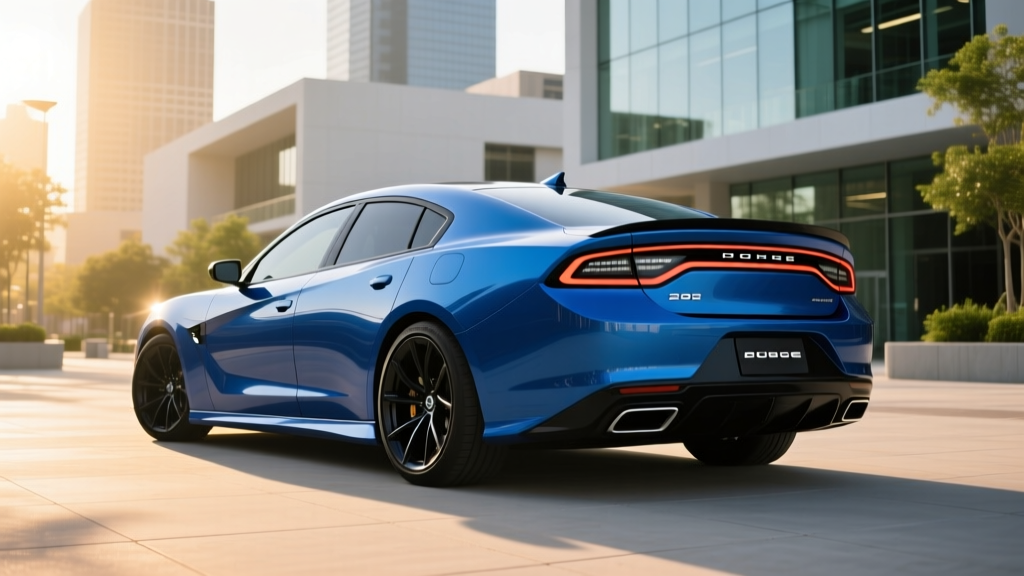
The 2026 Dodge Charger EV (officially the Charger Daytona) starts at $49,995 for the R/T trim and delivers an EPA-estimated 317 miles of range on its 100 kWh (usable) battery pack. The high-performance Scat Pack produces 670 hp and hits 0-60 in 3.3 seconds but sacrifices range to roughly 260 miles EPA. Real-world highway range drops to approximately 240-270 miles depending on trim and conditions. DC fast charging peaks at ~175 kW, achieving a 10-80% charge in about 27 minutes. The Charger EV qualifies for partial or full §30D federal tax credits depending on battery sourcing and buyer income, but verify current-year eligibility with your tax professional before purchasing.
Range, Battery, and Real-World Efficiency
Dodge equips the 2026 Charger Daytona with a 100.5 kWh usable lithium-ion NMC battery housed in a dedicated EV platform shared with Stellantis siblings. This is a large pack by muscle-car standards, and it's necessary — the Charger EV is a heavy vehicle at roughly 5,800 lbs, and pushing that mass at highway speeds demands serious energy.
Real-World Range Expectations
EPA sticker (R/T): 317 miles
Real-world highway (70-75 mph): ~255-275 miles
Cold weather (below 32°F): ~210-240 miles (20-30% reduction typical for NMC packs without aggressive preconditioning)
Scat Pack real-world highway: ~210-230 miles
The R/T achieves better efficiency partly due to its lower-output tune and standard 18-inch wheels. The Scat Pack's wider 20-inch performance tires and higher power draw reduce range measurably. If your commute involves sustained 80 mph driving in winter, plan for charging stops on any trip over 180 miles.
Efficiency lands around 86 MPGe combined for the R/T, which translates to roughly 39 kWh/100 miles — not class-leading. For comparison, a Tesla Model S Long Range achieves about 124 MPGe combined on a smaller 100 kWh pack, owing to its lighter weight and more aerodynamic profile. The Charger EV trades efficiency for presence, interior volume, and that muscle-car identity.
| Spec | R/T (AWD) | Scat Pack (AWD) |
|---|---|---|
| Battery (usable) | 100.5 kWh NMC | 100.5 kWh NMC |
| EPA Range | 317 miles | 260 miles |
| Horsepower | 496 hp | 670 hp |
| 0-60 mph | 4.7 seconds | 3.3 seconds |
| Peak DC Charge Rate | ~175 kW | ~175 kW |
| 10-80% DC Fast Charge | ~27 minutes | ~27 minutes |
| Level 2 Charge Rate | 11.5 kW | 11.5 kW |
| Level 2 Full Charge Time | ~8.5 hours | ~8.5 hours |
| Base MSRP | $49,995 | $59,995 |
| Battery/Powertrain Warranty | 8 yr / 100,000 mi | 8 yr / 100,000 mi |
Charging Speed and Infrastructure Reality
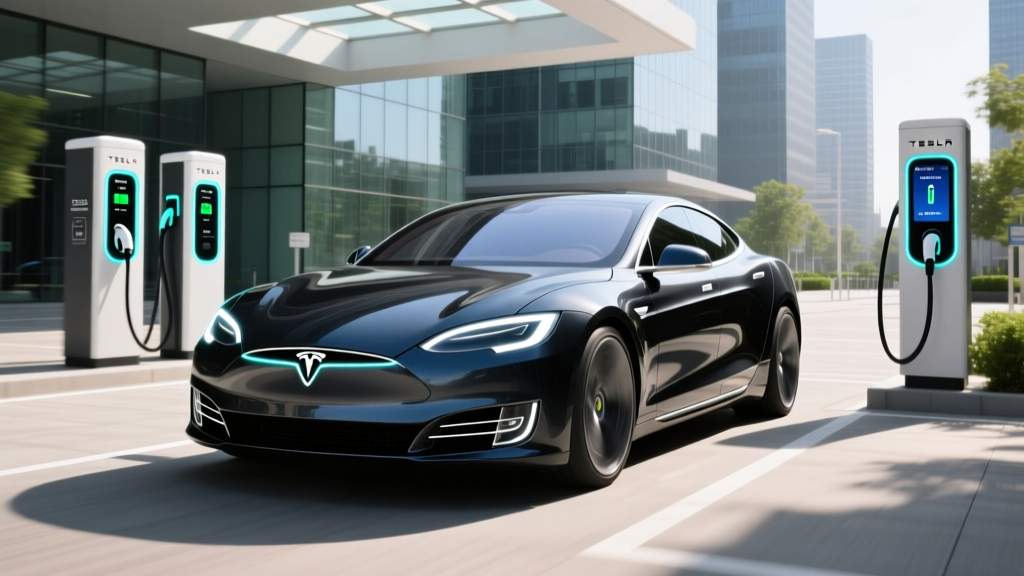
The Charger Daytona's peak DC fast-charge rate of approximately 175 kW via its CCS connector is adequate but not exceptional for 2026. Competitors like the Hyundai Ioniq 5 N (peak ~240 kW) and Porsche Taycan (peak ~270 kW on 800V architecture) replenish significantly faster on compatible chargers.
Here's the charging-curve reality Dodge doesn't advertise: the 175 kW peak only sustains between roughly 10-40% State of Charge (SoC). Above 50%, the rate tapers to ~120 kW, and above 80%, it drops below 50 kW to protect the NMC cells. That 27-minute 10-80% claim assumes optimal battery preconditioning and a functional 175+ kW stall — something you won't find at every Electrify America or EVgo station.
| Charging Level | Power (kW) | Connector | Miles Added per Hour | Best For |
|---|---|---|---|---|
| Level 1 (120V household) | ~1.4 kW | J1772 | ~3-4 mi/hr | Emergency top-offs only |
| Level 2 (240V home/public) | 11.5 kW | J1772 | ~28-32 mi/hr | Daily home charging |
| DC Fast Charge | Peak 175 kW | CCS1 | ~350-420 mi/hr (peak) | Road trips |
Home charging is essential for practical Charger EV ownership. At 11.5 kW on a Level 2 home charger (requiring a 60-amp circuit and a 48-amp charger), a full overnight replenishment is achievable. Without home charging access, relying on public DC fast chargers at $0.35-$0.50/kWh will push your fuel costs close to — or above — gasoline equivalents in many regions. Consult a licensed electrician for panel capacity assessment; a 200-amp service panel is typically required, and upgrades run $1,500-$4,000 if your panel is older.
EV vs. Gas Charger: Cost and Performance Comparison
The previous-generation Dodge Charger with a 5.7L HEMI V8 or 6.4L Scat Pack engine set the benchmark the EV must beat. Here's how the numbers stack up for 2026.
| Factor | Charger EV R/T ($49,995) | Gas Charger R/T (~$45,000 est. used/comparable) |
|---|---|---|
| Purchase Price (before incentives) | $49,995 | ~$45,000 |
| Federal Tax Credit (§30D, if eligible) | Up to $7,500 | $0 |
| Effective Purchase Price | ~$42,495 | ~$45,000 |
| Fuel/Energy (5 yr, 15K mi/yr) | ~$5,100 (home L2 @ $0.14/kWh) | ~$12,750 (18 MPG @ $3.40/gal) |
| Maintenance (5 yr) | ~$1,800 | ~$4,500 |
| Insurance (5 yr avg.) | ~$11,500 | ~$9,500 |
| 5-Year Total Cost | ~$60,895 | ~$71,750 |
The EV wins on operating costs decisively — you'll save roughly $7,600-$10,800 over five years on fuel and maintenance combined, depending on your electricity rates and local gas prices. However, EV insurance premiums run 15-25% higher on average due to repair costs and battery replacement risk. Factor that in.
Performance-wise, the Scat Pack EV's 670 hp and 3.3-second 0-60 time actually beats the old 6.4L gas Scat Pack (485 hp, ~4.3 sec). Electric torque delivery is instant. Where the gas model still has an edge: sustained track use without thermal derating, lighter overall weight (~4,200 lbs vs. ~5,800 lbs), and refueling in 5 minutes anywhere. The Charger EV is a brutally fast grand tourer, not a track-day car.
Tax Credit Eligibility and Purchase Incentives
The IRS §30D clean vehicle credit remains the key financial variable for Charger EV buyers. For 2026, the credit can reach up to $7,500, but qualification depends on several factors that shift annually:
- MSRP cap: Sedans must be under $55,000 MSRP. The R/T at $49,995 qualifies; the Scat Pack at $59,995 likely exceeds the cap (verify with dealer for destination-charge calculations).
- Buyer income limits: AGI must not exceed $150,000 (single), $225,000 (head of household), or $300,000 (joint filing).
- Battery sourcing: Critical minerals and battery components must meet escalating domestic/free-trade-agreement percentages each year. Stellantis has been ramping North American sourcing, but exact 2026 qualification percentages should be confirmed at point of sale.
- Point-of-sale transfer: You can transfer the credit to the dealer for an immediate price reduction rather than waiting to claim it on your tax return.
Do not assume you'll receive the full $7,500. Battery-sourcing rules tighten each calendar year, and a trim that qualifies in January may not in December if supply chains shift. Always check the fueleconomy.gov tax credit database for the specific model and build date before committing.
Common Misconceptions About the Charger EV
| Myth | Fact |
|---|---|
| "It's not a real Charger — it needs a V8." | The Scat Pack EV produces 670 hp and 627 lb-ft of instant torque — more than any production gas Charger ever sold. Dodge includes a synthetic exhaust sound system (Fratzonic) to replicate the visceral experience. |
| "317 miles of range means I can drive 317 miles." | EPA range assumes mixed driving at moderate speeds. Sustained highway driving at 75+ mph, cold weather, or aggressive acceleration will reduce range by 15-30%. Plan for ~250 usable miles on road trips. |
| "DC fast charging takes 27 minutes, so road trips are easy." | 27 minutes is 10-80% under optimal conditions. Add 5-10 minutes for stall setup, payment, and the taper above 80%. Realistic road-trip stops are 35-45 minutes each. |
| "EVs have no maintenance costs." | EVs eliminate oil changes, spark plugs, and transmission service. But tire wear is 20-30% faster due to weight and instant torque, cabin air filters still need replacement, brake fluid needs periodic flushing, and the 12V auxiliary battery still dies every 4-6 years. |
| "The battery will need replacing in 5 years." | Modern NMC packs with active thermal management typically lose 10-15% capacity over 100,000 miles. Dodge warranties the battery for 8 years/100,000 miles with a 70% capacity retention threshold. Full replacement costs $15,000-$22,000 but is rarely needed within the warranty period. |
Decision Framework: Should You Buy the Charger EV?
Choose the Dodge Charger EV R/T if:
- You have Level 2 home charging access (garage or driveway with 240V circuit)
- Your daily commute is under 80 miles round-trip
- You want a practical 4-seat coupe with 300+ mile range and strong acceleration
- You qualify for the §30D tax credit (income under caps, R/T under MSRP limit)
- You value low operating costs and don't regularly tow or track-drive
Choose the Charger EV Scat Pack if:
- Straight-line performance (3.3-sec 0-60) is your top priority
- You accept 260 miles of range (realistically ~210 highway) as the trade-off
- The higher MSRP and potential tax-credit ineligibility don't deter you
- You primarily drive in urban/suburban environments where range is less critical
Look elsewhere (gas or hybrid) if:
- You live in an apartment without charging access and your area has sparse public DC infrastructure
- You regularly drive 300+ miles in a single day through charging-desert regions
- You need a vehicle for sustained high-speed track sessions (thermal derating will limit you)
- Your budget is firm below $40,000 — consider a used EV or PHEV instead
What First-Time EV Buyers Need to Know
If the Charger Daytona is your first EV, understand these ownership realities before signing:
Home charging installation is a real cost. Budget $800-$2,500 for a quality Level 2 charger (ChargePoint Home Flex, Emporia Vue, or Wallbox Pulsar Plus) plus $500-$3,000 for electrician labor, permits, and potential panel upgrades. Total: $1,300-$5,500 depending on your home's electrical infrastructure.
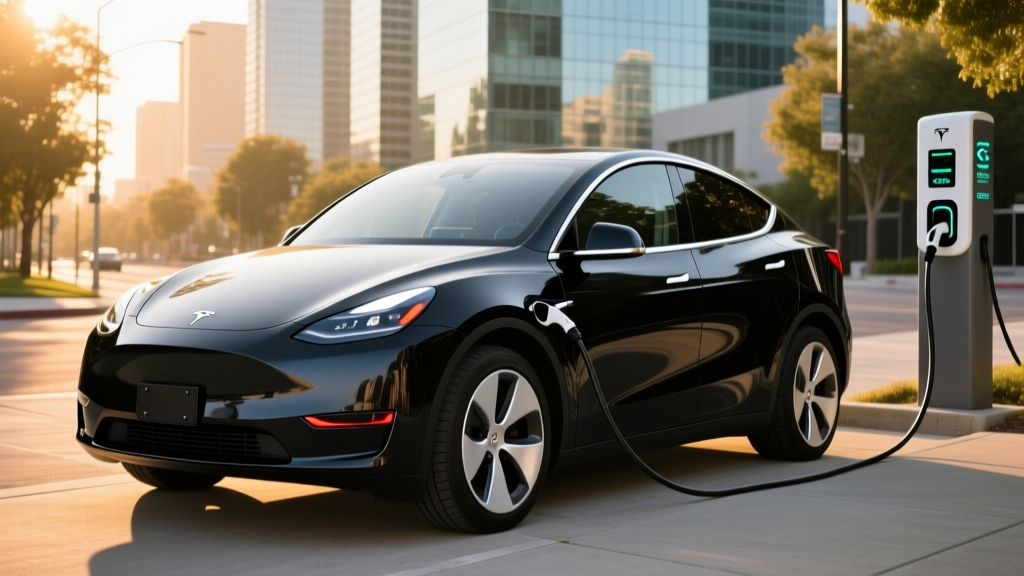
Route planning is mandatory on road trips. Apps like PlugShare and A Better Routeplanner are essential. The Charger EV uses CCS1 connectors, giving you access to Electrify America, EVgo, ChargePoint, and (with an adapter) Tesla Superchargers that have opened to non-Tesla vehicles. Reliability on public networks remains inconsistent — expect 10-15% of stalls to be out of service on any given trip.
Cold weather changes everything. If you live north of the 37th parallel, invest in a garage or at minimum precondition the battery while plugged in each morning. Preconditioning warms the NMC cells to optimal charging temperature, which can cut your DC fast-charge time by 30-40% in freezing weather.
Tire costs add up. The Charger EV's 5,800-lb weight and instant torque chew through tires. Expect to replace them every 25,000-35,000 miles at $250-$400 per corner for the OEM-spec all-season or performance rubber. Budget $1,200-$1,600 for a full set every 2-3 years.
Frequently Asked Questions
Does the 2026 Dodge Charger EV have a frunk (front trunk)?
No. The Charger Daytona's front hood houses the Fratzonic exhaust sound chamber and electronic components. All cargo space is in the rear trunk, which offers approximately 14.5 cubic feet — adequate for a weekend bag for two but less than a gas Charger's 16.5 cu ft.
Can the Charger EV use Tesla Superchargers?
Dodge has committed to NACS adapter compatibility, and Stellantis has announced access to Tesla's Supercharger network for CCS-equipped vehicles via adapter. Confirm adapter availability and any software-update requirements with your dealer at delivery, as rollout timelines have shifted.
What happens if the battery degrades below 70%?
Under Dodge's 8-year/100,000-mile battery warranty, if your pack falls below 70% State of Health (SoH) within the warranty period, Stellantis is obligated to repair or replace it to restore capacity above the threshold. Document your SoH readings through the vehicle's telematics or at dealer service visits to maintain a clear record.
Is the Charger EV all-wheel drive?
Yes. Both the R/T and Scat Pack trims come standard with dual-motor all-wheel drive. There is no single-motor rear-wheel-drive variant offered for 2026, which contributes to the higher base price but provides strong traction in rain and light snow.
How does Charger EV insurance compare to the gas model?
Expect premiums 15-25% higher than an equivalent gas Charger, averaging $2,200-$2,600/year depending on your state, driving record, and coverage level. Higher repair costs, battery replacement risk, and the vehicle's weight (which increases collision damage to other vehicles) all factor into insurer pricing. Get quotes from at least three carriers before purchasing.
Does regenerative braking enable one-pedal driving?
The Charger EV offers adjustable regen levels, but Dodge has tuned the maximum regen to be moderate rather than aggressive. True one-pedal driving (where the car comes to a complete stop without touching the brake) is possible at lower speeds but not as strong as a Tesla or Nissan Leaf. Most owners use a blend of regen and friction braking.