Quick Answer: What Is the EV Scat Pack?
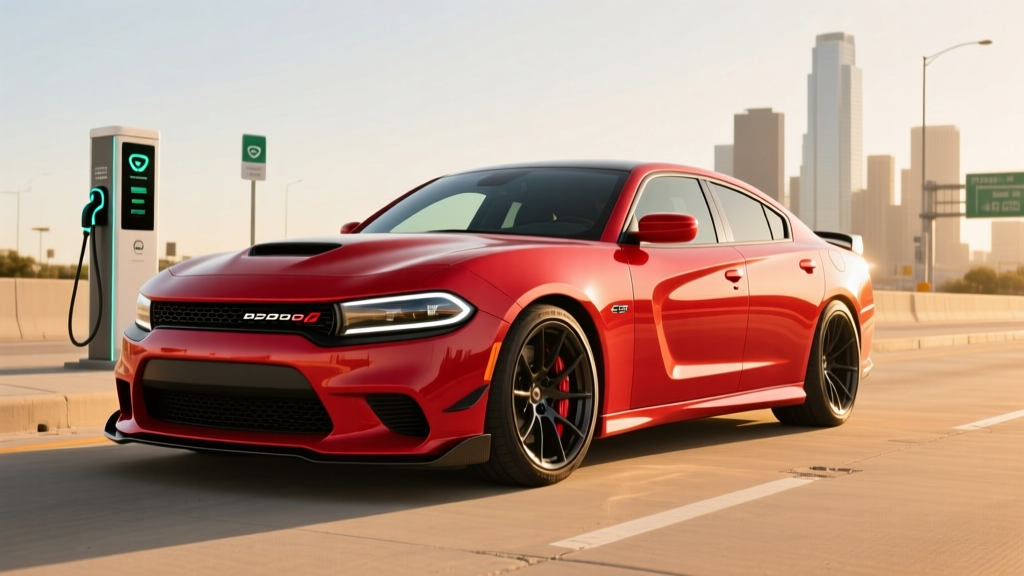
The Dodge Charger Daytona EV Scat Pack is a high-performance electric muscle car built on Stellantis' STLA Large platform. For the 2025–2026 model years, it delivers 670 horsepower, a 0-60 mph time of 3.3 seconds, and an EPA-estimated range of up to 260 miles (with the standard 100 kWh battery pack). Pricing starts around $59,995 before destination. It qualifies for up to $7,500 in federal tax credits under IRS §30D, subject to income caps, MSRP limits, and battery-sourcing requirements — check the IRS clean vehicle credit page before purchasing. Real-world highway range drops to approximately 210–230 miles at sustained 75+ mph speeds, and cold-weather operation can shave another 15–25% off that figure.
Range, Battery, and Efficiency: The Numbers That Matter
The Charger Daytona Scat Pack uses a 100 kWh gross battery (approximately 93–95 kWh usable) with nickel-manganese-cobalt (NMC) chemistry. NMC offers higher energy density than lithium iron phosphate (LFP), which is why Dodge can pack this much capacity into a muscle-car form factor — but it also means the battery prefers partial state-of-charge daily use rather than sitting at 100%.
| Spec | Charger Daytona Scat Pack (R/T shown for range comparison) | Scat Pack AWD |
|---|---|---|
| Battery (gross / usable) | 100 kWh / ~94 kWh | 100 kWh / ~94 kWh |
| Chemistry | NMC | NMC |
| EPA Range | ~317 mi (R/T trim) | ~260 mi (Scat Pack AWD) |
| Efficiency (MPGe) | ~96 MPGe combined | ~83 MPGe combined |
| Horsepower | 496 hp | 670 hp |
| 0-60 mph | 4.7 sec | 3.3 sec |
| Top Speed | 137 mph | 140 mph |
EPA vs. Real-World Range: What to Expect
The Scat Pack AWD's 260-mile EPA estimate assumes mixed driving with moderate climate use. In real-world conditions:
- Highway cruising (75 mph, 70°F): Expect 210–230 miles before needing a charge stop.
- Cold weather (30°F, highway): Range can drop to 170–200 miles due to battery resistance and cabin heating demands. The Charger Daytona includes a heat pump, which mitigates but does not eliminate cold-weather loss.
- Aggressive driving / launch mode use: Heavy throttle input can push consumption above 3.5 kWh/mile, cutting effective range below 180 miles.
Charging Speed and Infrastructure Reality
The Charger Daytona supports DC fast charging at a peak rate of approximately 160 kW on a compatible CCS or NACS connector (Dodge has confirmed NACS adoption for future model years). On a 350 kW-capable Electrify America or Tesla Supercharger (with adapter) station, you can expect:
| Charging Level | Power (kW) | Rate (miles/hour added) | Notes |
|---|---|---|---|
| Level 1 (120V outlet) | ~1.4 kW | ~4–5 mi/hr | Emergency/top-off only; ~50+ hours for full charge |
| Level 2 (240V home) | ~11.5 kW | ~32–36 mi/hr | Full charge in ~8.5 hours; ideal daily solution |
| DC Fast Charge (peak) | ~160 kW | ~450+ mi/hr (peak) | 10–80% in approximately 32 minutes; tapers above 80% |
Charge-curve reality check: The 160 kW peak only holds between roughly 10–40% state of charge. Above 60%, the rate drops significantly — by 80% SoC, you may see only 50–60 kW. This means the published 10–80% time of ~32 minutes is realistic, but don't expect fast top-offs from 80–100%.
For home charging, a Level 2 wall connector on a dedicated 60-amp circuit (48-amp continuous draw) will fully replenish the battery overnight. Installation typically costs $800–$2,500 depending on panel proximity and whether a 200-amp service upgrade is needed. Always consult a licensed electrician for final specs.
EV Scat Pack vs. Gas Challenger Scat Pack: Cost and Performance Compared
The most common question from muscle-car buyers: does the EV Scat Pack stack up against the gas-powered Challenger Scat Pack (6.4L HEMI V8, 485 hp) that it effectively replaces?
| Category | Charger Daytona EV Scat Pack (2025) | Challenger Scat Pack (Final Edition 2023) |
|---|---|---|
| Base MSRP | ~$59,995 | ~$50,000 (before markups) |
| Horsepower | 670 hp | 485 hp |
| 0-60 mph | 3.3 seconds | 4.2 seconds |
| Fuel / Energy Cost per Mile | ~$0.045/mi (home L2 at $0.14/kWh) | ~$0.18/mi (16 MPG combined at $3.50/gal) |
| Annual Fuel/Energy (12,000 mi) | ~$540 | ~$2,160 |
| Annual Maintenance | ~$300–$500 | ~$800–$1,200 |
| Range / Tank | ~260 mi (EPA) | ~294 mi (18.5 gal tank) |
| Refuel/Recharge Time | ~32 min (10–80% DCFC) | ~5 minutes |
| Federal Tax Credit | Up to $7,500 (§30D) | $0 |
| Exhaust Sound | Fratzonic chambered exhaust (synthetic) | Real 6.4L HEMI V8 |
5-year cost snapshot (12,000 mi/year, home charging):
| Expense | EV Scat Pack | Gas Scat Pack |
|---|---|---|
| Purchase (after $7,500 credit) | $52,495 | $50,000 |
| Energy/fuel (5 years) | $2,700 | $10,800 |
| Maintenance (5 years) | $2,000 | $5,000 |
| Insurance (est. 5 years) | $12,000–$15,000 | $9,000–$12,000 |
| Estimated Total (5 years) | $69,195–$72,195 | $74,800–$77,800 |
The EV Scat Pack breaks even on operating costs within 2–3 years, though insurance premiums run higher due to the vehicle's power output, repair complexity, and parts cost. Get quotes from at least three insurers before committing.
Tax Credit Eligibility: What You Actually Qualify For
The Dodge Charger Daytona may qualify for the full $7,500 federal tax credit under IRS §30D, but eligibility depends on multiple factors that change frequently:
- MSRP cap: Sedans must be under $55,000; SUVs/trucks/vans under $80,000. The Charger Daytona is classified as a sedan — verify current classification on the IRS qualified vehicles list, as the Scat Pack's ~$59,995 MSRP may exceed the sedan cap depending on how Stellantis classifies it.
- Buyer income limits: Modified AGI must not exceed $150,000 (single), $225,000 (head of household), or $300,000 (joint).
- Battery sourcing: Critical minerals and battery components must meet escalating domestic-content thresholds. For 2025–2026, 60% of critical minerals and 75% of battery components must come from the U.S. or free-trade-agreement partners.
- Point-of-sale transfer: You can transfer the credit to the dealer at purchase for an immediate price reduction, rather than waiting for a tax refund.
Critical caveat: The Charger Daytona's classification and battery supply chain determine eligibility. Always verify on fueleconomy.gov's tax credit lookup tool for the exact VIN and model year before signing paperwork.
Real-World Ownership: What First-Time EV Buyers Need to Know
Owning a 670-hp electric muscle car is not the same as owning a Tesla Model 3 commuter. Here are the practical realities:
Home Charging Is Non-Negotiable for Most Owners
At 260 miles of range and performance-oriented consumption, public DC fast charging alone will cost you $0.30–$0.48 per kWh at networks like Electrify America — roughly $0.09–$0.15 per mile, which erodes much of the EV cost advantage. A home Level 2 charger at residential electricity rates ($0.10–$0.18/kWh depending on state) is where the savings live. If you cannot install home charging (apartment, street parking), factor in the time and cost of regular public charging before buying.
Tire Wear Is Real
High-torque EVs with instant 670 hp chew through tires faster than gas equivalents. Expect to replace performance tires every 15,000–25,000 miles depending on driving style. A set of four performance tires runs $1,200–$2,000. Budget accordingly.
Weight and Handling Trade-Offs
The Charger Daytona Scat Pack weighs approximately 5,800+ lbs — roughly 1,400 lbs more than the outgoing gas Challenger Scat Pack. That mass is felt in cornering and braking. The car is brutally fast in a straight line, but it is a grand-touring cruiser, not a track car. Brake wear is reduced thanks to regenerative braking, but suspension components may require earlier service under aggressive use.
The Frunk Is Small
Unlike some EVs with spacious front trunks, the Charger Daytona's frunk is modest — roughly 1.7 cubic feet. Combined with the rear trunk, total cargo space is adequate for a weekend bag but not much more. This is a muscle car, not a crossover.
Common Misconceptions About the EV Scat Pack
| Myth | Fact |
|---|---|
| "It's not a real muscle car without a V8" | 670 hp and a 3.3-second 0-60 beat every production Challenger Scat Pack ever made. Straight-line performance is objectively superior. |
| "Electric cars are cheaper to own" | Lower energy and maintenance costs are real, but higher insurance, tire wear, and upfront price narrow the gap. Savings depend on your electricity rate, mileage, and credit eligibility. |
| "The range is 317 miles" | 317 miles applies to the R/T trim (496 hp, lighter). The Scat Pack AWD at 670 hp is rated at ~260 miles EPA — and real-world highway driving yields 210–230 miles. |
| "Charging takes too long for road trips" | At 160 kW DCFC, a 10–80% charge takes ~32 minutes. On a 600-mile trip, plan two 30-minute stops — comparable to meal and rest breaks. |
| "The battery will need replacing in 5 years" | Stellantis provides an 8-year/100,000-mile battery warranty with a minimum 70% capacity retention threshold. NMC batteries typically degrade 10–15% over 100,000 miles under normal use. |
Decision Framework: Should You Buy the EV Scat Pack?
Buy the Charger Daytona EV Scat Pack If:
- You have access to home Level 2 charging (garage or driveway with a 240V circuit).
- Straight-line performance matters more than corner-carving agility.
- You drive under 250 miles daily and can charge overnight.
- You qualify for the §30D tax credit (check income, MSRP cap, and sourcing rules).
- You want a 670-hp daily driver with lower per-mile energy costs than a HEMI V8.
Wait or Look Elsewhere If:
- You live in an apartment without charging access and your area has limited DC fast-charging infrastructure.
- You regularly take 400+ mile road trips and don't want to plan charge stops.
- Cornering dynamics and lightweight handling are priorities — consider a Porsche Taycan or Tesla Model S Plaid.
- The synthetic Fratzonic exhaust sound is a dealbreaker and you need the visceral experience of a real V8. (Look for a used Challenger Scat Pack before they disappear.)
- Your state has high electricity rates ($0.25+/kWh) that erode the fuel-cost advantage.
Frequently Asked Questions
Does the EV Scat Pack qualify for the $7,500 federal tax credit?
It may, but eligibility depends on MSRP classification (sedan vs. SUV cap), your income, and battery-sourcing compliance. The Scat Pack's ~$59,995 price exceeds the $55,000 sedan cap, but Stellantis may classify it differently. Verify the exact VIN on fueleconomy.gov before purchasing.
What is the real-world range of the EV Scat Pack on a road trip?
Expect 210–230 miles at highway speeds (70–80 mph) in moderate temperatures. In cold weather (below 40°F), plan for 170–200 miles. Use A Better Route Planner (ABRP) to model specific trips with elevation and temperature inputs.
How fast does the EV Scat Pack charge at home?
On a Level 2 home charger (48-amp, 11.5 kW), a full charge from empty takes approximately 8.5 hours. Most owners plug in at night and wake up to a full battery. A typical daily top-off from 50% takes about 4 hours.
Is the Charger Daytona heavier than the gas Challenger?
Yes — significantly. The EV Scat Pack weighs roughly 5,800 lbs compared to the gas Challenger Scat Pack's ~4,400 lbs. The extra mass comes from the 100 kWh battery pack. You feel it in corners and during direction changes, though the low center of gravity helps stability.
What does battery replacement cost if it fails out of warranty?
Out-of-warranty replacement for a 100 kWh NMC pack is estimated at $15,000–$25,000 based on current industry pricing for packs of this size. However, NMC packs rarely require full replacement — individual module repairs are often possible at lower cost. The 8-year/100,000-mile warranty covers defects and capacity loss below 70%.
Can the EV Scat Pack do a quarter-mile as fast as the gas version?
Dodge claims an 11.2-second quarter mile for the Scat Pack AWD — quicker than the gas Challenger Scat Pack's typical 12.3–12.5 seconds. The instant torque delivery of electric motors gives a decisive advantage off the line.
Does it have one-pedal driving?
Yes. The Charger Daytona offers adjustable regenerative braking, including a one-pedal driving mode that can bring the car to a full stop without touching the brake pedal in most city-driving scenarios. Brake pad wear is significantly reduced as a result.