Quick Verdict: Is the Charger Daytona EV Worth It?
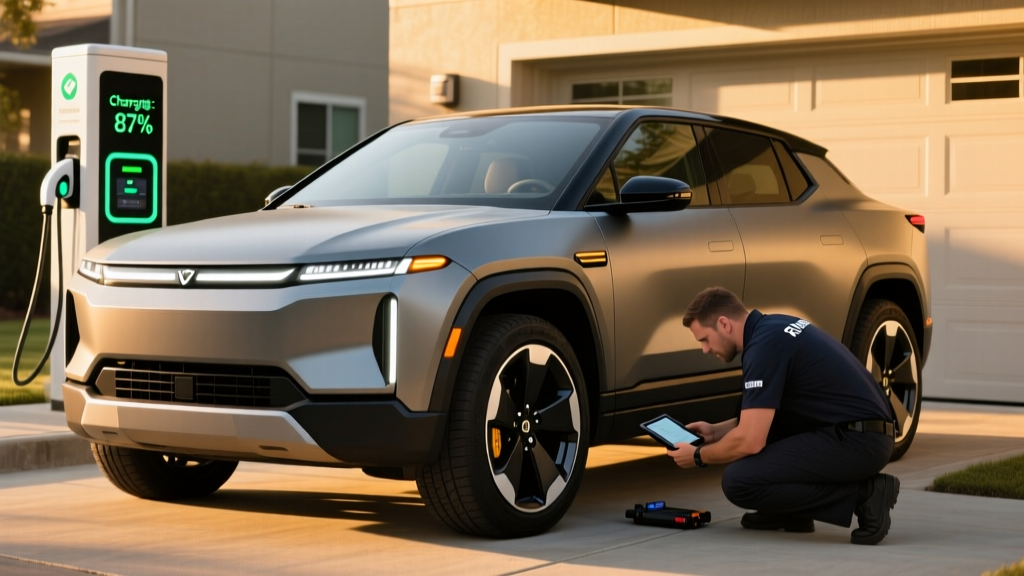
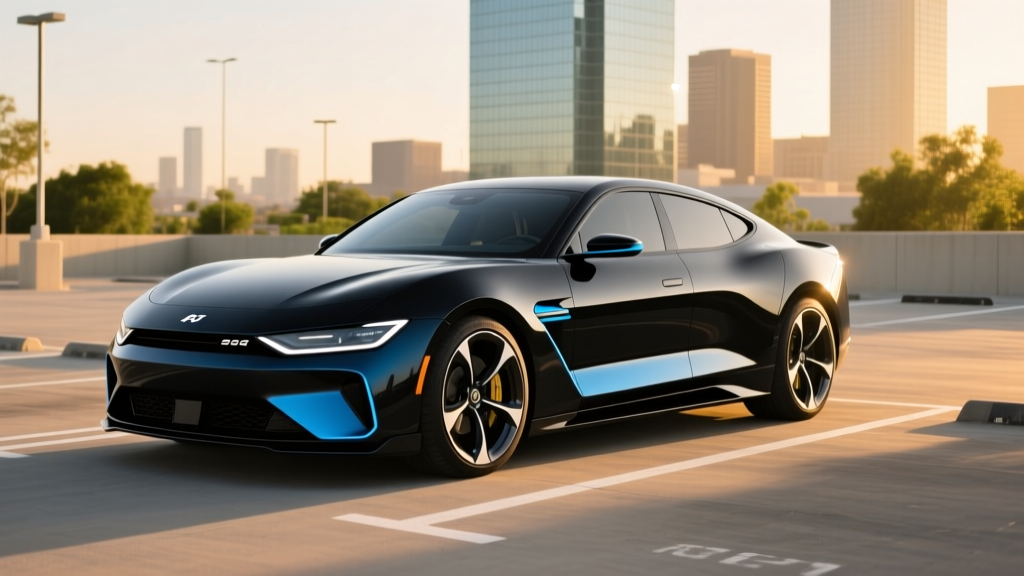
The Dodge Charger Daytona is the first all-electric American muscle car, built on Stellantis' STLA Large platform. For 2026, the Daytona R/T starts at $51,990 (340-mile EPA range, 496 hp) and the Daytona Scat Pack at $59,990 (318-mile EPA range, 670 hp). Real-world highway range drops to roughly 260–290 miles depending on trim and driving style. DC fast charging peaks at 175 kW, delivering a 10–80% charge in approximately 27 minutes. The Charger Daytona qualifies for a partial or full $7,500 federal tax credit under current IRS §30D rules, depending on battery sourcing and buyer income — verify eligibility at the point of sale.
Range and Efficiency: EPA Sticker vs. Real World
Dodge rates the Charger Daytona R/T at 340 miles EPA and the Scat Pack at 318 miles EPA. Both trims use a 100.5 kWh (usable) lithium-ion NMC battery pack operating on an 800-volt architecture. Efficiency varies significantly by trim:
| Spec | Daytona R/T | Daytona Scat Pack |
|---|---|---|
| EPA Range | 340 miles | 318 miles |
| Battery (usable) | 100.5 kWh NMC | 100.5 kWh NMC |
| MPGe (combined) | ~90 MPGe | ~82 MPGe |
| kWh/100 mi | ~37 | ~41 |
| Horsepower | 496 hp (w/ Direct Connection) | 670 hp (w/ Direct Connection) |
| 0–60 mph | 4.7 sec | 3.3 sec |
| Drivetrain | AWD (dual motor) | AWD (dual motor) |
| Top Speed | 137 mph | 134 mph |
Real-World Range Expectations
EPA estimates assume mixed driving at moderate speeds. In real-world conditions:
- Highway (75 mph sustained): Expect 270–290 miles (R/T) or 250–270 miles (Scat Pack). Aerodynamic drag hits hard at speed — this is a wide, heavy coupe.
- Cold weather (below 32°F): Range drops 15–25%. A Scat Pack in a Midwest winter may deliver 230–250 miles before needing a charge.
- City/regen-heavy driving: You can match or slightly exceed the EPA number thanks to aggressive regenerative braking modes.
The Charger Daytona does not currently offer a heat pump (resistance cabin heating is standard), which contributes to larger cold-weather range losses compared to competitors like the Hyundai Ioniq 5 or Tesla Model S.
Charging Speeds: Home and DC Fast Charging
The 800V architecture enables competitive DC fast charging, though the Daytona doesn't quite match class leaders like the Ioniq 5 N or Lucid Air.
| Level | Power | Charge Time | Miles Added/Hour |
|---|---|---|---|
| Level 1 (120V) | ~1.4 kW | ~72 hours (0–100%) | ~4 mi/hr |
| Level 2 (240V, 48A) | ~11.5 kW | ~9 hours (0–100%) | ~32 mi/hr |
| DC Fast (peak) | 175 kW | ~27 min (10–80%) | ~170 mi in 10 min |
Charging curve reality: The Daytona peaks near 175 kW at low state-of-charge (around 10–25% SoC) but tapers significantly above 60%. Expect an average sustained rate of roughly 110–120 kW across the full 10–80% session. If you're road-tripping and charging from 20–80%, plan for roughly 25–30 minutes at a 350 kW Electrify America or EVgo station — the car cannot utilize the full capacity of those chargers.
Connector: The 2026 Charger Daytona uses the CCS1 connector. Stellantis has not yet transitioned to NACS (Tesla-style) for this platform. Adapters for Tesla Superchargers may become available, but as of early 2026, native Supercharger access is not confirmed for the Daytona. Plan road trips around CCS-compatible networks.
Pricing, Trims, and Federal Tax Credit Eligibility
Dodge simplified the Charger Daytona lineup for 2026:
| Trim | Base MSRP | Key Features |
|---|---|---|
| Daytona R/T | $51,990 | 496 hp, 340 mi range, 20" wheels, leather, 12.3" cluster + 12.3" infotainment |
| Daytona Scat Pack | $59,990 | 670 hp, 318 mi range, 20" aluminum wheels, Track Package, SRT-tuned suspension, head-up display |
§30D Federal Tax Credit — 2026 Rules
Under current IRS guidelines, the Charger Daytona may qualify for up to $7,500 in federal tax credit, split into two halves:
- $3,750 — Battery Components: Requires ≥60% of battery components manufactured or assembled in North America.
- $3,750 — Critical Minerals: Requires ≥70% of critical minerals sourced from the U.S. or FTA-partner countries.
- Buyer income caps: AGI ≤ $300,000 (joint), ≤ $225,000 (head of household), ≤ $150,000 (single).
- MSRP cap: Vehicle MSRP must not exceed $55,000 (sedans/coupes). The Scat Pack at $59,990 exceeds this cap and does NOT qualify.
- Point-of-sale transfer: The R/T can apply the credit as an instant dealer discount if eligibility is confirmed.
Bottom line: The R/T at $51,990 can qualify for the full $7,500, bringing the effective price to roughly $44,490. The Scat Pack exceeds the MSRP cap — no federal credit applies. Always confirm current sourcing compliance with your dealer and consult a tax professional.
EV vs. Gas: Charger Daytona vs. the Old V8 Charger
The Charger Daytona replaces the iconic HEMI V8 Charger. Here's how the math actually compares to the last-generation 2023 Charger Scat Pack (6.4L V8, 485 hp):
| Factor | 2026 Daytona Scat Pack (EV) | 2023 Charger Scat Pack (V8) |
|---|---|---|
| Base MSRP | $59,990 | $51,320 |
| Horsepower | 670 hp | 485 hp |
| 0–60 mph | 3.3 sec | 4.3 sec |
| Fuel/Energy Cost (15k mi/yr) | ~$720/yr (at $0.16/kWh, home) | ~$2,700/yr (at $3.50/gal, 18 MPG) |
| Annual Maintenance | ~$300 (tire rotation, cabin filter, fluid top-offs) | ~$800 (oil, filters, brakes, spark plugs) |
| 5-Year Fuel/Energy | ~$3,600 | ~$13,500 |
| 5-Year Maintenance | ~$1,500 | ~$4,000 |
| EPA Range / Tank Range | 318 mi | ~340 mi (18.5 gal tank) |
| CO₂ Tailpipe | Zero | ~4.6 metric tons/yr |
The EV Daytona costs more upfront (especially since the Scat Pack misses the tax credit) but saves roughly $12,400 in fuel and maintenance over five years. At $1.30/gallon equivalent for home electricity, your "fuel" cost drops by about 73%. Public DC fast charging at $0.40–$0.50/kWh narrows the gap — frequent road-trippers relying on fast chargers may see annual energy costs closer to $1,400–$1,800.
Real-World Ownership: What First-Time EV Buyers Should Know
Home Charging Access Is the Make-or-Break Factor
If you can install a Level 2 home charger (240V, 48A), the Daytona becomes trivially easy to live with — plug in at night, wake up to 300+ miles every morning. Budget $800–$2,000 for a quality Level 2 unit (ChargePoint Home Flex, Emporia Level 2, or Wallbox Pulsar Plus) plus $500–$2,500 for electrician installation depending on panel proximity and whether you need a 200-amp service upgrade. If you're in an apartment or lack dedicated parking, daily life with a 100 kWh battery on Level 1 (120V) is impractical — you'd add only ~4 miles per hour of charging.
Insurance Costs Are Higher
EV insurance premiums run 15–25% higher than comparable gas vehicles due to battery replacement costs and specialized repair requirements. Expect $2,200–$3,000/year for a Daytona Scat Pack depending on your state, driving record, and coverage level. Get quotes before purchasing.
The Frunk and Practicality Question
Unlike the Tesla Model S, the Daytona's front trunk (frunk) is modest — roughly 1.5 cubic feet — because the 800V power electronics occupy significant front-end space. Total cargo volume behind the rear seats is limited to approximately 13.5 cu ft. This is a coupe, not a daily family hauler. Rear-seat space accommodates adults on shorter trips but isn't limousine-grade.
Battery Warranty and Degradation
Stellantis covers the Charger Daytona battery with a 8-year / 100,000-mile warranty (10 years / 150,000 miles in CARB states like California, New York, and Massachusetts). The warranty guarantees the battery will retain at least 70% of original capacity. Based on NMC chemistry degradation data from similar platforms, expect roughly 5–8% capacity loss over 5 years under normal use. Avoid habitual DC fast charging above 90% SoC and frequent deep discharges below 10% to maximize longevity.
Common EV Misconceptions — Addressed with Facts
| Myth | Fact |
|---|---|
| "EV batteries need replacing every few years." | NMC batteries in liquid-cooled packs like the Daytona's typically retain 85–92% capacity after 100,000 miles. Full replacement costs $12,000–$18,000 but is rarely needed within the warranty period. |
| "Charging takes too long for road trips." | 10–80% in ~27 minutes at a DC fast charger. Plan 2–3 stops on a 600-mile trip — comparable to gas-car rest stops for food and stretching. |
| "EVs are worse in cold weather." | Range drops 15–25% in sub-freezing temps, but preconditioning (warming the battery while plugged in) recovers much of that loss. AWD traction is excellent with dual motors. |
| "The power grid can't handle EVs." | Most charging happens overnight during off-peak hours. A single Level 2 charger draws ~11.5 kW — similar to an electric oven. Smart charging and time-of-use rates manage grid load. |
| "EVs are slower and less fun than muscle cars." | The Scat Pack hits 60 mph in 3.3 seconds with instant torque. Dodge added a "Fratzonic" exhaust sound system to replicate engine-note feedback — love it or hate it, the acceleration is undeniable. |
Decision Framework: Should You Buy the Charger Daytona?
Choose the Daytona R/T if:
- You want a practical daily-driver muscle car with 340 miles of range.
- You qualify for the $7,500 tax credit (income under cap, R/T under MSRP cap).
- You prioritize range and value over maximum horsepower.
- Your commute is under 80 miles round-trip with home Level 2 charging.
Choose the Daytona Scat Pack if:
- You want 670 hp and sub-3.5-second 0–60 times — Hellcat-rivaling performance.
- You plan track days and value the SRT-tuned suspension and Track Package.
- You can absorb the higher price ($59,990, no federal tax credit) and insurance premiums.
- 318 miles of range covers your needs without frequent charging stops.
Look elsewhere if:
- You need a spacious family sedan — consider the Tesla Model S, BMW i5, or Hyundai Ioniq 6.
- You lack home charging access — public-only charging on a 100 kWh battery gets expensive and time-consuming.
- You regularly tow or haul — the Daytona is not rated for towing.
- You want NACS/Supercharger access today — the Daytona is CCS1-only for 2026.
Frequently Asked Questions
Does the Dodge Charger Daytona qualify for the $7,500 EV tax credit?
The R/T trim ($51,990 MSRP) can qualify for up to $7,500 under IRS §30D rules, assuming battery sourcing requirements are met and buyer income is within limits. The Scat Pack ($59,990) exceeds the $55,000 MSRP cap for sedans/coupes and does not qualify. Always verify current eligibility with your dealer and the IRS clean vehicle credit page.
How fast does the Charger Daytona charge on a road trip?
Peak DC fast charging is 175 kW, with a 10–80% time of approximately 27 minutes. The charge curve tapers above 60% SoC, so sessions from 20–80% take roughly 25–30 minutes. Use the fueleconomy.gov listing for official efficiency data.
Is the Charger Daytona all-wheel drive?
Yes. Both the R/T and Scat Pack use a dual-motor all-wheel-drive system. There is no rear-wheel-drive-only EV variant for 2026, though Dodge has offered an RWD-only gas-powered Charger Sixpack alongside the EV.
What's the real-world range on the highway?
Expect approximately 270–290 miles for the R/T and 250–270 miles for the Scat Pack at sustained 75 mph highway speeds. Cold weather (below freezing) can reduce these figures by 15–25%.
Does the Daytona have a frunk?
Yes, but it's small — approximately 1.5 cubic feet. The 800V power electronics limit front storage compared to some competitors. Plan to use the rear cargo area (13.5 cu ft) for most luggage.
Can I charge at Tesla Superchargers?
Not natively. The 2026 Daytona uses CCS1. Stellantis has announced plans to adopt NACS in future model years, but for now, rely on Electrify America, EVgo, ChargePoint, and other CCS-compatible networks for DC fast charging.