Quick Answer: Is the Dodge Charger Daytona EV Worth It?
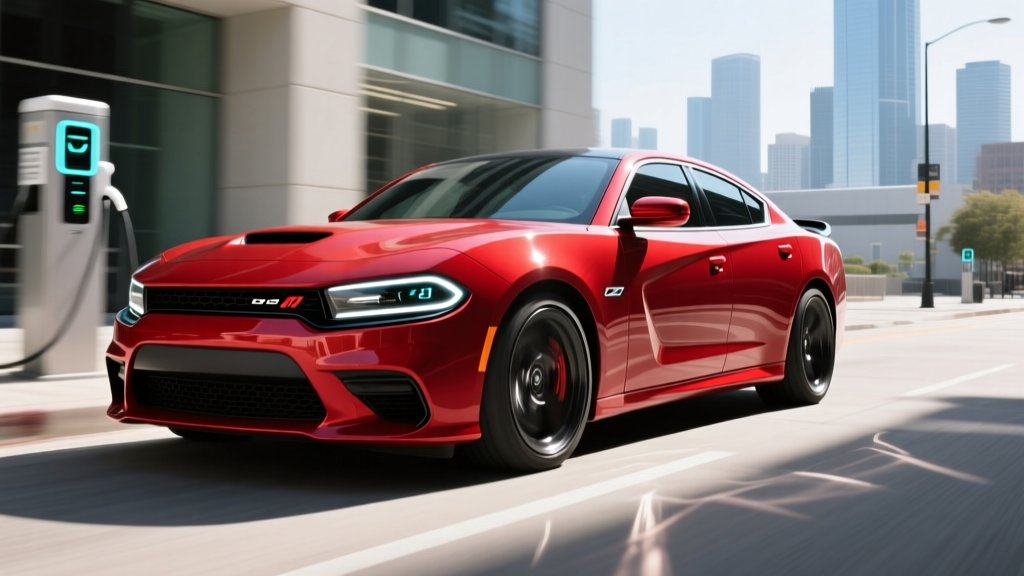
The 2026 Dodge Charger Daytona EV is a legitimate electric muscle car delivering up to 670 horsepower and a 0-60 mph time of 3.3 seconds in the R/T and Scat Pack trims, with an EPA-estimated range of up to 318 miles on the R/T. Starting around $51,990 (before incentives), it undercuts comparable gas Hellcat models on running costs while matching or exceeding their straight-line performance. However, at roughly 5,800 lbs and with DC fast charging peaking at 175 kW, it prioritizes brute-force acceleration over efficiency and rapid road-trip charging. If you have Level 2 home charging and primarily drive in urban or suburban environments, the Charger Daytona EV makes a compelling case. If you frequently road-trip through charging deserts or lack home charging access, weigh the trade-offs carefully.
What Exactly Is the Dodge Charger Daytona EV?
After discontinuing the gas-powered Challenger and Charger following the 2023 model year, Dodge pivoted its muscle-car legacy to the Stellantis STLA Large platform. The result is the Charger Daytona EV — a two-door (coupe) and four-door (sedan) performance vehicle that retains aggressive muscle-car styling while swapping the HEMI V8 for dual electric motors and a 100.5 kWh (gross) lithium-ion NMC battery pack.
For 2026, Dodge offers several key configurations:
- Charger Daytona R/T: 496 hp (with Direct Connection Stage 1 upgrade), 318 miles EPA range, starting at ~$51,990
- Charger Daytona Scat Pack: 670 hp (with Direct Connection Stage 2 upgrade), 260 miles EPA range, starting at ~$57,990
Both trims feature all-wheel drive via dual motors, an 800-volt electrical architecture, and Dodge's "Fratzonic" exhaust sound system — a synthetic exhaust note piped through interior and exterior speakers to mimic the rumble of a V8.
Range, Efficiency, and Real-World Expectations
The EPA range figures tell only part of the story. Here's what the spec sheet says versus what you should actually plan for:
EPA Sticker vs. Real-World Range
| Trim | EPA Range | Highway (75 mph) | Cold Weather (20°F) | Combined Real-World |
|---|---|---|---|---|
| R/T (20" wheels) | 318 mi | ~255-270 mi | ~220-240 mi | ~270-290 mi |
| Scat Pack (20" wheels) | 260 mi | ~210-225 mi | ~180-200 mi | ~220-240 mi |
Note: Cold-weather estimates assume no preconditioning. Using the battery's thermal preconditioning feature before driving or charging will recover some of this loss. The 100.5 kWh gross / ~92 kWh usable battery includes a top/bottom buffer to protect long-term health.
Efficiency lands around 2.8-3.2 kWh/mile depending on trim and driving style — not class-leading for an EV, but expected given the vehicle's 5,800+ lb curb weight and wide performance tires. For context, the Tesla Model S Plaid achieves roughly 3.0 kWh/mile while producing 1,020 hp, and the Ford Mustang Mach-E GT manages about 2.7 kWh/mile at 480 hp.
Charging Speed: Home and DC Fast Charging
The Charger Daytona's 800-volt architecture enables competitive charging speeds, though it doesn't quite match the fastest-charging EVs on the market (the Hyundai Ioniq 5 peaks at 240 kW; the Lucid Air at 300 kW).
| Charging Level | Power (kW) | Time / Rate | Best For |
|---|---|---|---|
| Level 1 (120V household) | ~1.4 kW | ~2-3 mi/hr added | Emergency trickle only |
| Level 2 (240V, 48A) | ~11.5 kW | ~9-10 hours (0-100%) | Daily home charging |
| DC Fast Charge (peak) | 175 kW | 10-80% in ~27 min | Road trips |
| DC Fast Charge (avg 10-80%) | ~130 kW sustained | ~200 mi added in 27 min | Practical road-trip planning |
Charging curve reality: Like all EVs, the Charger Daytona doesn't sustain its peak 175 kW rate for the full session. Expect peak rates between roughly 10-50% SoC, with a taper beginning around 60% and a significant slowdown above 80%. For road-trip planning, plan stops around the 10-80% window to minimize time at the charger.
Connector note: The Charger Daytona ships with a CCS1 connector. With Stellantis committing to NACS adoption, newer builds may include a NACS port or adapter for Tesla Supercharger access — verify with your dealer at purchase, as this has been a moving target across the Stellantis lineup.
Cost Breakdown: Charger Daytona EV vs. Gas Charger Scat Pack
The most common question from muscle-car buyers: does going electric actually save money? Here's a five-year ownership comparison assuming 12,000 miles/year, $3.50/gal gasoline, and $0.14/kWh home electricity:
| Cost Category | Charger Daytona Scat Pack EV ($57,990 MSRP) | 2023 Charger Scat Pack Gas (~$52,000 MSRP) |
|---|---|---|
| Purchase price (before incentives) | $57,990 | $52,000 |
| Federal tax credit (§30D)* | Up to $7,500 (if eligible) | $0 |
| Effective purchase price | ~$50,490 | $52,000 |
| Fuel/electricity (5 years, 60k mi) | ~$3,950 (home charging) | ~$10,500 (16 mpg combined) |
| Maintenance (5 years) | ~$1,200 | ~$3,800 |
| Insurance (5-year avg) | ~$14,000 | ~$11,500 |
| Estimated depreciation (5 years) | ~$28,000 | ~$24,000 |
| Total 5-year cost | ~$97,640 | ~$101,800 |
*Federal §30D tax credit eligibility depends on MSRP caps (sedans: $55,000), buyer income limits ($150K single / $300K joint), and battery critical-mineral sourcing requirements. The Scat Pack's MSRP may exceed the sedan cap depending on body style classification — consult IRS.gov §30D guidelines and a tax professional before assuming eligibility. Point-of-sale transfer is available for eligible buyers in 2026.
The EV wins on fuel and maintenance savings — roughly $6,550 in fuel and $2,600 in maintenance over five years. However, higher insurance premiums (performance EVs carry a surcharge of roughly 15-25% over gas equivalents) and steeper projected depreciation narrow the gap. The break-even point typically arrives around year 4-5 if you qualify for the full federal credit and charge primarily at home.
EV vs. Gas Muscle Car: Performance and Driving Experience
| Metric | Charger Daytona Scat Pack EV | 2023 Charger Scat Pack (6.4L V8) | 2023 Charger SRT Hellcat Redeye |
|---|---|---|---|
| Horsepower | 670 hp | 485 hp | 807 hp |
| Torque | 627 lb-ft | 475 lb-ft | 707 lb-ft |
| 0-60 mph | 3.3 sec | 4.3 sec | 3.5 sec |
| Top speed | ~140 mph (limited) | 175 mph | 203 mph |
| Curb weight | ~5,840 lbs | ~4,500 lbs | ~4,600 lbs |
| EPA range / MPG | 260 mi / 87 MPGe | 18 mpg combined | 15 mpg combined |
| Drivetrain | AWD (dual motor) | RWD | RWD |
The electric Scat Pack demolishes its gas predecessor to 60 mph by a full second, thanks to instant torque delivery and AWD grip. However, the 1,300+ lb weight penalty shows up in handling dynamics — this is a straight-line bruiser, not a canyon carver. Top speed is electronically limited, and above 100 mph, the gas Hellcat's power advantage becomes apparent.
Dodge's Fratzonic exhaust system generates synthetic V8-like sounds through a chambered speaker system. In our assessment, it's a clever party trick that won't fool anyone who's stood next to a real 6.4L HEMI, but it does provide useful auditory feedback during hard acceleration that silent EVs typically lack. You can also turn it off entirely for stealth-mode commuting.
Common Misconceptions About Electric Muscle Cars
| Myth | Fact |
|---|---|
| "EVs can't do burnouts or drag racing" | The Scat Pack EV has a dedicated Drag mode with launch control, line-lock front brakes for burnouts, and consistent quarter-mile times without the heat-soak issues of supercharged V8s. |
| "The battery will need replacing in 5 years" | Dodge warranties the battery for 8 years / 100,000 miles against capacity loss below 70%. NMC batteries in modern thermal-managed packs typically retain 85-90% capacity at 100k miles based on industry data. |
| "You can't road-trip an EV muscle car" | With 260 miles of range and 10-80% charging in ~27 minutes, road trips are viable — but require planning around DC fast chargers. The CCS/NACS adapter situation affects Supercharger access. |
| "EVs are cheaper to insure" | Performance EVs like the Charger Daytona typically cost 15-25% more to insure than gas equivalents due to higher repair costs, specialized parts, and elevated vehicle values. |
| "It qualifies for the full $7,500 tax credit automatically" | Eligibility depends on MSRP caps, buyer income, and battery sourcing rules that change periodically. Always verify current-year rules on IRS.gov. |
Real-World Ownership: What First-Time EV Buyers Must Know
Home charging is essential. With a 100.5 kWh battery, Level 1 (120V) charging adds roughly 2-3 miles of range per hour — essentially useless for daily driving. A Level 2 home charger (240V, 48A) is mandatory for practical ownership. Budget $800-$2,500 for professional installation depending on your electrical panel's capacity. If your home has a 100-amp panel, you may need a $2,000-$4,000 upgrade to 200 amps.
Apartment and street-parking reality. If you can't install a home charger, the Charger Daytona EV becomes significantly less practical. Public DC fast charging at $0.35-$0.50/kWh costs roughly 2.5-3x more than home charging and adds wear to the battery if used exclusively. Check your area's public charging infrastructure on apps like PlugShare before committing.
Cold-weather impact. In sustained sub-freezing temperatures, expect 20-30% range reduction due to battery chemistry limitations and cabin heating demands. The Charger Daytona's heat pump (standard) helps mitigate this, but preconditioning while plugged in is the single most effective cold-weather strategy — warm the battery and cabin using grid power before you leave.
Tire costs. Performance EVs consume tires faster than gas cars due to instant torque and heavy weight. Budget for replacement rubber every 20,000-30,000 miles at $300-$500 per tire for the OEM-spec 20" performance tires.
Decision Framework: Should You Buy the Charger Daytona EV?
Choose the Charger Daytona EV If:
- You have access to Level 2 home charging (or a reliable workplace charger)
- Your daily commute is under 100 miles round-trip
- You want muscle-car performance with dramatically lower fuel costs
- You primarily drive in urban/suburban environments with DC fast charger access
- You value instant torque and AWD traction over lightweight handling
- You can qualify for the §30D federal tax credit (verify income and MSRP caps)
Look Elsewhere (or Consider a PHEV/Gas Alternative) If:
- You lack reliable home or workplace charging access
- You regularly drive 300+ miles between stops in areas with sparse charging infrastructure
- You prioritize track-day handling and low curb weight over straight-line acceleration
- You live in an extreme cold-weather climate and can't garage/precondition the vehicle
- Your budget can't absorb the higher insurance premiums and potential panel-upgrade costs for home charging
- You need the 50,000+ mile longevity certainty of a proven V8 platform for high-mileage driving
Battery Warranty and Long-Term Outlook
Dodge backs the Charger Daytona's battery pack with an 8-year / 100,000-mile warranty covering defects and capacity loss below 70% of original capacity. The powertrain (motors, inverters) carries the same coverage. This aligns with the federal minimum mandate and matches most competitors, though Hyundai's 10-year/100,000-mile battery warranty remains the segment benchmark.
Full battery replacement costs, should you need one out of warranty, are estimated at $15,000-$22,000 based on current NMC pack pricing for ~100 kWh batteries — though prices are trending downward as battery manufacturing scales. In practice, modern liquid-cooled NMC packs rarely require full replacement; individual module service is more common and less expensive.
Frequently Asked Questions
Does the Dodge Charger Daytona EV qualify for the $7,500 federal tax credit?
Possibly, but it's not guaranteed. Eligibility under IRS §30D depends on: (1) the vehicle's MSRP falling under the cap ($55,000 for sedans, $80,000 for SUVs/trucks — the Charger's classification matters), (2) your modified adjusted gross income being below $150,000 (single) or $300,000 (joint), and (3) the battery meeting critical-mineral and component sourcing thresholds that tighten annually. As of 2026, the point-of-sale transfer option lets you apply the credit directly at the dealership rather than waiting for tax filing. Always verify current eligibility on fueleconomy.gov before purchasing.
How long does it take to charge the Charger Daytona EV at home?
On a 240V Level 2 charger at 48 amps (~11.5 kW), a full 0-100% charge takes approximately 9-10 hours. Most owners charge from 20-80% overnight, which takes roughly 5-6 hours and is better for long-term battery health. Install a smart charger with scheduled charging to take advantage of off-peak electricity rates.
Can the Charger Daytona EV do a real burnout?
Yes. Dodge includes a Line Lock feature that locks the front brakes while freeing the rear motors, enabling front-brake burnouts. The instant 627 lb-ft of torque makes this effortless compared to a gas car's rev-and-dump technique. However, this will rapidly consume rear tire tread — budget accordingly.
Is the Charger Daytona EV heavier than the gas Charger?
Significantly. The EV Scat Pack weighs approximately 5,840 lbs — roughly 1,300 lbs more than the gas Scat Pack. This affects braking distances, tire wear, handling agility, and efficiency. The weight is distributed low and centrally due to the battery pack placement, which helps stability but can't overcome physics in tight corners.
What happens if the battery degrades significantly?
If capacity drops below 70% within 8 years or 100,000 miles, Dodge will repair or replace the battery under warranty at no cost. Real-world data from similar NMC packs (Tesla, Hyundai, VW) suggests most packs retain 85-92% capacity at 100,000 miles with normal use. Avoid habitual DC fast charging above 90% SoC and frequent deep discharges below 10% to maximize longevity.
Does it have a frunk (front trunk)?
Yes, the Charger Daytona EV includes a front trunk (frunk) in addition to the rear cargo area. Combined cargo space is competitive for a coupe/sedan, though the sloping roofline limits rear cargo versatility compared to a hatchback EV like the Tesla Model S or Hyundai Ioniq 5.
Sources: fueleconomy.gov (EPA range and efficiency data), Dodge official specifications, IRS.gov §30D clean vehicle credits. All specifications reflect 2026 model-year data available at time of publication. Real-world range and cost estimates are approximations based on typical driving conditions and may vary.