Quick Answer: Is There a New Electric Hellcat?
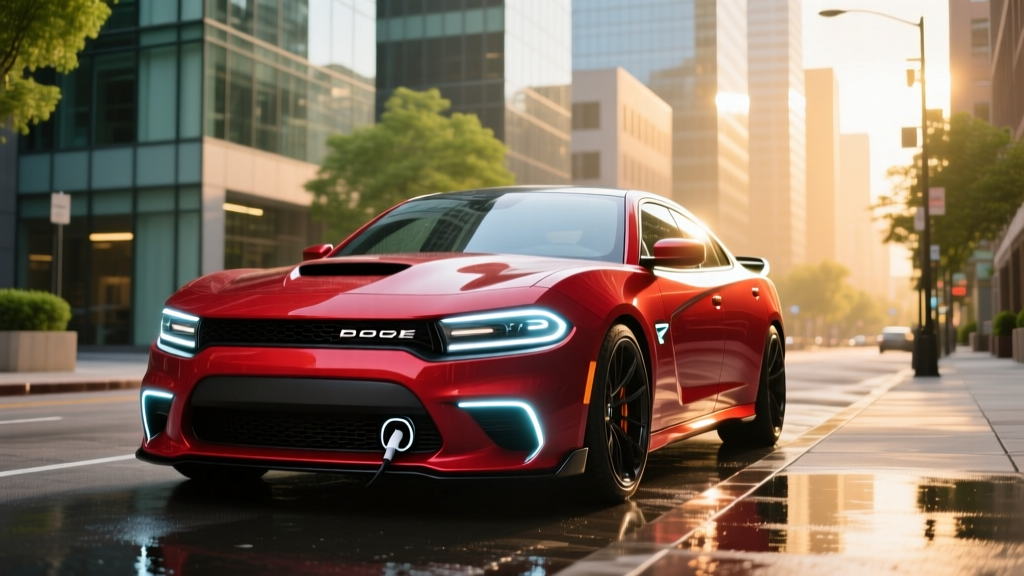
The 2025 Dodge Charger Daytona EV is the spiritual successor to the Hellcat — a battery-electric muscle car producing up to 670 horsepower in the R/T trim and up to 670 hp (with more expected in future Scat Pack variants). The current R/T starts at $59,590 (before incentives), delivers an EPA-estimated 317 miles of range, and hits 0-60 mph in approximately 4.7 seconds. However, it does not carry the "Hellcat" badge — Dodge has retired that nameplate. If you're searching for a "new electric Hellcat," the Charger Daytona is the closest equivalent, though buyers seeking 700+ hp will need to wait for announced higher-performance trims or consider the gas-powered Charger SIXPACK.
Range, Battery, and Real-World Efficiency
The 2025 Dodge Charger Daytona rides on Stellantis's STLA Large platform and packs a 100.6 kWh gross battery (approximately 93-95 kWh usable) using nickel-manganese-cobalt (NMC) chemistry. Here's what the EPA says versus what you'll actually experience:
EPA Range vs. Real-World Expectations
| Metric | R/T AWD | Notes |
|---|---|---|
| EPA Estimated Range | 317 miles | Combined city/highway cycle |
| Real-World Highway (70 mph) | ~240-260 miles | High-speed driving reduces efficiency ~18-22% |
| Cold Weather (below 32°F) | ~200-230 miles | NMC chemistry + cabin heating penalty |
| Efficiency (EPA) | ~2.5-2.7 kWh/mile | Heavy 5,800+ lb curb weight impacts consumption |
Source: fueleconomy.gov
At roughly 5,838 pounds (R/T), the Charger Daytona is one of the heaviest vehicles in its class. That mass gives it planted highway manners but exacts an efficiency toll — expect around 2.5-2.7 kWh per mile in mixed driving, which is thirstier than a Tesla Model S (~2.8-3.0 mi/kWh) or Hyundai Ioniq 6. For buyers coming from a 707-hp Hellcat that averaged 13-16 MPG, the efficiency improvement is real, but don't expect Model 3-level frugality.
Charging Speed: DC Fast, Level 2, and Infrastructure Reality
Dodge equips the Charger Daytona with an 800-volt architecture — the same voltage class used by Hyundai/Kia's E-GMP platform and Porsche's Taycan. This enables impressively fast DC charging:
| Charging Level | Power (kW) | Time / Rate | Connector |
|---|---|---|---|
| Level 1 (120V household) | ~1.4 kW | ~3-4 miles/hour | J1772 adapter |
| Level 2 (240V home) | ~11.5 kW | ~27-30 miles/hour; full charge ~9 hrs | J1772 / NACS adapter |
| DC Fast Charge | Peak ~175-185 kW | 10-80% in ~27 minutes | CCS1 (NACS adapter available) |
The 800V system allows the Charger Daytona to sustain higher charge rates deeper into the session compared to 400V architectures. However, the large ~100 kWh battery means even at peak rates, a 10-80% session takes roughly 27 minutes — longer than an Ioniq 5 (18 min) with its smaller battery, but competitive with other large-battery EVs like the BMW iX.
Home charging reality: To charge this 100 kWh battery overnight, you'll need a 48-amp Level 2 circuit (60-amp breaker). Installation costs typically range from $800-$2,500 depending on panel proximity and whether your home's electrical panel needs a 200-amp upgrade ($1,500-$3,500 additional). Budget accordingly — this is not a plug-into-any-outlet situation.
Performance: Where the Electric Hellcat Spirit Lives
| Spec | Charger Daytona R/T | 2023 Challenger Hellcat (gas) |
|---|---|---|
| Horsepower | 496 hp (up to 670 hp w/ PowerShot) | 717 hp |
| Torque | 404 lb-ft (up to 627 lb-ft w/ PowerShot) | 656 lb-ft |
| 0-60 mph | ~4.7 sec (est.) | ~3.6 sec |
| Drivetrain | AWD (dual motor) | RWD |
| Curb Weight | ~5,838 lbs | ~4,451 lbs |
| EPA Range / MPG | 317 mi / ~95 MPGe | ~16 MPG combined |
| Base MSRP | $59,590 | $65,595 (discontinued) |
Let's be direct: the current Charger Daytona R/T does not match the Hellcat's straight-line fury. The 717-hp Challenger Hellcat ran 0-60 in roughly 3.6 seconds; the Daytona R/T, even with its temporary "PowerShot" boost to 670 hp, takes approximately 4.7 seconds. The weight difference is the physics problem — nearly 1,400 extra pounds of battery mass.
Where the Daytona excels is in daily usability: instant torque from a stop, quiet cruising, all-wheel-drive traction in rain and light snow, and zero tailpipe emissions during city driving. Dodge has also engineered a "Fratzonic" exhaust system that simulates engine sound and even simulates gear shifts — a polarizing feature that some enthusiasts appreciate and others find gimmicky.
Buyers wanting Hellcat-rivaling performance should watch for Dodge's announced higher-output variants (potentially wearing Scat Pack or other performance badges), which have been teased at 800+ hp. These remain unreleased as of early 2026 — specs are preliminary.
EV vs. Gas Muscle Car: The Ownership Cost Breakdown
5-Year Estimated Cost of Ownership: Charger Daytona R/T vs. Comparable Gas Muscle Car
| Category | Charger Daytona R/T (EV) | Gas Equivalent (~$55K, 18 MPG) |
|---|---|---|
| Purchase Price (MSRP) | $59,590 | $55,000 |
| Federal Tax Credit (§30D) | Up to $7,500 (eligibility varies) | $0 |
| Effective Purchase Price | ~$52,090 (if eligible) | $55,000 |
| Fuel/Charging (5 yrs, 60K mi) | ~$3,600 (home L2) / ~$6,200 (public DC) | ~$10,500 ($3.50/gal avg) |
| Maintenance (5 yrs) | ~$1,200 (tires, cabin filter, fluid top-offs) | ~$3,800 (oil, brakes, belts, plugs) |
| Insurance (5 yrs avg) | ~$12,000-$15,000 | ~$9,000-$12,000 |
| Estimated 5-Year Total | ~$69,000-$76,000 | ~$78,300-$81,300 |
Assumptions: 12,000 miles/year, $0.14/kWh home electricity, $0.48/kWh public DC, $3.50/gal gas. Insurance varies significantly by driver profile and state. Tax credit eligibility depends on income, MSRP caps, and battery sourcing — see IRS §30D rules.
The EV wins on fuel and maintenance savings — roughly $5,000-$7,000 less over five years if charging primarily at home. However, insurance premiums for high-performance EVs are typically 20-35% higher than comparable gas cars, which narrows the gap. Your mileage (literally) will vary based on electricity rates, driving habits, and whether you have access to affordable home charging.
Federal Tax Credit Eligibility: What You Actually Qualify For
§30D Clean Vehicle Credit — Key Requirements (2025-2026)
- MSRP Cap: Sedans must be under $55,000; SUVs/trucks/vans under $80,000. The Charger Daytona is classified as a sedan — at $59,590 base, it may exceed the cap depending on final IRS vehicle classification and trim pricing.
- Buyer Income Limits: AGI must not exceed $150,000 (single), $225,000 (head of household), or $300,000 (joint).
- Battery Sourcing: Critical minerals and battery components must meet phased-in domestic/free-trade sourcing thresholds. Stellantis has not publicly confirmed full compliance for all Charger Daytona battery packs.
- Point-of-Sale Transfer: Eligible buyers can transfer the credit to the dealer for an immediate price reduction rather than claiming it on their tax return.
- One Credit Per VIN: The credit is tied to the vehicle, not the buyer — verify the specific VIN's eligibility at fueleconomy.gov.
Disclaimer: Tax credit rules are complex and subject to change. Consult a tax professional and verify VIN-level eligibility before purchasing.
The Charger Daytona's tax credit situation is uncertain. If IRS classifies it as a sedan, the $55,000 MSRP cap may disqualify higher trims. If classified as an SUV (some crossovers get reclassified), the $80,000 cap would apply. Always check the specific VIN on fueleconomy.gov before committing to a purchase.
Common Misconceptions About the Electric Charger
| Myth | Fact |
|---|---|
| "It's basically a Hellcat but electric" | The current R/T produces 496-670 hp vs. the Hellcat's 717 hp. It's a grand tourer, not a drag strip monster. |
| "317 miles means I'll always get 317 miles" | Highway driving at 75+ mph drops range to ~240-260 miles. Sub-freezing temps drop it further to ~200-230 miles. |
| "I can charge it on any outlet" | Level 1 (120V) adds only ~3-4 miles per hour — a full charge takes over 24 hours. You need Level 2 for practical daily use. |
| "The battery will need expensive replacement soon" | Stellantis provides an 8-year/100,000-mile battery warranty (covering capacity below 70%). NMC batteries typically retain 85-90% capacity at 100K miles. |
| "It qualifies for the full $7,500 tax credit" | Eligibility depends on MSRP classification, buyer income, and battery sourcing. Not guaranteed — verify per VIN. |
Who Should Buy the Charger Daytona — And Who Shouldn't
Decision Framework: Is This EV Right for You?
Choose the Charger Daytona if:
- You want a stylish, practical American EV with genuine muscle-car presence
- You have home Level 2 charging access (or can install it)
- Your daily commute is under 80 miles round-trip
- You value instant torque, AWD traction, and quiet cruising over raw 0-60 numbers
- You're coming from a V8 and want to reduce fuel costs without going full "appliance car"
Look elsewhere if:
- You need 700+ hp and sub-3.5-second 0-60 times (wait for higher trims or keep a gas car for track days)
- You live in an apartment with no charging access and your area has sparse DC fast-charging infrastructure
- You regularly drive 300+ miles in cold weather without stopping — the real-world range won't support it
- You're on a tight budget — even with incentives, this is a $55K-$65K vehicle with premium insurance costs
Battery Warranty, Degradation, and Long-Term Ownership
Stellantis backs the Charger Daytona's battery with an 8-year / 100,000-mile warranty, guaranteeing that the pack will retain at least 70% of its original capacity during that period. This is the industry-standard floor set by federal emissions warranty requirements, and most manufacturers now match or exceed it.
Based on data from similar NMC packs in the industry (Hyundai, BMW, VW), expect approximately 5-8% degradation in the first 50,000 miles, then a slower linear decline. At 100,000 miles, most NMC packs retain 85-92% of original capacity under normal use. Extreme heat exposure, frequent DC fast charging above 80%, and consistently charging to 100% accelerate degradation — keeping daily charges between 20-80% and preconditioning before fast charging will maximize longevity.
If the battery does need out-of-warranty replacement, expect a cost in the range of $12,000-$18,000 for a ~100 kWh pack, based on current NMC cell pricing trends. However, this is a worst-case scenario that very few owners will face within the first decade.
Frequently Asked Questions
Does Dodge make an electric Hellcat?
No. Dodge has retired the "Hellcat" nameplate. The 2025 Charger Daytona EV is the brand's electric muscle car, producing up to 670 hp in current R/T form — less than the Hellcat's 717 hp. Higher-output variants have been announced but are not yet on sale.
How much does the 2025 Dodge Charger Daytona cost?
The R/T trim starts at $59,590 before destination charges and incentives. Fully loaded, expect pricing in the mid-$60,000s. Federal tax credit eligibility is uncertain due to MSRP cap and battery sourcing rules.
What is the real-world range of the Charger Daytona?
The EPA rates the R/T at 317 miles combined. In real-world highway driving at 70-75 mph, expect 240-260 miles. In cold weather (below freezing), expect 200-230 miles. Plan road trips around the conservative estimate.
Can I charge the Charger Daytona at a Tesla Supercharger?
Dodge has indicated NACS adapter compatibility for Supercharger access, but availability depends on the specific adapter and Tesla's network openness to non-Tesla vehicles in your region. Confirm adapter availability with your dealer before relying on Supercharger access.
How does the Charger Daytona compare to a Tesla Model S?
The Model S offers more range (402 mi EPA), faster charging, and a more mature Supercharger network. The Charger Daytona offers more traditional muscle-car styling, a physical instrument cluster, and the Dodge brand identity. Performance is comparable in the R/T trim, though the Model S Plaid (1,020 hp) far exceeds any current Daytona variant.
Is the Charger Daytona good in winter?
The standard AWD system provides confident traction in snow and rain. However, range drops 25-35% in sub-freezing temperatures — a characteristic of NMC chemistry, not a Dodge-specific flaw. If you live in a cold climate, plan for ~200-230 miles of usable winter range and precondition the battery while plugged in.