Quick Answer: Is the Dodge Charger Daytona the Right All-Electric Car for You?
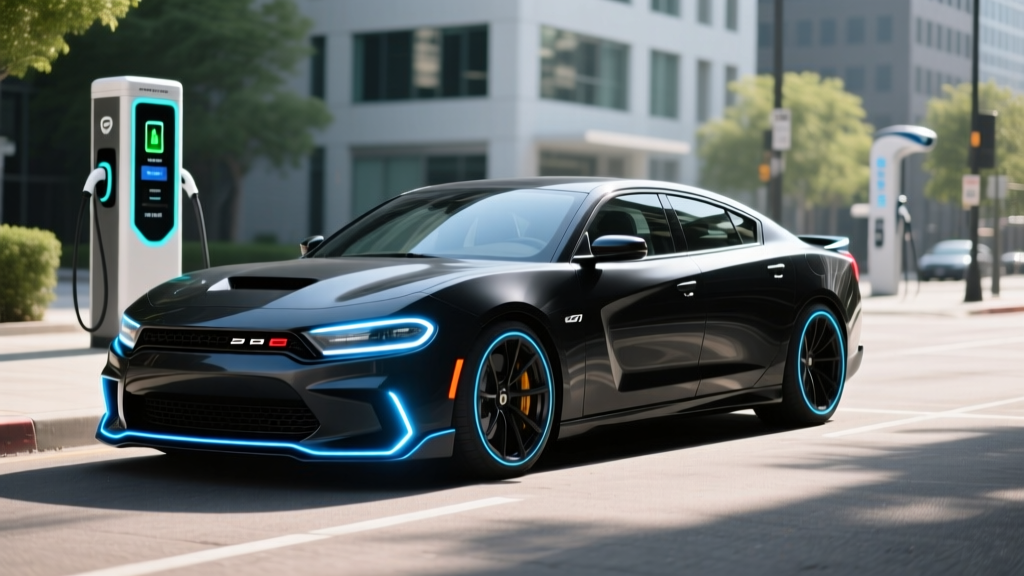
The 2026 Dodge Charger Daytona is Dodge's first all-electric production car, offered in two trims: the R/T (496 hp, 318 miles EPA range) and the Scat Pack (670 hp, 260 miles EPA range). Pricing starts at approximately $51,990 for the R/T before incentives. It rides on Stellantis' STLA Large platform with an 800-volt architecture capable of peak DC fast charging at roughly 200 kW. If you want muscle-car performance with zero tailpipe emissions and can charge at home, the Charger Daytona is a compelling option — but buyers should understand real-world range trade-offs, cold-weather impacts, and federal tax credit eligibility before committing.
Range, Battery, and Real-World Efficiency
The 2026 Dodge Charger Daytona is built around a 100.6 kWh (gross) lithium-ion battery pack using NMC (nickel-manganese-cobalt) chemistry. The usable capacity is approximately 96 kWh. Here's how the two trims stack up on paper — and on the road.
| Spec | R/T | Scat Pack |
|---|---|---|
| EPA Range | 318 miles | 260 miles |
| Real-World Highway (~70 mph) | ~260–280 miles | ~210–230 miles |
| Cold-Weather Estimate (20°F) | ~220–250 miles | ~175–200 miles |
| Battery (Gross / Usable) | 100.6 kWh / ~96 kWh | 100.6 kWh / ~96 kWh |
| Chemistry | NMC | NMC |
| Efficiency (MPGe Combined) | ~92 MPGe | ~82 MPGe |
| Horsepower | 496 hp | 670 hp |
| 0–60 mph | 4.7 seconds | 3.3 seconds |
| Drivetrain | AWD (dual motor) | AWD (dual motor) |
Real-World Range Reality Check
EPA estimates assume a mix of city and highway driving at moderate temperatures. In practice, the Scat Pack's more aggressive power delivery, wider tires, and sport-tuned suspension increase rolling resistance and energy consumption. On a 75 mph interstate run in summer, expect the Scat Pack to deliver roughly 215–230 miles before you need to stop. In freezing temperatures (20°F or below), NMC batteries lose roughly 20–30% of their rated range due to increased internal resistance and cabin heating demands. The R/T, with its lower output and slightly better efficiency, holds up better on long road trips — a critical distinction if your commute or travel patterns regularly exceed 200 miles.
Charging Speeds: Home and DC Fast Charging
Dodge equips the Charger Daytona with an 800-volt electrical architecture, which enables faster DC charging and thinner, lighter wiring harnesses. Here's what charging looks like across all three levels:
| Charging Level | Power (kW) | Connector | Miles of Range Added | Notes |
|---|---|---|---|---|
| Level 1 (120V household) | ~1.4 kW | J1772 / NACS adapter | ~4–5 miles/hour | Emergency/trickle only; full charge takes 3+ days |
| Level 2 (240V home/public) | Up to 11.5 kW | J1772 / NACS | ~32–38 miles/hour | Full overnight charge in ~9 hours |
| DC Fast Charging | Peak ~200 kW | CCS1 (NACS adapter available) | ~140 miles in 15 min (10–80%) | Peak rate sustained to ~35% SoC; tapers significantly above 80% |
Charging curve reality: The advertised 200 kW peak is only sustained at low states of charge (roughly 10–35% SoC). Between 35–60%, expect rates around 150–160 kW. Above 80%, the battery management system throttles charging to protect cell longevity, dropping below 50 kW. This is standard behavior for NMC packs, but it means a 10–90% charge will take roughly 35–40 minutes — not the 20 minutes some marketing materials imply. Always plan road-trip stops around 10–80% charges for maximum efficiency.
The Charger Daytona uses the CCS1 connector natively. Stellantis has committed to providing NACS (Tesla-style) adapters for access to the Tesla Supercharger network, which now includes over 20,000 stalls in North America. Verify adapter availability and included-vs-purchased status with your dealer at the time of purchase.
Pricing, Trims, and Federal Tax Credit Eligibility
| Trim | Base MSRP (2026) | Key Features |
|---|---|---|
| R/T | $51,990 | 496 hp, 318-mi range, 20" wheels, heated seats, 12.3" infotainment |
| Scat Pack | $57,990 | 670 hp, 260-mi range, Track mode, launch control, upgraded brakes, 20" aluminum wheels |
Destination charges add approximately $1,595. Fully loaded Scat Pack models with the Plus Group and Track Package can push past $68,000.
Federal §30D Tax Credit: What You Need to Know
The Charger Daytona may qualify for up to $7,500 in federal EV tax credits under IRS §30D rules, but eligibility depends on several factors that change annually:
- MSRP Cap: The vehicle must have an MSRP below $55,000 for sedans. The R/T at $51,990 qualifies; the Scat Pack at $57,990 currently exceeds the sedan cap. (Check IRS guidance — classification as a sedan vs. SUV/truck affects the cap.)
- Buyer Income Limits: Modified adjusted gross income must not exceed $150,000 (single), $225,000 (head of household), or $300,000 (joint filers).
- Battery Sourcing: The $7,500 credit is split into two $3,750 halves — one for critical minerals sourcing and one for battery component manufacturing. Stellantis' supply chain compliance with North American sourcing requirements determines how much of the credit applies. This changes yearly as sourcing rules tighten.
- Point-of-Sale Transfer: As of 2024, buyers can transfer the credit to the dealer at purchase, reducing the upfront price rather than waiting for a tax refund. The dealer must be registered with the IRS.
Bottom line: Consult a tax professional and check fueleconomy.gov for the latest eligibility status before relying on the credit in your purchase math.
Cost of Ownership: Charger Daytona EV vs. Gas Dodge Charger
To understand whether the electric Charger saves money over its gas-powered predecessor, we compared a 5-year ownership scenario. The gas baseline is a 2023 Dodge Charger R/T with the 5.7L HEMI V8 (an apt comparison for performance intent).
| Cost Category (5-Year) | 2026 Charger Daytona R/T (EV) | 2023 Charger R/T 5.7L HEMI (Gas) |
|---|---|---|
| Purchase Price (MSRP) | $51,990 | $44,990 |
| Estimated Federal Tax Credit | –$3,750 to –$7,500* | $0 |
| Fuel / Energy (15,000 mi/yr) | $4,200 (at $0.14/kWh avg) | $12,750 (at $3.50/gal, 19 MPG combined) |
| Maintenance | ~$1,800 | ~$4,500 |
| Insurance (avg) | ~$12,500 | ~$10,200 |
| 5-Year Total (approx.) | $62,990 – $66,740 | $72,440 |
*Tax credit amount depends on battery sourcing compliance and buyer income. Insurance estimates are averages; EV insurance premiums tend to run 15–25% higher than equivalent gas vehicles due to higher repair costs and battery replacement risk.
Key takeaway: The EV Charger breaks even or pulls ahead within 5 years despite a higher sticker price, primarily through fuel and maintenance savings. Home charging at residential electricity rates is essential to achieving these numbers. If you rely exclusively on DC fast charging at $0.35–$0.50/kWh, your energy costs roughly double, eroding much of the savings advantage.
Real-World Ownership: What First-Time EV Buyers Must Know
Buying your first all-electric car involves adjustments that go beyond the showroom. Here's what Charger Daytona buyers should plan for:
Home Charging Is Non-Negotiable for Most Owners
Level 2 home charging (240V, 40–48 amps) is the backbone of convenient EV ownership. A full overnight charge adds roughly 300+ miles — enough to start every day with a "full tank." Budget $800–$2,000 for a quality Level 2 charger (ChargePoint Home Flex, Emporia Vue, or Wallbox Pulsar Plus) and $500–$2,500 for professional electrician installation, depending on your panel capacity and run distance. If your home has a 100-amp electrical panel, you may need a $1,500–$3,000 panel upgrade to support a 48-amp circuit.
Cold Climate Considerations
NMC batteries lose 20–30% of rated range in sustained freezing temperatures. The Charger Daytona includes a heat pump (standard on both trims), which significantly reduces the energy penalty of cabin heating compared to resistive heaters. Still, if you live in Minnesota, North Dakota, or similar climates, plan around the cold-weather range figures in the spec table above. Preconditioning the battery while plugged in — warming it using grid power before you drive — preserves range and enables faster DC charging on winter road trips.
Public Charging Infrastructure
The Charger Daytona's CCS1 connector is compatible with Electrify America, EVgo, and most non-Tesla networks. With the NACS adapter, Tesla Supercharger access expands your options considerably. Use apps like PlugShare and A Better Routeplanner to map charging along your regular routes. In rural areas of the Mountain West and Great Plains, DC fast chargers remain sparse — a real limitation for road-trip-heavy owners.
Maintenance Simplification
EVs eliminate oil changes, transmission fluid, spark plugs, and exhaust system repairs. The Charger Daytona's regenerative braking significantly extends brake pad life — many EV owners report original brake pads lasting 80,000+ miles. Expect to maintain tires (EVs wear tires faster due to instant torque and heavier weight), cabin air filters, brake fluid, coolant, and windshield washer fluid. Stellantis provides an 8-year/100,000-mile battery warranty covering defects and capacity loss below 70% of original capacity.
Common Misconceptions About the Dodge All-Electric Car
| Myth | Fact |
|---|---|
| "EVs are slower than muscle cars." | The Scat Pack hits 60 mph in 3.3 seconds — quicker than the gas Charger SRT Hellcat's 3.6-second time. Electric motors deliver instant torque with no gear shifts. |
| "The battery will need replacing in a few years." | NMC batteries in modern thermal-managed packs like the Daytona's typically degrade 10–15% over 100,000 miles. The 8-year/100,000-mile warranty covers capacity below 70%. |
| "Charging takes too long for road trips." | At 200 kW peak, the Daytona adds ~140 miles in 15 minutes. Most drivers stop for 20–30 minutes every 2–3 hours anyway. Plan around 10–80% charges to avoid taper slowdowns. |
| "EVs are worse in winter." | Range drops 20–30% in extreme cold, but AWD traction, instant cabin heat (with heat pump), and a low center of gravity make the Daytona capable in snow and ice. Preconditioning mitigates range loss. |
| "I'll save $7,500 no matter what." | The §30D credit has income caps, MSRP caps, and battery sourcing requirements that change yearly. The Scat Pack may exceed the sedan MSRP cap. Always verify with a tax professional. |
Decision Framework: Is the Charger Daytona Right for You?
Choose the Charger Daytona R/T if:
- You want 300+ miles of range for commuting and regular road trips
- You have access to Level 2 home charging (or can install it)
- Your budget is $50,000–$55,000 and you want to stay under the §30D MSRP cap
- You value daily usability over maximum track performance
- You drive 30–60 miles daily and want to charge overnight for pennies per mile
Choose the Charger Daytona Scat Pack if:
- Performance is the priority — 670 hp and 3.3-second 0–60 times are supercar territory
- You primarily drive shorter routes (under 200 miles) and can accept the 260-mile range
- You're willing to pay $58,000+ and potentially forfeit the full federal tax credit due to the MSRP cap
- You plan to use Track mode and launch control regularly
Consider a PHEV or gas alternative if:
- You cannot install home charging and lack reliable public charging near your home or workplace
- You regularly drive 300+ miles in a single trip through areas with sparse DC charging infrastructure
- Your budget is under $40,000 and you need a more affordable entry point
- You live in extreme cold climates and cannot accept the 20–30% winter range penalty
Frequently Asked Questions
Does the Dodge Charger Daytona qualify for the $7,500 federal tax credit?
It depends. The R/T at $51,990 falls under the $55,000 sedan MSRP cap, but the Scat Pack at $57,990 may not (unless classified differently by the IRS). Additionally, buyer income limits, battery critical-mineral sourcing, and component manufacturing requirements all affect eligibility. Check IRS §30D guidance and consult a tax professional before purchasing.
How long does it take to charge the Charger Daytona at home?
On a Level 2 home charger at 11.5 kW, a full 0–100% charge takes approximately 9 hours. Most owners plug in overnight and wake up to a full battery every morning. On a standard 120V outlet (Level 1), a full charge takes over 60 hours — only practical for emergency trickle charging.
What is the real-world range of the Dodge all-electric car?
The R/T achieves an EPA-estimated 318 miles, but expect roughly 260–280 miles in real-world highway driving at 70–75 mph. The Scat Pack's EPA rating of 260 miles translates to about 210–230 miles on the highway. In cold weather (below 32°F), subtract another 20–30% from these figures.
Is the Charger Daytona self-driving?
No. The Charger Daytona offers Level 2 driver-assistance features (adaptive cruise control, lane centering, automatic emergency braking) under Stellantis' ADAS suite. Per SAE automation definitions, Level 2 requires the driver to remain fully engaged and supervising at all times. This is not autonomous or self-driving capability.
How does the Charger Daytona compare to the Tesla Model S?
The Model S Long Range offers 402 miles of EPA range and starts at roughly $74,990 — significantly more expensive but with superior range and access to the native Supercharger network. The Daytona Scat Pack matches or beats the Model S Plaid on 0–60 performance at a lower price, but sacrifices roughly 140 miles of range. The Daytona appeals to buyers who want Dodge's muscle-car identity; the Model S appeals to range-maximizers and tech-focused buyers.
What is the battery warranty on the Dodge Charger Daytona?
Stellantis covers the battery pack for 8 years or 100,000 miles (whichever comes first), warranting against defects and capacity degradation below 70% of original capacity. This is consistent with industry standards. Out-of-warranty battery replacement costs for a 100+ kWh pack are estimated at $12,000–$18,000, though actual costs will depend on future cell pricing and availability.
Can I tow with the Charger Daytona?
Dodge has not published an official towing rating for the Charger Daytona as of this writing. Given its sedan body style and performance orientation, it is not designed as a tow vehicle. Buyers needing towing capacity should look at electric trucks or SUVs like the Ford F-150 Lightning or Rivian R1S.
Sources: EPA range and efficiency data via fueleconomy.gov; IRS §30D credit rules via irs.gov; Dodge Charger Daytona specifications via Stellantis/Dodge official press materials.