Quick Verdict: The Dodge EREV Muscle Car Gambit
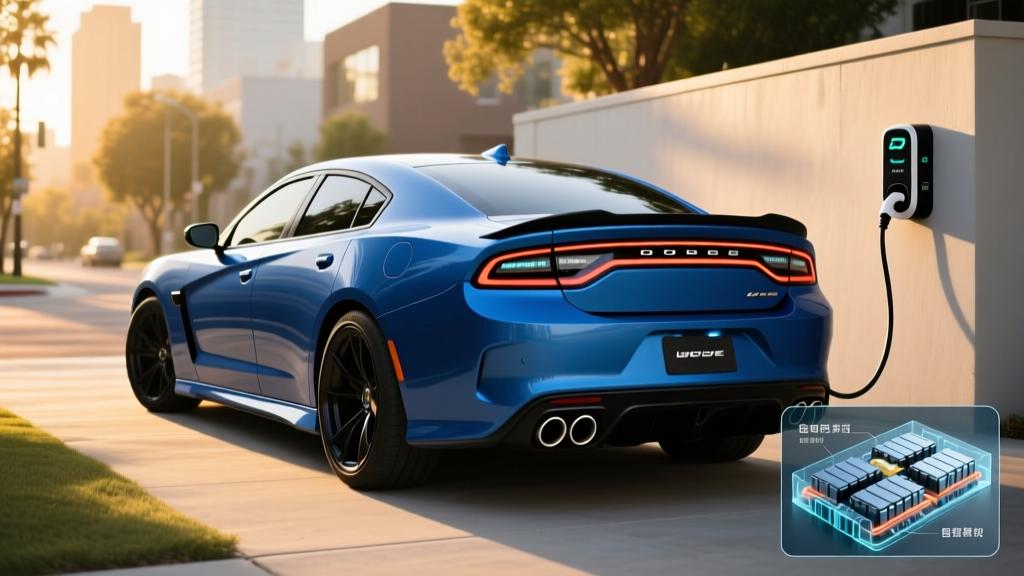
Stellantis is betting that American muscle-car loyalists aren't ready to go full battery-electric — and the 2026 Dodge Charger Daytona EREV (Extended-Range Electric Vehicle) is the proof. Unlike a pure BEV, this Charger pairs a modest battery pack with a 3.0-liter Hurricane inline-six twin-turbo engine that acts solely as a generator. The wheels are always driven by electric motors; the gas engine never connects to the drivetrain. It's a series hybrid in the tradition of the original Chevy Volt, but with significantly more power and a muscle-car identity.
The EREV variant sits alongside the all-electric Charger Daytona BEV (available in Scat Pack and R/T trims) in Dodge's 2026 lineup. Where the BEV offers 268 to 317 miles of EPA range depending on trim, the EREV promises something different: roughly 80 miles of pure electric driving for daily commutes, plus a combined total range exceeding 450 miles when the range extender kicks in. For buyers who want electric daily driving without any long-trip charging anxiety, the EREV is Dodge's answer — though it comes with trade-offs in weight, complexity, and price that deserve a close look.
2026 Dodge Charger Daytona EREV: Full Spec Sheet
Because the EREV powertrain differs substantially from the BEV models, here's a consolidated look at the key specifications as announced by Dodge for the 2026 model year.
| Specification | Charger Daytona EREV (Announced) |
|---|---|
| Powertrain Type | Series hybrid (EREV) — electric motors drive wheels; ICE is generator only |
| Battery Capacity (usable) | ~35 kWh (estimated), NMC chemistry |
| Range Extender Engine | 3.0L Hurricane I-6 twin-turbo (generator mode) |
| EV-Only Range (EPA est.) | ~80 miles |
| Total Combined Range (est.) | 450+ miles |
| Combined System Horsepower | ~455 hp (est., dual-motor AWD) |
| 0–60 mph (est.) | ~4.5 seconds |
| Drivetrain | Dual-motor AWD |
| Max DC Fast Charge Rate | ~100 kW (est.) |
| 10–80% DC Charge Time | ~28 minutes (est.) |
| Level 2 Home Charging | ~7.2 kW / ~22 mi/hr |
| EPA MPGe (EV mode, est.) | ~95 MPGe combined |
| Fuel Economy (CS mode, est.) | ~28 MPG combined (engine running) |
| Base MSRP (est.) | ~$55,000 |
| Battery/Powertrain Warranty | 8 years / 100,000 miles |
Note: The Charger Daytona EREV has been announced but is not yet available for purchase as of early 2026. Specifications above are preliminary estimates based on Dodge disclosures and industry analysis. Final EPA-certified figures may differ. We will update this review when production models are delivered and independently tested.
Real-World Range: What to Expect Beyond the EPA Sticker
EPA Estimated (EV-only): ~80 miles
Real-World Highway (70 mph, moderate temps): ~65–72 miles
Real-World City / Mixed: ~75–85 miles (regen braking helps)
Cold Weather (below 32°F): ~50–60 miles (expect 25–35% reduction)
Total Range with Extender: 450+ miles combined
The ~80-mile EV-only range figure is competitive for an EREV in this class — it comfortably covers most American daily commutes (the U.S. average is roughly 37 miles round-trip, per FHWA data). However, as with any EV, real-world results depend heavily on conditions.
Highway driving at sustained 70+ mph speeds will drain the battery faster than the EPA cycle suggests. Expect closer to 65–72 miles of pure electric range on an open interstate. City driving, where regenerative braking recaptures energy at every stop, can actually push you slightly above the EPA estimate. Cold weather is the biggest variable: battery chemistry becomes less efficient below freezing, and cabin heating draws significant power. Plan for a 25–35% range reduction in sub-freezing conditions, dropping EV-only range to roughly 50–60 miles.
Once the battery depletes to its buffer threshold, the Hurricane twin-turbo I-6 starts generating electricity. The transition is designed to be nearly seamless — most EREV owners report they can't feel the engine start under normal driving. Total range with a full tank and full battery should exceed 450 miles, making this a viable road-trip vehicle without DC fast-charger dependency.
Charging: DC Fast, Level 2, and Home Setup
Charging an EREV is fundamentally different from charging a large-battery BEV. With roughly 35 kWh of usable battery capacity, the Charger Daytona EREV's charging demands are modest — which means faster sessions and less strain on home electrical infrastructure.
| Charging Level | Power / Rate | Time (Approx.) | Use Case |
|---|---|---|---|
| Level 1 (120V household) | ~1.4 kW | ~25 hours (0–100%) | Emergency / trickle top-up |
| Level 2 (240V home/public) | ~7.2 kW | ~5 hours (0–100%) | Daily overnight charging |
| DC Fast Charge | ~100 kW peak | ~28 min (10–80%) | Road-trip EV range replenishment |
Home charging is the sweet spot. A Level 2 home charger at 7.2 kW will fully replenish the ~35 kWh battery in about five hours — easily achievable overnight. Because the battery is small, you likely won't need a panel upgrade for a 40-amp / 7.2 kW charger installation (a 200-amp panel is typically sufficient). Expect a professional Level 2 installation to run $600–$1,500 for the charger and electrician labor if your panel is already adequate, per U.S. Department of Energy guidance.
DC fast charging is adequate but not impressive. The estimated ~100 kW peak rate is constrained by the smaller battery's ability to accept charge (charge C-rate). A 35 kWh battery charging at 100 kW is approaching a 3C rate, which is near the upper limit for sustained NMC charging without excessive heat. Expect the charge curve to taper noticeably above 60% state of charge. The 10–80% session should take roughly 28 minutes — acceptable for a quick stop, but not competitive with BEVs like the Hyundai Ioniq 5 (which charges at 240 kW on 800V architecture).
The practical reality: most EREV owners will rarely use DC fast charging. If your daily commute fits within the 80-mile EV envelope and you charge at home nightly, you may go weeks without visiting a gas station or a fast charger. The gas engine handles long trips.
Performance: Hurricane-Powered Electric Muscle
The EREV powertrain uses a dual-motor all-wheel-drive layout, with electric motors providing instant torque to all four wheels. The combined system output is estimated at approximately 455 horsepower — a meaningful step below the Charger Daytona BEV Scat Pack's 670 hp, but still firmly in muscle-car territory.
The estimated 0–60 mph time of ~4.5 seconds is respectable and puts the EREV in the company of performance sedans like the BMW M340i xDrive. The electric motors deliver their torque instantly, so real-world acceleration feels punchier than the number suggests, particularly in the 0–30 mph range where the EREV will leap from stoplights.
The 3.0-liter Hurricane inline-six twin-turbo serves exclusively as a generator. It does not mechanically drive the wheels. This means the driving experience is always electric — smooth, linear, and quiet in EV mode. When the engine starts, it runs at optimized RPM for electricity generation rather than tracking throttle input, which can create a slight disconnect between engine noise and acceleration feel (a common EREV trait shared with the BMW i3 REx and earlier Chevy Volt).
Dodge has emphasized that the EREV will retain the brand's performance character, including launch control, drive modes, and the simulated "Fratzonic" exhaust note (a speaker-based sound system that mimics a V8 rumble). Whether that synthetic sound satisfies muscle-car traditionalists remains an open question.
Interior, Cargo, and Technology
The Charger Daytona EREV shares its interior with the BEV variants, meaning you get Dodge's latest Uconnect 5 infotainment system on a 12.3-inch center touchscreen, a 10.25-inch digital instrument cluster, and an available head-up display. The cabin is a two-door coupe layout (a four-door variant has been confirmed for later), with seating for five.
Cargo space is a practical consideration. The BEV Charger Daytona offers approximately 14.5 cubic feet of trunk space. The EREV variant will lose some of that volume to the range-extender engine and fuel tank packaging in the rear — expect roughly 12–13 cubic feet of usable trunk space. There is no frunk (front trunk), as the Hurricane engine and associated power electronics occupy the space under the hood.
Passenger space should mirror the BEV: approximately 42 inches of front legroom and 33 inches of rear legroom. The rear seat is best suited for children or shorter adults on longer trips — typical for a coupe.
Driver-assistance technology includes adaptive cruise control with stop-and-go, lane-keeping assist, automatic emergency braking, blind-spot monitoring, and rear cross-traffic alert. These are SAE Level 2 driver-assistance features — the driver must remain attentive and in control at all times. Dodge has not announced any plans for a hands-free highway driving system (comparable to GM's Super Cruise or Ford's BlueCruise) on the Charger platform.
Pricing, Tax Credits, and Ownership Costs
The 2026 Dodge Charger Daytona EREV is expected to start around $55,000 MSRP, positioning it between the BEV R/T (~$52,000) and the BEV Scat Pack (~$60,000). A fully loaded EREV with performance and technology packages could approach $65,000.
| Cost Factor | Details |
|---|---|
| Estimated Base MSRP | ~$55,000 |
| Estimated As-Tested Price | ~$62,000–$65,000 |
| Federal Tax Credit (§30D) | Up to $7,500 — eligibility depends on battery sourcing, buyer income, and MSRP caps |
| MSRP Cap (§30D) | $55,000 for sedans/coupes — EREV base price may be at or slightly above the cap |
| Buyer Income Cap (§30D) | $150K single / $225K head of household / $300K joint filers |
| Battery Sourcing Requirement | Critical minerals + battery components must meet phased-in thresholds |
| Point-of-Sale Transfer | Available — credit applied at purchase, reducing out-of-pocket cost |
| Annual Fuel/Energy Cost (est.) | ~$800–$1,200 (mix of electricity and gasoline, varies by driving pattern) |
Tax credit eligibility is uncertain. Under IRS §30D rules, the $7,500 federal credit requires the vehicle to meet battery-component and critical-mineral sourcing thresholds that tighten annually. Additionally, the MSRP cap for sedans and coupes is $55,000 — if the EREV's base price lands even slightly above that threshold, it would be ineligible regardless of sourcing compliance. Buyer income caps also apply. The point-of-sale transfer option (allowing the credit to reduce your purchase price at the dealer rather than waiting for a tax refund) is available if the vehicle qualifies. Consult a tax professional and check the latest fueleconomy.gov listings before relying on the credit in your purchase decision.
Five-year ownership costs will depend heavily on how much you drive in EV mode versus charge-sustaining (engine-running) mode. If your commute fits within 80 miles and you charge at home, your fuel costs will be very low — roughly $0.04–$0.06 per mile on electricity (national average). On road trips where the engine runs, expect costs closer to $0.12–$0.15 per mile at current gas prices. Insurance premiums for performance coupes tend to run 15–25% above the segment average.
Who Should Buy the Dodge Charger Daytona EREV?
Choose the EREV if:
- Your daily commute is under 70 miles round-trip and you can charge at home
- You want electric daily driving but regularly take 300+ mile road trips
- You want a performance coupe with muscle-car branding but aren't ready for full BEV ownership
- You lack reliable DC fast-charging infrastructure near your home or on your common routes
- You want maximum EV range — the BEV Charger Daytona R/T offers 317 EPA miles
- You need serious cargo space — consider an SUV-format EREV like the upcoming Jeep options
- You want a proven EREV platform — the BMW iX xDrive50 or Toyota RAV4 Prime have longer track records
- Tax credit eligibility is critical to your budget — the MSRP cap puts this vehicle in a precarious position
The Charger Daytona EREV is best understood as a bridge vehicle for a specific buyer: someone emotionally tied to the Dodge muscle-car identity, practically constrained by charging infrastructure, and unwilling to commit to a pure EV. It's not the most efficient or the most powerful option in Dodge's own lineup — the BEV Scat Pack beats it on both counts. But it is the most flexible, offering genuine daily EV commuting with zero range anxiety on longer hauls.
Key competitors to cross-shop include the BMW i5 xDrive50 (a premium BEV sedan with 295 miles of range, starting around $70,000), the Toyota Crown Signia (a hybrid wagon, not an EREV, but excellent efficiency at a lower price), and the Charger Daytona BEV R/T (317 miles EPA, simpler powertrain, lower maintenance). None of these match the EREV's specific combination of electric-only commuting plus engine-backed total range, which is the EREV's unique selling proposition.
Pros and Cons at a Glance
- ~80 miles EV-only covers most daily commutes with zero emissions
- 450+ mile total range eliminates road-trip charging dependency
- Instant electric torque with AWD provides strong acceleration
- Muscle-car identity and styling in an electrified package
- Modest battery means faster home charging and lower replacement cost risk
- Smaller battery may avoid panel-upgrade costs for home Level 2 install
- DC fast charging at ~100 kW is slow by modern BEV standards
- Trunk space reduced vs. BEV due to engine/fuel tank packaging
- MSRP near the $55K sedan cap jeopardizes federal tax credit eligibility
- EREV adds mechanical complexity (two powertrains to maintain long-term)
- Engine noise under load may not match throttle feel (series-hybrid trait)
- Not yet available for purchase — specs remain preliminary
- Cold-weather EV range drops to ~50–60 miles
Frequently Asked Questions
What is the real-world range of the Dodge Charger Daytona EREV?
In EV-only mode, expect roughly 65–85 miles depending on driving conditions (highway vs. city, temperature). With the Hurricane range extender running, total combined range should exceed 450 miles. Cold weather will reduce EV-only range by 25–35%.
How fast does the Charger EREV charge at home and on DC fast chargers?
At home on a Level 2 (240V, 7.2 kW) charger, the ~35 kWh battery fills in about five hours. On a DC fast charger, the estimated peak rate is ~100 kW, achieving a 10–80% charge in roughly 28 minutes. The smaller battery limits peak charge rate compared to large-battery BEVs.
Does the Dodge Charger Daytona EREV qualify for the $7,500 federal EV tax credit?
Eligibility is uncertain and depends on multiple factors under IRS §30D: the vehicle's MSRP must not exceed $55,000 (the sedan/coupe cap), the buyer's adjusted gross income must fall within limits ($150K/$225K/$300K by filing status), and the battery must meet critical-mineral and component-sourcing thresholds. The EREV's estimated ~$55,000 base price puts it right at the cap boundary. Always verify current eligibility on fueleconomy.gov before purchasing.
Is the EREV worth buying over the Charger Daytona BEV?
It depends on your use case. If you can charge at home and rarely drive more than 300 miles in a day, the BEV R/T (317 miles EPA range) is simpler, has more cargo space, lower maintenance costs, and a stronger tax-credit case. If you regularly take long trips through areas with sparse charging infrastructure, the EREV's 450+ mile total range and gas-engine backup make it the more practical choice.
What's the biggest drawback of the Charger Daytona EREV?
The combination of limited DC fast-charging speed (~100 kW peak), reduced trunk space from the range-extender packaging, and uncertain federal tax credit eligibility are the primary concerns. Additionally, the EREV's two-powertrain architecture means more long-term maintenance complexity than a pure BEV — you're maintaining both an electric drivetrain and a turbocharged gasoline engine.
When will the Dodge Charger Daytona EREV be available to buy?
Dodge has announced the EREV variant as part of the Charger Daytona lineup, with production expected to begin in late 2025 or early 2026. Exact delivery timelines and final EPA-certified specifications have not been confirmed. We recommend monitoring Dodge's official site for updates and placing a reservation only after reviewing final pricing and tax-credit eligibility.
How does the EREV's warranty compare?
Dodge is expected to offer an 8-year/100,000-mile warranty on the high-voltage battery and electric powertrain components, consistent with industry standards and federal requirements for emissions-related components. The gasoline range extender should be covered under the standard 5-year/60,000-mile powertrain warranty. Final warranty terms will be confirmed at launch.