Quick Verdict: Tesla Connectivity & the 2026 Model 3
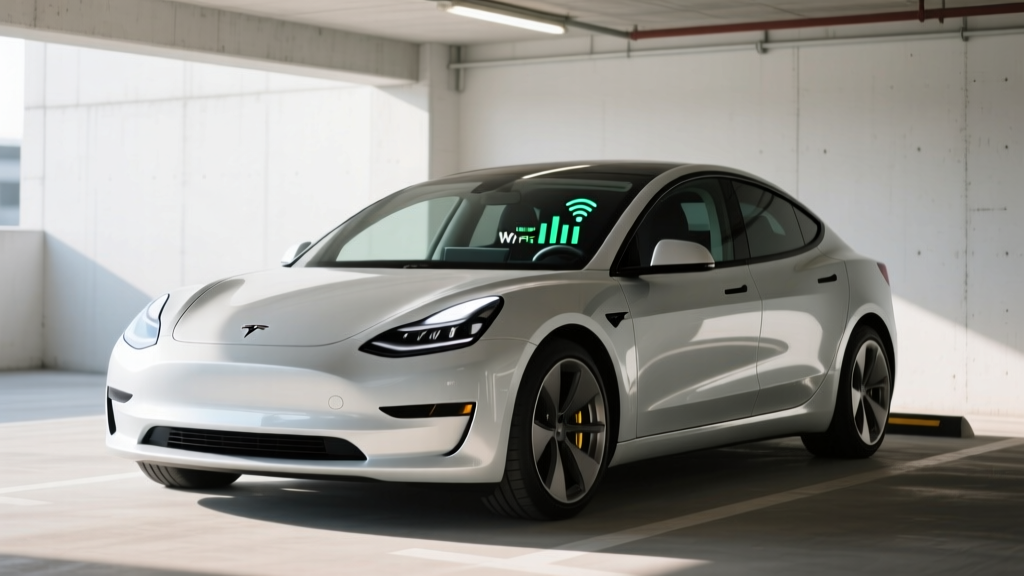
The short answer to "do Teslas have Wi-Fi hotspot" is nuanced: Teslas do not broadcast a Wi-Fi hotspot for your personal devices (phones, laptops, tablets). Instead, Tesla vehicles include a built-in cellular connection that powers the car's own systems — navigation, streaming, over-the-air updates, and remote app features. This connection is called Standard Connectivity (free) and Premium Connectivity ($9.99/month or $99/year in 2026), but neither shares a Wi-Fi signal to your phone.
What Teslas can do is connect to your home Wi-Fi network or a mobile hotspot you bring into the car for faster software updates and media downloads. If you need an in-car hotspot for passengers, you'll need to use your phone's tethering feature or a dedicated mobile hotspot device.
That connectivity question answered, the 2026 Tesla Model 3 remains one of the most efficient and tech-forward electric sedans on the market. Below, we break down everything you need to know about range, charging, pricing, and whether it earns your garage spot.
| Spec | Long Range RWD | Long Range AWD | Performance |
|---|---|---|---|
| EPA Range | 363 mi | 346 mi | 315 mi |
| Battery (usable) | ~75 kWh (NMC) | ~75 kWh (NMC) | ~75 kWh (NMC) |
| 0-60 mph | 4.9 sec | 4.2 sec | 2.9 sec |
| Horsepower | 271 hp | 346 hp | 510 hp |
| Drivetrain | RWD (single motor) | AWD (dual motor) | AWD (dual motor) |
| Peak DC Charge Rate | 250 kW | 250 kW | 250 kW |
| 10-80% DC Time | ~25 min | ~25 min | ~25 min |
| Base MSRP | $44,130 | $49,130 | $56,130 |
Range & Efficiency: EPA vs. Reality
The 2026 Model 3 Long Range RWD carries an EPA-estimated 363 miles of range — among the highest of any production EV sedan. The Long Range AWD drops to 346 miles, and the Performance variant sits at 315 miles, per fueleconomy.gov.
- City / mixed driving (55-65°F): Expect 340-360 mi on the LR RWD — close to the EPA sticker thanks to regenerative braking in stop-and-go traffic.
- Highway (70-75 mph sustained): Plan for 270-300 mi. Aerodynamic drag at speed is the biggest range killer in any EV.
- Cold weather (below 32°F): Expect 220-270 mi, a 25-35% reduction. Battery chemistry (NMC) is less tolerant of cold than LFP, and cabin heating draws heavily from the pack despite the heat pump.
- Efficiency: The LR RWD achieves 132 MPGe combined (25 kWh/100 mi) — best-in-class for the segment.
Tesla's thermal management system, including a standard heat pump, helps mitigate cold-weather losses compared to older EVs, but physics still applies. If you live in a region with harsh winters, budget 30% off the EPA number for January road trips.
Charging Speed: DC Fast, Level 2, and the Supercharger Advantage
The 2026 Model 3 uses the NACS (North American Charging Standard) connector natively — the same plug used across the Tesla Supercharger network. This gives Tesla owners access to over 20,000 Supercharger stalls in North America, widely regarded as the most reliable public charging network available.
| Charging Level | Power | Speed (approx.) | Use Case |
|---|---|---|---|
| Level 1 (120V household) | 1.4 kW | ~4 mi/hr | Emergency top-off only |
| Level 2 (240V home) | 11.5 kW | ~44 mi/hr | Daily overnight charging |
| DC Fast (Supercharger V3/V4) | 250 kW peak | 10-80% in ~25 min | Road trips |
Charging curve reality check: The 250 kW peak rate only holds between roughly 10-40% State of Charge (SoC). From 40-80%, the rate tapers progressively — you might see 150 kW at 50% and 60 kW by 75%. This is normal lithium-ion behavior, but it means the full 10-80% session averages closer to 150-170 kW sustained, not the headline 250 kW figure.
At home on a 48-amp Level 2 Tesla Wall Connector (11.5 kW), a full overnight charge adds roughly 44 miles of range per hour. Most owners who plug in nightly never need to think about range during the week.
Performance & Drivetrain
Even the base Long Range RWD Model 3 delivers 271 horsepower and a 4.9-second 0-60 mph time — quicker than most gas-powered sport sedans. The dual-motor AWD version bumps output to 346 hp and drops the sprint to 4.2 seconds.
The Performance trim is the enthusiast pick: 510 hp, 2.9-second 0-60, adaptive dampers, and track-mode software. It rides on 19-inch wheels standard with optional 20-inch, and the steering calibration is noticeably sharper.
All trims feature one-pedal driving via strong regenerative braking, low center of gravity from the under-floor battery pack, and near 50/50 weight distribution. The Model 3's ride quality improved substantially with the 2024 "Highland" refresh — cabin noise is down, suspension compliance is up, and the interior materials no longer feel budget-tier.
Interior, Tech & Connectivity Deep-Dive
The 2026 Model 3 interior is minimalist by design: a single 15.4-inch center touchscreen handles everything — navigation, media, climate, vehicle settings. There is no instrument cluster; speed and range info appears in the upper-left corner of the main display.
Addressing the connectivity question directly:
- Standard Connectivity (free): Includes basic maps, navigation, and Bluetooth phone/audio streaming. No satellite-view maps, no live traffic, no in-car streaming.
- Premium Connectivity ($9.99/mo): Adds satellite maps, live traffic visualization, video streaming (YouTube, Netflix, Twitch) while parked, music streaming (Spotify, Tidal), and the Caraoke feature.
- No Wi-Fi hotspot output: The car's cellular modem does not create a Wi-Fi network for your devices. To get internet on a laptop in the passenger seat, tether from your phone or bring a mobile hotspot.
- Wi-Fi input: The Model 3 connects to your home Wi-Fi for faster OTA updates and media downloads — strongly recommended for the multi-gigabyte firmware pushes Tesla sends quarterly.
A second 8-inch rear touchscreen (added in the Highland refresh) lets back-seat passengers control climate, seat heaters, and media — a welcome addition for family use.
Autopilot & FSD: Every Model 3 ships with Basic Autopilot (lane centering + adaptive cruise). Enhanced Autopilot ($6,000) adds auto lane-change, autosteer on highways, and summon. Full Self-Driving (Supervised) at $8,000 adds traffic-light recognition and city-street autosteer. All are SAE Level 2 driver-assist systems — you must remain attentive and keep hands available at all times. FSD is not autonomous driving.
Pricing, Trims & Federal Tax Credit
The 2026 Tesla Model 3 lineup spans three trims:
- Long Range RWD: $44,130 (includes destination)
- Long Range AWD: $49,130
- Performance AWD: $56,130
All trims fall under the IRS §30D MSRP cap of $55,000 for sedans, meaning the LR RWD and LR AWD are potentially eligible for the full $7,500 federal tax credit — if you meet the remaining requirements. The Performance trim at $56,130 exceeds the cap and does not qualify.
- MSRP cap: ≤ $55,000 for sedans (LR RWD ✓, LR AWD ✓, Performance ✗)
- Buyer income cap: ≤ $150,000 single / $225,000 head of household / $300,000 joint (MAGI)
- Battery sourcing: Must meet critical-minerals and battery-component requirements (phased thresholds per irs.gov)
- Point-of-sale transfer: You can transfer the credit to the dealer at purchase for an immediate price reduction, or claim it on your tax return
- Assembly: Vehicle must undergo final assembly in North America (all Model 3 variants ✓ — assembled in Fremont, CA)
| Trim | MSRP | §30D Credit | Effective Price |
|---|---|---|---|
| Long Range RWD | $44,130 | Up to $7,500 | ~$36,630 |
| Long Range AWD | $49,130 | Up to $7,500 | ~$41,630 |
| Performance AWD | $56,130 | $0 (over MSRP cap) | $56,130 |
Important: Battery-sourcing requirements tighten annually. Confirm the specific VIN's eligibility on fueleconomy.gov before purchase. State incentives (California, Colorado, New York, and others) may stack on top — check your local DMV or energy office.
Cargo, Passenger Space & Practicality
The Model 3 is a compact executive sedan, and interior space reflects that:
- Front legroom: 42.7 inches
- Rear legroom: 35.2 inches (tight for tall passengers on long trips)
- Cargo (trunk + frunk): 23 cu ft total (19.8 trunk + 3.1 frunk)
- Rear seats: 60/40 split-folding for longer cargo
Compared to the Hyundai Ioniq 6 (which offers 36.1 inches rear legroom and similar trunk volume), the Model 3 is competitive but not class-leading. The frunk is useful for charging cables or a small bag but won't hold a full suitcase.
Warranty & Long-Term Ownership
Tesla's warranty structure is straightforward:
- Basic vehicle: 4 years / 50,000 miles
- Battery & drive unit (Long Range/Performance): 8 years / 120,000 miles, whichever comes first, with minimum 70% capacity retention
- Roadside assistance: 4 years / 50,000 miles
The 70% retention threshold at 120,000 miles is standard for the industry. Real-world degradation data from Tesla's own fleet reports and third-party tracking (e.g., Recurrent Auto) suggest Model 3 NMC batteries lose roughly 8-12% capacity over the first 100,000 miles — well within warranty limits. The Model 3 RWD (Standard Range) previously used an LFP battery, which degrades more slowly and tolerates 100% SoC storage, but the 2026 Long Range lineup uses NMC chemistry for its higher energy density.
Insurance costs remain a consideration: Model 3 premiums average 15-25% higher than comparable gas sedans, driven by repair costs for aluminum body panels and sensor recalibration after collisions. Get a quote before ordering.
Pros, Cons & Who Should Buy
- Best-in-class efficiency (132 MPGe, 25 kWh/100 mi)
- Supercharger network access — still the gold standard for road-trip charging
- Strong performance even in base LR RWD trim
- Over-the-air updates continuously add features
- Excellent safety ratings (NHTSA 5-star, IIHS Top Safety Pick+)
- Falls under §30D MSRP cap (LR trims)
- No Wi-Fi hotspot output for personal devices
- Rear seat legroom is tight for adults on long trips
- No physical controls — everything runs through the touchscreen
- Insurance premiums run higher than segment average
- FSD ($8,000) remains SAE Level 2 — expensive for what it delivers
- No Apple CarPlay or Android Auto
Who the Model 3 Suits Best
- Commuters & solo drivers: Ideal. The efficiency, home-charging convenience, and Autopilot lane-centering make daily highway miles effortless.
- Couples without kids: The rear seats work for occasional passengers or groceries, but this is fundamentally a front-seat car.
- Road trippers: Supercharger density and 25-minute 10-80% sessions make long-distance travel viable, though you'll plan stops more carefully than in a 400-mile gas car.
- Families needing rear space: Consider the Model Y, Hyundai Ioniq 5, or Kia EV6 instead — more cargo room and rear-seat comfort.
FAQ: Tesla Connectivity & Model 3 Ownership
Do Teslas have Wi-Fi hotspot capability for my phone or laptop?
No. Tesla's built-in cellular connection powers the car's own systems (navigation, streaming, updates) but does not broadcast a Wi-Fi hotspot for external devices. Use your phone's mobile hotspot or a dedicated hotspot device for passenger internet access.
What is the real-world range of the 2026 Model 3?
The EPA rates the Long Range RWD at 363 miles. In real-world mixed driving at moderate temperatures, expect 330-350 miles. Highway-only driving at 75 mph drops that to roughly 270-300 miles, and cold weather (below freezing) can reduce range to 220-270 miles.
How fast does the Model 3 charge at home and on the road?
At home on a 240V Level 2 charger (11.5 kW), the Model 3 adds about 44 miles of range per hour — a full overnight charge covers most weekly driving. On a V3/V4 Supercharger, it peaks at 250 kW and charges from 10-80% in approximately 25 minutes, though the rate tapers significantly above 60% SoC.
How much does the Model 3 cost after the federal tax credit?
The Long Range RWD starts at $44,130 and may qualify for the full $7,500 §30D credit, bringing the effective price to roughly $36,630 — assuming you meet income limits (≤$150K single / $300K joint) and the vehicle's battery meets current-year sourcing requirements. The Performance trim at $56,130 exceeds the $55,000 sedan MSRP cap and is not eligible.
Does the 2026 Model 3 qualify for the federal EV tax credit?
The Long Range RWD ($44,130) and Long Range AWD ($49,130) are under the $55,000 MSRP cap for sedans and are assembled in North America, making them potentially eligible. Final eligibility depends on your income, the vehicle's battery-sourcing compliance, and current IRS rules — verify at irs.gov before purchasing.
Is the Model 3 worth buying vs. the Hyundai Ioniq 6 or BMW i4?
The Model 3 wins on efficiency (132 MPGe vs. Ioniq 6's 140 MPGe is close, but Tesla's Supercharger network access is unmatched) and software experience. The Ioniq 6 offers more rear-seat space and 800V architecture for faster peak charging. The BMW i4 delivers a more traditional luxury interior and Apple CarPlay but costs more and has less range. If Supercharger reliability and software integration matter most, the Model 3 remains the default pick. If rear-seat comfort or CarPlay are dealbreakers, cross-shop the Ioniq 6.